Choosing a pistol optic is two decisions that people collapse into one. Which optic is good is the interesting question. Which optic fits is the one that decides whether you wasted three hundred dollars.
So: footprints first. And a disclosure while we are here — I shoot a 2011 and I run Vortex glass on rifles, but I have not personally mounted all eight of the optics on this page. The footprint work below is verifiable from Staccato's own accessories catalog and from the listings; the rankings are research, and I would rather say that than pretend to range time I did not put in.
What a footprint is, and why it matters here
A footprint is the bolt pattern and recoil-lug geometry an optic mounts on. There are several in common use and they are not interchangeable — no adapter turns a small footprint into a large one, and forcing a mismatch is how optics shoot loose.
The three that matter on this page:
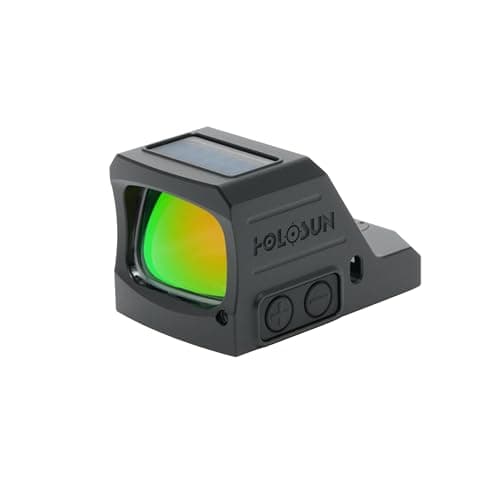
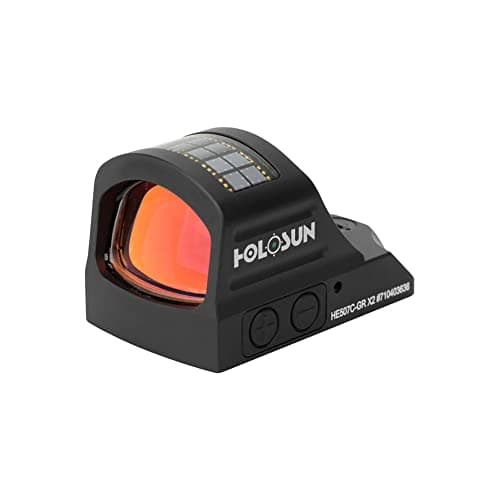
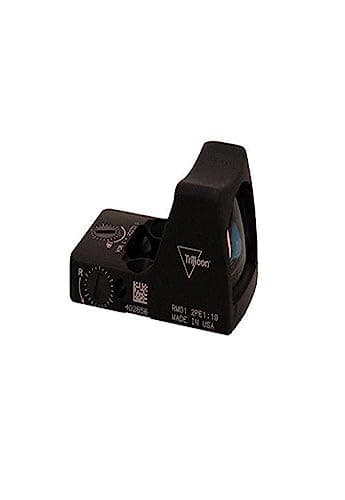
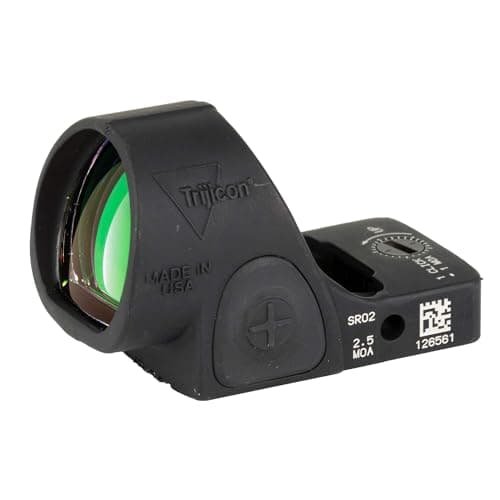
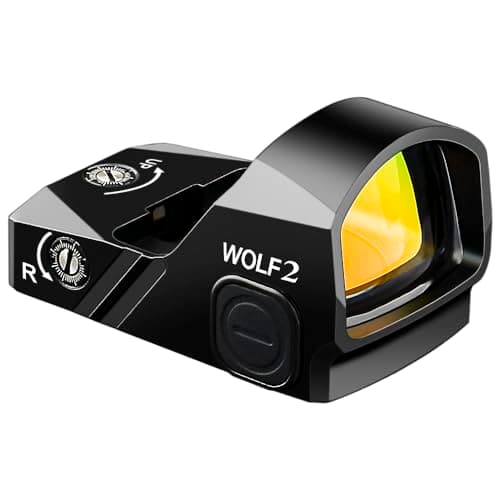
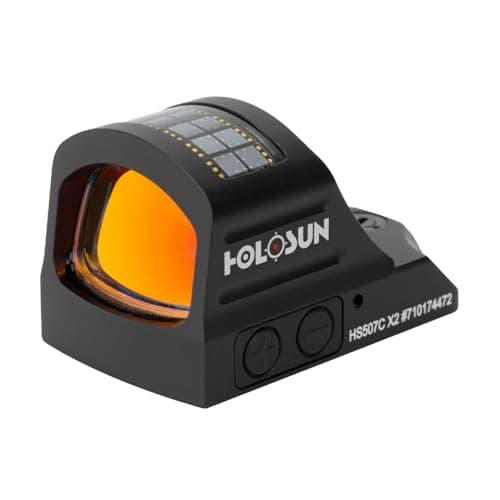
- RMR — Trijicon's pattern, and the most widely supported in the aftermarket. The Holosun 507C and 407C use it, as do the Trijicon RMR and SRO and the budget Cyelee WOLF2.
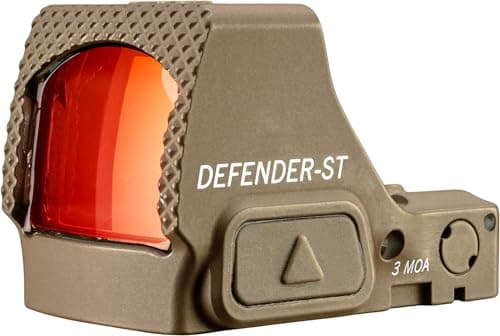
- DeltaPoint Pro (DPP) — Leupold's pattern. The Vortex Defender-ST uses it.
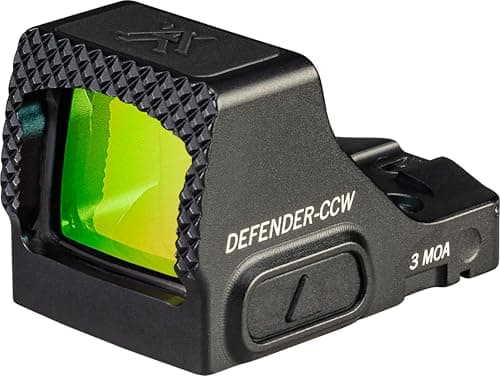
- Shield RMSc — the compact standard. The Vortex Defender-CCW uses it.
How this maps onto a Staccato specifically
This is the useful part, and it comes straight from Staccato's own accessories catalog. They sell factory Dawson Precision DPO mounting kits, and the kits are sold per optic footprint. The ones listed on their site:
- DPO Trijicon RMR / RMRHD / SRO kit — $129.95
- DPO Holosun 507C / 508T / 507Comp kit — $129.95
- DPO Trijicon RMRcc kit — $129.95
- DPO Holosun 509T kit — $129.95
- DPO Aimpoint ACRO kit — $129.95
- DPO Sig Romeo Zero / JPoint / Shield kit — $159.95
- DPO Leupold DeltaPoint Pro kit — $49.95
- Staccato HD HOST mounting kit — $74.99
Two things fall straight out of that list. First, the DeltaPoint Pro kit is dramatically cheaper than the rest — eighty dollars less than the RMR kit. That is worth knowing before you pick an optic, and it makes the Vortex Defender-ST an unusually sensible choice on this platform.
Second, and more importantly: Staccato runs more than one mounting system — DPO, DUO and HD are different — and which one your pistol has determines which kits apply. I am not going to tell you which system your specific pistol uses, because that depends on the model and when it was made, and getting it wrong is exactly the mistake this page exists to prevent. Check your pistol against Staccato's own accessories pages, which are linked in the sources.
Then, and only then, pick the optic
Window size versus durability
The Trijicon SRO has by far the biggest window here, which makes finding the dot on the draw much easier — and that big open window is also far more exposed. It is a competition optic. The RMR's distinctive housing shape is the reason RMRs survive impacts that flatten other optics, and it is why it remains the durability benchmark despite being an older design.
Open versus enclosed emitter
Everything on this page is an open reflex. That is normal for pistol optics and it means rain, snow or lint on the emitter can kill the dot. If that matters for your use, an enclosed emitter is the answer — our Vortex red dot page covers the enclosed Venom.
Battery access
The Trijicon RMR Type 2 has the battery underneath, which means unmounting and re-zeroing to change it. The SRO fixed that with a top-loading tray. The Holosuns have solar backup and Shake Awake, which largely removes the question. This is a bigger day-to-day difference than most spec comparisons admit.
Green if red looks wrong
If red dots have always looked like a smear or a comma to you, that is astigmatism and a green emitter frequently reads far more cleanly. Both the Holosun HE507C-GR and the Vortex Defender-CCW here are green.
Where I would land
Holosun 507C-X3 if you want the default good answer — RMR footprint stated on the listing, 7075 housing, solar and Shake Awake, and a factory DPO kit that fits it.
Vortex Defender-ST if the total cost matters — the DPP mounting kit is eighty dollars cheaper than the RMR kits and the Vortex warranty is unconditional.
Trijicon RMR Type 2 if durability is the whole priority and the battery access does not bother you.
Trijicon SRO if it is a competition gun and the window is what you are buying.
One design question cuts across this entire ranking and is worth deciding before you pick a model: whether the emitter should be exposed at all. For a competition gun it does not matter; for a pistol carried under a shirt in a wet climate it decides everything — enclosed versus open emitter.
Two of these optics are sold in a green emitter as well as red, and for some eyes that is the difference between a dot and a smear: red against green is the comparison. If you are still choosing the gun under the optic, the competition pistol page is the editorial one — it ranks nothing and links nothing, because its subject is a firearm.
Mounting a pistol optic without regrets
Confirm your mounting system before you buy anything
DPO, DUO and HD are different systems and the kits are not interchangeable. Two identical optics on two Staccatos can need two different plates. Check your specific pistol against the manufacturer's accessories pages first — this is the ten minutes that saves the three hundred dollars.
Factor the mounting kit into the price
A $233 Holosun plus a $129.95 DPO kit is a $363 purchase. A $299 Defender-ST plus a $49.95 DPO DeltaPoint Pro kit is $349. The cheaper optic is not automatically the cheaper outcome, and almost nobody does this arithmetic before ordering.
Use thread locker and the specified torque
Optic mounting screws back out under recoil without thread locker, and strip when over-torqued. Use the figure the optic manufacturer publishes, and use an inch-pound driver rather than feel. This is the single most common cause of a red dot that will not hold zero.
Keep the irons
Electronics fail. Suppressor-height sights that co-witness through the window turn a dead optic into an inconvenience rather than a stoppage. On a defensive pistol this is not optional.
Zero it and then confirm it
Zero at a distance that matches how you use the gun, then confirm it again after fifty rounds — mounting hardware settles. Our zeroing guide covers the process and the distance argument.
Match the dot size to the job
2 to 3 MOA for precision, 6 MOA for speed. A circle-dot reticle like the Holosun 32 MOA circle gives you both — the circle for fast acquisition, the dot for precise shots — and it is why those are the default recommendation here.