The belt is the first thing to buy and the thing most people buy last. Everything else in this sport hangs off it, and a soft belt quietly ruins a draw you have spent months practicing.
We earn a commission when you buy through our Amazon links, at no extra cost to you. It never changes the order of the picks, and we say so when the cheaper thing is the better buy. How this works.
Everything in competition shooting is downstream of the belt. The holster, the mag pouches, the shell caddy, the dump pouch — all of it is hanging off a strip of nylon around your waist, and if that strip flexes, every single item on it moves relative to your hands. A draw is a repeatable motion to a fixed point. Make the point stop being fixed and the whole thing falls apart.
This is also the cheapest problem in the sport to solve properly, which is what makes it so irritating that so many people put it off.
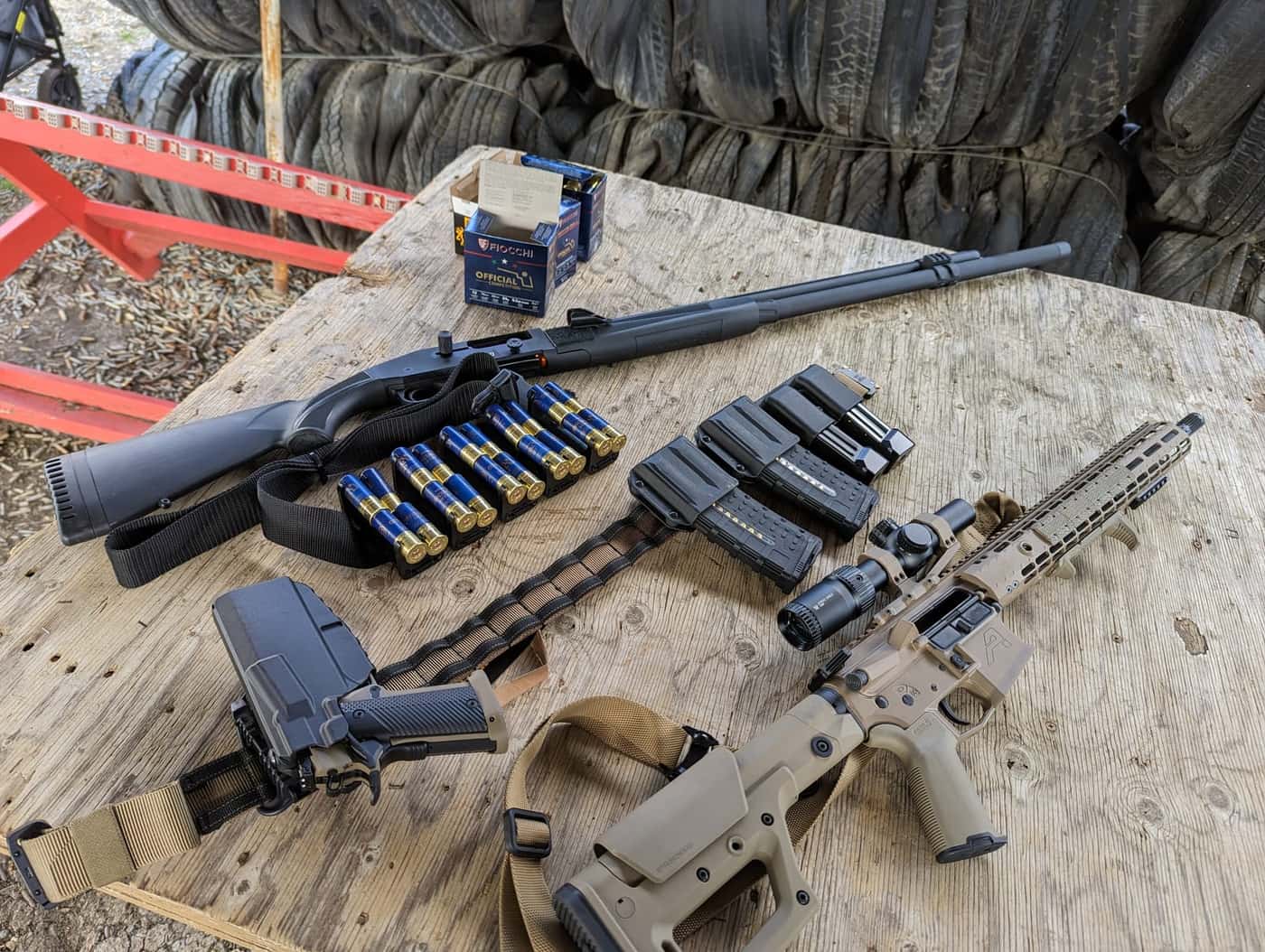
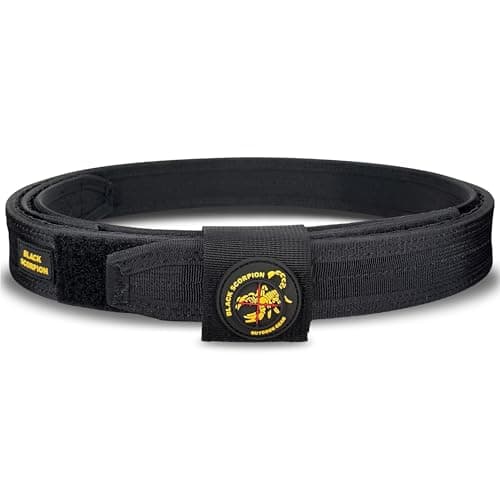
My belt as it sits before a match. The layout is the whole point: everything in a fixed place, reachable without looking, and the belt stiff enough that a loaded holster does not drag it out of position.
The inner and outer belt system
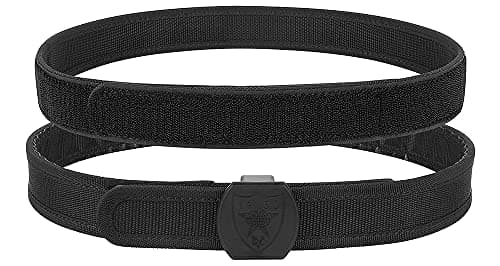
The two-piece design is not a gimmick and it is the thing to understand before you shop. You wear a thin inner belt through your trouser loops. It has hook or loop material on the outside. The outer belt — the stiff one carrying your holster and pouches — mates to it around your whole circumference.
Two things follow from that, and both matter:
The rig cannot rotate. A single belt through trouser loops is held at five or six points and pivots between them. A mated two-piece belt is held along its entire length. When you turn hard into a shooting position, the gun stays where you left it.
The whole rig comes off as a unit. Unclip the outer, and holster, mag pouches and caddy come off in one piece with their positions intact. You are not rebuilding your belt layout every time you visit the bathroom, which sounds trivial until you have done it four times in a day.
Stiffness is the specification
Belt marketing talks about materials. What you actually care about is whether the belt holds its shape with a loaded holster and four pouches on it while you sprint, turn and drop into a shooting position. Rigidity comes from an internal stiffener, and the difference between a belt with a good one and a belt without is immediately obvious in the hand — hold the belt out horizontally by one end and see how much it droops.
A soft belt is not merely less good. It is actively teaching you an inconsistent draw, because the gun is in a slightly different place every time depending on how the belt happened to sag.
Retention: ALS, GLS, and open-front
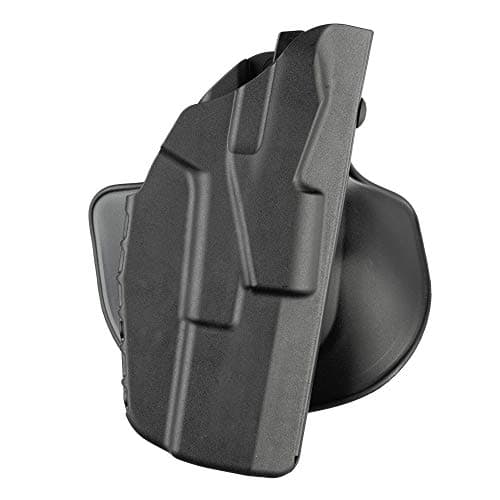
Safariland publishes its holster security mechanisms as a family — ALS, SLS, ALS/SLS and GLS — alongside duty retention levels. Two of those matter for competition:
GLS (grip-lock). Releases from the middle finger as you take a firing grip. Because the release is part of a motion you were making anyway, it adds essentially nothing to the draw once learned.
ALS (automatic locking). Locks the gun when you holster it and releases with a deliberate thumb press. More positive, and a distinct extra motion to train.
The third option is an open-front race holster with adjustable friction and no mechanical lock. That is the fastest and it is what a lot of pure competition shooters run — but check your division and your club first. Rulebooks have opinions about holster type and holster position, and finding out at the safety briefing is an expensive way to learn.
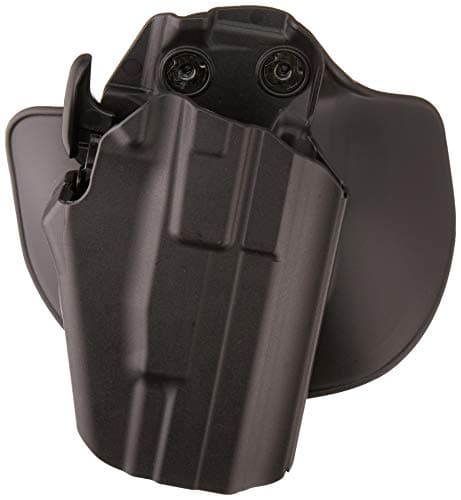
GLS releases off the middle finger as you take a firing grip, so retention costs you nothing on the draw — which is why it survives contact with a timer.
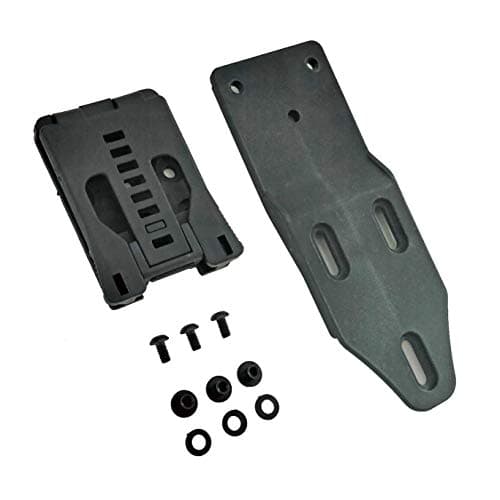
The part that moves the holster down and away from your belt line so a full firing grip is available before the gun moves — and the part most people skip.
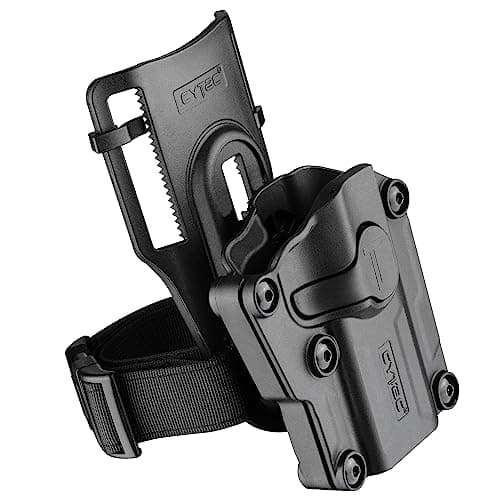
A thigh rig is not a competition holster. It is strapped to a moving limb, which is the one place you do not want your gun when the draw has to be identical every time.
#ad · Live prices from the Amazon Creators API, as of October 19, 2026. Where we have no verified live price we show none — a gap beats a number that has rotted.
In detail
The picks, in full
01
Best overall
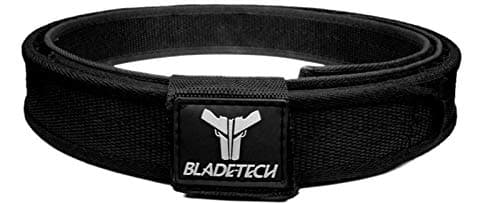
Black Scorpion Pro Heavy-Duty Competition Belt
Two-piece inner/outerReinforced stiffenerIPSC/USPSA sizing1.5 in
7.6/10
Stiff enough that a loaded holster and four mag pouches do not fold the belt over on the first hard turn, which is the entire job.
Stiffness
9
Build quality
9
Adjustability
7
Comfort
6
Value
7
What's good
+Genuinely rigid — the failure mode of a soft belt is the holster rotating as you run, and this does not do it
+Two-piece design means the outer comes off with everything still mounted in position
+Sized for competition rather than adapted from a duty belt
What's not
−Stiff enough to be uncomfortable worn all day off the range
−Costs three times a basic hook-and-loop belt
Skip it if…
…you are shooting your first two or three matches. Borrow or buy cheap first — belt sizing is personal and you will learn what you want.
GLS grip-lock retentionPro-Fit multi-modelPaddle and belt loopSTX finish
8.0/10
GLS releases off the middle finger as you take a firing grip, so retention costs you nothing on the draw — which is why it survives contact with a timer.
Draw speed
7
Retention
9
Build quality
9
Fit range
8
Value
7
What's good
+The release is part of the grip you were taking anyway, so it does not add a step
+Pro-Fit shell covers a range of frames rather than one model
+Safariland's retention hardware is the reference point in this category
What's not
−Retention adds a failure mode a race holster does not have — it must be practiced
−Pro-Fit is a compromise fit by design; a dedicated shell holds a specific gun better
−Check division rules before running any retention holster in competition
Skip it if…
…you are shooting a pure race division where an open-front speed holster is legal and normal. Retention is for the matches and clubs that require it.
The part that moves the holster down and away from your belt line so a full firing grip is available before the gun moves — and the part most people skip.
Draw speed
8
Retention
4
Build quality
6
Fit range
8
Value
8
What's good
+Drop and offset are what let you build a full grip in the holster instead of on the way up
+Universal hole pattern fits most competition holster shells
+Cheap relative to the draw consistency it buys
What's not
−More hardware between belt and gun means more fasteners to check before every match
−Excessive drop puts the muzzle outside some clubs' safety-angle rules — check first
Skip it if…
…your division caps holster position. Several rulebooks specify how far the gun may sit from the belt, and an adapter is the easiest way to end up non-compliant.
A thigh rig is not a competition holster. It is strapped to a moving limb, which is the one place you do not want your gun when the draw has to be identical every time.
Draw speed
4
Retention
4
Build quality
5
Fit range
7
Value
5
What's good
+Inexpensive
+Genuinely universal fit
What's not
−The holster moves with your leg, so the gun is in a slightly different place on every draw — the opposite of what a timed draw needs
−Leg straps loosen while you run a stage, and you will feel it move
−Universal fit means loose fit, and a loose shell is a retention problem when you are moving hard
−The offset drop adapter above gets you a lower holster position without leaving the belt
Skip it if…
…the holster is for competition, which on this page it is. If you want the gun lower, use a belt-mounted drop and offset instead.
If a belt droops under its own weight in your hands, it will droop under a loaded rig. Everything else — color, brand, buckle style — is secondary to that one property.
Size it over what you wear to a match
Competition belt sizing is measured over your clothes at the belt line, not by trouser size, and an outer belt has to clear an inner belt underneath it. Manufacturers publish sizing charts for exactly this reason. Measure, do not guess — belts are the most-returned item in this whole category.
Set the layout once, then leave it
Holster, then pouches in the order you will reach for them, then the caddy. Then shoot with it, adjust once, and stop. A layout you keep changing is a layout your hands never learn, and hand memory is the entire benefit of having a dedicated belt.
The order of spending
A stiff two-piece belt.
A holster that fits your actual gun properly.
Drop and offset hardware, if your grip in the holster is compromised.
I haven't handled these. Here's what I did instead.
Everyone in this category says they tested twenty of these. I haven't tested any, and I say so. What I do instead: read the manufacturer's manual and published specification, compile the numbers that decide the purchase, do the arithmetic in the open, check the live price, and name one product to skip. The scores above are judgments from that research against a published rubric — they are not measurements I took, because I do not have a lab and I am not going to pretend otherwise.
Questions
Frequently asked
Can I just use a good leather gun belt?+
For your first match, yes. It will work and nobody will comment. It will also flex more than a competition belt and it will not let you take the whole rig off as a unit. The two-piece system is a genuine functional improvement, not a fashion.
Is a retention holster required?+
It depends entirely on the club and the division, which is why the answer here is "read your rulebook and ask the match director" rather than a recommendation. Some matches require retention, some divisions effectively assume an open-front race holster, and buying the wrong one is a wasted purchase rather than a small mistake.
What is wrong with a drop-leg holster?+
It is strapped to your thigh, which moves. A timed draw needs the gun to be in the same place relative to your hand every single time, and a leg rig cannot deliver that — it also loosens as you run. If you want the gun lower, use a belt-mounted drop and offset adapter instead. That is why the thigh rig is the skip pick above.
Hook-and-loop or buckle?+
Hook-and-loop two-piece systems hold extremely well when clean and degrade with grit over seasons at a dusty outdoor range. A buckled rigid belt is more durable and slightly slower to don. Both are legitimate; if you shoot in sand and mud constantly, lean buckle.
We do not run a testing lab and we do not pretend to. Where a measured number came from a manufacturer's published specification or someone else's lab, we name them and link them. Where we could not verify something, we say so on the page rather than quietly leaving it out. Read the full method.