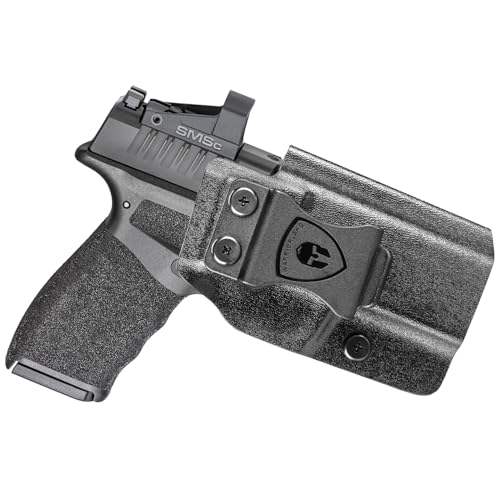
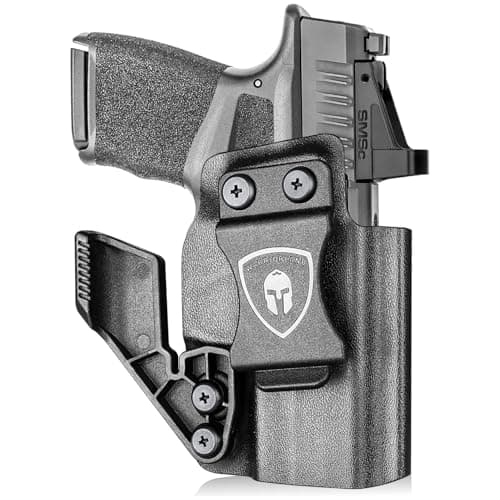
My everyday carry pistol is a Springfield Armory Hellcat RDP — the Rapid Defense Package version of the Hellcat micro-compact — in the manual-safety configuration, and I carry it with the compensator taken off.
Both halves of that sentence are decisions I made on purpose, and neither is the obvious one. This page is why. It is my reasoning about my own gun, and I am going to be careful to keep it that — a lot of people I respect carry differently and are right to.
Nothing on this page sells you a gun or a gun part. Receivers, barrels, bolt carrier groups, triggers, gas blocks, suppressors and magazines are not sold on Amazon, this site monetizes through Amazon, and a buy button next to any of them would point somewhere that cannot sell you one. Those rows link to the vendor I used, unmonetized. The only things here anyone is paid for are the accessories — optics, mounts, furniture — and they are marked as such. The holsters, optics, belts and covers below are the accessories, and those are ranked with live prices.
Part one: the gun before this one
Before the Hellcat I carried a Kel-Tec PF-9, and I carried it a lot.
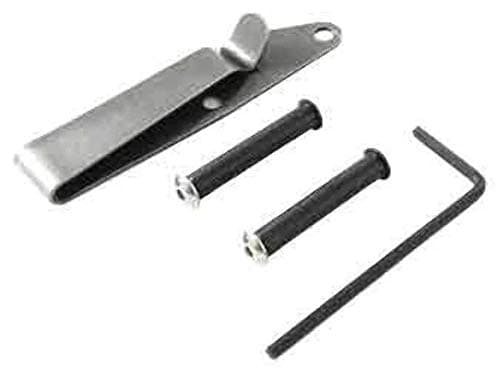
What I loved about it was the size. It is ultra-thin and light, and I carried it with a frame-mounted belt clip — no holster, just a spring-steel clip screwed to the gun, tucked into the waistband. Nothing in your belt line but the pistol itself. For sheer disappearing-into-your-clothes convenience I have not found anything since that matches it, and I understand completely why people still do it.
What I did not love was shooting it. A pistol that light and that thin, chambered in 9mm, is snappy in a way that is genuinely unpleasant, and the long double-action-only trigger pull is a lot of travel to manage while the gun is trying to move in your hand. It was not a bad gun — it was exactly the gun it was designed to be, and it was designed to be carried far more than it was designed to be shot. I just found I did not want to practice with it, and a carry gun you avoid practicing with is a problem.
The honest part about clip carry
I have to say this plainly, because I described it approvingly above. A bare frame clip leaves the trigger guard completely uncovered. There is nothing between the trigger and your waistband, your belt, your shirt tail and whatever else is in there.
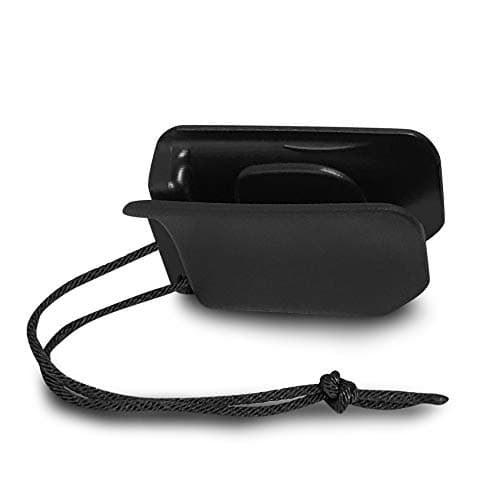
The PF-9's long, heavy double-action-only trigger is a genuine mitigating factor — that pull is not a light one to snag through by accident — and that is a large part of why the practice exists at all on guns like it. It is a mitigation and not a solution. Many people who carry on a clip add at least a trigger-guard cover, which is a small Kydex shell that covers the trigger and pulls off on the draw via a cord anchored to the belt. There is one ranked below.
I am telling you what I did and what I liked about it. I am not telling you to do it.
Part two: I wanted to carry chambered, and that changed everything
Here is the decision that actually drove the upgrade, and it is the one people skip past.
I wanted to carry with a round in the chamber more of the time. That is not a controversial position — an unchambered gun requires two hands and a working support arm to bring into action, and neither is guaranteed. But it turns the trigger-coverage question from a theoretical one into a real one, and it did not sit right with me on a gun carried on a bare clip with no mechanical safety of any kind.
The PF-9 has no manual safety. There is nothing to switch off, and the long trigger pull is the entire safety system. For a lot of carriers that is fine and always has been. For me, carrying chambered, on a clip, it was the specific combination I did not want.
So the requirement became: a gun I actually wanted to shoot, that I could carry chambered, with an actual thumb safety.
Part three: the Hellcat RDP, and why the manual safety mattered
Springfield offers the RDP in a manual-safety configuration — their own page describes it as an optional ambidextrous manual safety on the frame, low-profile, with positive engagement and operable left or right-handed. That is the version I have, and it is the reason I have this gun and not one of several similar ones.
The reasoning, in plain terms: a thumb safety was my comfort threshold for chambered carry. Sweeping it off is a motion that happens as the gun comes up, folded into a draw stroke I was going to make anyway, and in exchange the gun has a deliberate mechanical state while it is sitting against my body.
The honest counterargument, which I want stated as clearly as my own position: a great many experienced carriers deliberately choose no manual safety, and their reasoning is sound. A safety is one more thing to fail to disengage under stress, and a proper holster that fully covers the trigger guard already solves the problem the safety is being asked to solve. If your carry method is a good Kydex holster and you train the draw, you do not need a thumb safety, and the argument that it adds a failure point is a real one.
I am not claiming my choice is the correct one. I am saying it is the one that let me carry the way I wanted to, and being at ease with how you carry is not a small thing — it decides whether the gun is actually on you.
Part four: why the compensator comes off
The RDP ships with Springfield's self-indexing compensator on a threaded barrel, and per their own description it is designed to install and remove easily without shims or extra parts for timing. That removability is not an accident, and I use it.
Mine comes off for carry. Two reasons, both practical:
- Length. A compensator adds length at the muzzle end of an already-carefully-sized micro-compact. On a gun whose entire selling point is disappearing under a shirt, adding to the longest dimension is working against the purchase.
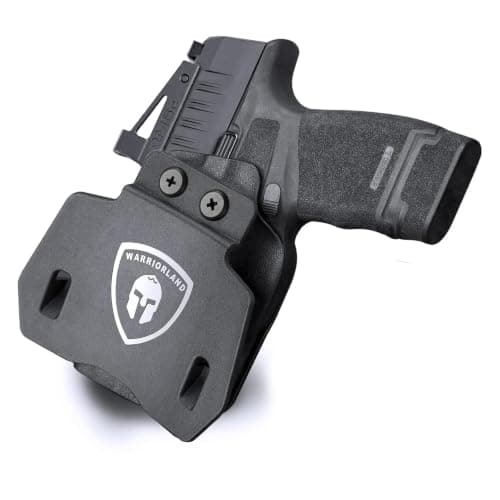
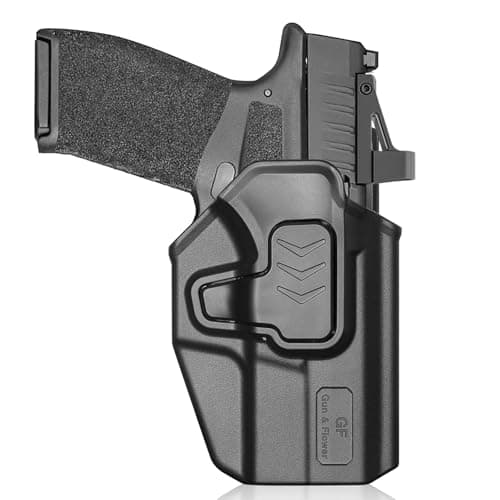
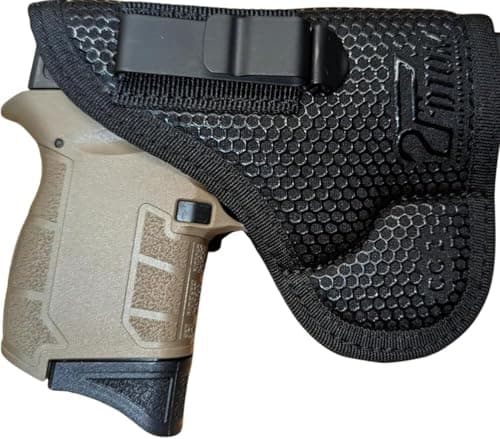
- Holster fit. This is the bigger one. A comp changes the profile the holster has to accept, and a holster cut for the bare pistol will not take the gun with the comp fitted. That means either a comp-cut holster — a much smaller market — or the comp comes off. I went with the comp coming off.
What I give up is real: a compensator reduces muzzle rise, and on a light micro-compact that is exactly where you would want the help. On the range, with the comp on, the gun is nicer to shoot. That is genuinely a trade and not a free win.
My position, and only mine: concealment is the job the carry gun is doing the other twenty-three hours and fifty-nine minutes of the day, and I would rather have the gun on me in a holster that fits than have a flatter-shooting gun I fight to conceal. If you carry openly, or under a jacket, or you found a comp-cut holster you like, the maths comes out differently and you should follow it.
Where that leaves the whole arc
- PF-9 on a clip. Loved carrying it, did not love shooting it, and the trigger guard was uncovered.
- I wanted to carry chambered. Which made the uncovered trigger a question I actually had to answer.
- So I wanted a manual safety. Not because it is objectively correct, but because it was my threshold for being comfortable carrying that way.
- Hellcat RDP, manual-safety configuration, comp off. A gun I want to shoot, carried in a holster, with a mechanical state I can set.
One footnote on availability: Springfield's own site now lists the RDP variants as discontinued. Mine is the gun I have, not a recommendation to go and find one, and if you are shopping the current Hellcat range that page is where the live line-up lives.
The holster fitment trap, which is worth more than any pick below
"Hellcat" and "Hellcat Pro" are different guns. The Pro has a longer slide and a longer grip. Their listing photos look nearly identical, they sit next to each other in every search result, and buying the wrong one is the single most common mistake in this category. That is why one of the picks above is a Hellcat Pro holster marked as the skip: it is a perfectly good shell for a gun that is not this one.
Read the fitment line, not the title. The listings worth buying name the exact variants they fit. The ones that just say "Hellcat" in the title and nothing in the fitment are guessing, and so are you.
And decide about the comp before you order. A holster fitted to the bare pistol will not take it with the compensator on. If you intend to carry with the comp fitted, you need a comp-cut holster and the pool of options gets much smaller.
On the optic
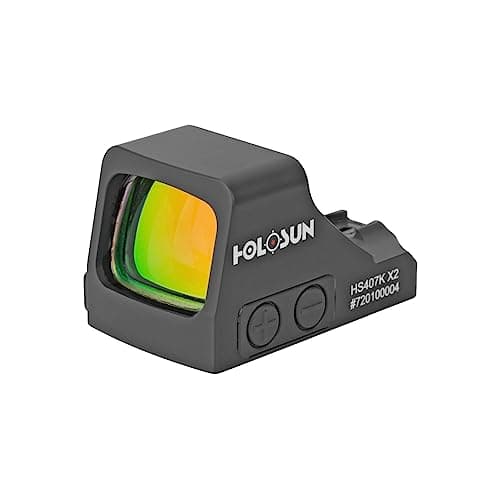
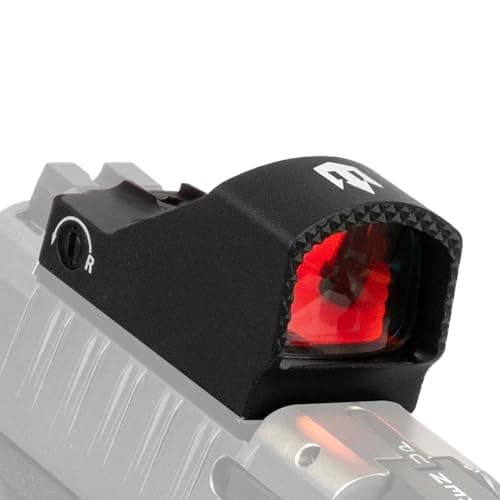
The RDP comes with a Shield SMSc fitted. The dots ranked above are here for people who want to change it or who are putting a dot on a different micro-compact — not because the factory optic needs replacing. If yours works, leave it alone and spend the money on ammunition.
The specification that decides compatibility is the footprint, not the brand. Check your slide cut against the exact pattern before ordering anything, the same way you would on a rifle mount — the fuller version of that argument is on best red dots for 2011 pistols, which applies well beyond 2011s.
On belts, which matter more than people think
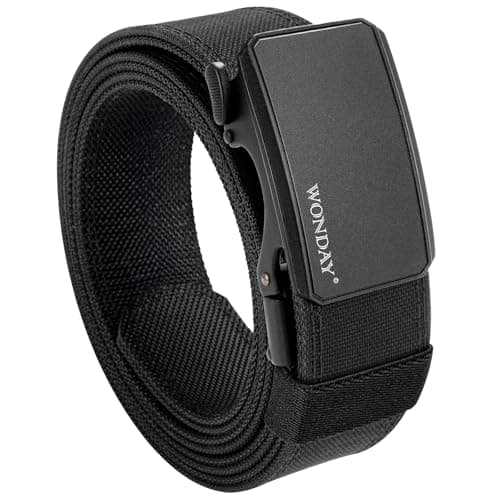
A carry belt is doing structural work. A soft belt lets an inside-the-waistband holster roll away from your body, which is uncomfortable, prints worse and makes the draw inconsistent. A rigid belt fixes all three at once and it is the cheapest upgrade on this page. The competition version of the same argument is on competition belts and holster setups.
On practice
A manual safety is a motion you have to make correctly under stress, which means it is a motion you have to practice. Same for finding a red dot on the draw. Both are dry-fire problems and dry fire is nearly free — shot timers and dry-fire gear covers what actually helps.