Section 06 · Shooting Gear
My Match Pistol: A Cerakoted RIA TAC Ultra FS HC
The 2011 itch on a working budget. This is the double-stack 1911 I actually shoot, the specialist parts that make it competitive, and the photo sequence of it going from black to tan.
We earn a commission when you buy through our Amazon links, at no extra cost to you. It never changes the order of the picks, and we say so when the cheaper thing is the better buy. How this works.
Everybody who shoots a double-stack 1911 has looked at a Staccato. I have written a whole page about why that platform earned its reputation, and I stand by every word of it.
This page is about what you do when you want that gun and the budget is the budget. The Rock Island TAC Ultra FS HC is the double-stack 1911 in 9mm at a fraction of the price of the guns it imitates, and what follows is honestly what that costs you and what it does not.
Nothing on this page sells you a gun or a gun part. Receivers, barrels, bolt carrier groups, triggers, gas blocks, suppressors and magazines are not sold on Amazon, this site monetizes through Amazon, and a buy button next to any of them would point somewhere that cannot sell you one. Those rows link to the vendor I used, unmonetized. The only things here anyone is paid for are the accessories — optics, mounts, furniture — and they are marked as such. That applies here too: the pistol is a dealer purchase, and the two aftermarket parts that make it competitive both come from a specialist shop rather than a marketplace.
The story this page is really about
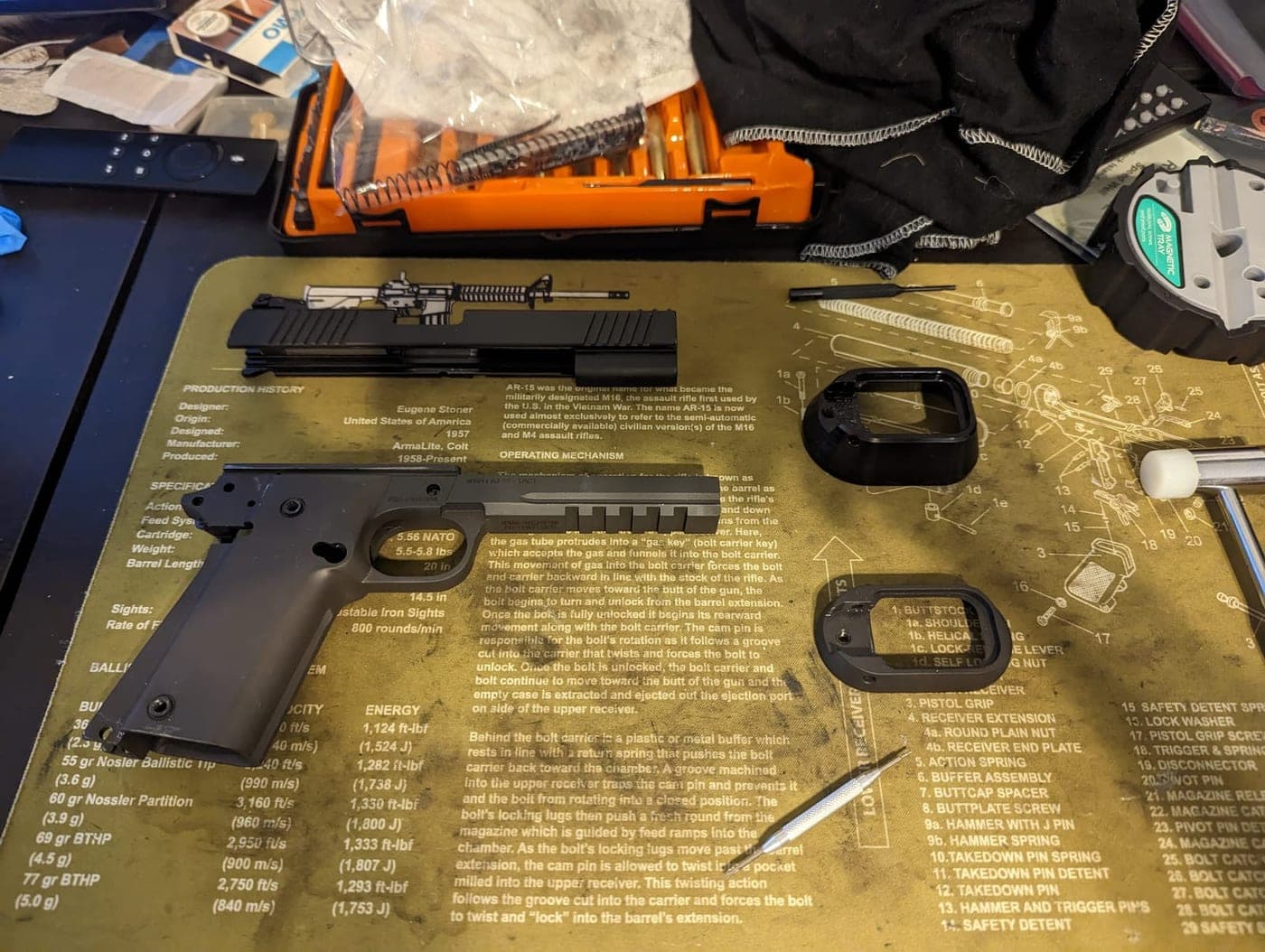
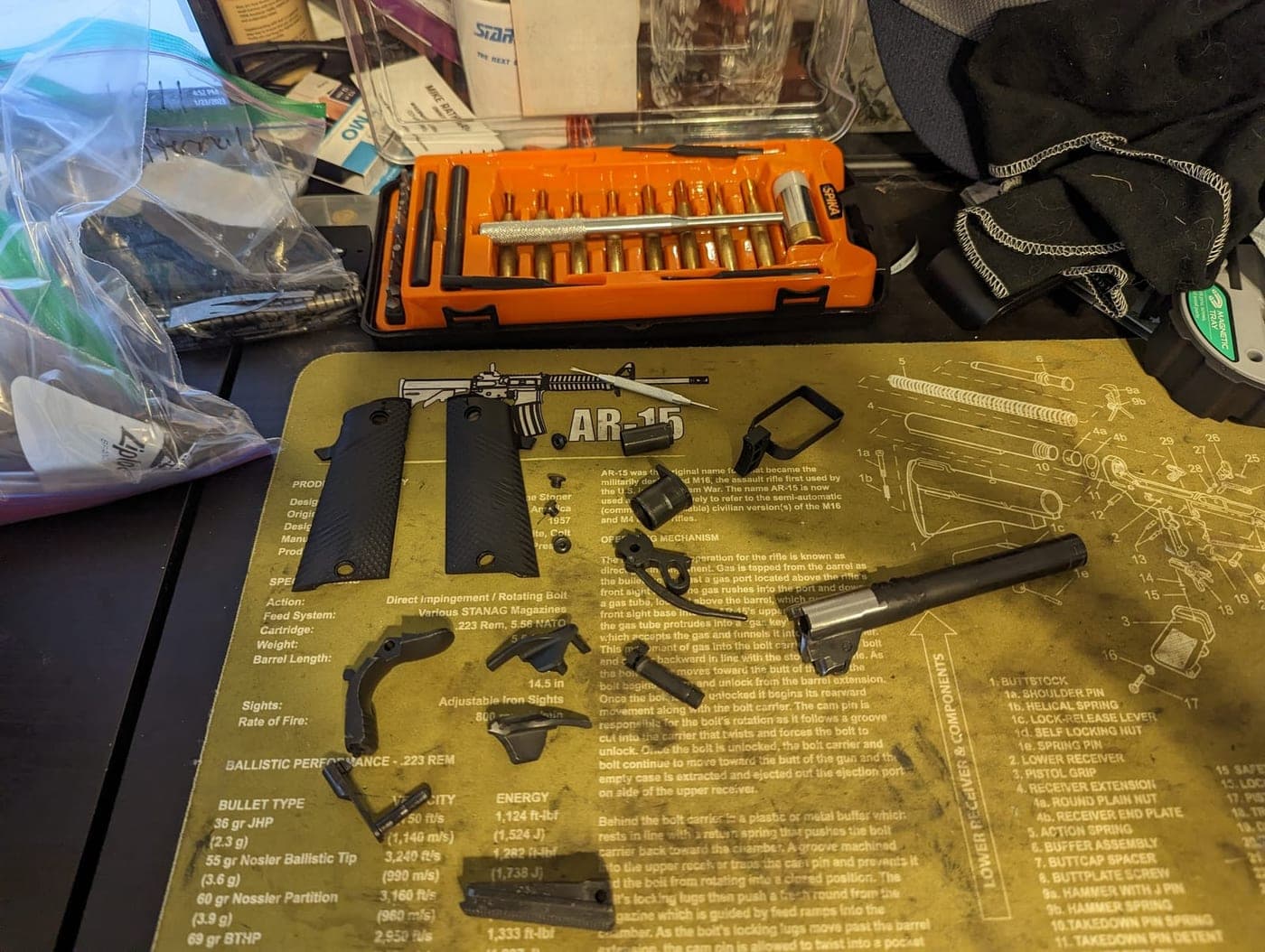
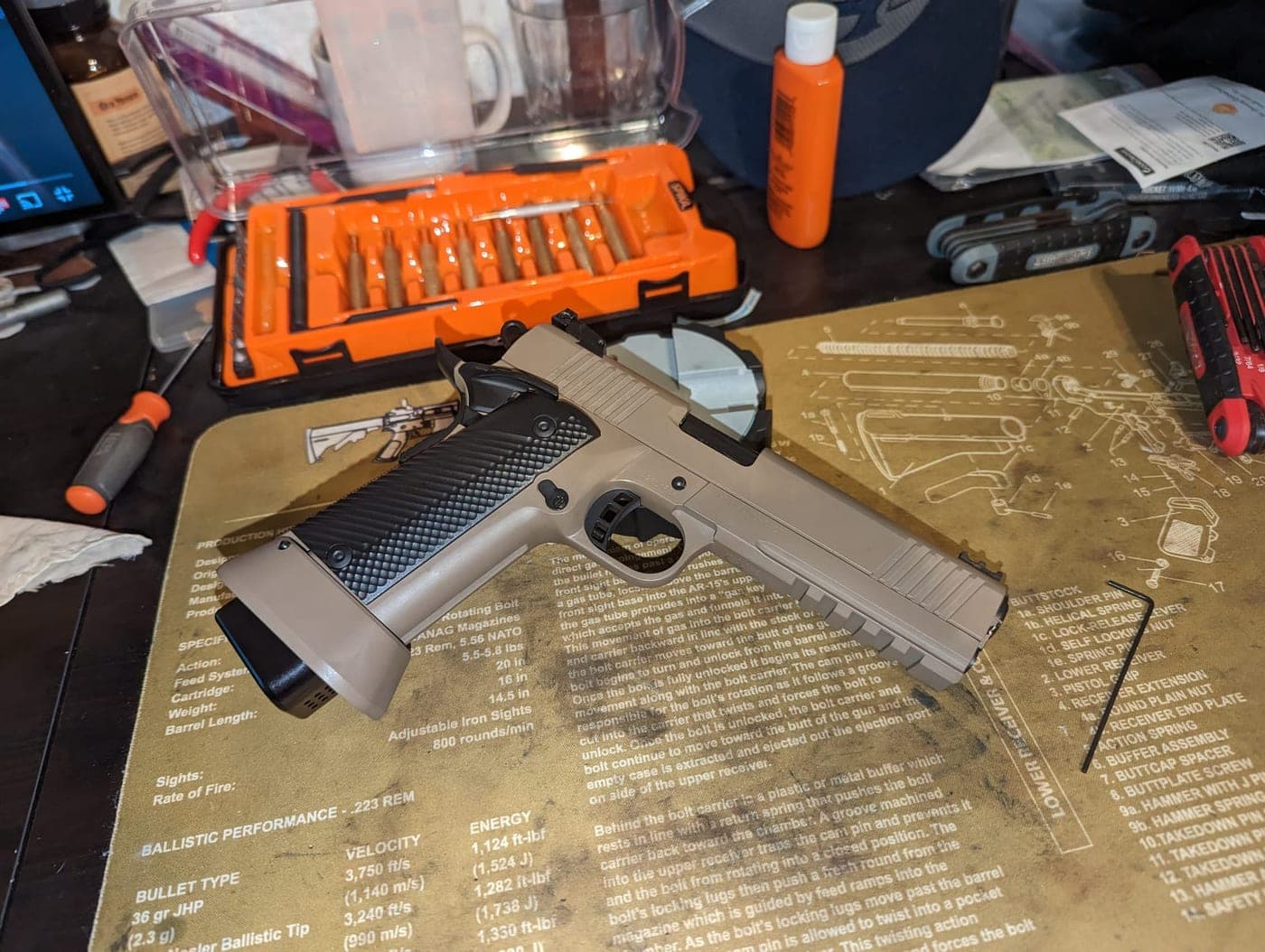
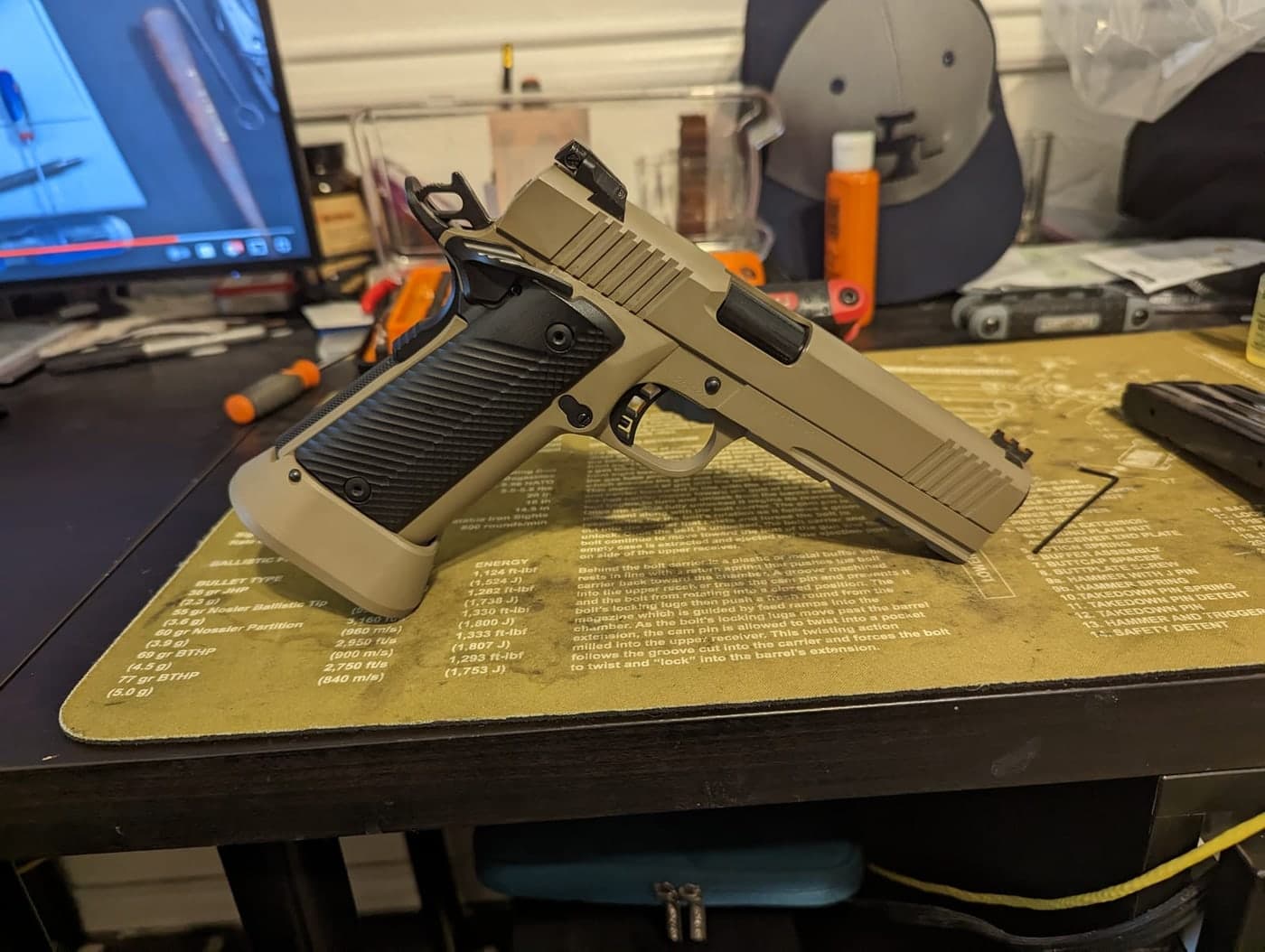
It arrived black. It is not black now, and the sequence below is the part of this page worth your time — a gun stripped to its component parts, refinished in tan with black, and put back together.
Before
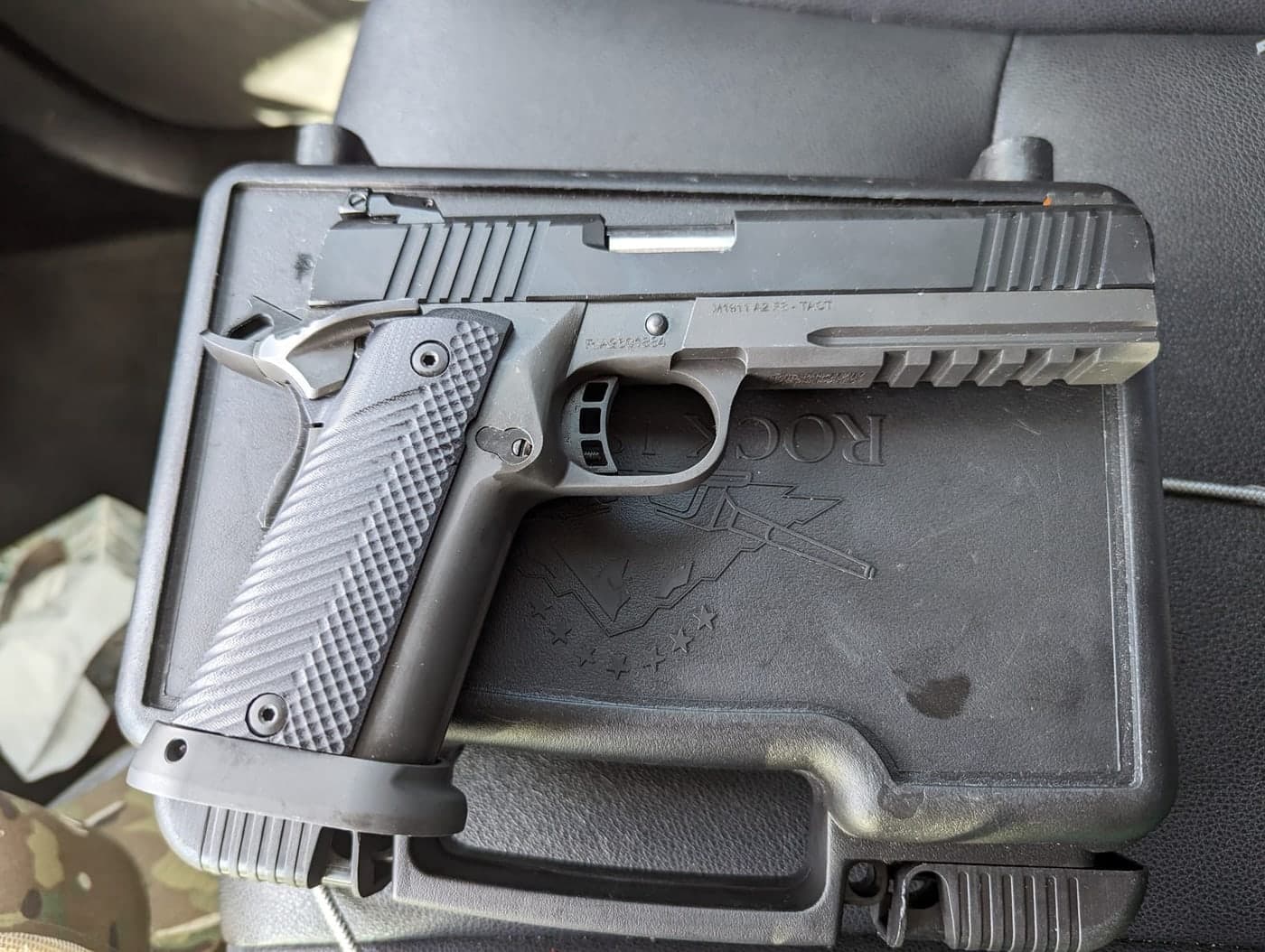
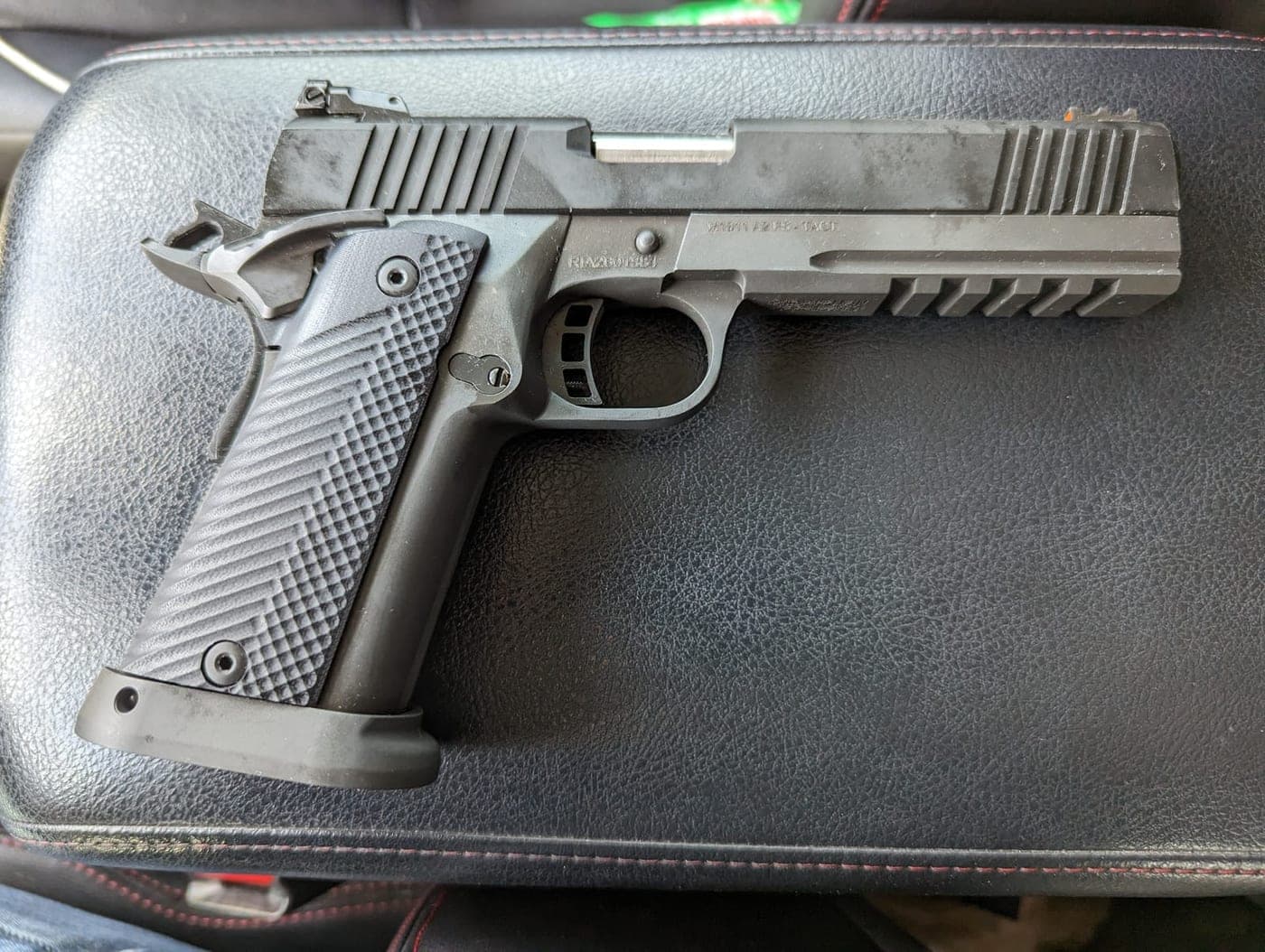
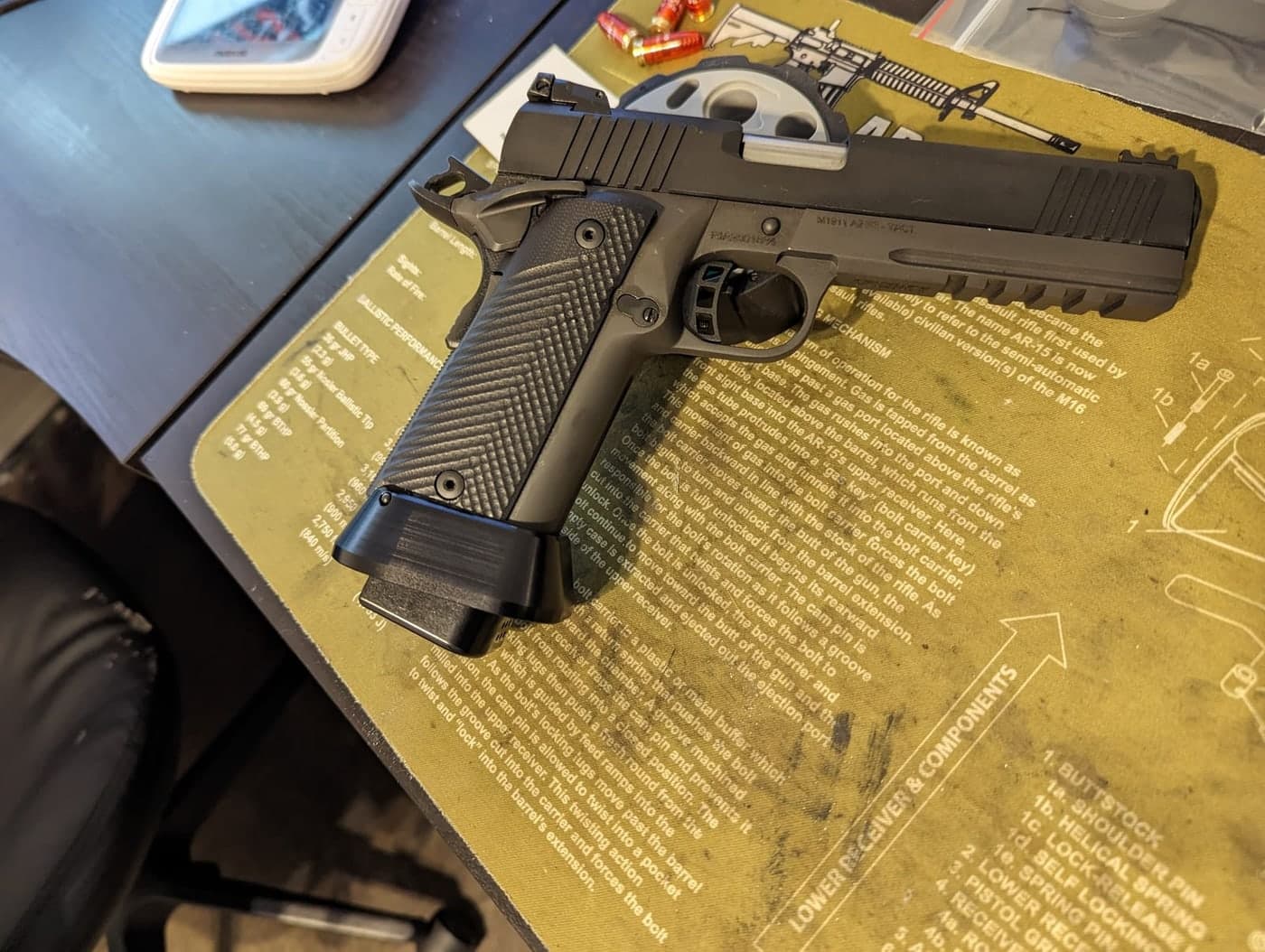
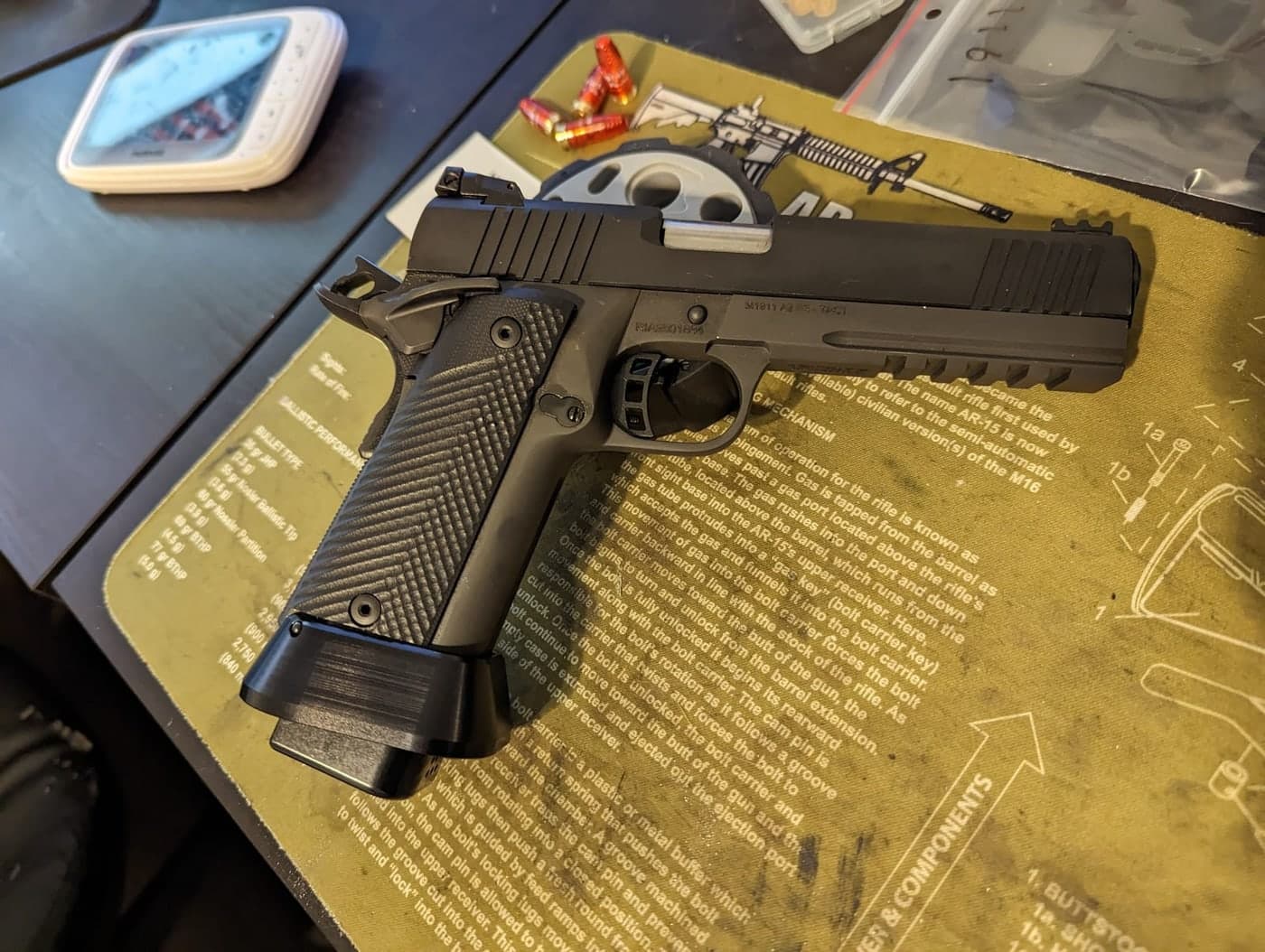
Teardown
After
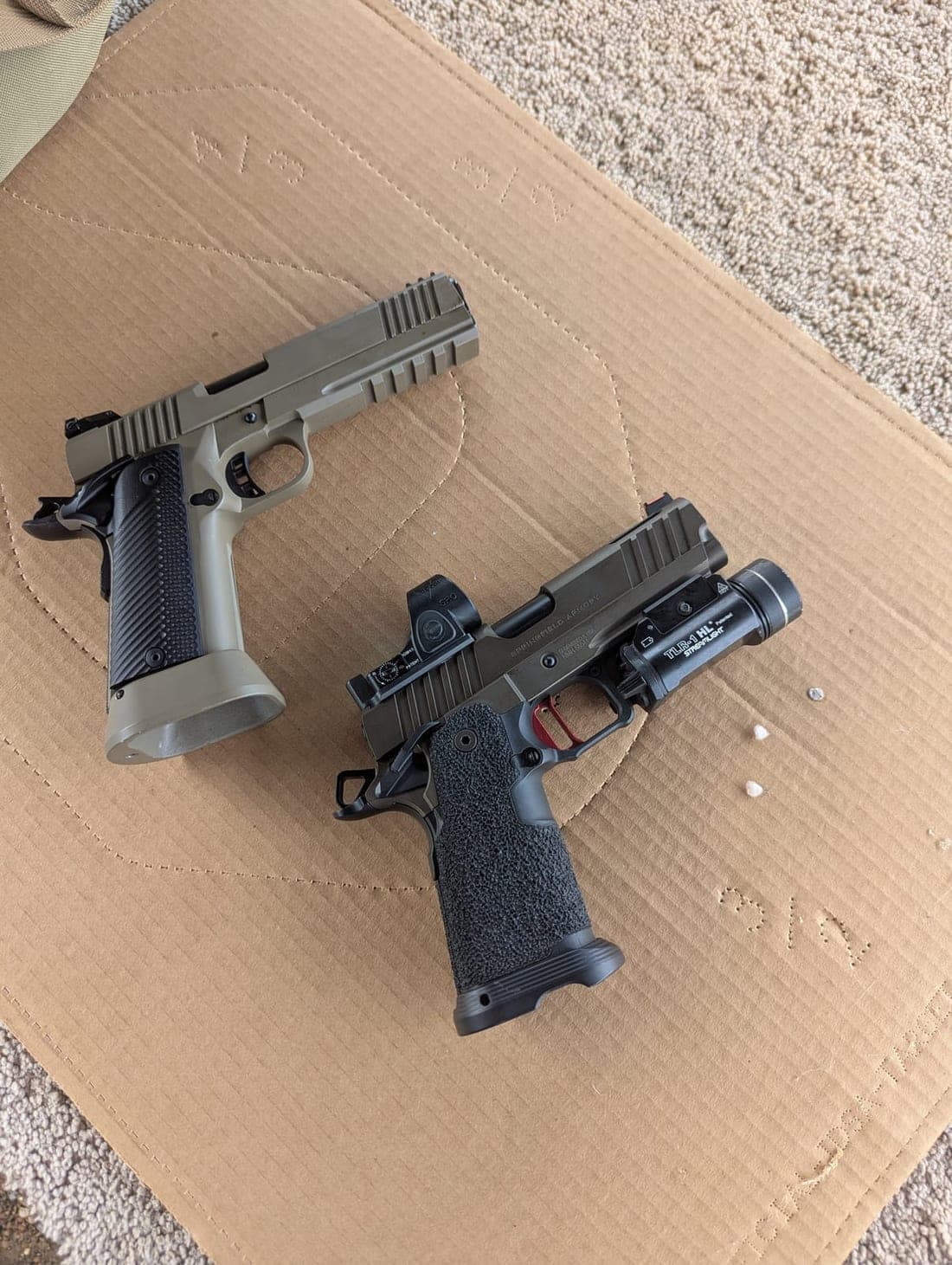
Why a double-stack 1911 at all
Because of the trigger, and because of the capacity, and because on this platform you get both at once.
A 1911 trigger is single-action: the hammer is already cocked, so the trigger does one job and one job only, and it can be a short, light, crisp movement with a positive reset in a way a striker trigger cannot. That is the fastest interface there is between a decision and a shot.
The historical cost was capacity — a single-stack 1911 in .45 holds what it holds. The double-stack frame in 9mm removes that limit, and what is left is a competition pistol with a genuinely excellent trigger and a magazine that does not run you dry mid-array.
The weight helps too. A full-size steel-framed 1911 is heavy, and heavy pistols track flat. Standing on a stage that is a virtue; carrying one all day it is not, which is exactly why this is a match gun and my carry gun is something else entirely.
The setup, and the capacity math
- Magazines: Mec-Gar 17-round 9mm / .38 Super 1911 A2, blued (MGP183817B). Bought from Greg Cote LLC, who are the Mec-Gar distributor most people in this corner of the sport end up at.
- Basepads: Taylor Freelance Rock Island 140mm +4, black.
- Magwell: Taylor Freelance Rock Island "Fattie" Speedwell Tall, black.
The arithmetic on that first two lines is the whole reason they exist. Seventeen rounds in the Mec-Gar body, plus four from the extended basepad, gives 21 rounds in a magazine — up from the factory capacity, in a gun that already had a good trigger.
That is not a small change in how a stage runs. It is the difference between a reload you have to plan and a stage you can shoot straight through. Which magazines and how many are legal is a division question and a state question — check both before you buy four of anything.
The magwell does the other half. A tall, flared magwell turns the reload from a find-the-hole problem into a get-it-close-and-let-the-funnel-do-it problem, and under time that is worth more than most people expect. It also adds length to the grip, which is fine on a match gun and a genuine problem on a concealed one.
The specialist-shop reality
Here is the thing about running a budget double-stack: the parts exist, and they are not where you normally shop.
Taylor Freelance makes basepads and magwells specifically for Rock Island frames. Not "2011 pattern, should fit." Actually cut for this gun. That is not something you find on a marketplace, and searching for it on one is how people end up with a nearly-right part that requires filing.
Same story with the magazines. Mec-Gar bodies through a distributor who knows which part number matches which frame is a different experience from guessing at a listing title.
Both of those shops are linked above and we earn nothing from either. That is the honest shape of this platform: the gun is cheap and the ecosystem around it is small, specific and run by people who know exactly what they are selling. Learn the two or three shops that serve it and the platform gets a great deal easier to own.
What it costs you, honestly
The trigger out of the box is not a Staccato trigger. Fit and finish are not either — this gun came with a perfectly serviceable factory finish and I refinished it, which tells you something about how I felt about it. The magazines wanted a distributor rather than a catalog. And the aftermarket, while excellent, is small.
What you get for accepting all that is a full-size, steel-framed, double-stack 1911 in 9mm with a genuinely good single-action trigger, at a price that leaves money for ammunition. For a shooter whose limiting factor is practice rather than equipment — which is nearly everybody, including me — that is the correct trade.
If the budget is not the constraint, go and read the 2011 page and buy the Staccato. It is a better gun. This one is the one I shoot.
Questions
Frequently asked
Is the RIA actually competitive, or is it a compromise?
Why aren't the magazines and basepads linked with prices?
Did the Cerakote change how it shoots?
Should I refinish a gun myself?
Keep reading
Related
- Why 2011 pistols earned the hypeThe expensive end of this platform, and why people pay it.
- What makes a good competition pistolWhere the double-stack 1911 sits against the other two tiers.
- Mag pouches & rifle mag retentionExtended basepads change what pouch you need. Ranked, with live prices.
- Competition belts & holster setupsA magwell changes holster fit too. Start with the belt.
Receipts
Sources
- Armscor / Rock Island Armory — TAC Ultra and double-stack 1911 lineup
- Taylor Freelance — basepads and magwells for competition pistols
- Greg Cote LLC — Mec-Gar magazine distributor
- Mec-Gar — magazine specifications
- Staccato 2011 — pistol lineup and factory optic mounting kits
We do not run a testing lab and we do not pretend to. Where a measured number came from a manufacturer's published specification or someone else's lab, we name them and link them. Where we could not verify something, we say so on the page rather than quietly leaving it out. Read the full method.