The verdict first: chamfer and deburr matters, consistent neck condition matters, trimming matters when the case has actually grown. Everything else in case prep is somewhere between marginal and cosmetic, and the honest version of this page says which is which.
Equipment only, once more: nothing here links or discusses powder, primers, bullets or brass, and there is no load data on this site. Trim-to-length and maximum case length come from a current manual or from SAAMI, not from us.
Cleaning: what it is actually for
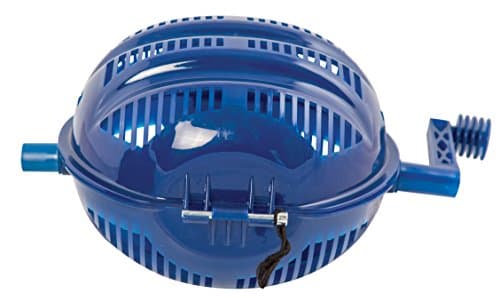
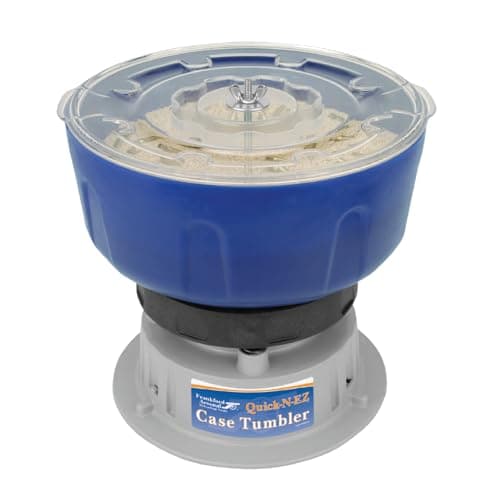
Dry media, in a vibratory tumbler
Corncob or walnut in a vibrating bowl. It cleans the outside, it does not clean primer pockets, and it does not touch the inside of the neck. For everything except match rifle brass, that is enough — the reason to clean brass at all is to keep grit out of your dies.
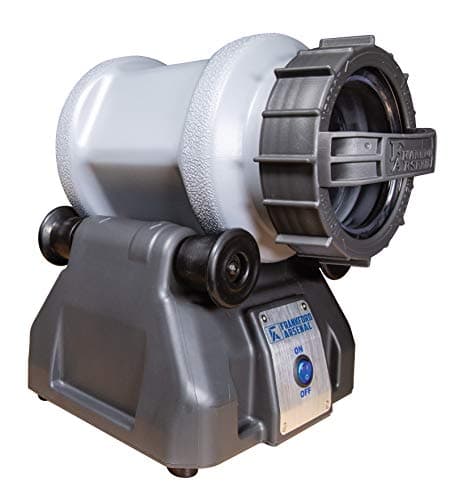
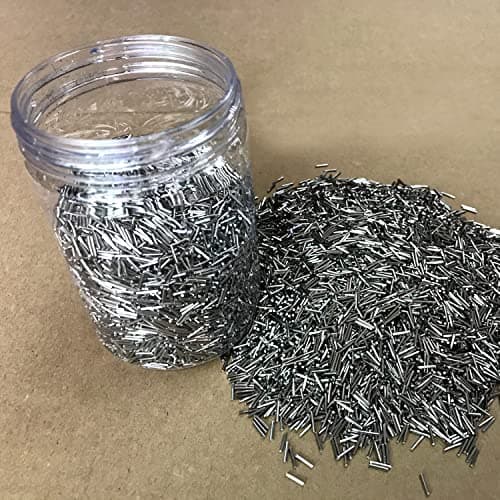
Wet, with stainless pins
A rotating drum with water, soap and stainless pins. It cleans everything, including primer pockets and case interiors, and the brass comes out looking like new.
The precision argument for it is not the shine — it is that carbon left in the case neck varies from case to case, and neck friction varies with it, and neck friction affects how consistently a bullet releases. Removing it entirely makes that variable the same on every case.
The costs are real: brass has to be dried thoroughly, and every case has to be checked for pins in the flash hole, every time. That check is not optional and it is the reason some people go back to dry media.
Trimming: only when the case has grown
Cases stretch when fired and sized, and a case longer than maximum can pinch the bullet at the chamber mouth and raise pressure. That is a real safety issue.
It is also less frequent than the marketing for trimmers implies. Measure your brass against the trim-to-length in your manual; trim the ones that need it. Bolt-gun brass neck-sized or bumped lightly can go many firings without needing a trim, and a hand trimmer handles that rate of work fine.
Chamfer and deburr: do this one, always
After trimming, and on new brass, the case mouth has a sharp edge inside and out. Seating a bullet into a sharp mouth shaves copper off it and makes seating force inconsistent.
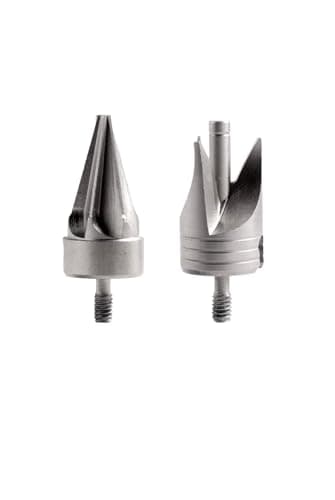
A light inside chamfer and a light outside deburr is a five-second operation, costs twelve dollars of tooling, and is the case prep step with the clearest connection to how the ammunition performs. Buy the VLD-angle tool — it works for conventional bullets too.
Primer pockets: the small one
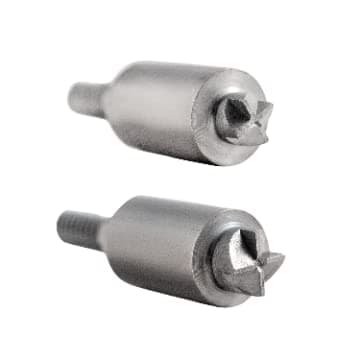
Uniforming cuts every pocket to the same depth so every primer sits at the same depth. It is a real variable and it is a small one. On match brass, once, it is worth the fifteen dollars. On plinking ammunition it is an evening you will not get back.
Removing a military crimp is different — that one is mandatory on crimped brass, because a primer will not seat at all until it is gone.
What we are not going to tell you it does
Shiny brass does not shoot better than clean brass. Neck turning, annealing and weight sorting are all real techniques with real effects at the level where those effects are measurable, and most people are nowhere near that level. If your groups are opening up, the honest first suspects are the scope mount, the wind call and the shooter — in that order.
Buying notes
Which tumbler, in one sentence each
Dry vibratory if you load pistol or gas-gun volume and want brass clean enough for the dies. Wet rotary with pins if you load match rifle brass and want the neck condition to be identical case to case. Owning both is common and not silly.
Hand tools versus a powered prep center
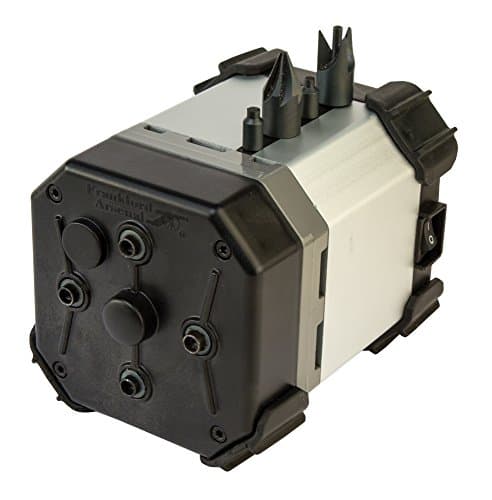
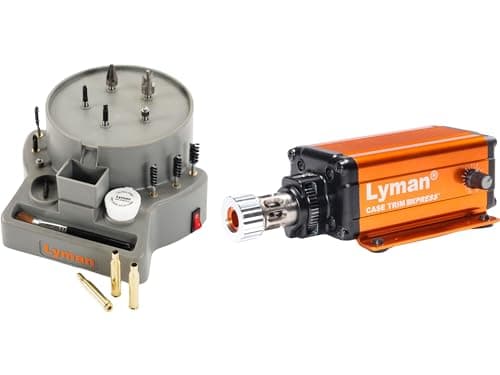
Under about fifty cases a session, hand tools win on price and on feel. Past a hundred, a powered center wins on consistency — and consistency, not speed, is the reason to buy one. A powered chamfer is the same depth every time; your hand is not.
Skip the big processing bundles
The kit that combines a powered trimmer with a prep center costs nearly three times the standalone prep center, and it commits you to a trimming workflow before you know whether trimming is your bottleneck. That is the skip pick above and the reasoning generalizes to every bundle in reloading.
Order of purchase
- Chamfer and deburr tool. Twelve dollars, always worth it.
- A tumbler — dry if you are unsure, because it is cheaper and simpler.
- Calipers, if you do not already own a pair. Everything here is measured.
- A trimmer, when you find brass that has actually grown past maximum.
- Primer pocket tooling, if you are loading match brass.
- A powered prep center, when the hand tools become the reason you avoid the bench.
Where the measuring tools live
Calipers, a comparator and a scale are ranked on why I handload for long range rather than repeated here. They are the tools that tell you whether any of this worked.