Every round through both of my precision rifles is one I made. This page is about why that matters at distance and how the process works — and it does not contain a single charge weight.
We earn a commission when you buy through our Amazon links, at no extra cost to you. It never changes the order of the picks, and we say so when the cheaper thing is the better buy. How this works.
I load all of my own ammunition. Everything that goes through the LR-308, everything that goes through the Remington 700, and everything that went downrange at the White Buffalo came off my own bench.
This page explains why, and how the process works at the level of process. Before anything else, two rules that govern the entire page.
No load data on this site. Not now, not ever. You will not find a charge weight, a recipe or a "start here and work up" anywhere on these pages, and you should be suspicious of any website that hands you one. Load data belongs in a published, pressure-tested manual for the exact components in front of you — the Hodgdon Reloading Data Center, a Sierra or Nosler manual, or the bullet maker's own data. What I write about is process and precision practice. This is not caution for its own sake. A charge that is safe in one rifle with one lot of components can be dangerous in another, and a number copied off a website has no lot, no pressure testing and no accountability behind it. The manuals exist for exactly this reason and they are cheap.
Second rule: nothing that goes inside a cartridge is sold or priced here. No powder, no primers, no bullets, no brass, no loaded ammunition — not linked, not priced, not recommended by product name. Those come from a dealer who can see what you are doing and advise you. What this page monetizes is equipment: the press, the dies, the scale, the measuring tools. That is a deliberate line and it does not move.
The actual argument: velocity consistency becomes vertical
At 100 yards, ammunition that varies in velocity from round to round looks fine. The bullet is in the air for a fraction of a second and a small difference in speed makes a difference in drop too small to see.
At 1,000 yards, that same variation has had a full second and change to express itself as drop. Two rounds that leave the muzzle at meaningfully different speeds land at meaningfully different heights, and on target that shows up as vertical spread — a group that is tall rather than round. You will read it as a wind problem or a position problem. It is neither. It is an ammunition problem, and it is the single clearest reason precision shooters load their own.
Handloading does not automatically fix it. What it does is put every variable that causes it in your hands: how uniformly the cases are prepared, how precisely each charge is weighed, how consistently each bullet is seated. Factory match ammunition is genuinely good and controls those things well. The difference is that you can control them for your rifle rather than for the average of all rifles.
A weekend's worth, boxed and separated by bullet. These photographs are cropped deliberately — the lids carry my hand-written charge weights and this site does not publish load data, so the lids are not in the frame. What is in the frame is the useful part: batches kept apart, because different bullets are different loads and mixing them up is how you waste a range trip.
The second argument: tuning to one specific rifle
Every rifle is slightly different. Chambers differ within tolerance, throats differ, barrels differ. Two rifles chambered for the same cartridge will not necessarily prefer the same ammunition, and factory ammunition cannot know which one it is going into.
Handloading lets you adjust the things a rifle actually responds to — chiefly how far the bullet is seated out, and how tightly the case neck grips it. These are the two levers people mean when they talk about a load being "tuned" to a rifle. Finding the right settings is a methodical process of changing one thing, shooting it, writing down what happened, and changing it again. It is not mystical and it is not fast.
It is also the reason the log book on the mat matters as much as anything on the bench. A tuning process without written records is just a series of unconnected afternoons.
The cost argument, honestly
People will tell you handloading saves money. It can, and the accounting is less flattering than it sounds.
The per-round cost of a handload genuinely is lower than the per-round cost of comparable factory match ammunition, and the gap is widest exactly where you care about it most — at the premium end, where factory match ammunition is expensive. That part is real.
What the arithmetic usually leaves out is the bench. The press, dies, scale, trimmer, tumbler and measuring tools on this page add up to real money before you have loaded a single round, and they only amortize if you shoot a lot. It also leaves out your time: brass prep and charge weighing for a couple of hundred precision rifle rounds is an evening, and if your time has a value then handloading has a labor cost that factory ammunition does not.
So the honest version: if you shoot enough precision rifle to notice the ammunition bill, handloading will save you money and will also make your ammunition better. If you shoot a box a year, it will cost you money and an evening, and you should buy good factory match ammunition and go shooting instead. I load because I shoot enough for it to make sense and because the consistency is worth the evening — not because it is free.
The process, step by step
This is the shape of a precision rifle loading session. It is the process, not a recipe — the actual numbers come from your manual, for your components, in your rifle.
1. Sort and inspect the brass
Cases from the same manufacturer and the same lot behave alike; cases scavenged from a range floor do not. Sorting by headstamp is the baseline; sorting by weight goes further. Inspect every case for split necks, incipient case-head separation and damaged rims, and throw away anything questionable. Brass is the one component you reuse, which means it is the one that fails.
2. Clean
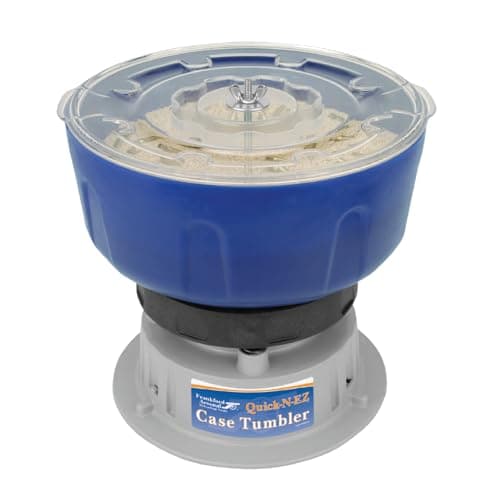
Grit on a case is grit dragged through a sizing die, and a scored die scores every case afterwards. A vibratory tumbler with dry media is the cheap, effective answer; wet tumbling with stainless pins goes further and cleans primer pockets as well. Either way the point is protecting your tooling as much as cosmetics.
3. Size
Sizing returns the fired case to dimensions that will chamber again. For a bolt gun that is usually a partial or shoulder-bump sizing, working the brass as little as possible; for a semi-auto like the LR-308, full-length sizing is the reliable choice because a round that does not chamber in a gas gun is a stoppage rather than an inconvenience. Bushing dies let you choose how much you squeeze the neck, which is how you control neck tension deliberately instead of accepting whatever the die gives you.
4. Trim, chamfer and deburr
Cases lengthen with each firing and sizing cycle. Trimming them back to a uniform length keeps neck tension and any crimp consistent, and prevents a case getting long enough to cause a genuine problem in the chamber. Chamfering the inside of the mouth and deburring the outside means the bullet enters straight rather than shaving.
5. Uniform the primer pockets
Optional, and the sort of thing that separates a careful bench from a fast one. A uniformer cuts every pocket to the same depth so every primer seats to the same place. Whether it is worth the time depends on how far you are chasing consistency.
6. Charge — weigh every single one
This is the step that matters most and it is the step people rush. For precision rifle, throw slightly under, then trickle up to the target weight on the scale, one charge at a time. Not "close". The same number, every time. This is the entire reason a trickler exists and it is why an accurate scale is where a precision bench should spend its money first.
Where the target weight comes from is your manual, developed carefully in your rifle, and it is not something you will find here or anywhere else on the internet.
7. Seat the bullet, and measure to the ogive
Seating depth is one of the two big tuning levers. Measure it with a comparator against the bullet's ogive rather than to the tip — tips vary by thousandths straight out of the box and the ogive is the part that actually engages the rifling. A micrometer seating die turns depth into a number you can dial and repeat.
8. Label the box, and write it down
Every batch gets labeled with what is in it. Every batch gets a line in the log. When a load shoots well at 1,000 yards, the difference between a good day and a repeatable process is entirely whether you wrote it down while you were doing it.
Two different bullet types, kept in two separate boxes for a reason. From above you can see the tips clearly — match hollow points on one side, polymer tips on the other. They are not interchangeable and they do not share a load, which is the practical argument for labeling everything.
Safety, plainly
Handloading is safe when it is done methodically and it is not forgiving of inattention. The rules that matter:
One powder on the bench at a time. Ever. The single most dangerous thing in this hobby is two containers open and a moment of distraction.
Data comes from a current published manual for your exact components, and you start at the published starting point and work up while watching for pressure signs. Never from a forum, never from a friend, never from a website — including this one.
Never assume a substitution is equivalent. A different powder with a similar name is a different powder. A different lot can behave differently.
Inspect every case, every time, and every charged case before you seat a bullet. Looking down a loading block at fifty charges and seeing one that is not level with the others is a habit worth building.
Know your cartridge's standards.SAAMI publishes the chamber and pressure specifications your rifle was built to. Understanding what those mean is part of doing this properly.
Where to get load data — properly
Since this page will not give you numbers, here is where the numbers actually come from. All three of these are published by companies that pressure-test their data:
Buy a physical manual as well. The front section of a good reloading manual — the part nobody reads, before the tables start — is the actual education, and it will tell you more about why a load works than any amount of internet reading.
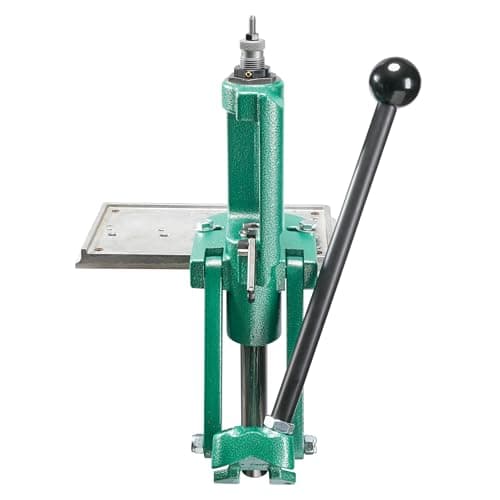
The cast-iron single stage that has outlived most of the people who bought one. For precision rifle you want one round at a time and you want the press to be irrelevant to the result.
Bushing dies let you choose exactly how much you squeeze the neck. That single decision is most of what separates a rifle that shoots to its potential from one that nearly does.
Everything downstream of the scale is a rounding error compared with the scale itself. This is where a precision bench should spend money before it spends it anywhere else.
Ten dollars of brass and plastic that is the difference between charges that are close and charges that are the same. A thrower gets you near; the trickler gets you there.
Cases grow every time you fire and size them. Uniform case length is not a nicety at distance — it is what keeps neck tension and crimp consistent from round to round.
Measuring a loaded round to the bullet tip measures the tip, which is the least consistent part of a bullet. This measures to the ogive, which is the part that touches the rifling.
You cannot handload without measuring, and you cannot measure without calipers. A cheap pair used carefully beats an expensive pair you were too precious to bring to the bench.
#ad · Live prices from the Amazon Creators API, as of October 19, 2026. Where we have no verified live price we show none — a gap beats a number that has rotted.
In detail
The picks, in full
01
Best press
RCBS Rock Chucker Supreme Single Stage Press
Single stageCast iron O-frameTakes standard 7/8-14 diesAmbidextrous handle
7.8/10
The cast-iron single stage that has outlived most of the people who bought one. For precision rifle you want one round at a time and you want the press to be irrelevant to the result.
Rigidity
10
Build quality
9
Speed
4
Value
8
What's good
+Rigid enough that press flex stops being a variable, which is the entire argument for cast iron
+Single-stage forces you to do one operation to a whole batch, which is how consistency actually happens
+It will outlast you, and the used market proves it
What's not
−Slow — deliberately so. This is not the tool for loading a thousand pistol rounds
−Heavy enough that it needs a bench bolted to something
−Priming on the press is workable and a hand primer is better
Skip it if…
…your volume is pistol or blasting ammunition. Buy a progressive press instead; a single stage will make you hate reloading.
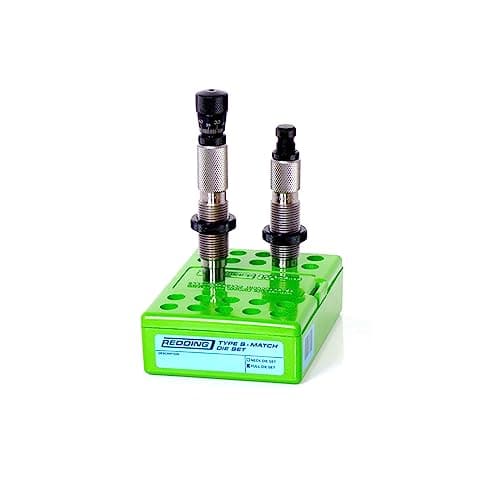
Bushing dies let you choose exactly how much you squeeze the neck. That single decision is most of what separates a rifle that shoots to its potential from one that nearly does.
Precision
10
Build quality
9
Adjustability
9
Ease of use
5
Value
7
What's good
+Interchangeable bushings mean you set neck tension deliberately instead of accepting whatever a standard die does
+Micrometer seating stem makes seating depth a repeatable number rather than a feel
+Redding's machining is the reason these hold value on the used market
What's not
−Bushings are sold separately and you will need calipers and a plan before you know which to order
−Three times the price of a standard die set
−More adjustments means more ways to be wrong if you do not measure
Skip it if…
…this is your first die set. Buy a standard full-length set, load a few hundred rounds, and come back when you can articulate why your neck tension is a problem.
Price as of October 19, 2026. Prices move — Amazon's is the one that counts.
#ad · we may earn a commission from this link to Redding Type S-Match Bushing Full Die Set, .308 Winchester
03
Best scale
Lyman Accu-Touch 2000 Electronic Scale
2000 grain capacity0.1 grain resolutionTouch controlsIncludes pan and calibration weight
7.5/10
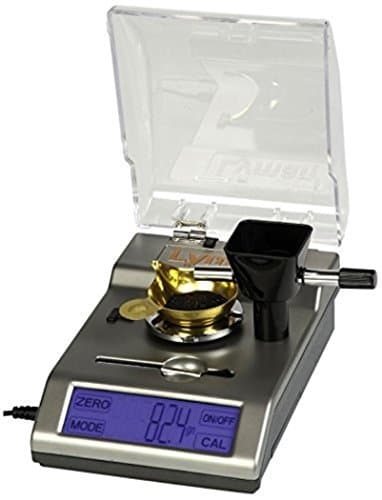
Everything downstream of the scale is a rounding error compared with the scale itself. This is where a precision bench should spend money before it spends it anywhere else.
Accuracy
8
Resolution
8
Stability
6
Value
8
What's good
+Resolution that is actually meaningful for rifle charges rather than optimistic
+Large capacity lets you weigh cases and loaded rounds for sorting, not just powder
+Comes with the calibration weight, which the cheap scales do not
What's not
−Every electronic scale in this class drifts and needs re-zeroing through a session
−Fluorescent lights and phone chargers genuinely upset strain-gauge scales
−A beam scale is slower and more trustworthy, and serious benches often keep both
Skip it if…
…you want set-and-forget accuracy without checking. Buy a beam scale as well and use it to audit the electronic one — that is the standard practice and it exists for a reason.
Manual tricklerLarge reservoirBench height matches most scalesWeighted base
7.5/10
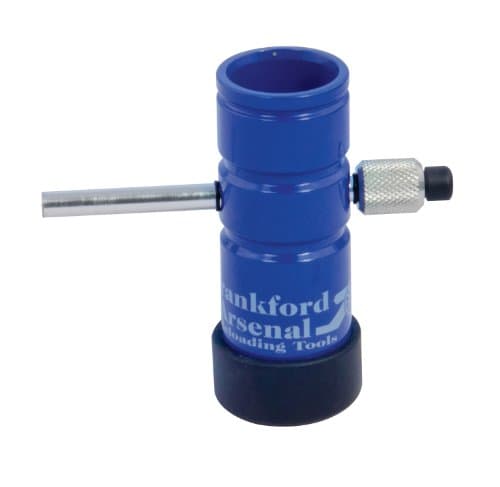
Ten dollars of brass and plastic that is the difference between charges that are close and charges that are the same. A thrower gets you near; the trickler gets you there.
Precision gained
9
Build quality
7
Speed
4
Value
10
What's good
+Turns 'near enough' into 'identical', which is what consistency at distance is made of
+Large reservoir means fewer refills across a long session
+Heavy base so it does not walk around the bench
What's not
−Slow. Trickling a hundred charges by hand is an evening
−Extruded stick powders bridge in the tube and need a tap
−An automatic dispenser does this faster if you value your time over your money
Skip it if…
…you already run an automatic powder dispenser. It does this job, and a trickler alongside it is a solution looking for a problem.
Cam-lock case holderMicro-adjust cutterSeven pilots includedHandles up to .50 caliber
7.3/10
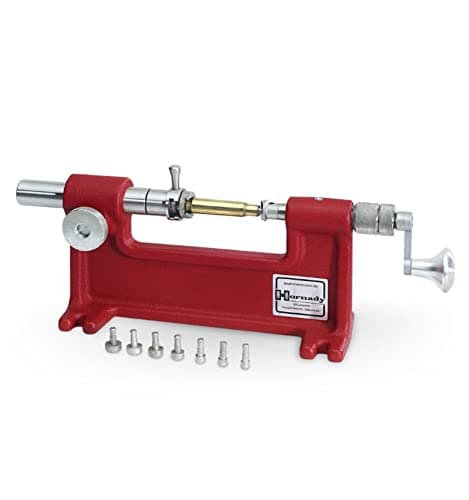
Cases grow every time you fire and size them. Uniform case length is not a nicety at distance — it is what keeps neck tension and crimp consistent from round to round.
Consistency
8
Build quality
8
Speed
6
Value
7
What's good
+The cam lock makes case changes fast enough that you will actually trim a whole batch
+Micro-adjustable cutter head means you set a length once and repeat it
+Pilot set covers most common rifle calibers out of the box
What's not
−Hand-cranking a few hundred cases is genuinely tedious without the power adapter
−Trims to case length, not to a datum on the shoulder, which the very high-end trimmers do
−Needs a chamfer and deburr step afterwards, which is another tool
Skip it if…
…you shoot factory-length brass once and throw it away. Trimming only matters if you are on your second or third firing.
Price as of October 19, 2026. Prices move — Amazon's is the one that counts.
#ad · we may earn a commission from this link to Frankford Arsenal Quick-N-EZ Vibratory Case Tumbler
07
Best measuring upgrade
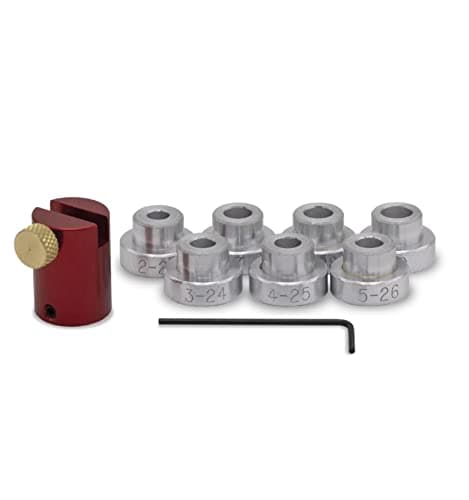
Hornady Lock-N-Load Bullet Comparator Basic Set
Comparator bodySeven caliber insertsClamps onto calipersMeasures to the ogive
8.3/10
Measuring a loaded round to the bullet tip measures the tip, which is the least consistent part of a bullet. This measures to the ogive, which is the part that touches the rifling.
Precision gained
9
Build quality
8
Completeness
8
Value
8
What's good
+Bullet tips vary by thousandths from the box; ogives do not, so this is the measurement that actually correlates with what the rifle sees
+Turns seating depth from a specification into something you can verify on every round
+The inserts cover the common calibers and more can be bought singly
What's not
−Useless without calipers, which is a second purchase
−Adds a step to every measurement, which slows a loading session
−Only meaningful once you are chasing seating depth deliberately
Skip it if…
…you load to the manual's overall length and are happy. This tool exists to answer a question you have not asked yet.
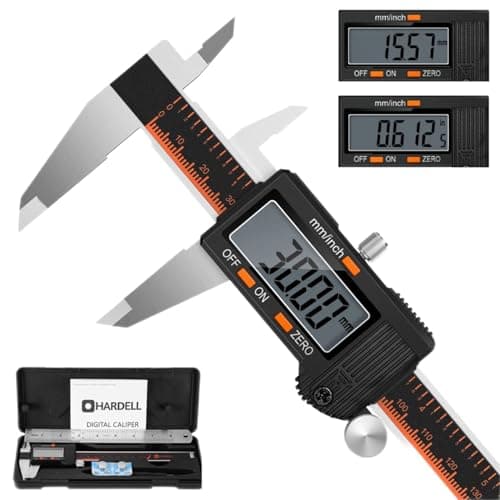
You cannot handload without measuring, and you cannot measure without calipers. A cheap pair used carefully beats an expensive pair you were too precious to bring to the bench.
Repeatability
7
Readability
9
Build quality
6
Value
10
What's good
+Cheap enough to own two, and having a second pair is how you find out the first pair drifted
+Large display that is readable under a bench lamp
+Good enough for case length, seating depth and ogive measurement with the comparator above
What's not
−Battery-powered digital calipers at this price eat batteries when left switched on
−Repeatability is fine and absolute accuracy is not lab grade
−The jaws are not hardened the way a Mitutoyo's are, and they will wear
Skip it if…
…you are chasing measurements below a thousandth of an inch. Buy a Mitutoyo — it costs six times as much and it is worth it at that level of care.
Every other tool on the bench is downstream of the scale. If your charges are not the same, nothing you do afterwards matters. Buy the best scale you can, and consider owning a beam scale alongside an electronic one to audit it — that is standard practice at benches that care, and it exists because electronic scales drift.
Single stage for rifle, progressive for volume
A single stage press does one operation at a time and is the correct tool for precision rifle. If your actual problem is loading thousands of pistol rounds, a single stage will make you give up — buy a progressive for that job and keep the single stage for rifle.
Standard dies before bushing dies
Bushing dies are excellent and they are the second die set, not the first. Load a few hundred rounds with a standard full-length set, learn what your brass and your rifle do, and buy bushings when you can explain why you want to change neck tension.
Calipers and a comparator are not optional
You cannot handload precision ammunition without measuring, and measuring to the bullet tip measures the least consistent part of the bullet. Calipers plus a comparator is around sixty dollars and it is the cheapest genuine capability upgrade on this page.
What is deliberately missing from this list
Powder, primers, bullets, brass and loaded ammunition. Not because they do not matter — they matter more than any tool here — but because this site does not sell components and would not be a good place to buy them from if it did. Get those from a dealer who can talk to you about what you are loading and why.
How these were picked
I haven't handled these. Here's what I did instead.
Everyone in this category says they tested twenty of these. I haven't tested any, and I say so. What I do instead: read the manufacturer's manual and published specification, compile the numbers that decide the purchase, do the arithmetic in the open, check the live price, and name one product to skip. The scores above are judgments from that research against a published rubric — they are not measurements I took, because I do not have a lab and I am not going to pretend otherwise.
Questions
Frequently asked
Will you publish your load data?+
No. Not for my rifles and not for anybody else's. A charge weight that is safe in my chamber with my lot of components is not automatically safe in yours, and a number published on a website carries no pressure testing and no accountability. Use a current published manual for your exact components and work up from the listed starting point.
Does handloading actually make you more accurate at long range?+
It removes a variable rather than adding skill. The specific thing it fixes is round-to-round velocity variation, which shows up as vertical spread on target and gets worse the further you shoot. It also lets you tune seating depth and neck tension to your specific rifle, which factory ammunition cannot do for you.
Is handloading cheaper than buying match ammunition?+
Per round, yes, and the gap is largest against premium factory match ammunition. Overall, only if you shoot enough to amortize several hundred dollars of equipment, and only if you count your time as free. If you shoot a couple of boxes a year, buy factory match ammunition and go shooting.
What is the single most important piece of reloading equipment?+
The scale. Every other tool is downstream of it. Charges that vary produce velocities that vary, which produces vertical spread at distance — and no press, die or bullet fixes a charge that was wrong when it went in the case.
Why are the lids cropped out of your ammunition photos?+
Because they have my charge weights hand-written on them, and this site does not publish load data. The crop is deliberate. The rest of the photograph — batches separated by bullet type, everything labeled — is the part that is actually useful to you.
Do I need to full-length size for a semi-auto?+
It is the reliable choice. In a bolt gun you can size minimally and work the brass as little as possible, because you can feel a tight round on the bolt. In a gas gun a round that does not chamber cleanly is a stoppage, and reliability is worth more than the brass life you give up.
We do not run a testing lab and we do not pretend to. Where a measured number came from a manufacturer's published specification or someone else's lab, we name them and link them. Where we could not verify something, we say so on the page rather than quietly leaving it out. Read the full method.