Let me be straight about what this page is. US Optics scopes are not sold on Amazon. I ran the brand name and specific model names through the same product API that prices every buy button on this site, and the results came back full of Vortex, Sig and Leupold — and no US Optics at all.
So there is nothing here for me to link and nothing for me to earn from the brand. What follows is editorial, unmonetized and disclosed as such. The products at the bottom are the mounting hardware you will need regardless of whose scope ends up on the rifle, and those are monetized in the normal way.
What US Optics actually is
The company describes itself as "a U.S. manufacturer of custom riflescopes and optics since 1991". It sells, in its own words, "directly to you or to your favorite dealer", and runs a dealer locator and a dealer recruitment program. That is a deliberate distribution model, and it is the reason a marketplace search comes back empty.
The current published lineup breaks into three groups:
- Foundation Series (FDN). The flagship line. Listed models include the FDN FX10 fixed 10x, the FDN 10X at 1.8-10x, the FDN 17X at 3.2-17x and the FDN 25X at 5-25x.
- X-Series. The SXR 1-6x, the TXH 3-18x and the LXR 4-24x.
- RISE. A 3 MOA red dot.
No prices are published on the homepage, and I am not going to publish figures I cannot source. If you want a number, the dealer locator on their site is the honest route.
Where I land on them
US Optics is a premium tier I genuinely respect. I have not owned one, and the reason is straightforward: at every moment I was actually buying glass, the Sightron-and-Vortex combination won on value. Sightron got the precision money — a SIII 8-32x56 on the Remington 700, because that is the best pure glass per dollar anybody sells. Vortex got the versatile money, because the reticles are the most current in the bracket and the warranty is real.
That is a value judgment about my own budget, not a verdict on US Optics. If you want an American-built, built-to-order scope from a company that has been doing it since 1991, that is a legitimate thing to want and nothing on this page is going to talk you out of it.
What people are actually buying
Two things, and they are worth separating.
The build. American manufacture, built to order, with a reputation for mechanical robustness and turrets that do exactly what they say. This is a real proposition and it is not one Vortex or Sightron makes in the same way.
The scarcity. A scope you cannot buy in two clicks feels different from one you can. That is a legitimate thing to value and it is also worth being conscious of, because it is not optical performance.
The honest comparison
If you are drawn to US Optics for the American manufacture, the closest thing on a marketplace is Leupold, which builds in Oregon. If you are drawn to it for turrets that track under abuse, the Vortex Razor line and the Sightron SV are the ones to compare against, and both are immediately available with a warranty attached.
I have put those three, plus the sensible value alternative, on a separate page: US Optics vs Vortex Razor vs premium glass. That page is where the money comparison lives.
What this page can genuinely help with
Mounting. Nobody spends premium money on a scope and then thinks carefully about rings, and it is the most common reason an expensive optic underperforms. Ring screws have a torque specification. Reticles need to be level to the rifle, not to your eye. Cant that is invisible at a hundred yards is a miss at six hundred.
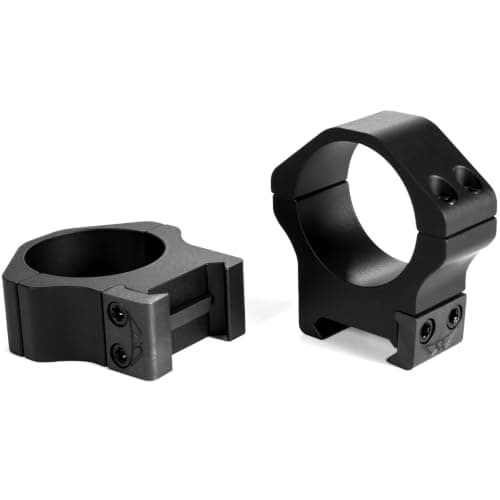
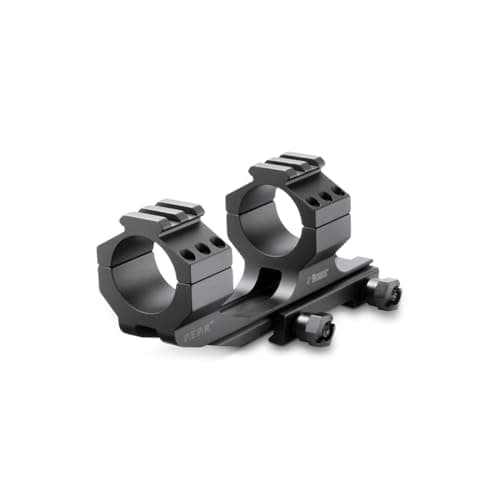
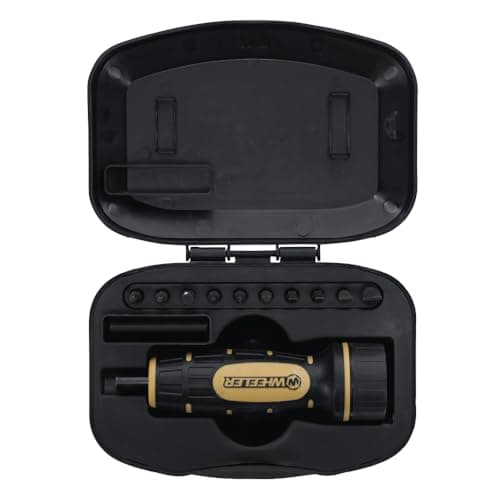
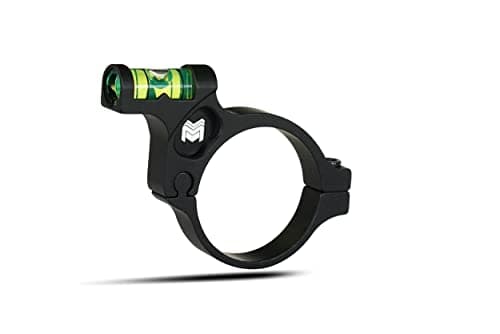
The six picks below are what solves all of that, and they apply whatever ends up in the rings.
Mounting a premium scope properly
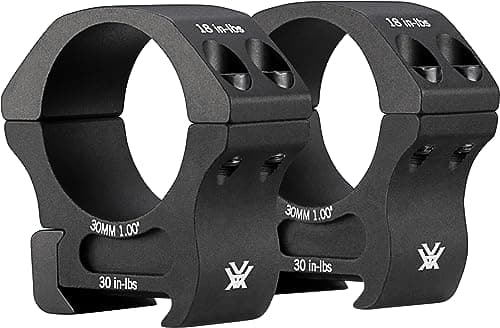
Match the ring diameter to the tube, exactly
30mm rings do not hold a 34mm tube and no amount of enthusiasm changes that. Check the tube diameter on the scope specification before you order rings — this is the single most common ordering mistake in optics.
Get the height right the first time
Ring height has to clear the objective bell over the barrel and put your eye behind the scope at your natural cheek weld. Too low and the objective touches; too high and you are craning. Measure before you order.
Torque to specification, not to feel
Ring screws are typically specified in inch-pounds and hand-tight is not a number. Over-torque and you dent the tube; under-torque and it slips under recoil and you chase a zero forever. An inch-pound wrench costs sixty-six dollars and removes the entire problem.
Level the reticle to the rifle
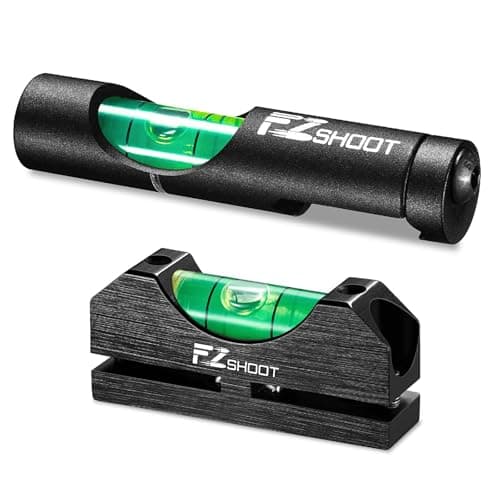
Not to your eye, and not to the ring gap. Use a level on the rail and a second one on the turret cap. A reticle canted two degrees is invisible at a hundred yards and is a clear miss at six hundred, which is the distance where you most need it to be right.
Add an anti-cant bubble and actually look at it
Seventeen dollars, mounted where you can see it in your peripheral vision. It is the cheapest measurable long-range accuracy improvement available and most people who own one forget to check it.
Re-check everything after the first fifty rounds
Fasteners settle. Check ring screws and base screws with the torque wrench after the first range session, and again after the first hundred rounds. Most "the scope will not hold zero" problems are a loose screw and nothing more.