We earn a commission when you buy through our Amazon links, at no extra cost to you. It never changes the order of the picks, and we say so when the cheaper thing is the better buy. How this works.
Scope listings hide the important information in one line, and most buyers skip past it. There are four coating tiers and they are not interchangeable:
Coated — one surface has one layer
Fully coated — every air-to-glass surface has one layer
Multi-coated — at least one surface has multiple layers
Fully multi-coated — every air-to-glass surface has multiple layers
Only the last one reliably means the scope will still be usable in the last twenty minutes of legal light, which is when game moves. A listing that states no coating tier at all is telling you where it sits.
Two more phrases worth finding: nitrogen or argon purged, which is what prevents internal fogging when a cold scope meets warm air, and O-ring sealed, which keeps water out. A scope with neither is an indoor optic being sold as an outdoor one.
Magnification, by contrast, is cheap to print. 3-9x40 covers essentially all North American big-game hunting, and most people who buy more magnification never use it.
This page is the hunting-rifle class, which is where most buyers belong. If the rifle is going to be dialed rather than held over — exposed turrets, a tree reticle, four hundred yards and beyond — that is a different price band and a different page: best long range rifle scopes. And whichever you buy, budget for the hardware that holds it on: rings and mounts decide ring height, cheek weld and how much elevation you can actually reach.
Two pages pick up where this one stops. If you are choosing a badge rather than a model, rifle scope brands compared is the side-by-side. And if the rifle is going west rather than into a timber stand, the elk scope page is a different problem: weight on a climb, light at the edges of the day, and a shot at a distance you did not choose.
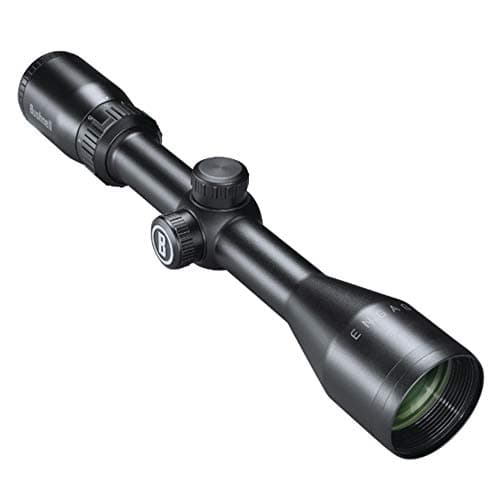
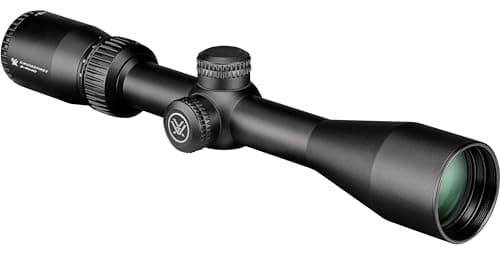
3-9x40 is the magnification range that covers essentially all North American big-game hunting, and the VIP warranty means a broken scope is replaced without argument.
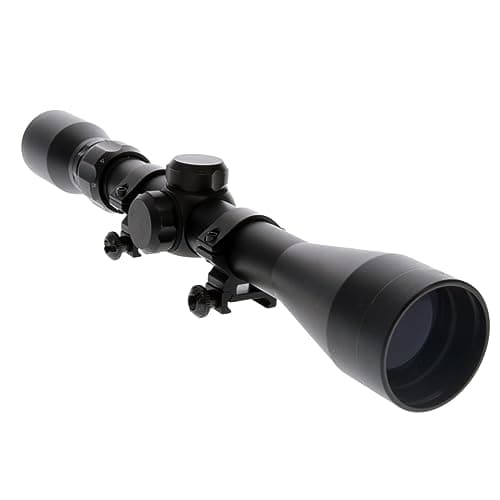
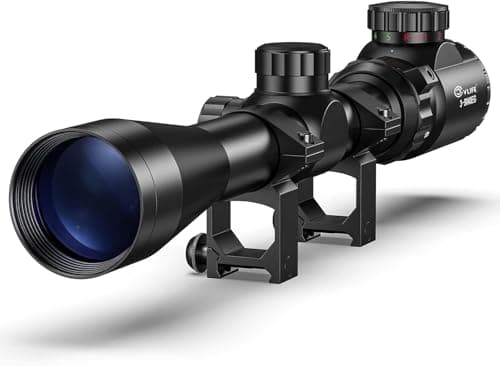
Thirty dollars for a scope, rings and an illuminated mil-dot reticle. The coatings line is the tell: this listing does not state whether the glass is coated at all, and coatings are what let you see an animal in the last twenty minutes of legal light.
#ad · Live prices from the Amazon Creators API, as of October 19, 2026. Where we have no verified live price we show none — a gap beats a number that has rotted.
3-9x40 is the magnification range that covers essentially all North American big-game hunting, and the VIP warranty means a broken scope is replaced without argument.
Glass clarity
8
Low light
8
Turret tracking
8
Durability
9
Value
9
What's good
+Fully multi-coated glass — every air-to-glass surface, which is what determines low-light usability
+3-9x is the most useful hunting range: 3x for timber, 9x for open country
+Vortex VIP warranty is unconditional and transferable
+Nitrogen purged and O-ring sealed, so no internal fogging
What's not
−Second focal plane, so the BDC holdovers are only correct at maximum magnification
−Not a long-range scope — 9x runs out past about 400 yards
Skip it if…
…you shoot past 400 yards. The magnification and the turret travel both run out, and that is a different scope.
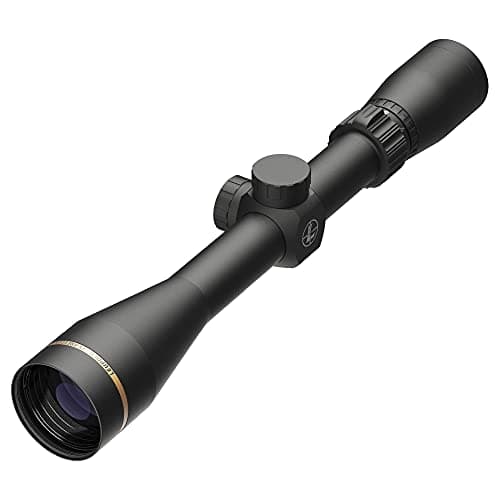
3-9x40Twilight Light ManagementHunt-Plex reticleMade in USA
8.6/10
American-made, Twilight Light Management coatings, and the reputation for surviving decades on a rifle that nothing at half the price has yet earned.
Glass clarity
9
Low light
9
Turret tracking
9
Durability
10
Value
6
What's good
+Twilight coatings genuinely add usable minutes at dawn and dusk, which is when game moves
+Leupold's lifetime guarantee and US service network
+Lighter than most scopes in its class
What's not
−Two and a half times the price of the Crossfire II
−The optical advantage is real but not proportional to the price gap
Skip it if…
…budget is tight. The Crossfire II does most of this for a fraction, and the difference shows up in the last ten minutes of light rather than at midday.
Thirty dollars for a scope, rings and an illuminated mil-dot reticle. The coatings line is the tell: this listing does not state whether the glass is coated at all, and coatings are what let you see an animal in the last twenty minutes of legal light.
Glass clarity
3
Low light
3
Turret tracking
3
Durability
4
Value
5
What's good
+Very cheap
+Rings included
+Illuminated reticle
What's not
−Optics listings state coatings in four tiers — coated, fully coated, multi-coated, fully multi-coated — and a listing that states none is telling you which end it sits at
−Fully multi-coated glass is what makes an optic usable at dawn and dusk, which is when game moves
−Mil-dot reticle implies ranging capability the glass and turrets cannot support
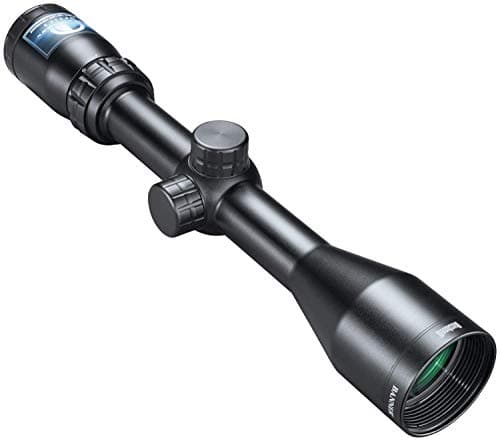
−The TRUGLO costs $20 more and comes from a company with a warranty department
Skip it if…
…you intend to shoot at legal light. Buy fewer features and better glass — magnification is cheap, coatings are not.
A "3-9x40" is 3x to 9x magnification with a 40mm objective lens. The objective gathers light; bigger gathers more, and also raises the scope higher above the bore and adds weight. For hunting, 40mm is the practical sweet spot and 50mm is often more scope than the rifle needs.
Exit pupil, the number nobody quotes
Objective diameter divided by magnification. A 40mm objective at 9x gives a 4.4mm exit pupil, which is well matched to a human eye in low light. The same scope at 4x gives 10mm, which is more than your eye can use. This is why cranking magnification up at dusk makes the image darker — you are shrinking the exit pupil below what your pupil can accept.
First or second focal plane
In a second focal plane scope the reticle stays the same apparent size as you zoom, so holdover marks are only correct at one magnification — usually maximum. In a first focal plane scope the reticle grows and shrinks with the image, so holdovers are correct at every magnification, and the reticle is very fine at low power. For hunting inside 400 yards, second focal plane is fine and cheaper.
Turret tracking, if you dial
If you plan to dial elevation for distance, the turrets have to return to zero reliably. The standard check is a box test: dial up, right, down, left in equal amounts and confirm the group returns to the starting point. Budget scopes routinely fail this, which is why they are best used with holdover reticles rather than dialed.
Mount it properly
Level the reticle to the rifle, set eye relief so you get a full sight picture in your natural shooting position, and torque the rings to specification. A canted reticle introduces horizontal error that grows with distance and is invisible at the bench.
How these were picked
I haven't handled these. Here's what I did instead.
Everyone in this category says they tested twenty of these. I haven't tested any, and I say so. What I do instead: read the manufacturer's manual and published specification, compile the numbers that decide the purchase, do the arithmetic in the open, check the live price, and name one product to skip. The scores above are judgments from that research against a published rubric — they are not measurements I took, because I do not have a lab and I am not going to pretend otherwise.
Questions
Frequently asked
What magnification rifle scope do I need for hunting?+
3-9x covers essentially all North American big-game hunting: 3x for timber and moving game, 9x for open country. Higher magnification narrows the field of view and darkens the image at dusk, which is when you shoot.
What does fully multi-coated mean?+
Every air-to-glass surface has multiple anti-reflective coating layers. It is the tier that reliably predicts a scope will still be usable in the last minutes of legal light, and it is the single most useful phrase in an optics listing.
First or second focal plane for hunting?+
Second focal plane for most hunting. Holdovers are only correct at one magnification, usually maximum, which is acceptable inside 400 yards and considerably cheaper. First focal plane matters when you dial and hold at varying magnifications.
Is a 50mm objective better than a 40mm?+
It gathers more light, but it also raises the scope higher above the bore, adds weight, and only helps if your exit pupil was the limiting factor. At normal hunting magnifications a 40mm objective already exceeds what your eye can use.
We do not run a testing lab and we do not pretend to. Where a measured number came from a manufacturer's published specification or someone else's lab, we name them and link them. Where we could not verify something, we say so on the page rather than quietly leaving it out. Read the full method.