The bolt gun to the AR's gas gun. A barrel you can change with a wrench, a stock that does not move with the weather, and the best pure glass I own sitting on top of it.
We earn a commission when you buy through our Amazon links, at no extra cost to you. It never changes the order of the picks, and we say so when the cheaper thing is the better buy. How this works.
If the LR-308 is the rifle I built by argument, the 700 is the one I built by subtraction. A bolt action has fewer things in it that can be inconsistent — no gas system, no carrier moving during the shot, no adjustable anything except the trigger. What is left is a barrel, a stock, a base, some rings and glass. Get those five right and the rifle stops being the limiting factor.
Here is what is on it. Some of these I have the number for and some I do not, and where I do not, the row says so rather than carrying something I made up.
Nothing on this page sells you a gun or a gun part. Receivers, barrels, bolts, triggers, gas blocks and magazines are not sold on Amazon, this site monetizes through Amazon, and a buy button beside any of them would point somewhere that cannot sell you one. Those rows link to the maker, unmonetized. The only things anyone is paid for here are the accessories — optics, mounts, bipods, bags — and they are marked as such.
The 700 on a bench. The stock is the Grayboe A3 in tan with the black spiderweb — the same FDE-and-tan thread that runs through most of what I build — and out front is a long, heavy barrel with a bipod under it. Big glass, sunshade fitted, which tells you what this rifle is for.
These are historical prices — what I paid when I bought these parts, not what they cost today. None of the maker links above is an affiliate link and we earn nothing if you use one; they are there so you can check a specification against the company that publishes it.
The total above is only the rows I have a number for. The action, the base and the rings are real parts on a real rifle and I did not keep the receipts, so they are listed without a price rather than with an estimate. An estimate on a page like this is just a lie with a dollar sign in front of it.
Rem/Age: what a barrel-nut prefit actually gets you
"Rem/Age" is shorthand for a Remington 700 barrel cut with Savage-style threads and fitted with a barrel nut. It sounds like trivia. It is the reason this rifle exists in this configuration.
On a conventional Remington 700, headspace — the relationship between the chamber and the bolt face — is set when the barrel is chambered and threaded to your specific action. That is gunsmith work. It is precise work, it is good work, and it means a barrel change is a job you send away with a lead time and a bill.
A Rem/Age prefit moves that adjustment to the barrel nut. The barrel threads into the action and the nut clamps against the receiver face; you set headspace by threading the barrel in against a go-gauge and then torquing the nut. The tools are an action wrench, a barrel nut wrench and a set of gauges. It is genuinely something a careful person can do on a bench.
Honest caveats, because the internet oversells this. The tooling is not free, and doing it badly is worse than not doing it. Setting headspace is a safety-critical operation and gauges are not optional — the phrase "it felt about right" has no place in it. A barrel nut is also visible, and some people simply do not like the look. And a prefit is chambered to a nominal specification rather than to your chamber, so a gunsmith cutting a chamber to your action will still, in principle, do a tighter job. What a prefit buys is not superiority. It is the ability to change a barrel yourself, in an afternoon, for the price of a barrel — and that changes what you are willing to try.
Twenty-six inches is a lot of barrel, and it is deliberate. The .308 gets meaningfully more out of a long tube than short one, and on a rifle that never leaves a bench or a mat there is no penalty for length that matters. It is also the reason this rifle handles like a fence post, which is fine, because it is not for carrying.
The 20 MOA base is the same lesson, applied deliberately
I wrote up the elevation problem in detail on the LR-308 page, where I learned it by buying the wrong mount first. Short version: your scope has a finite adjustment range, you only get to use the part above your zero, and a rifle that dials out to 1,000 yards will spend most of it.
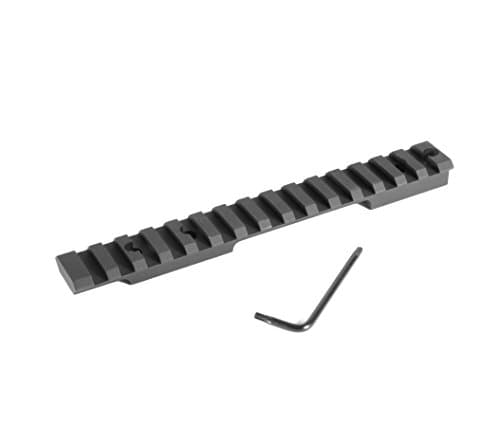
A 20 MOA base tilts the whole scope down relative to the bore by 20 minutes, which hands that 20 MOA back as usable up-travel. On the 700 I bought it at the start instead of discovering the ceiling in the middle of a string. The EGW HD version is the thicker rail, which matters when there is a two-pound scope hanging off it, and it is a one-piece rail so the rings can go anywhere along it — useful when you are chasing eye relief on a stock with an adjustable comb.
One thing worth saying out loud: a canted base spends your down adjustment. If you zero at a very short distance with a scope that has modest travel, you can run out going the other way. Check the total elevation figure on your scope before you buy cant.
The stock, and why it is tan
The Grayboe A3 is a fiberglass stock, and the point of a fiberglass stock is that it does not care about the weather. Wood moves with humidity. A moving stock changes how the action sits in it, and that changes point of impact for reasons that have nothing to do with you or the ammunition. Removing that variable is not glamorous and it is the entire reason composite stocks took over precision shooting.
Mine is tan with the black spiderweb, bought through Red Hawk Rifles at $235 — an unmonetized mention, we earn nothing from it, and it is here because "where I actually got it" is the useful part. The color is not an accident either: the FDE and tan thread runs through most of what I build, from the 300 Blackout SBR to the Rock Island. It is not a tactical statement. I just like how it looks and I am consistent about it.
Sightron is the most underrated glass in American shooting
This is where my precision money went, and I will say plainly why. The SIII line is built in Sightron's own Japanese facility, and the glass in it competes with scopes carrying twice the name recognition. The brand is understated to the point of being invisible in a market where everybody else is shouting, and that is exactly why an 8-32x56 SIII lands at the price it does.
I run the MOA-2 reticle. Thirty-two power and a 56mm objective is a target configuration rather than a general-purpose one — you would not want it on a hunting rifle and it is not trying to be there. On a 26-inch bolt gun that lives on a bipod, it is exactly right.
If you want the whole argument rather than the summary, it is on the Sightron brand guide, and the honest comparison with the brand that gets more attention is in Sightron vs Vortex. The one-line version of my position: Vortex makes the most current reticles and has the warranty I want on a rifle that gets knocked about; Sightron makes better pure glass for the money. My AR wears the Vortex. My bolt gun wears the Sightron. That is not a contradiction, it is the two brands doing what each is best at.
What it eats
The same thing the AR does: ammunition I loaded. A 26-inch match prefit and a $900 scope are an expensive way to shoot inconsistent ammunition, and the argument for handloading gets stronger the further out you go. That reasoning has its own page.
No load data on this site. Not now, not ever. You will not find a charge weight, a recipe or a "start here and work up" anywhere on these pages, and you should be suspicious of any website that hands you one. Load data belongs in a published, pressure-tested manual for the exact components in front of you — the Hodgdon Reloading Data Center, a Sierra or Nosler manual, or the bullet maker's own data. What I write about is process and precision practice.
Where it goes
Both of these rifles have been out to the NRA Whittington Center across several trips. Getting a rifle like this to its actual limit near home is the hard part, which is the subject of a separate, honest page.
More photographs coming. There is one photograph of this rifle here so far. More are coming — the prefit and barrel nut, the base and ring setup, and the stock inletting are all worth showing properly, and I would rather add real photographs later than pad this page with stock images of somebody else's rifle now.
The two parts of this rifle people ask about most have their own pages now. The base and rings — including why a 20 MOA base is on it at all — are covered on best scope rings and mounts, and the scope sits in context against six others on best long range rifle scopes.
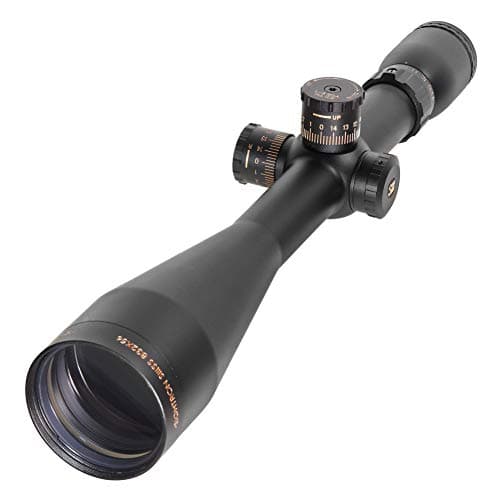
The scope on my 700, and the reason I keep telling people Sightron is the most underrated glass in American shooting. At this money the Japanese-built SIII is the best pure optic you can buy.
Sixty dollars that buys you roughly 20 MOA of extra up-elevation. On a bolt gun that is meant to reach, this is the highest-leverage part in the whole build.
Steel rings from a company that has been making them since before precision rifle was a hashtag. The job of a ring is to be boring, and these are excellent at it.
#ad · Live prices from the Amazon Creators API, as of October 19, 2026. Where we have no verified live price we show none — a gap beats a number that has rotted.
In detail
The picks, in full
01
Best overall
Sightron SIII LR 8-32x56, MOA-2 Tactical
I run this one
This is the glass on my Remington 700 — the SIII 8-32x56 in MOA-2, $900 as paid. It is where my precision money went, and I would spend it there again.
The scope on my 700, and the reason I keep telling people Sightron is the most underrated glass in American shooting. At this money the Japanese-built SIII is the best pure optic you can buy.
Glass clarity
10
Magnification range
9
Turret tracking
9
Availability
5
Value
9
What's good
+The SIII line is built in Sightron's own Japanese facility, which is the actual reason to buy the brand rather than the marketing
+Thirty-two power and a 56mm objective is a serious target configuration, not a hunting scope with a big number on it
+Glass that competes with scopes carrying twice the name recognition and most of the price
+Limited lifetime warranty
What's not
−Sightron availability on Amazon is genuinely thin — stock counts are often in single units
−Second focal plane, in a market that has largely moved to first focal plane at this money
−Big, heavy, and 8x on the bottom end means it does one job
Skip it if…
…the rifle does anything other than shoot at a target. Eight power minimum and a 56mm bell make this a poor hunting scope and a worse field scope. It is a bench and prone optic and it does not apologize for that.
EGW HD 20 MOA Picatinny Rail, Remington 700 Short Action
I run this one
The base on my 700. Same lesson the AR taught me, learned once and then applied on purpose the second time.
20 MOA cantRemington 700 short actionOne-piece picatinnyMade in USA
9.0/10
Sixty dollars that buys you roughly 20 MOA of extra up-elevation. On a bolt gun that is meant to reach, this is the highest-leverage part in the whole build.
Elevation gained
9
Rigidity
9
Fitment
8
Value
10
What's good
+Twenty MOA of cant is roughly 20 MOA of elevation you no longer have to find inside the scope
+One-piece rail is stiffer than two-piece bases and gives you somewhere to put rings anywhere along it
+EGW's HD version is thicker through the middle than the standard rail, which matters on a rifle with a heavy scope on it
+It costs less than a set of rings
What's not
−Twenty MOA of cant costs you down-adjustment, so a very short zero can run a scope out of travel
−The action screw torque matters more than people expect — a rail is only as straight as the receiver it is bolted to
−Nothing about a rail is exciting to spend money on
Skip it if…
…the rifle is a 200-yard deer gun. A flat base is one less variable and you will never notice the difference.
Price as of October 19, 2026. Prices move — Amazon's is the one that counts.
#ad · we may earn a commission from this link to EGW HD 20 MOA Picatinny Rail, Remington 700 Short Action
03
Best rings
Leupold PRW2 30mm Scope Rings, High
I run this one
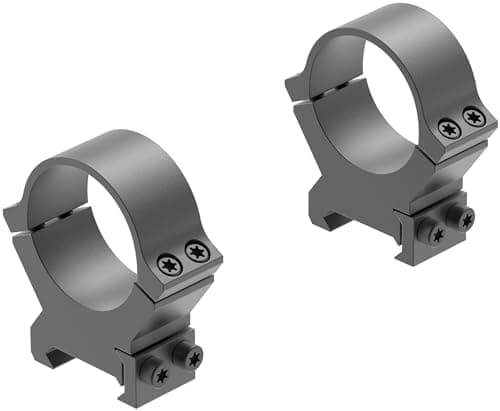
I run Leupold PRW 30mm highs on the 700. This listing is the current PRW2 version of the same ring — I am naming the ring family I actually use, not claiming I bought this exact SKU.
30mm ringsHigh heightPicatinny cross-slotMatte black
8.3/10
Steel rings from a company that has been making them since before precision rifle was a hashtag. The job of a ring is to be boring, and these are excellent at it.
Build quality
9
Fitment
9
Scope protection
7
Value
8
What's good
+High rings are what a 56mm objective actually needs, and undersizing rings is the classic first-build mistake
+Cross-slot recoil lug means they do not walk forward under a heavy-recoiling rifle
+Leupold's warranty and the fact that these have been made, essentially unchanged, for years
What's not
−Two-piece rings need lapping or at least careful torquing to avoid marking a scope tube
−No integral bubble level or accessory rail like some competitors at this money
−High rings raise the scope, which means raising your cheek — you may need a cheek riser you did not budget for
Skip it if…
…your scope has a 50mm objective or smaller. Buy mediums instead; the lower you can mount a scope while clearing the barrel, the better your head position will be.
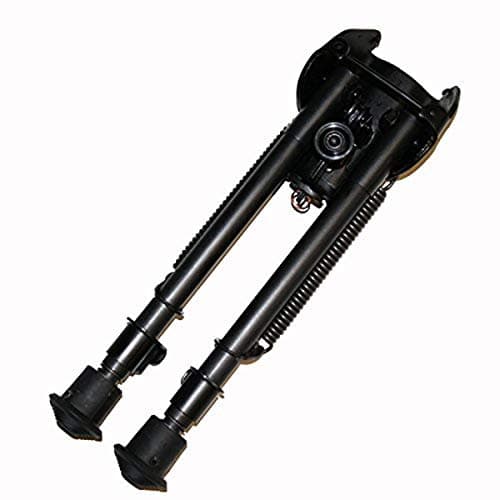
9-13in leg rangeSolid (non-swivel) baseSling-stud mountSpring-return legs
8.0/10
The non-swivel Harris. On a bolt gun that mostly shoots from a bench or a flat mat, the fixed head is stiffer, cheaper and one fewer thing to fight.
Stability
9
Build quality
9
Adjustability
6
Value
8
What's good
+A fixed head is measurably more rigid than a swivel head, and rigidity is the point of a bipod
+Meaningfully cheaper than the swivel versions
+Mounts to a standard sling stud, which is what a traditional stocked rifle actually has
What's not
−No cant, so unlevel ground has to be solved with your body or with a bag under the buttstock
−Sling-stud mounting means you cannot also run a sling on the same stud without an adapter
−Notched legs only, so height is set in steps rather than continuously
Skip it if…
…you shoot on real terrain rather than on a flat firing line. Pay the extra for a swivel head — you will use it on every position that is not a range bench.
Everything you do to a rifle is transmitted to your eye through the mounting system. A $60 base and a $65 set of rings is not expensive against a $900 scope, and the failure mode of cheap mounting hardware is not "slightly worse" — it is a rifle that shoots differently on Tuesday than it did on Sunday and no obvious reason why.
Buy ring height for your objective, not by default
A 56mm objective needs high rings to clear the barrel. A 44mm objective usually does not, and mounting a scope higher than it needs to be costs you cheek weld and consistency. Work out the clearance first, then buy the lowest rings that give it to you.
A prefit is a real option, and gauges are not optional
If the idea of changing your own barrel appeals, a Rem/Age prefit makes it genuinely achievable. Budget for the action wrench, the barrel nut wrench and headspace gauges before you budget for the barrel, and do not start without them. Setting headspace by feel is the one shortcut on this whole page that can hurt you.
Fiberglass over wood if the rifle is for shooting groups
Wood is lovely and it moves. If your rifle exists to put rounds into the same place across seasons and weather, a composite stock removes a variable you cannot otherwise control. If the rifle is a hunting rifle you also like looking at, that calculus is different and entirely legitimate.
How these were picked
3 of these are mine. The rest are research, and I say which is which.
Anything carrying the "I run this one" stamp above is gear I actually own and use, and I write about it in those terms. What I do not do is invent numbers to dress that up — there are no group sizes, round counts or chronograph figures on this site, because I did not record them. For everything without the stamp: I read the manufacturer's published specification, compile the numbers that decide the purchase, do the arithmetic in the open, check the live price, and name one product to skip. Those scores are judgments against a published rubric, not measurements I took.
Questions
Frequently asked
What does Rem/Age mean?+
A Remington 700 barrel cut with Savage-pattern threads and headspaced with a barrel nut rather than by chambering to your specific action. It means you can change the barrel yourself with an action wrench, a nut wrench and a set of headspace gauges instead of sending the rifle to a gunsmith.
Can I really fit a prefit barrel myself?+
Yes, carefully, with the right tools. You need an action wrench, a barrel nut wrench and go/no-go headspace gauges — the gauges are not the optional part. If any of that sounds like something you would improvise, pay a gunsmith. This is the one operation on a rifle where "close enough" is a safety question rather than an accuracy one.
Is 26 inches too much barrel for a .308?+
Not for a rifle that lives on a bench or a bipod. Longer barrels give the powder more time to work, and on a target rifle there is no handling penalty that matters. It is absolutely too much barrel for a rifle you carry, which this one is not.
Sightron or Vortex?+
Both, on different rifles, for different reasons. Sightron's SIII gives you the best pure glass at the money and it is the brand nobody talks about. Vortex gives you the most current reticle designs and a warranty that genuinely matters on a rifle that gets handled. My bolt gun wears the Sightron and my AR wears a Vortex, which is the honest answer.
Why 20 MOA on this and 30 MOA on the AR?+
Because 20 MOA plus the Sightron's travel is enough for what this rifle does, and because I bought the AR's canted mount as a replacement after finding the ceiling rather than as a plan. Twenty MOA bases are more common and are the right default for a .308 going to 1,000 yards.
We do not run a testing lab and we do not pretend to. Where a measured number came from a manufacturer's published specification or someone else's lab, we name them and link them. Where we could not verify something, we say so on the page rather than quietly leaving it out. Read the full method.