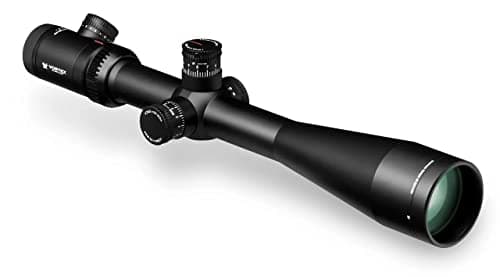
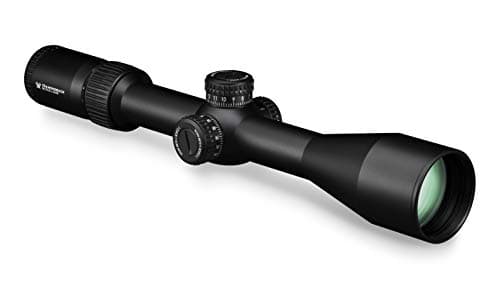
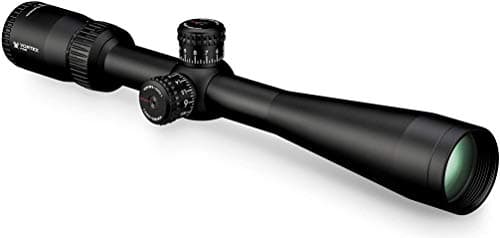
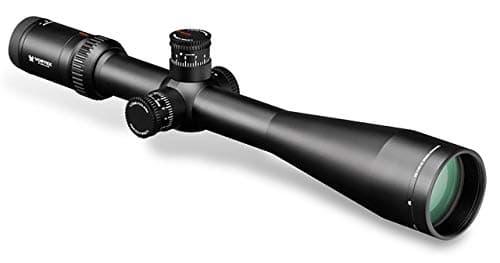
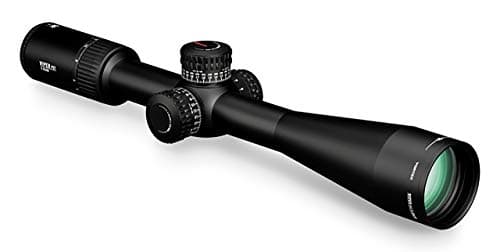
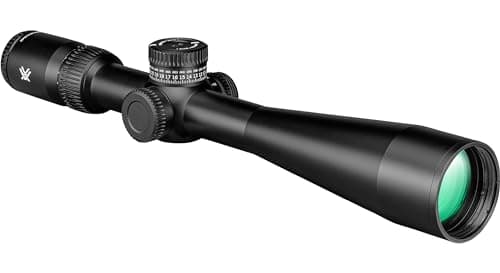
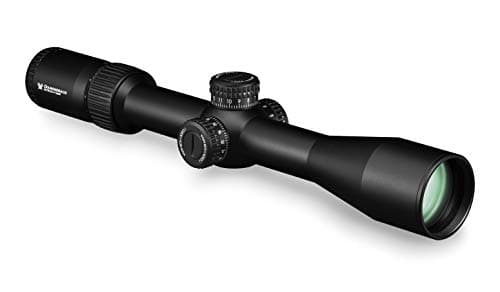
This is the most consequential decision in the Vortex catalog. Below it, everything is cheap enough not to agonize over; above it, you are into Razor money and a different conversation. Here, six hundred dollars separates two scopes that on paper do the same thing.
I have skin in this one: a Viper PST 6-24x50 is the scope on my LR-308, and it is on this page carrying the owner-run stamp. So when I tell you the cheaper scope is the better buy for most people, understand that I did not take my own advice — I bought the Viper. What follows is the argument for why you probably should not.
What they have in common
Both tiers offer first focal plane models with exposed, dialable turrets and holdover reticles. Both track. Both hold zero. Both are covered by the same unconditional VIP warranty. Neither will be the reason you miss.
What the six hundred dollars actually buys
Glass, and it is real
Put a Diamondback Tactical and a Viper side by side at last light and the difference is not subtle. Contrast, edge sharpness and low-light transmission all improve. This is the single biggest reason to step up and the one that shows up in use rather than on a spec sheet.
Turret feel
Viper clicks are crisper and more countable — you can dial by feel in the dark and be confident about how far you went. Diamondback Tactical turrets work; they are mushier. Whether that matters depends entirely on how much you dial.
Illumination
The Viper PST Gen II has it. The Diamondback Tactical does not. At dusk, against a dark target, an illuminated reticle is the difference between a shot and no shot. This is probably the most underrated item on this list.
The reticle
The EBR-7C in the Viper PST is a properly designed tree with usable wind holds. The EBR-2C in the Diamondback Tactical has holdover structure but far less of it. If you hold for wind rather than dialing it, this matters more than the glass does.
The honest recommendation
Buy the Diamondback Tactical 4-16x44. Four hundred dollars for first focal plane, dialable turrets and a real reticle is unmatched, and the six hundred dollars you keep buys somewhere in the region of a thousand rounds of practice ammunition. For a shooter who has not yet shot their rifle to its limit, that trade is not close.
Buy the Viper if you dial constantly, shoot in poor light regularly, or compete where reading mirage at high magnification decides your score. Those are real reasons and the Viper answers all three.
And check the Viper HS-T listing first. At the last price check, a discontinued Viper HS-T 6-24x50 was $396.79 — less than the Diamondback Tactical it is meant to be twice the price of. That is Viper glass and Viper turrets at Diamondback money. It is second focal plane, which is a genuine limitation, and clearance pricing does not last. But it is the sort of thing worth checking before you buy anything else on this page.
Making the call
Count how often you actually dial
If you zero at a hundred yards and hold over for everything else, turret quality is nearly irrelevant to you and the Diamondback is an easy answer. If you dial for every shot at varied distances, crisp countable clicks are worth real money.
Be honest about the light you shoot in
Glass differences are invisible at midday and obvious at dusk. If you have never shot at last light and do not intend to, you are paying for something you will not see.
First focal plane at 4x is genuinely hard to see
This is the FFP tax and it applies to both tiers. On the Diamondback Tactical, without illumination, a fine reticle at low power in poor light is a real problem. The Viper's illumination is the fix — which is another way of saying the illumination is worth more than it looks.
Match your reticle units to your turret units
MOA reticle with MOA turrets, or MRAD with MRAD. Mixing them is the most common and most frustrating error in precision optics, and it is entirely avoidable. Our MOA vs MRAD page explains why either works and mixing does not.
Weight is a real cost on a carried rifle
Both of these are heavy compared with a hunting scope. If the rifle gets walked with, look at the Razor HD LHT instead — the premium glass comparison covers it.