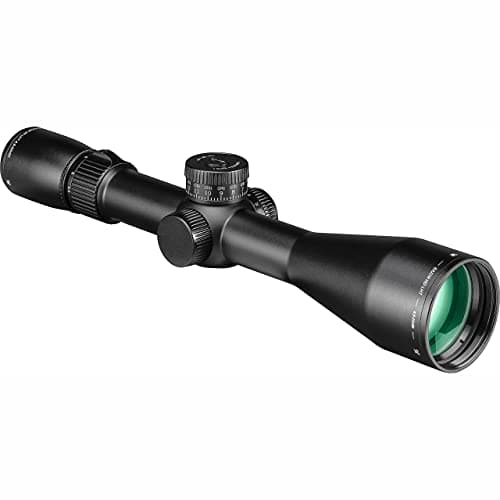
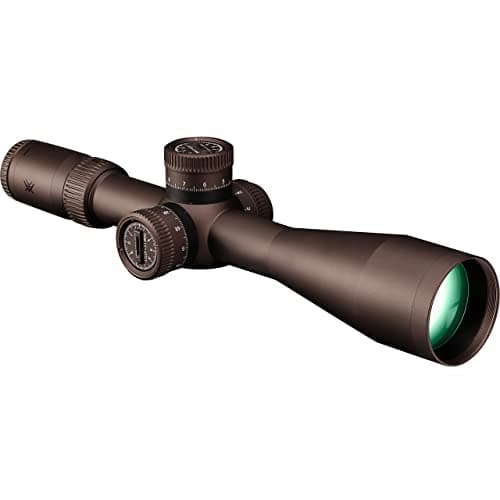
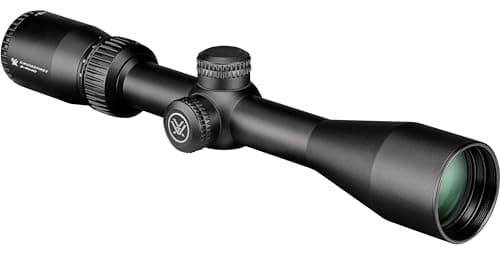
Vortex is the brand I recommend most often on this site, and I should say up front that I buy it myself: there is a Viper PST 6-24x50 on my LR-308 and Strike Eagles on my ARs. That PST has been behind a 30 MOA mount at the Whittington Center, which is the most honest test I can give a scope: dial it a long way, and see whether it comes back.
My position on the brand is simple. Vortex is excellent for the price, and they have the most modern reticle designs of anyone in this bracket — that is the thing that keeps pulling me back, more than the glass does. It is not that the glass is the best available at every price, because it frequently is not; my precision money went to Sightron for exactly that reason. It is that the ladder is coherent, the pricing is honest, the reticles are current, and the warranty removes the single biggest risk in buying an optic.
The warranty, first, because it changes the maths
Vortex calls it the VIP warranty and describes it, in its own words on its own site, as "unlimited, unconditional, lifetime". The page says: "It doesn't matter how it happened, whose fault it was, or where you purchased it."
What it excludes is stated just as plainly: loss, theft, deliberate damage, and cosmetic damage that does not hinder performance. Everything else — you dropped it, a horse rolled on it, you bought it second-hand from a stranger — is covered.
That matters most at the bottom of the range. A hundred-and-twenty-dollar scope with an unconditional lifetime warranty is a fundamentally different purchase from a hundred-and-twenty-dollar scope without one, and it is why a Crossfire II beats a lot of nominally better glass at the same money. It is also not a theoretical benefit — it is the reason I am comfortable putting a Vortex on a rifle I care about rather than treating the optic as the fragile part of the system.
The four rungs, and what each one actually buys
Crossfire — the entry tier
Roughly $100 to $250. Fully functional scopes with adequate coatings and capped turrets. They do the job in good light and they tell you they were inexpensive in the last twenty minutes of legal shooting light. The Crossfire HD line sits slightly above the older Crossfire II with newer coatings.
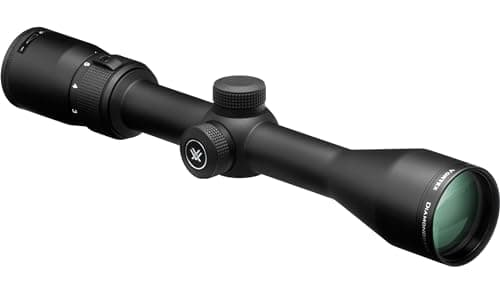
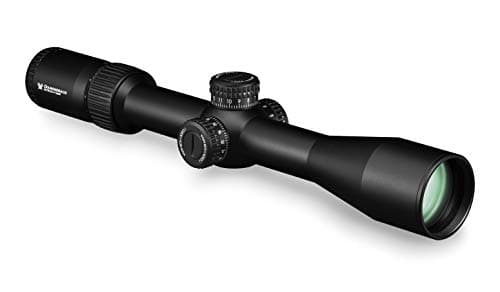
Diamondback — the sensible step up
Roughly $190 to $430. Better coatings, and — importantly — the tier where Diamondback Tactical appears with first focal plane and exposed turrets. That model is the single best value in the entire Vortex catalog and it is why this tier matters more than the price gap suggests.
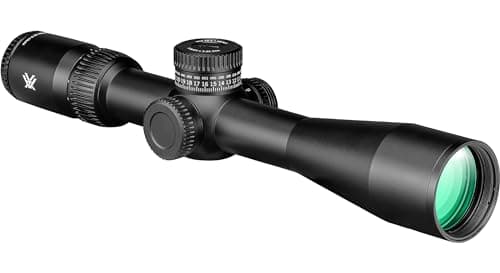
Viper — where the glass stops being the limit
Roughly $400 to $1,000. The HD optical system, illumination, and turrets that track and return to zero properly. For most shooters this is the ceiling of useful improvement, and the Viper PST Gen II is the scope I would tell most people to stop at.
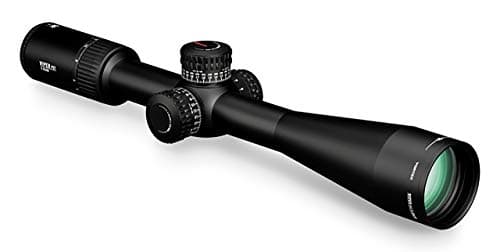
Razor — the top, and the AMG above it
Roughly $1,300 to $4,800, with the AMG at $6,399. Elite glass and elite mechanics. The performance gap over a Viper is real. It is also considerably smaller than the price gap, and this page is going to say so.
Vortex also runs Triumph below Crossfire and Strike Eagle alongside Viper for low-power variables, plus Venom as a newer mid-tier name that spans scopes and red dots. The four rungs above are the spine.
Where I would actually spend
Under $150: a Crossfire II. The warranty carries it.
Around $400: the Diamondback Tactical 4-16x44 FFP, without hesitating. It is the best price-to-capability point Vortex sells and it is not close.
Around $1,000: the Viper PST Gen II, and then stop and buy ammunition.
Above that: only if you have genuinely outgrown a Viper. Most people saying they have, have not — and the difference between a good shooter with a Viper and an average shooter with a Razor is not the scope.
This page argues inside one brand. If the question you actually have is which brand to buy from in the first place, the brand comparison page puts Vortex next to Sightron, Leupold, Athlon and Bushnell with one representative scope each — and is honest about the one axis where Vortex does not win.
Choosing a tier without overpaying
Focal plane decides more than tier does
In a first focal plane scope the reticle grows and shrinks with magnification, so holdover marks are true at every power. In second focal plane they are only true at one power, usually maximum. FFP is right for dialing and holding at varied distances; SFP is right for hunting in poor light, where an FFP reticle at low power gets genuinely hard to see. Our MOA vs MRAD guide covers the units that go with them.
Objective size is not a brightness cheat code
A bigger objective gathers more light and also sits the scope higher, adds weight, and costs money. At normal hunting magnifications a 40mm objective is not the thing limiting you — the coatings are. That is exactly what you are buying when you step a tier.
Buy the magnification you use, not the one that impresses
A 6-24x scope with a 6x floor is genuinely difficult to use on a close, fast shot. If the rifle does anything other than shoot from a bipod, a 3-15x or a 4-16x is the more useful tool regardless of what the top number says.
Budget for rings and a torque wrench
The most common cause of a scope that will not hold zero is a mounting job done by feel. Ring screws have a torque specification. Our mounting hardware picks cover the rings, the levels and the wrench.
The warranty is worth more at the bottom than at the top
If a $2,999 Razor fails, you were always going to get it fixed. If a $117 Crossfire fails, the warranty is the difference between a repair and a bin. Weight that accordingly when you are comparing Vortex against cheaper brands at the entry level.