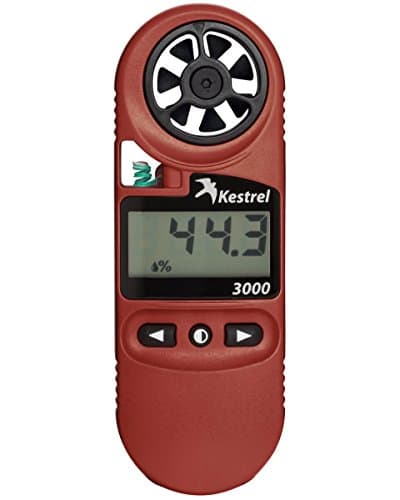
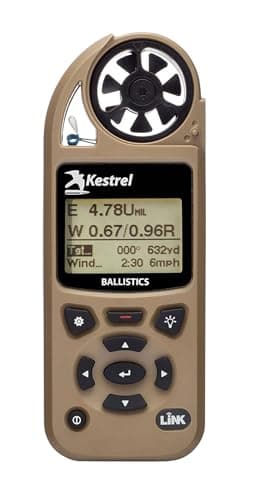
The uncomfortable truth first: the wind meter in your hand measures the wind at your position, and the wind at your position is the least important wind between you and the target. That does not make meters useless — it makes them a calibration tool for a skill you have to build anyway.
Elevation you can solve. You will get within a click or two with a calculator, a card and a rangefinder. Wind you have to read, and it changes across the distance, over the terrain, and while the bullet is in flight.
The three shortcuts that make wind manageable
1. Full value, half value, no value
A crosswind at 90 degrees to your line of fire pushes the bullet with its whole speed — full value. A wind at 45 degrees pushes with roughly seventy percent of it, which everyone rounds to half for simplicity in the field. A head or tail wind is close enough to no value that you can ignore it at the distances most people shoot.
This is why your card needs one wind column and not six. Record the hold for a full-value crosswind and scale it in your head.
2. The 10 mph reference
Build the card around a 10 mph full-value crosswind. Five is half of it, twenty is double it. You are not doing trigonometry on a hillside — you are estimating a speed, halving or doubling a known number, and applying a fraction for angle.
3. Read the middle, not the ends
A bullet spends the largest portion of its flight time in the middle third of the distance and is slowest and most vulnerable in the last third. The wind at the muzzle acts on a fast bullet for a very short time. When the range has a gradient, weight your call toward what is happening downrange.
The indicators, in order of usefulness
Mirage
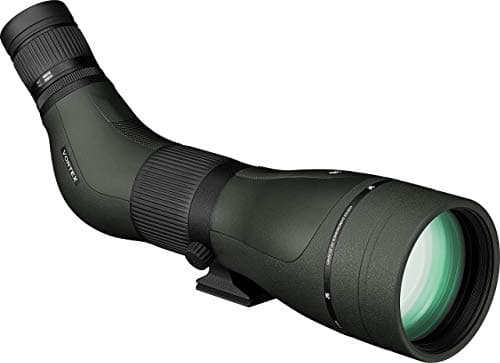
The best indicator available, and free. Focus a spotting scope short of the target and the heat shimmer shows the wind's direction and rough speed across the whole flight path. Running mirage moves horizontally; boiling mirage means the wind is at or near zero value.
It has one limitation and it is a real one: mirage needs heat. On a cold morning there is none, which is exactly when a lot of hunting shots happen.
Vegetation and terrain
Grass, leaves and dust are gauges you did not have to buy. What matters is not the absolute reading but the difference between what the grass is doing at 200 yards and what it is doing at 600. A wind that reverses across a draw is the classic miss.
Flags
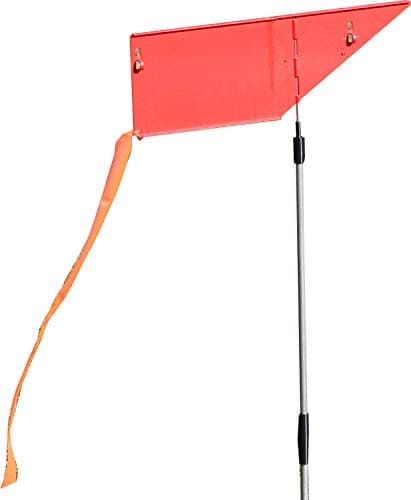
Where a range allows them, flags placed downrange are the most direct read available — they measure the wind that will actually deflect your bullet, at the place where it will do it. Most public ranges will not let you walk downrange to set them.
The meter
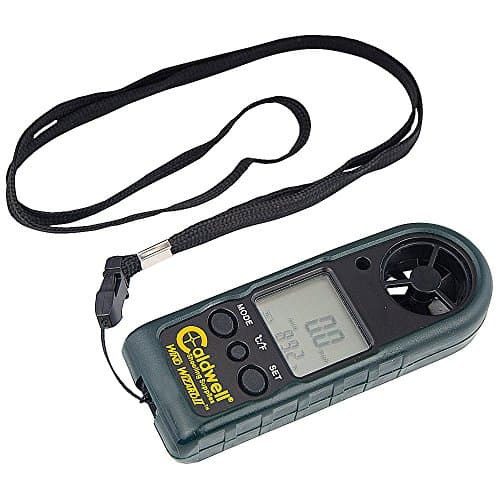
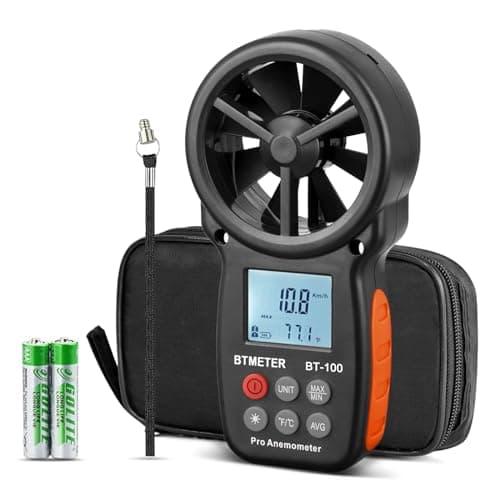
A handheld meter tells you what 12 mph feels like on your face, which is genuinely valuable for the first year of learning. Its readings are a calibration exercise for your own estimates, not a substitute for them.
The one thing nobody tells beginners
You are allowed to be wrong and correct. A first-round hit in a changing wind is partly luck. The professional skill is the second shot: watch where the bullet went, apply the correction, and send it again before the condition changes. That means being able to spot your own impacts, which is another argument for a spotting scope and a bipod that lets you stay in position.
What to buy, and in what order
First: the cheapest meter you will carry
The purpose of a first meter is to calibrate your guesses. Estimate the wind, then measure it, and be honest about the gap. That exercise costs thirty-odd dollars and it is worth more than any single piece of equipment on this page.
Second: something to read the middle distance with
A spotting scope for mirage, or flags if your range permits them. This is the step that changes your hit rate, because it is the step that reads the wind that actually matters. The optics themselves are ranked on best spotting scopes, and what holds them steady is on the tripod page.
Third, and only third: a solver
A ballistics meter is excellent and it is the last purchase, not the first. It converts a measurement into a hold, and it will do that with great precision using whatever wrong number you gave it. Build the card first.
The middle of the market is where the bad value is
A premium weather meter without a ballistic solver costs four times the budget meter to give you the same shooting-relevant readings. That is the skip pick above, and the reasoning generalizes: either buy the cheap meter and learn, or buy the one that solves.