Texas is enormous and finding somewhere to shoot past 600 yards is still hard. Here is the honest state of it, what the real options look like, and why I keep driving to New Mexico.
We earn a commission when you buy through our Amazon links, at no extra cost to you. It never changes the order of the picks, and we say so when the cheaper thing is the better buy. How this works.
I live in North Texas and I own two rifles built to reach past 1,000 yards. Those two facts are in tension, and this page is about that tension rather than about pretending it does not exist.
The shape of the problem is this: Texas has an enormous number of shooting ranges and very few of them go past 300 yards. Of the ones that do, most stop somewhere between 500 and 800. Of the handful that genuinely reach 1,000, several are members-only, and almost all of them require you to qualify before they will let you past a few hundred yards. That is not gatekeeping for its own sake — a rifle shooting a mile of trajectory over occupied ground is a serious thing and the ranges are right to be careful — but it does mean "find a 1,000-yard range" is not a five-minute search.
What actually counts as long-range access
Before naming anywhere, it is worth being precise, because ranges advertise distance in ways that mean different things.
A stated maximum distance. "Up to 1,000 yards" sometimes means there is a target at 1,000 yards and sometimes means the backstop is 1,000 yards away and the furthest target is at 600. Ask which.
Steel or paper. Steel gives you instant feedback and is what most long-distance facilities hang, but you cannot measure a group on it. Paper at distance requires a target pit or a very long walk. Both are legitimate; they train different things.
Intermediate distances. A range with targets only at 100 and 1,000 is far less useful than one with something every hundred yards, because building a verified drop chart means confirming it in steps rather than jumping to the end.
Access model. Public and walk-in; public with a mandatory qualification; appointment only; members and guests only. This is the axis that actually decides whether a range is available to you, and it is the one least likely to be on the front page.
Caliber and ammunition rules. Magnum bans, steel-core bans, FMJ bans and velocity limits on steel are all common and all worth reading before you load the truck.
The realistic options
Everything below I checked directly against the facility's own website during the writing of this page. I have deliberately not listed places I could not verify, and I have not listed my own local clubs. If a range is not here, that means I could not confirm its current details from the source — not that it does not exist.
North Texas and the DFW area
Red River West — northwest of Gainesville, in Cooke County. Their long range page states distances out to 1,050 yards with platforms and benches at the 800 and 1,000 yard lines. Access is by scheduled appointment with a minimum of three days' notice, and vetting is required before you get past 300 yards: their Long Range Safety Vetting Course is a three-hour, $100 course requiring five consecutive center-mass hits at each hundred-yard step to progress. Long range use is listed at $20. This is the closest genuine four-figure yardage to North Texas that I could verify as available to a member of the public.
Fossil Pointe Sporting Grounds — Decatur. Steel from 250 to 800 yards, open to the public, $40, Wednesday through Sunday, with caliber-dependent minimum distances (.223 limited to 600 yards, magnums to 400 and beyond). All new shooters must be qualified by their staff before entering the long range. It does not reach 1,000, and 800 yards of usable steel within an easy drive of DFW is a genuinely valuable thing.
Tac Pro Shooting Center — Mingus, about 65 miles west of the Metroplex. Firing points at 300, 400, 500 and 1,000 yards, and 50 calibers are welcome. The important detail: their site states the 1,000-yard range and those firing points are open to members and their guests exclusively, and a 1,000-yard qualifier is required. If you are willing to join, this is real distance an hour or so from Fort Worth.
North East Texas Tactical — near Dallas. Their site describes shooting from 100 yards to one mile across more than a hundred steel targets, and states plainly that it is a members-only club. A mile is a mile, and this is the longest verified distance I found in the region — behind a membership.
Further out in Texas
5H Shooting Sports — Frankston, in East Texas. A genuinely public 1,000-yard rifle range: their pricing lists short range (0 to 500 yards) at $25 a day and long range (0 to 1,000 yards) at $35 a day after a one-time $25 qualification fee. There is also an RV park on site, which makes a weekend viable rather than a day trip. Of everything I verified, this is the most straightforwardly public path to a full 1,000 yards inside Texas.
The competition route
There is a category most people miss entirely: shoot a match. The Texas State Rifle Association defines High Power Rifle Long Range as prone competition at 800, 900 and 1,000 yards, and the matches happen at ranges that host them. Entering a match gets you onto a properly run 1,000-yard line, with people who will tell you what you are doing wrong, for an entry fee rather than a membership. If you cannot find a range to practice at, the fastest route to distance is often to find a match and go shoot it badly the first time. Everybody there did exactly that.
The category nobody lists: private land
A very large share of long-range shooting in Texas happens on somebody's ranch, and that is the honest reason 1,000-yard public ranges are thin on the ground — the demand gets met privately. If you have access to land with a genuinely safe backstop and the distance, that is the answer, and the equipment on this page is aimed squarely at making it work: steel you can hang at graduated sizes, a stand that packs flat, and a rangefinder so your distances are numbers rather than estimates. What you cannot buy is the backstop, and there is no substitute for it.
Why the drive to New Mexico happens anyway
Add up the options above and a pattern emerges. To shoot at 1,000 yards in Texas you will usually be paying a membership, or completing a qualification and booking days ahead, or driving several hours east. All of those are reasonable and none of them is what you want on a Saturday morning when you have a new load to test.
Against that, the NRA Whittington Center is a public destination with twenty-five ranges, camping and cabins on site, an unbroken 1,000-yard high power range, and a silhouette range that runs out to a steel buffalo at 1,025 meters. It is a long drive from North Texas. It is also a place where you can shoot for three days instead of two hours, at elevations that will teach you something about your drops, without a membership.
So the honest framing is not "Texas has nowhere to shoot". It is that Texas has places to shoot which mostly require planning, and if you are going to plan anyway, a destination trip a few times a year does more for your shooting than a nearby range you visit for an hour.
This is what the drive buys. A firing line with the whole valley in front of it, targets stepping out to the far treeline, and nobody hurrying you. There is nothing structurally like this within a day of North Texas that does not come with a membership.
Practicing the skill without the distance
If you cannot get to 1,000 yards this month, the useful thing to understand is which parts of long-range shooting actually require the distance. Position, natural point of aim, trigger control, calling your shot and reading wind are all trainable much closer in. A shrinking steel target at 300 yards presents the same angular problem as a bigger target much further away, and it is available at far more ranges.
What genuinely requires distance is verifying your drops in the transonic region, and learning what wind does over a long column of air. Those two things are why the trip exists. Everything else you can build at home, and the sooner you separate the two lists the less frustrated you will be.
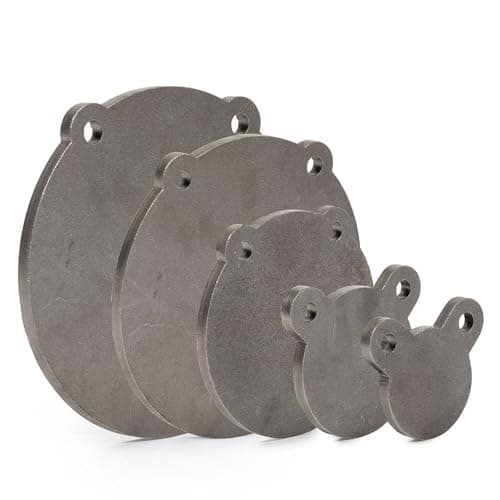
If the nearest 1,000-yard line is a four-hour drive, the useful answer is to practice the skill at the distance you can get. A graduated set of gongs turns 300 yards into real training.
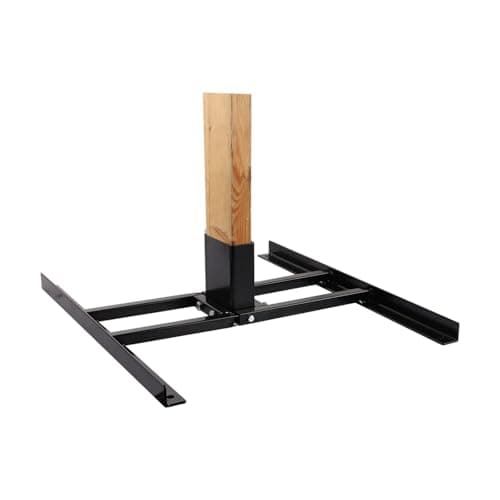
Two brackets, two pieces of lumber from any hardware store, and you have a target stand that packs flat in the truck. This is the correct way to buy a stand.
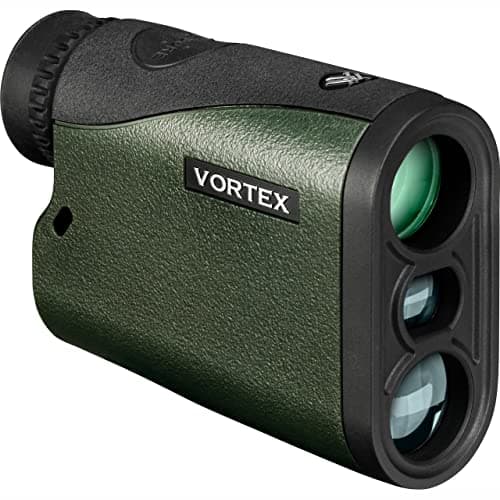
If you are pacing out your own distances on private land, buy the rangefinder before you buy the steel. A target at 'about 600' is worthless for building a drop chart.
#ad · Live prices from the Amazon Creators API, as of October 19, 2026. Where we have no verified live price we show none — a gap beats a number that has rotted.
In detail
The picks, in full
01
Best steel target set
AR500 Steel Gong Set, 3/8in (five sizes)
3/8in AR500 plateFive diameters, 3in to 10inLaser cutSwinging paddle design
8.3/10
If the nearest 1,000-yard line is a four-hour drive, the useful answer is to practice the skill at the distance you can get. A graduated set of gongs turns 300 yards into real training.
Training value
9
Durability
8
Completeness
7
Value
9
What's good
+A shrinking target at a fixed distance simulates a fixed target at increasing distance, which is the drill that actually transfers
+AR500 at 3/8in is rated for rifle at sensible distances, unlike the mild steel sold at farm stores
+Audible feedback means you can practice without walking downrange, which is most of a session's time
What's not
−Steel demands minimum distances and a proper angle — this is the category where people get hurt through carelessness
−Rifle velocity limits matter, and a magnum at close range will crater a plate
−Needs hangers, chain and a stand you have to buy or build
Skip it if…
…you have not read the manufacturer's minimum-distance and velocity guidance, or you do not have land with a safe backstop. Steel is not a casual purchase.
Takes standard 2x4 lumberT-shaped baseSteel constructionPacks flat
7.8/10
Two brackets, two pieces of lumber from any hardware store, and you have a target stand that packs flat in the truck. This is the correct way to buy a stand.
Stability
6
Portability
9
Build quality
7
Value
9
What's good
+The expensive, heavy part of a target stand is the lumber, and lumber is available everywhere for a few dollars
+Packs flat, so the stand costs almost no space in a vehicle
+Replaceable — when the uprights get shot up you buy new wood, not a new stand
What's not
−You still have to buy and cut the lumber
−A T-base blows over in real wind unless you weight it
−Not stable enough for a heavy steel silhouette without staking
Skip it if…
…you are hanging heavy plates. Buy or build a proper A-frame; a 2x4 base is for paper and light gongs.
Ranges to 1,400 yards on reflective targetsHD optical systemAngle compensationCompact
8.0/10
If you are pacing out your own distances on private land, buy the rangefinder before you buy the steel. A target at 'about 600' is worthless for building a drop chart.
Range performance
7
Glass clarity
7
Ease of use
9
Value
9
What's good
+Turns 'about 600 yards' into a number you can build a drop chart against
+Compact enough to live in a pocket rather than a bag
+Vortex warranty
What's not
−The 1,400-yard figure is a reflective-target number, not a steel-in-a-field number
−No ballistic solver
−Small objective makes it harder to hold on a distant target in low light
Skip it if…
…you need genuine 1,000-yard ranging on non-reflective targets. Step up to a bigger unit, or measure the distance once with a wheel and write it on the post.
If you are laying out your own distances, buy the rangefinder first. A drop chart built against "about 600 yards" is not a drop chart, it is a story. Measure it, write it on the post, and then hang the steel.
Graduated sizes beat one big plate
A set of gongs from 3 inches up to 10 lets you train the angular problem at a distance you can actually get to. Shooting a 10-inch plate at 300 yards is not the same exercise as shooting a 3-inch plate at 300 yards, and the second one is much closer to what a distant target feels like.
Read the steel manufacturer's distance and velocity limits, seriously
AR500 has minimum engagement distances and impact-velocity limits, and plates that have been cratered by close or fast hits become genuinely dangerous. This is the one category on this site where the manufacturer's safety guidance is not boilerplate.
Do not buy a membership before you have shot the range
Most of the facilities above will let you visit or shoot a day rate before you commit. Distance on a website and usable distance on a firing line are different things — go and look at the line, and at what is actually hanging at the far end, before you spend a year's dues.
How these were picked
I haven't handled these. Here's what I did instead.
Everyone in this category says they tested twenty of these. I haven't tested any, and I say so. What I do instead: read the manufacturer's manual and published specification, compile the numbers that decide the purchase, do the arithmetic in the open, check the live price, and name one product to skip. The scores above are judgments from that research against a published rubric — they are not measurements I took, because I do not have a lab and I am not going to pretend otherwise.
Questions
Frequently asked
Is there a public 1,000-yard rifle range in Texas?+
Yes. 5H Shooting Sports in Frankston, in East Texas, lists a public 1,000-yard rifle range with a day rate and a one-time qualification fee. Red River West, northwest of Gainesville, offers up to 1,050 yards to the public by appointment after completing their long range vetting course. Several other Texas facilities reach 1,000 yards or beyond for members only.
Why do so many long ranges require a qualification?+
Because at 1,000 yards a mistake travels a very long way, and the range is responsible for everything that leaves it. Qualification courses check that you can operate the rifle safely and hit reliably at each distance before you are allowed the next one. It is inconvenient and it is the correct policy.
What is the closest long range to Dallas-Fort Worth?+
Of what I could verify from the facilities' own websites: Fossil Pointe in Decatur offers public steel from 250 to 800 yards, Red River West northwest of Gainesville offers up to 1,050 yards by appointment after vetting, and Tac Pro Shooting Center at Mingus has 1,000-yard firing points for members and their guests. Distances, prices and access rules change — check with the range before you drive.
How far is the Whittington Center from North Texas?+
It is a road trip rather than a day out — the Center is ten miles south of Raton, New Mexico, and from North Texas that is most of a day in the vehicle. That is exactly why it works as a multi-day destination rather than a range visit.
Can I practice long-range shooting at a short range?+
Most of it, yes. Position, natural point of aim, trigger control and calling your shots all transfer, and shrinking your target size at a fixed distance reproduces the angular problem. What does not transfer is verifying drops past transonic and learning how wind behaves over a long distance. Those need the real thing.
We do not run a testing lab and we do not pretend to. Where a measured number came from a manufacturer's published specification or someone else's lab, we name them and link them. Where we could not verify something, we say so on the page rather than quietly leaving it out. Read the full method.