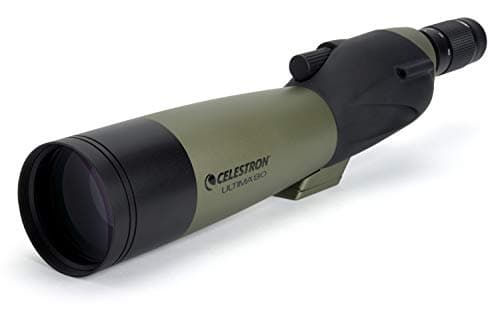
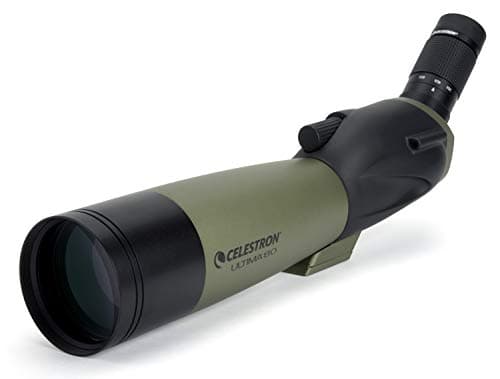
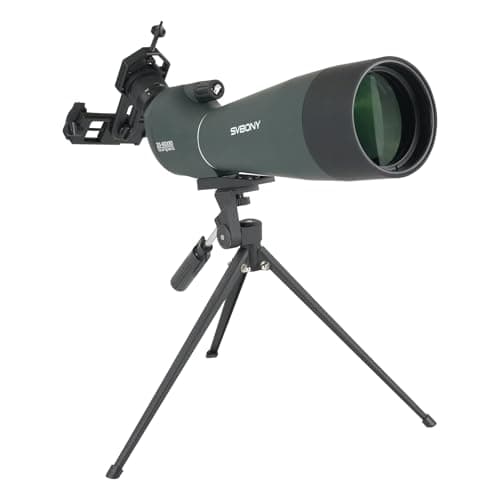
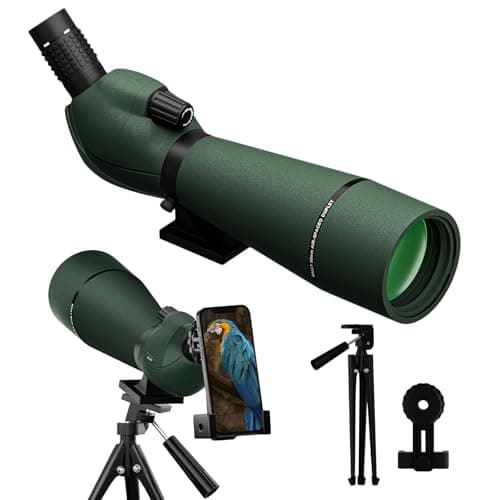
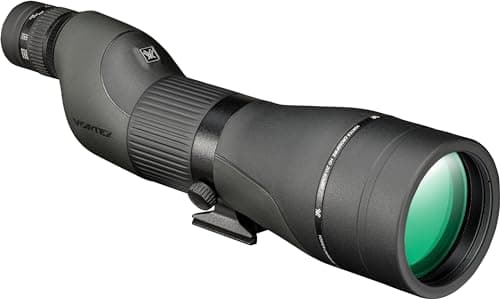
Every spotting scope in this price range is a 20-60x80. The zoom ring is cheap to build and cheap to print. What differs is the magnification at which the image is still usable, and that is decided by glass quality, coatings and how steady the whole assembly is.
On a budget spotter the image typically becomes soft and washed out somewhere around 30x. On good glass it stays sharp to 50x or beyond in decent conditions. Both scopes claim 60x. Only one of them means it.
The other half of the problem is the tripod, and it is routinely underestimated. At 50x, any vibration is magnified fifty times. A superb spotter on a flimsy camera tripod resolves less than a mediocre one on a solid mount, which is why bundled tripods are usually the weakest part of a budget package.
Buying a spotter properly
Budget for the tripod separately
Plan to spend roughly a third of your spotter budget on the tripod and head. A fluid head is worth having — it lets you pan smoothly across a hillside instead of jumping in increments, and smooth panning is how you actually find animals.
Straight or angled
Angled bodies are more comfortable for long glassing sessions, need a lower and therefore more stable tripod, and are much easier to share between people of different heights. Straight bodies point more intuitively and are better when you need to find something quickly, or when glassing downward from above.
Objective size and weight
80mm gathers noticeably more light than 60mm and weighs substantially more. For a truck or a shooting bench, 80mm. For a pack you carry up a mountain, 60mm — the weight saving is worth more than the light-gathering when the alternative is leaving it behind.
Atmospheric conditions cap magnification, not the scope
Heat shimmer, or mirage, is the real limit on a warm day. Above about 30x on a hot afternoon, you are magnifying rising air rather than resolving detail. This is why experienced spotters run lower magnification in the heat and higher in the cool of morning — no amount of glass quality changes it.
Phone adapters
Digiscoping through a spotter genuinely works for documenting game or a target, but a phone adapter demands a very steady setup. Add it to a good tripod, not to a bundled one.
How these were picked
I haven't handled these. Here's what I did instead.
Everyone in this category says they tested twenty of these. I haven't tested any, and I say so. What I do instead: read the manufacturer's manual and published specification, compile the numbers that decide the purchase, do the arithmetic in the open, check the live price, and name one product to skip. The scores above are judgments from that research against a published rubric — they are not measurements I took, because I do not have a lab and I am not going to pretend otherwise.