A garage fills up with tools that do a job approximately. That is fine for most of them. The ones worth spending real money on early are the ones that do a job to a specification you can check — because those replace judgment with a number, and judgment is what goes wrong at eleven at night with the car half apart.
Which is why this list is torque, organization and light, in that order, rather than a survey of everything a shop could own.
Torque is a published number and "tight" is not
Wheel lug nuts, cylinder heads, suspension bolts, brake caliper brackets and — for anyone who reads the shooting-gear section of this site — optic ring screws all have a manufacturer torque specification. Every one of those has a failure mode at both ends: under-torqued works loose, over-torqued stretches or snaps the fastener, or crushes what it is clamping.
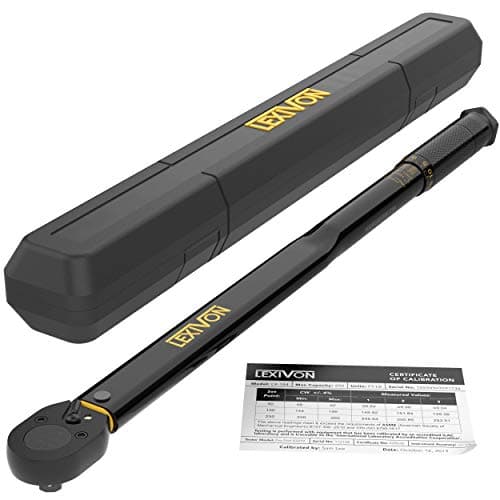
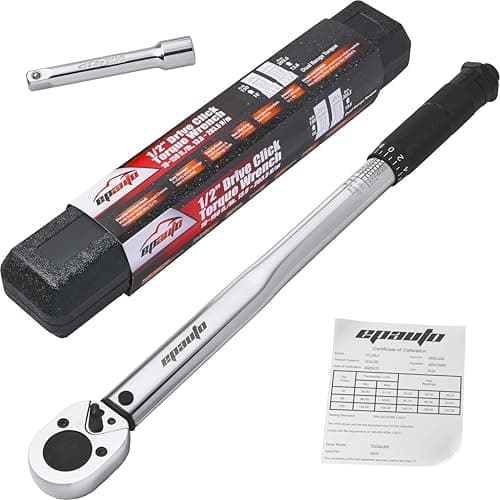
Most automotive fasteners you will actually torque fall somewhere between 10 and 150 foot-pounds, which is why the mid-range 1/2 inch click wrench is the first tool on this list. Past 150 you are into axle nuts and heavy suspension, which is a second wrench rather than a bigger setting on the first.
Two rules that cost nothing. Wind a click wrench back to its lowest setting before it goes away — leaving the spring loaded is how calibration walks off. And do not use a torque wrench to loosen anything; it is a measuring instrument that happens to be shaped like a breaker bar.
Organization is a purchase, not a personality
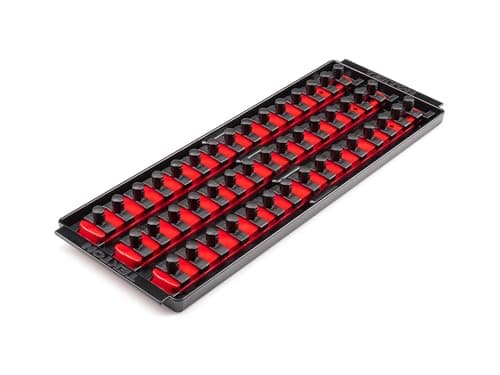
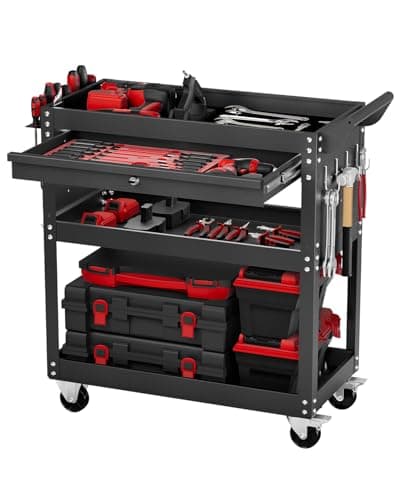
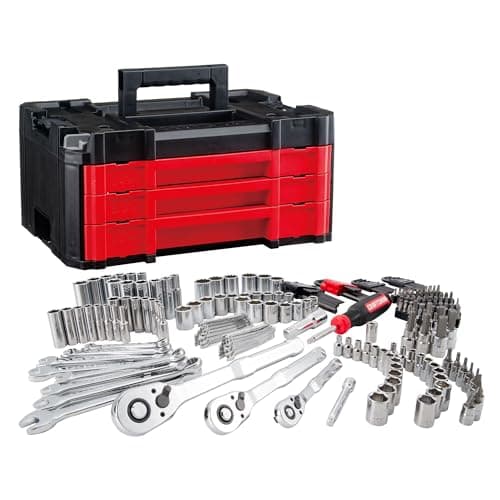
Nobody becomes tidy. What actually happens is that sockets go back onto a labeled rail because the rail is right there, and a rolling cart follows you to the car so that the trip back to the bench stops existing. Neither makes you faster on the first day. Both make you faster on the day it matters.
The labeled rail has a second benefit that is easy to miss: you can see at a glance that the 14 millimeter is missing, which is a much better time to find out than when you are under the car.
You cannot torque what you cannot see
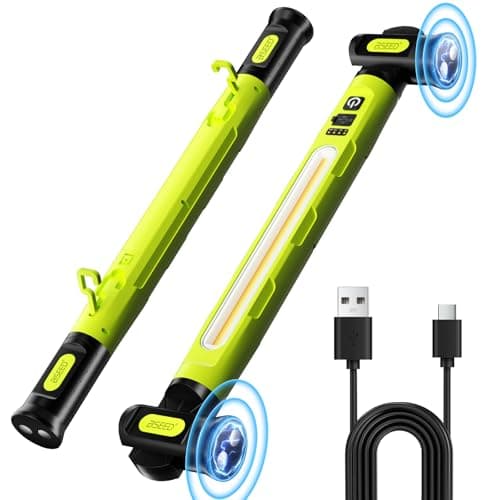
Under-hood work is lit from above by a fixture that your own head is blocking. A magnetic light bar that clips across the engine bay solves that geometry problem in a way no flashlight does, and a rechargeable one removes the extension lead running across the floor.
A note on the numbers: lumen figures on work lights are manufacturer claims with no independent certification behind them, and stated runtimes are usually quoted at a lower output than the headline. Treat both as ranking signals rather than as measurements.
Drive size decides what a tool set is for
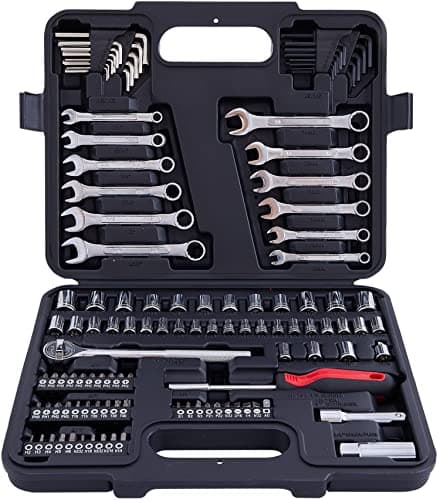
The single most useful thing on a mechanics tool set listing is not the piece count, it is the list of drive sizes. A set with 1/4 and 3/8 inch drives is a household and bicycle set. Automotive work needs 1/2 inch drive, because that is what lug nuts and suspension bolts take, and because using a 3/8 inch ratchet on a high-torque fastener is how ratchets break. The last product on this list is here to make exactly that point.
Buying a torque wrench
Range matters more than brand
A torque wrench is least accurate at the extreme ends of its range. Buy so that the figures you actually use sit in the middle. For general car work that means a 1/2 inch wrench in the 10 to 150 foot-pound band; add a 3/8 inch wrench for engine-bay fasteners, and a high-range 1/2 inch wrench only if you are doing axle and heavy suspension work.
Click, beam or digital
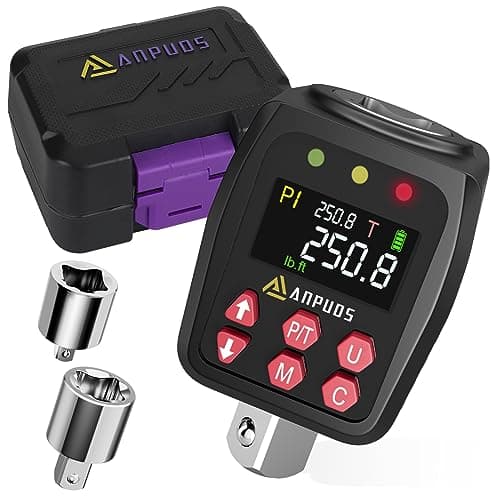
Click is the default: set the value, pull until it clicks, stop. Simple and unambiguous, and it drifts out of calibration over time. Beam wrenches never go out of calibration because there is nothing to drift — but you have to be able to see the needle, which under a car you often cannot. Digital adapters read live torque and can be used with any ratchet, at the cost of a battery that can be flat when you need it.
Calibration, honestly
Consumer torque wrenches are sold with an accuracy claim and almost never with a certificate. Two practical checks: compare the wrench against a digital adapter, which catches gross drift for the price of one tool; and if a wrench is dropped, treat its readings as suspect until you have checked it.
Choosing storage and lighting
Rails and drawers
Socket rails are bought per drive size, so a full set is three purchases. Buy the drive you use most first — for most people that is 3/8 inch. Check drawer depth before ordering: rails with tall clips do not fit shallow drawers, and finding that out after assembly is annoying.
Carts
The specification to read is the stated load capacity and whether the casters lock. A loaded cart on a sloped driveway with unlocked casters is a specific and memorable kind of bad day.
Light
A bar for the engine bay, a headlamp for everything else. Magnets are the most useful mounting method and also the reason your light will collect steel swarf — wipe it before it goes near a cylinder head.