We earn a commission when you buy through our Amazon links, at no extra cost to you. It never changes the order of the picks, and we say so when the cheaper thing is the better buy. How this works.
Do this before you look at a single tent. Open your owner's manual and find the dynamic roof load rating — the maximum weight your roof may carry while the vehicle is moving. On most crossovers and unibody SUVs it is between 100 and 165 pounds, and it includes the rack, the crossbars and everything mounted to them.
Now subtract your rack. A typical aftermarket rack and crossbar set is 40 to 60 pounds. On a 165-pound-rated roof that leaves roughly 105 to 125 pounds for a tent, and most hardshell tents weigh more than that.
The number people quote instead is static roof load — what the roof holds parked, with no suspension movement and no cornering forces. It is far higher, often three times the dynamic figure, and it is why the tents work at all once you stop. It is not the number that governs driving there.
Find the dynamic figure in the manual, not on a forum. On a substantial share of vehicles it means a ground tent is the honest answer — and a ground tent is cheaper, lighter and does not cost you 2 to 3 miles per gallon all year.
Inflatable beams instead of a rigid frame, which cuts weight dramatically — and weight is the constraint that stops most people buying a rooftop tent at all.
Not a comment on the tent so much as on who it is sold to. It is marketed for Jeeps, SUVs, trucks and vans as a group, and for a large share of that group the dynamic roof load arithmetic does not work.
#ad · Live prices from the Amazon Creators API, as of October 19, 2026. Where we have no verified live price we show none — a gap beats a number that has rotted.
In detail
The picks, in full
01
Best overall
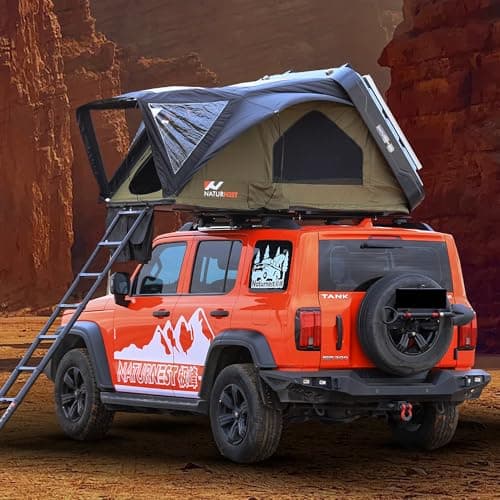
Adventurer Pro Hard Shell
Hard shell2-3 personAluminum constructionGas strut opening
7.6/10
Aluminum hardshell, opens in under a minute, and light enough that the roof-load arithmetic actually works on a mid-size SUV.
Setup speed
10
Weather protection
8
Weight
7
Interior space
6
Value
7
What's good
+Hardshell opens and closes far faster than a fold-out, which matters when you move camp daily
+Aluminum shell survives highway speeds and weather better than fabric covers
+Closed profile is lower and quieter on the highway than a softshell
What's not
−Smaller floor area than a fold-out of the same weight
−No annex or awning space underneath
−Still a substantial roof load — check your vehicle's dynamic rating first
Skip it if…
…your vehicle's dynamic roof load rating is under about 165 pounds. Subtract your rack weight from that figure before you shop, not after.
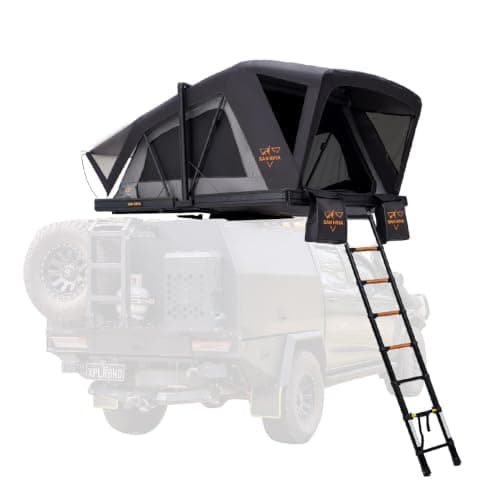
Inflatable frameSUV and truckLightweightPump required
7.6/10
Inflatable beams instead of a rigid frame, which cuts weight dramatically — and weight is the constraint that stops most people buying a rooftop tent at all.
Setup speed
6
Weather protection
6
Weight
10
Interior space
7
Value
9
What's good
+Substantially lighter than any framed tent here, which changes the roof-load math entirely
+A third of the price of the hardshells
+Packs smaller when not in use
What's not
−Inflatable beams can puncture, and a puncture is a structural failure rather than a leak
−Needs a pump and time at every setup
−Less rigid in wind than a framed tent
Skip it if…
…you camp in sustained wind. An inflatable structure flexes in gusts in a way a rigid frame does not.
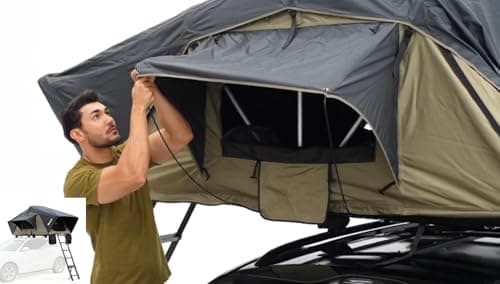
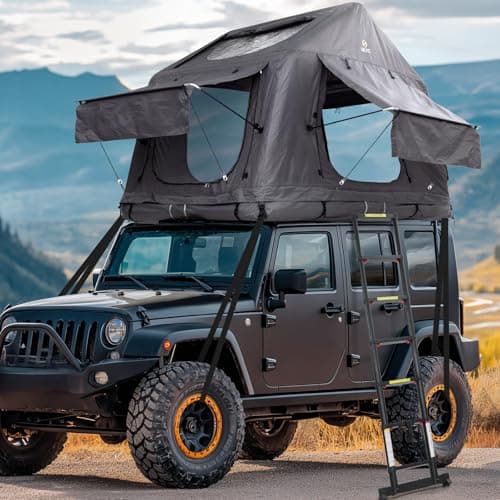
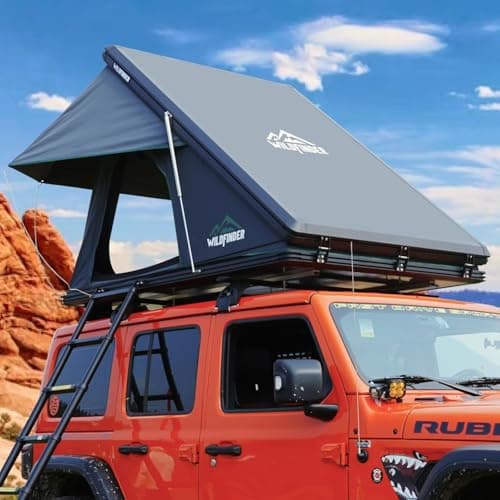
Hard shellMarketed for SUV/truck/vanAluminum shell
6.4/10
Not a comment on the tent so much as on who it is sold to. It is marketed for Jeeps, SUVs, trucks and vans as a group, and for a large share of that group the dynamic roof load arithmetic does not work.
Setup speed
8
Weather protection
7
Weight
4
Interior space
7
Value
6
What's good
+Hardshell convenience
+Priced below the premium hardshells
What's not
−Dynamic roof load — the weight a roof may carry while MOVING — is typically 100 to 165 lb on unibody crossovers and SUVs, and that figure INCLUDES the rack and crossbars
−A heavy hardshell plus a rack routinely exceeds that before you have loaded anything else
−The listing's vehicle compatibility is about physical fitment, not about whether your roof is rated for the load — those are different questions and only one is on the listing
−Static load (parked, with people in the tent) is far higher, which is why the tents work at all — but you still have to drive there
Skip it if…
…you have not read your owner's manual's dynamic roof load figure and subtracted your rack weight from it. Do that first; on many vehicles it ends the rooftop tent conversation, and a ground tent is both cheaper and better.
Hardshell tents open in under a minute with gas struts, sit lower on the highway, and give you less floor area for the weight. Softshell tents fold out over the side of the vehicle, giving substantially more sleeping area and a covered space beneath, at the cost of several minutes at each end and a taller, noisier profile while driving.
The deciding question is how often you move camp. Daily movers should buy hardshell. People who set up for three nights at a time should buy softshell and enjoy the space.
The real costs nobody mentions
Fuel. A rooftop tent typically costs 2 to 4 miles per gallon from aerodynamic drag. Over a year of driving, that is a real number.
Storage. When it is off the vehicle it is a 120-pound object that needs a garage and usually two people or a hoist to move.
Parking. Vehicle height increases by roughly 8 to 14 inches. Parking garages, drive-throughs and low branches all become considerations.
The ladder in the night. Everyone finds this romantic until the second trip.
What a rooftop tent genuinely buys you
Setup speed, a flat and dry sleeping surface anywhere you can park, and separation from wet or uneven ground. Those are real advantages on a trip where you move constantly and cannot rely on finding a good pitch. On a trip where you drive to a campground and stay, a ground tent is better in almost every way including cost.
Mounting
The tent bolts to crossbars, and the crossbars have their own load rating that is often lower than the roof's. Check both. Factory rails are frequently rated well below aftermarket crossbars, and the lowest rating in the chain is the one that governs.
How these were picked
I haven't handled these. Here's what I did instead.
Everyone in this category says they tested twenty of these. I haven't tested any, and I say so. What I do instead: read the manufacturer's manual and published specification, compile the numbers that decide the purchase, do the arithmetic in the open, check the live price, and name one product to skip. The scores above are judgments from that research against a published rubric — they are not measurements I took, because I do not have a lab and I am not going to pretend otherwise.
Questions
Frequently asked
What is dynamic roof load and where do I find it?+
The maximum weight your roof may carry while the vehicle is moving, including the rack and crossbars. It is in your owner's manual, usually in the roof rack or loading section. On crossovers it is often 100 to 165 lb, which is less than many rooftop tents weigh.
Why can a rooftop tent hold two people if my roof is rated for 165 lb?+
Because static load — parked, suspension settled, no cornering forces — is much higher than dynamic load. That is why people can sleep up there. You still have to drive to the campsite, and driving is governed by the dynamic figure.
How much fuel economy does a rooftop tent cost?+
Typically 2 to 4 miles per gallon depending on the tent's profile and your speed, with a hardshell generally costing less than a folded softshell because it is lower. Over a year of highway driving it is a meaningful running cost.
Hardshell or softshell rooftop tent?+
Hardshell if you move camp often — it opens in under a minute and packs away just as fast. Softshell if you stay put, because you get considerably more floor area and a covered annex space for the same weight.
We do not run a testing lab and we do not pretend to. Where a measured number came from a manufacturer's published specification or someone else's lab, we name them and link them. Where we could not verify something, we say so on the page rather than quietly leaving it out. Read the full method.