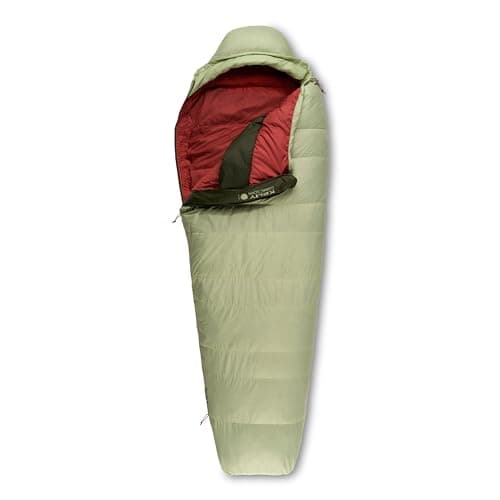
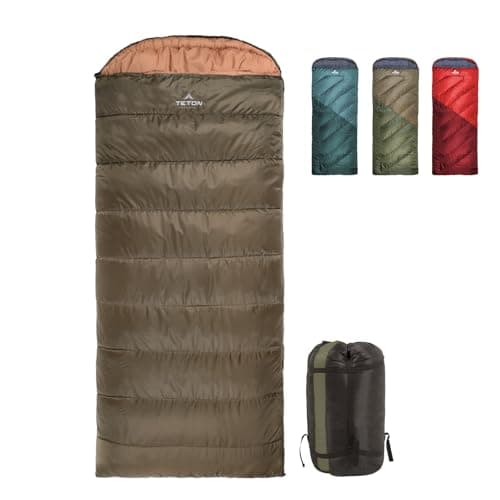
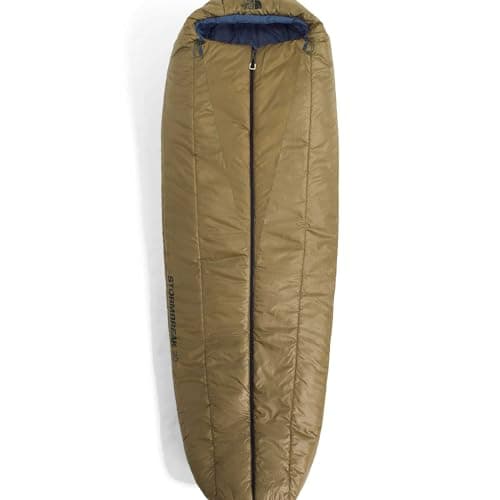
We earn a commission when you buy through our Amazon links, at no extra cost to you. It never changes the order of the picks, and we say so when the cheaper thing is the better buy. How this works.
Sleeping bags are unusual in outdoor gear: there is an actual international standard for temperature rating. ISO 23537 (which replaced EN 13537) puts a bag on a heated mannequin and produces two numbers — a comfort rating, at which a standard cold sleeper is comfortable, and a limit rating, at which a standard warm sleeper is curled up and just about not shivering.
The number printed large on the stuff sack is usually the limit. That gap is why so many people are cold in a bag rated ten degrees below the night's low. As a working rule, buy a bag rated 10 to 15°F below the coldest temperature you actually expect.
And note what happens when a bag quotes no rating at all. In the one category where a comparable standard exists, declining to state a number is the most informative thing a listing can do.
A bag is one third of a sleep system and the shelter is another. Our tent roundup covers the one- and two-person end, family tents covers the four-plus end where the decision is really about floor plan, and the camping checklist is the list to pack against once you own all three.
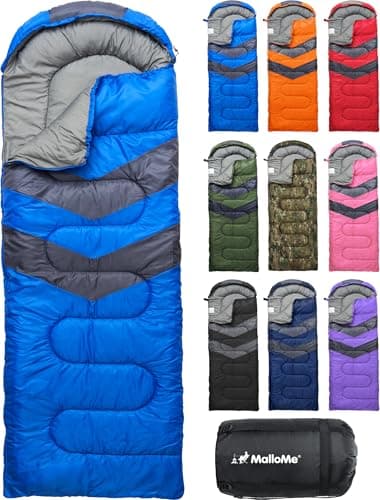
Sold as a cold-weather bag with no stated temperature rating and no stated standard. In the one gear category that HAS a real international rating system, refusing to quote one is the whole review.
#ad · Live prices from the Amazon Creators API, as of October 19, 2026. Where we have no verified live price we show none — a gap beats a number that has rotted.
In detail
The picks, in full
01
Best overall value
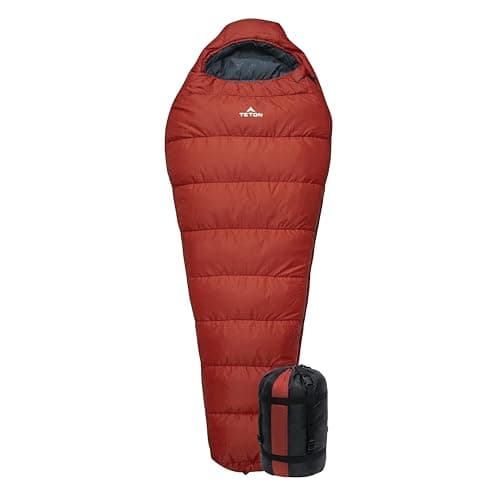
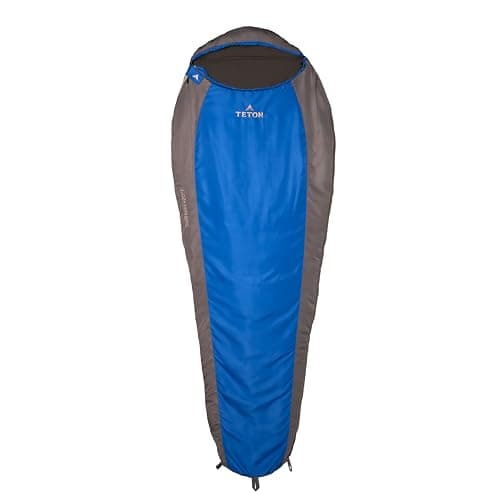
TETON Trailhead 20°F Mummy
20°F ratingMummy cutSynthetic fillCompression sack included
7.6/10
A 20°F mummy bag under seventy dollars from a company that has been making them for twenty years — the sensible default.
Warmth for weight
7
Packed size
6
Wet performance
8
Comfort
7
Value
10
What's good
+Mummy cut with a hood is dramatically warmer than a rectangular bag at the same fill
+Synthetic fill keeps working when damp, unlike down
+Compression sack included rather than sold separately
What's not
−Manufacturer temperature ratings are not always ISO-tested — treat 20°F as a limit rather than a comfort figure
−Synthetic fill packs larger than down
−Mummy cut is restrictive if you move in your sleep
Skip it if…
…you sleep cold and expect comfort at 20°F. Buy a bag rated 10 to 15 degrees below the temperature you actually expect.
Sold as a cold-weather bag with no stated temperature rating and no stated standard. In the one gear category that HAS a real international rating system, refusing to quote one is the whole review.
Warmth for weight
4
Packed size
7
Wet performance
6
Comfort
5
Value
5
What's good
+Very cheap
+Light and compact
What's not
−Sleeping bags are rated under ISO 23537 / EN 13537, which makes ratings comparable between brands. A bag that quotes no figure at all cannot be compared to anything
−"Cold weather" is a marketing phrase, not a specification
−Fill weight is also unstated, so there is no proxy number either
−Being cold at 2am is the failure mode that ends trips
Skip it if…
…you will sleep outside in it. The TETON Trailhead is a genuine 20°F bag for about forty dollars more, and forty dollars is cheap for not being cold.
Down has a far better warmth-to-weight ratio and compresses dramatically smaller, which is why backpackers buy it. It also loses most of its loft when wet and dries slowly. Synthetic is heavier and bulkier and keeps insulating when damp, which is why it is the right choice for canoe trips, humid climates and anyone hard on gear.
Fill power measures down's loft per ounce: 550 is entry-level, 800+ is premium. Higher fill power means the same warmth in a smaller, lighter package — it does not mean warmer by itself.
Mummy versus rectangular
A mummy cut with a hood and a draft collar is substantially warmer for the same fill, because there is less air to heat and less exposed head. A rectangular bag is more comfortable to move in and considerably colder. If you dislike mummy bags, buy a warmer rating rather than fighting the cut.
The pad matters as much as the bag
The insulation under you is compressed flat by your body weight and does almost nothing. Ground conduction is the main heat loss in a tent, and the sleeping pad's R-value is what stops it. A 0°F bag on a summer pad will leave you cold.
Storage kills more bags than use
Never store a bag compressed. Long-term compression permanently damages loft in both down and synthetic. Hang it or keep it in the large mesh storage sack it came with, and use the compression sack only for travel.
How these were picked
I haven't handled these. Here's what I did instead.
Everyone in this category says they tested twenty of these. I haven't tested any, and I say so. What I do instead: read the manufacturer's manual and published specification, compile the numbers that decide the purchase, do the arithmetic in the open, check the live price, and name one product to skip. The scores above are judgments from that research against a published rubric — they are not measurements I took, because I do not have a lab and I am not going to pretend otherwise.
Questions
Frequently asked
What temperature rating sleeping bag do I need?+
Rated 10 to 15°F below the coldest night you expect. The big number on the sack is usually the ISO limit rating, at which a warm sleeper is just about not shivering — not the comfort rating, which is what most people are actually shopping for.
Down or synthetic for camping?+
Synthetic for car camping, canoe trips, humid climates and anyone hard on gear — it keeps insulating damp. Down for backpacking, where its smaller packed size and lower weight are worth the care it demands.
Why am I cold in a bag rated for the temperature?+
Most likely your sleeping pad. The insulation beneath you is compressed flat and does nothing, so ground conduction is the dominant heat loss. Check the pad's R-value before blaming the bag.
What is fill power?+
The loft of down measured in cubic inches per ounce. 550 is entry-level, 800+ is premium. Higher fill power gives the same warmth in less weight and volume — it is a weight-and-packing measure, not a warmth measure on its own.
How should I store a sleeping bag?+
Uncompressed — hung in a closet or loose in a large mesh sack. Long-term compression permanently flattens loft in both down and synthetic, and a bag stored stuffed for a year is measurably colder afterwards.
We do not run a testing lab and we do not pretend to. Where a measured number came from a manufacturer's published specification or someone else's lab, we name them and link them. Where we could not verify something, we say so on the page rather than quietly leaving it out. Read the full method.