Skip to content
Steve's Outpost

Section 02 · Hunting

Best Insulated Hunting Boots

Insulation is not a quality scale, it is a matching problem. The warmest boot here is close to unusable for walking, and buying it as an all-rounder is the classic mistake.

By Stephen V.Updated How we pick
#ad

We earn a commission when you buy through our Amazon links, at no extra cost to you. It never changes the order of the picks, and we say so when the cheaper thing is the better buy. How this works.

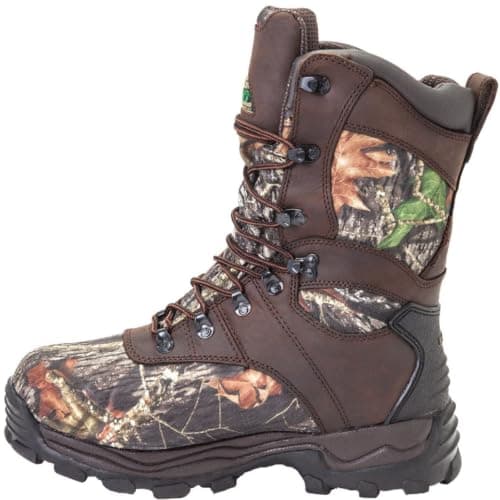
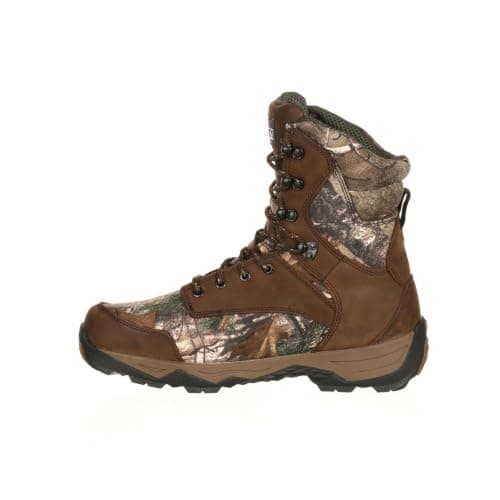
Rocky Rocky Sport Utility 1000G

The one insulated boot to own

Rocky Sport Utility 1000G

A thousand grams from an established boot maker covers a cold morning sit without turning the walk in into a mistake. It is the band that fits the most hunting most people do.

If you walk more than about half a mile to your stand, drop to the 800-gram boot below. Arriving with sweat-soaked feet is how people get cold in warm boots.

$101.99Amazon (affiliate link)

$144.6930% off

Price as of November 23, 2026. Prices move — Amazon's is the one that counts.

#ad · we may earn a commission from this link to Rocky Sport Utility 1000G

The verdict first: buy the Rocky Sport Utility 1000G. It is for the hunter who sits more than they walk and wants one insulated boot rather than a collection. If you want the most insulation for the least money, the budget pick is the HUNTRITE 1600-gram — the warmest boot in this registry and the cheapest one here I would recommend, on the condition that you understand it is a sitting boot. Skip the Hunthor boot sold on a -20°F rating: no standard produces a temperature rating for footwear, so that number is marketing rather than a measurement.

Prices come from a live lookup with the date printed under the table. Nothing in this prose quotes a number.

Insulation grams, and what the bands actually mean

Insulation on a hunting boot is specified in grams per square meter of the insulating material. It is the one comparable number in the category, and it maps to activity rather than to temperature:

  • 400g and below. Early season and any hunt where you cover ground. Nothing on this page is in this band.
  • 800g. The general-purpose band: warm enough to sit for a couple of hours, cool enough to walk a mile without soaking the liner.
  • 1000g. A stand boot. Comfortable sitting in genuinely cold weather, uncomfortable on any real approach.
  • 1600g. A specialist tool for sitting still in the cold. You will overheat within a quarter mile of walking and then your feet will get cold, which is the irony at the top of this scale.

The reason the bands map to activity and not to air temperature is simple: warmth in a boot depends on fit, sock choice, circulation and whether the liner is dry, and none of those are properties of the boot. How to keep your feet warm hunting is the technique half of this, and it will do more for you than two hundred extra grams.

Why a stated temperature rating is meaningless

Sleeping bags have an ISO standard — a defined test with a heated mannequin that produces comparable comfort and limit figures. Footwear has nothing equivalent. There is no test method, no standards body and no reference condition, so when a boot listing says it is rated to a temperature, nobody measured that and no two boots quoting a figure can be compared.

That is the entire reason one boot on this page is listed as a skip while a boot with the same stated insulation is the budget pick. The grams are comparable. The degrees are not.

Dry feet beat warm boots

Here is the failure mode nobody expects. You buy a thousand-gram boot, you walk twenty minutes to the stand in it, your feet sweat because the boot is doing exactly what it was built to do, and then you sit still in a damp liner for three hours and freeze. The boot did not fail. The matching failed.

The fixes, in order of how much they help: walk in lighter boots and change at the stand; wear a merino or wool-blend sock rather than cotton; size the boot so there is room for the sock rather than compressing it; and dry the liner properly between hunts rather than leaving it in a cold truck.

Rubber, leather, and the whitetail argument

A full rubber upper has no seams to leak and holds almost no scent, which is why whitetail hunters in wet country wear them and why one is ranked here. The cost is that rubber does not breathe at all and gives you less ankle support than a laced boot, so it is the wrong boot for broken ground and the right boot for flooded timber.

A laced leather or synthetic boot supports the ankle, breathes a little, and can be fitted precisely. For any hunt that involves covering ground on uneven terrain, that is the category — see the general boot roundup, which ranks on fit and walkability rather than on insulation.

How to choose between the five

  1. How far do you walk? Over half a mile: 800g. Under: 1000g or more.
  2. How long do you sit? Over three hours in December: 1000g minimum, and the 1600g boot is a real option if you drive to the stand.
  3. Is the ground wet? Standing water or flooded timber: rubber. Damp ground: a waterproof laced boot.
  4. Is this your only pair? Then 800g or 1000g. A 1600g boot as an all-rounder is the mistake this page exists to prevent.

The short answer

Quick picks

#ProductBest forScorePrice
01
Rocky Rocky Sport Utility 1000G
Rocky Sport Utility 1000G

A thousand grams from an established boot maker is the band that covers a cold morning sit without making the walk in a mistake. If you buy one insulated boot, this is the one to buy.

Best overall insulated boot
7.8
$101.99Amazon (affiliate link)
02
HUNTRITE HUNTRITE Insulated 1600-gram
HUNTRITE Insulated 1600-gram

The most insulation in this registry at the lowest price of any boot on this page I would recommend. It is a specialist tool for sitting still, and buying it as an all-rounder is the classic insulation mistake.

Warmest here — and the budget pick
7.2
Check price → (affiliate link)
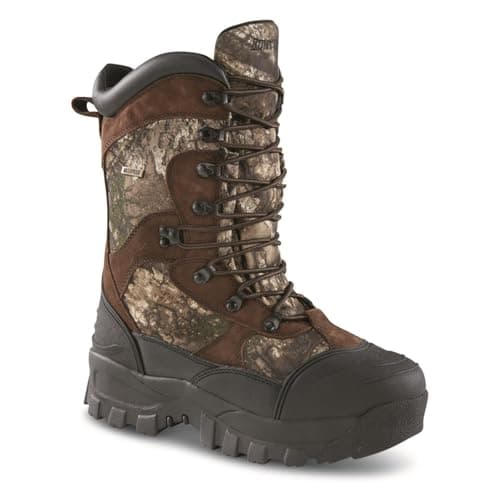
03
Rocky Rocky Retraction 800G
Rocky Retraction 800G

Eight hundred grams is the band that still lets you cover ground without arriving wet from the inside, which is the real reason cold feet happen in warm boots.

Best if you walk to your stand
7.8
$93.47Amazon (affiliate link)
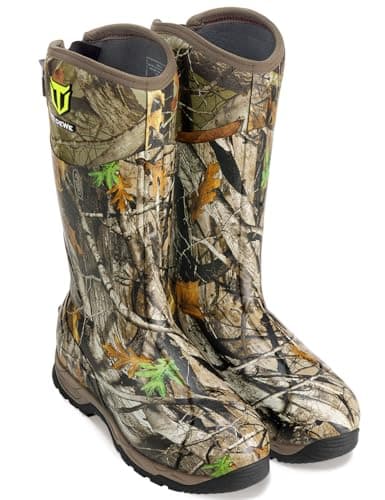
04
TIDEWE TIDEWE Rubber Hunting Boots 800G
TIDEWE Rubber Hunting Boots 800G

A full rubber upper has no seams to leak and holds almost no scent, which is why whitetail hunters in flooded timber wear them. It does not breathe at all, and that is the price.

Best for wet ground
7.8
$119.99Amazon (affiliate link)
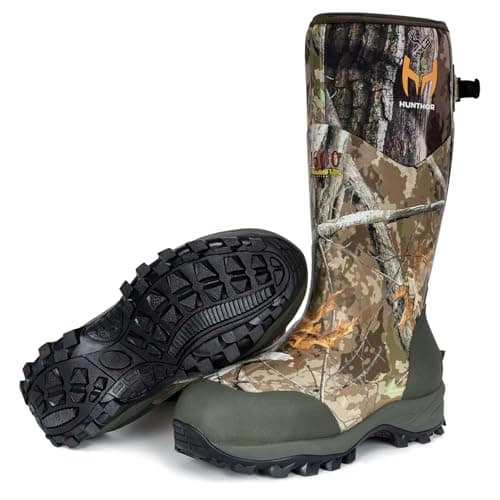
05
Hunthor Hunthor 1600g -20°F Rated
Hunthor 1600g -20°F Rated

No standard produces a temperature rating for footwear, so a stated degree figure is marketing rather than a specification. Insulation grams and fit are the comparable numbers, and this one gives you the grams without the claim attached.

Skip this one — the temperature number is not a measurement
5.4
$108.99Amazon (affiliate link)

#ad · Live prices from the Amazon Creators API, as of November 23, 2026. Where we have no verified live price we show none — a gap beats a number that has rotted.

In detail

The picks, in full

01
Rocky Rocky Sport Utility 1000G

Best overall insulated boot

Rocky Sport Utility 1000G

1000g insulationWaterproofMossy Oak Break-UpSteel shank
7.8/10

A thousand grams from an established boot maker is the band that covers a cold morning sit without making the walk in a mistake. If you buy one insulated boot, this is the one to buy.

Warmth
10
Waterproofing
8
Comfort
6
Durability
7
Value
8

What's good

  • 1000g is genuinely warm for long static sits in December
  • Waterproof and tall enough for shallow crossings
  • Steel shank supports a foot standing on a treestand platform

What's not

  • Far too warm for walking any distance
  • Heavy, which compounds over a long approach
  • Stiff until well broken in

Skip it if…

…you walk more than half a mile to your stand. You will arrive with wet feet, and wet feet in a 1000g boot get cold faster than dry feet in a 400g one.

$101.99Amazon (affiliate link)

$144.6930% off

Price as of November 23, 2026. Prices move — Amazon's is the one that counts.

#ad · we may earn a commission from this link to Rocky Sport Utility 1000G

02
HUNTRITE HUNTRITE Insulated 1600-gram

Warmest here — and the budget pick

HUNTRITE Insulated 1600-gram

1600g insulationWaterproofRT Edge camoRubber outsole
7.2/10

The most insulation in this registry at the lowest price of any boot on this page I would recommend. It is a specialist tool for sitting still, and buying it as an all-rounder is the classic insulation mistake.

Warmth
10
Waterproofing
7
Comfort
5
Durability
6
Value
8

What's good

  • 1600g is the top of the practical insulation range and it is genuinely warm
  • Priced like a 400g boot from a bigger name
  • Waterproof construction

What's not

  • Unusable for walking — you will overheat within a quarter mile
  • Very heavy
  • Less established brand, so long-term durability is unproven

Skip it if…

…this is your only pair of hunting boots. A 1600g boot is a specialist tool for static hunting, and buying it as an all-rounder is the classic insulation mistake.

Check price on Amazon → (affiliate link)

No buyable offer at the last price check (November 23, 2026). We show nothing rather than a stale number.

#ad · we may earn a commission from this link to HUNTRITE Insulated 1600-gram

03
Rocky Rocky Retraction 800G

Best if you walk to your stand

Rocky Retraction 800G

800g insulationWaterproofRealtree XtraRubber outsole
7.8/10

Eight hundred grams is the band that still lets you cover ground without arriving wet from the inside, which is the real reason cold feet happen in warm boots.

Warmth
8
Waterproofing
8
Comfort
7
Durability
7
Value
9

What's good

  • Hits the general-purpose insulation band at a genuinely accessible price
  • Waterproof construction from an established boot maker
  • Aggressive outsole grips wet leaves and mud

What's not

  • Not recraftable — when the sole goes, the boot goes
  • Heavier than the Danner for the same insulation
  • Sizing runs inconsistent between models

Skip it if…

…you will put a hundred days a season on them. This is a three-to-five-season boot, not a decade boot.

$93.47Amazon (affiliate link)

$109.9915% off

Price as of November 23, 2026. Prices move — Amazon's is the one that counts.

#ad · we may earn a commission from this link to Rocky Retraction 800G

04
TIDEWE TIDEWE Rubber Hunting Boots 800G

Best for wet ground

TIDEWE Rubber Hunting Boots 800G

800g insulationFull rubber upperNeoprene liningPull-on
7.8/10

A full rubber upper has no seams to leak and holds almost no scent, which is why whitetail hunters in flooded timber wear them. It does not breathe at all, and that is the price.

Warmth
8
Waterproofing
10
Comfort
6
Durability
6
Value
9

What's good

  • A rubber upper has no seams to leak — the only truly waterproof construction here
  • Scent-free relative to leather, which matters to whitetail hunters
  • Pull-on means no laces to freeze or fail

What's not

  • Rubber does not breathe at all — feet sweat and stay damp
  • Less ankle support than a laced boot
  • Rubber cracks with age and UV exposure

Skip it if…

…you cover broken ground. A pull-on rubber boot gives you far less ankle support than a laced leather one, and that is where injuries come from.

$119.99Amazon (affiliate link)

Price as of November 23, 2026. Prices move — Amazon's is the one that counts.

#ad · we may earn a commission from this link to TIDEWE Rubber Hunting Boots 800G

05
Hunthor Hunthor 1600g -20°F Rated

Skip this one — the temperature number is not a measurement

Hunthor 1600g -20°F Rated

1600g insulation claimed"-20°F rated"Waterproof claimed
5.4/10

No standard produces a temperature rating for footwear, so a stated degree figure is marketing rather than a specification. Insulation grams and fit are the comparable numbers, and this one gives you the grams without the claim attached.

Warmth
7
Waterproofing
5
Comfort
5
Durability
4
Value
6

What's good

  • 1600g of insulation, if accurate, is genuinely a lot
  • Inexpensive for the stated insulation level

What's not

  • No footwear standard produces a temperature rating — unlike sleeping bags, which have ISO 23537. A quoted °F figure on a boot is not comparable to anything
  • Insulation weight is the only comparable specification, and it is the one to buy on
  • Warmth depends enormously on fit, sock and activity level, none of which a temperature claim can account for
  • Unestablished brand with no durability record

Skip it if…

…you are choosing based on the temperature number. Buy on insulation grams and fit instead — the HUNTRITE gives you the same stated 1600g without the unverifiable claim attached.

$108.99Amazon (affiliate link)

Price as of November 23, 2026. Prices move — Amazon's is the one that counts.

#ad · we may earn a commission from this link to Hunthor 1600g -20°F Rated

Buying notes

Size with the sock you will actually wear

A heavyweight wool sock takes up real volume, and a boot that fits in a store with a thin sock will compress the sock in the field. Compressed insulation does not insulate, which is the same reason you do not wear two pairs.

Break them in before the season, not during it

Stiff insulated boots take weeks. Blisters on the first morning of a hunt you planned for a year is an avoidable way to end it. The preseason checklist puts this in the right month.

Dry the liner, not the boot

A boot dryer that moves air through the liner is cheap and doubles the useful life of insulation. Leaving boots next to a heater cooks the adhesives and shortens the boot's life instead.

Insulated boots are not a replacement for layers

If your core is cold, your extremities get less blood and no boot fixes that. Cold weather hunting clothing and the stand kit cover the rest of the system the boots sit inside.
How these were picked

I haven't handled these. Here's what I did instead.

Everyone in this category says they tested twenty of these. I haven't tested any, and I say so. What I do instead: read the manufacturer's manual and published specification, compile the numbers that decide the purchase, do the arithmetic in the open, check the live price, and name one product to skip. The scores above are judgments from that research against a published rubric — they are not measurements I took, because I do not have a lab and I am not going to pretend otherwise.

Questions

Frequently asked

How many grams of insulation do I need in a hunting boot?
Match it to activity, not to temperature: 400g or less if you are covering ground, 800g for general use, 1000g for a cold stand sit, and 1600g only if you drive to the stand and sit still. The warmest boot is the wrong boot for walking, which is where most people go wrong.
Are 1600 gram boots too warm?
For walking, yes — you will overheat within a quarter mile and then sit in a damp liner, which is colder than a lighter boot would have been. For a stationary late-season sit they are exactly right.
Do hunting boots have a real temperature rating?
No. There is no standardized test for footwear temperature ratings, unlike sleeping bags which have ISO 23537. A stated degree figure on a boot is not comparable to anything. Buy on insulation grams and fit.
Are rubber hunting boots warmer than leather?
Not inherently — insulation grams decide warmth. Rubber is more waterproof and holds less scent, and it breathes not at all and supports your ankle less. It is the right choice for wet flat ground and the wrong one for hiking broken terrain.
What is the cheapest insulated hunting boot worth buying?
The HUNTRITE 1600-gram, which is both the warmest boot on this page and the least expensive one we would recommend. The honest caveat is the same as for any boot at that insulation level: it is for sitting, not walking, and the brand has no long-term durability record.

Keep reading

Receipts

Sources

We do not run a testing lab and we do not pretend to. Where a measured number came from a manufacturer's published specification or someone else's lab, we name them and link them. Where we could not verify something, we say so on the page rather than quietly leaving it out. Read the full method.