Skip to content
Steve's Outpost

Section 02 · Hunting

How to Keep Your Feet Warm Hunting

Cold feet end more sits than cold hands do. Almost always the cause is not insufficient insulation — it is too much sock in too little boot, or a boot that was still damp when you put it on.

By Stephen V.Updated How we pick
#ad

We earn a commission when you buy through our Amazon links, at no extra cost to you. It never changes the order of the picks, and we say so when the cheaper thing is the better buy. How this works.

The short answer: wear one good heavyweight merino sock, not two, in a boot with room to wiggle your toes, and make sure the boot was completely dry when you put it on. Those three things fix most cold feet without buying a warmer boot. If you still get cold while sitting still for hours, the thing to add is insulated covers over the boot rather than more insulation inside it. Start with the sock — it is the cheapest thing on this page and the most likely culprit.

This is written for the stand or blind hunter sitting still in the cold, which is where the problem is worst. If you are walking, your feet are usually fine until you stop — and then the problem becomes sweat, which is the same problem from the other direction.

Why feet get cold, in order of how often it is the real cause

  1. Compression. This is the big one. Two pairs of socks, or one very thick pair, in a boot sized for one, squeezes your foot and restricts blood flow. Warm feet are a circulation problem before they are an insulation problem, and the classic mistake makes circulation worse in the name of warmth. If your foot feels snug in the boot, you have found your answer.
  2. Moisture. Water conducts heat away from your skin far faster than air does. The moisture comes from two places: boots that never fully dried from the last hunt, and your own sweat on the walk in. A boot that feels merely cool inside when you put it on is damp, and it will not get warm.
  3. Not moving. Your body heats your feet with circulation, and sitting motionless in a stand for four hours means your legs are doing nothing to help. This is why the same boots that are fine on a walk fail on a sit.
  4. Genuinely insufficient insulation. Last on the list on purpose. If your boots are 400 or 600 gram and you are sitting at twenty degrees for five hours, this genuinely is the problem — but it is the cause far less often than people assume, and buying 1600 gram boots will not help if the first three are unaddressed.

The fix, in order

1. One sock, the right sock

A single heavyweight merino wool sock. Merino holds warmth when damp, which cotton does not — a cotton sock that has absorbed any sweat is actively making you colder. Full cushion over the foot and up the calf, sized so you can still move your toes freely inside the boot.

If you have always worn two pairs, try one for a sit before buying anything else. It surprises people.

2. Dry the boots properly, every time

A forced-air or convection boot dryer overnight gets the inside of a boot genuinely dry in a way that leaving them by a heater does not — the insulation holds moisture in the middle where air does not reach. Running one is the step most people skip and it is the single highest-return habit in cold-weather hunting. Put it on the preseason list and then use it all season; the preseason checklist is here.

Note the limitation: do not run a hot dryer on rubber boots or on anything with a glued membrane beyond what the manufacturer allows. Low heat and time beat high heat.

3. Size for the sock you will actually wear

Hunting boots should be tried on with the sock you hunt in. Half a size up from your street shoe is common and correct for an insulated boot. The test is whether you can wiggle all your toes with the boot laced — if you cannot, it is too small no matter what the box says.

4. Insulate outside the boot, not inside it

For a long stationary sit, an insulated boot cover goes over the whole boot and adds a thick dead-air layer without compressing your foot at all. This is the correct way to add warmth to a boot you already own, and it is why it is on this page instead of a second pair of socks. It is bulky and poor for walking, which is fine — you put it on when you get to the stand.

5. Only then, buy the warmer boot

If you sit still in genuinely cold weather for hours, a heavily insulated boot — 1200 to 1600 gram — is the right tool and nothing else substitutes. Accept that it is a sitting boot: that much insulation is miserable to walk a mile in, and the sweat it generates becomes the moisture problem from step two. Our boot roundup splits them by that exact distinction.

Things that help less than people think

  • Chemical toe warmers. They work, with two caveats: most need air to activate and a tight boot starves them, and the adhesive type stuck directly under the foot gets crushed and stops. Put them on top of the toes, not underneath, and do not rely on them as the plan.
  • Battery-heated socks and insoles. Genuinely effective and genuinely fragile, and the battery pack lives in the cold where batteries do worst. A reasonable luxury, a poor foundation.
  • A vapor barrier sock. Works, and keeps your boot insulation dry across multi-day hunts, but your foot ends the day wet. Worth knowing about for a week in the backcountry; overkill for a weekend.
  • More layers under the boot. Covered above — this is the thing that makes it worse.

Two things worth saying plainly

Your feet are a symptom of your core. When your body decides it is losing heat, it reduces blood flow to your extremities to protect your core temperature. Feet and hands go first. If your torso is under-insulated, you can do everything right at foot level and still have cold feet — the layering page is here and the stand kit, including a heater, is here.

And if none of this works, ask a doctor. Feet that go painfully cold, numb or discolored in conditions other people find comfortable, in boots that fit, is worth mentioning to a physician rather than solving with gear. Nothing on this page is medical advice and we are not going to guess at a cause.

The short answer

Quick picks

#ProductBest forScorePrice
01
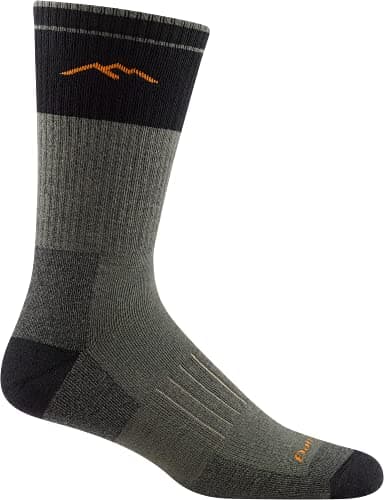
Darn Tough Darn Tough Vermont Hunting Boot Sock, Heavyweight Full Cushion
Darn Tough Vermont Hunting Boot Sock, Heavyweight Full Cushion

One heavyweight merino sock, sized so the boot still has air in it. Most cold-feet problems are a circulation problem created by too much sock in too little boot, and this is the cheapest way to find out whether yours is one of them.

Start here — the cheapest fix that works
9.0
$31.95Amazon (affiliate link)
02
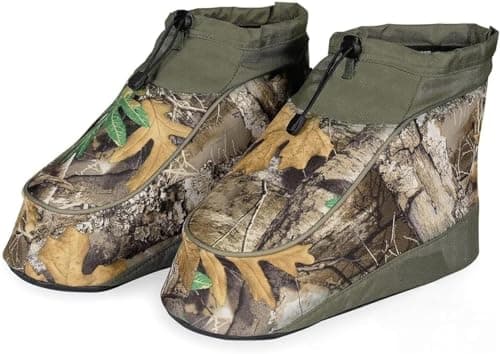
ArcticShield ArcticShield Insulated Boot Covers, 600D
ArcticShield Insulated Boot Covers, 600D

The honest fix for cold feet on a static sit. Boot insulators go on over the boots when you get to the stand and come off for the walk out, which is the only way to have warm feet and dry ones.

Best for sitting still
7.8
$43.69Amazon (affiliate link)
03
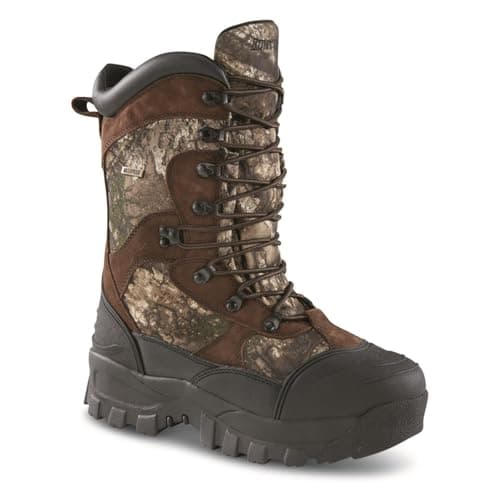
HUNTRITE HUNTRITE Insulated 1600-gram
HUNTRITE Insulated 1600-gram

The most insulation on this list, for the one job that genuinely needs it: sitting still in the cold for hours.

Best boot for a long cold sit
7.2
$99.95Amazon (affiliate link)
04
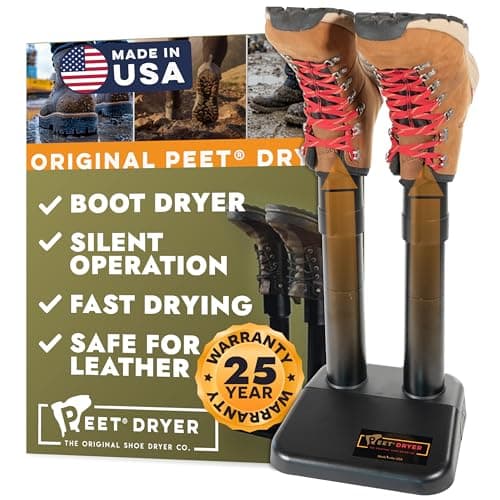
PEET PEET Original Portable Electric Boot & Shoe Dryer
PEET Original Portable Electric Boot & Shoe Dryer

Convection, no fan, no noise, no timer. It runs warm rather than hot and dries a soaked boot overnight, which is exactly the schedule hunting runs on.

Best boot dryer — and the step most people skip
8.2
$49.99Amazon (affiliate link)

#ad · Live prices from the Amazon Creators API, as of October 19, 2026. Where we have no verified live price we show none — a gap beats a number that has rotted.

In detail

The picks, in full

01
Darn Tough Darn Tough Vermont Hunting Boot Sock, Heavyweight Full Cushion

Start here — the cheapest fix that works

Darn Tough Vermont Hunting Boot Sock, Heavyweight Full Cushion

Merino wool blendFull cushionOver-the-calf boot heightLifetime warranty
9.0/10

One heavyweight merino sock, sized so the boot still has air in it. Most cold-feet problems are a circulation problem created by too much sock in too little boot, and this is the cheapest way to find out whether yours is one of them.

Warmth
9
Durability
10
Comfort
9
Warranty
10
Value
7

What's good

  • Unconditional lifetime guarantee, which turns the price into a one-time cost
  • Knit density means they do not pack out and go thin under the heel mid-season
  • Merino keeps working damp, which is the state your feet will actually be in

What's not

  • Expensive per pair, and you need at least two pairs for the rotation to work
  • Full cushion is too much sock for a boot that already fits snug

Skip it if…

…your boots are already tight. Adding a heavyweight cushioned sock to a snug boot cuts circulation and makes your feet colder, not warmer.

$31.95Amazon (affiliate link)

Price as of October 19, 2026. Prices move — Amazon's is the one that counts.

#ad · we may earn a commission from this link to Darn Tough Vermont Hunting Boot Sock, Heavyweight Full Cushion

02
ArcticShield ArcticShield Insulated Boot Covers, 600D

Best for sitting still

ArcticShield Insulated Boot Covers, 600D

600D shellInsulated over-bootWindproofPull-on
7.8/10

The honest fix for cold feet on a static sit. Boot insulators go on over the boots when you get to the stand and come off for the walk out, which is the only way to have warm feet and dry ones.

Warmth
9
Weather protection
8
Packability
6
Durability
7
Value
9

What's good

  • Solves the real problem, which is that a boot warm enough to sit in makes you sweat walking in
  • Cheaper than buying a second pair of 1,600-gram boots
  • Packs flat in the bottom of a pack

What's not

  • You cannot walk far in them — these are a sitting garment
  • Bulky in a day pack once you add them to bibs and a jacket

Skip it if…

…you spot and stalk. Nothing here helps a hunter who is moving; buy the right boot instead.

$43.69Amazon (affiliate link)

$45.995% off

Price as of October 19, 2026. Prices move — Amazon's is the one that counts.

#ad · we may earn a commission from this link to ArcticShield Insulated Boot Covers, 600D

03
HUNTRITE HUNTRITE Insulated 1600-gram

Best boot for a long cold sit

HUNTRITE Insulated 1600-gram

1600g insulationWaterproofRT Edge camoRubber outsole
7.2/10

The most insulation on this list, for the one job that genuinely needs it: sitting still in the cold for hours.

Warmth
10
Waterproofing
7
Comfort
5
Durability
6
Value
8

What's good

  • 1600g is the top of the practical insulation range and it is genuinely warm
  • Priced like a 400g boot from a bigger name
  • Waterproof construction

What's not

  • Unusable for walking — you will overheat within a quarter mile
  • Very heavy
  • Less established brand, so long-term durability is unproven

Skip it if…

…this is your only pair of hunting boots. A 1600g boot is a specialist tool for static hunting, and buying it as an all-rounder is the classic insulation mistake.

$99.95Amazon (affiliate link)

$129.9523% off

Price as of October 19, 2026. Prices move — Amazon's is the one that counts.

#ad · we may earn a commission from this link to HUNTRITE Insulated 1600-gram

04
PEET PEET Original Portable Electric Boot & Shoe Dryer

Best boot dryer — and the step most people skip

PEET Original Portable Electric Boot & Shoe Dryer

Convection, no moving partsSilent operationAlways-on designOne pair
8.2/10

Convection, no fan, no noise, no timer. It runs warm rather than hot and dries a soaked boot overnight, which is exactly the schedule hunting runs on.

Drying performance
8
Speed
6
Durability
10
Noise
10
Value
7

What's good

  • Nothing to fail — no fan motor is the reason these last for decades
  • Low heat will not cook the adhesives or the leather the way a hot-air gun does
  • Silent, so it can run overnight in a room somebody is sleeping in

What's not

  • Convection is slower than forced air — this is an overnight tool, not an hour-before tool
  • No timer, so it stays on until you unplug it

Skip it if…

…you need boots dry in two hours between sits. A forced-air dryer with a timer is genuinely faster and costs about half as much.

$49.99Amazon (affiliate link)

Price as of October 19, 2026. Prices move — Amazon's is the one that counts.

#ad · we may earn a commission from this link to PEET Original Portable Electric Boot & Shoe Dryer

Buying notes

Insulation weight is grams per square meter, not a temperature rating

"800 gram" describes how much insulating material is in the boot, not how cold you can be in it. There is no industry temperature standard for boots, so numbers from different brands are not strictly comparable and any "rated to minus twenty" claim is marketing rather than measurement.

Buy socks in a multi-pack and retire them honestly

Merino compresses with washing and a sock that has flattened out is no longer the sock you sized your boots around. They are not expensive relative to boots; replace them before they are thin.

Boot covers are sized to the boot, not the foot

Check the stated size range against the boot you will wear them over, including the heavy insulated one. A cover that is tight over the boot is compressing it, which undoes the point.

Rubber boots are a different trade

Completely waterproof, completely non-breathable. Excellent for wet ground and scent control, and they will sweat your feet wet on a long walk. If you hunt swamp edges, own a pair and dry them religiously.
How these were picked

I haven't handled these. Here's what I did instead.

Everyone in this category says they tested twenty of these. I haven't tested any, and I say so. What I do instead: read the manufacturer's manual and published specification, compile the numbers that decide the purchase, do the arithmetic in the open, check the live price, and name one product to skip. The scores above are judgments from that research against a published rubric — they are not measurements I took, because I do not have a lab and I am not going to pretend otherwise.

Questions

Frequently asked

Why are my feet cold in warm boots?
Usually compression or moisture rather than insufficient insulation. Two pairs of socks or one very thick pair in a boot sized for one restricts blood flow, and warm feet are a circulation problem first. The other common cause is a boot that never fully dried from the last hunt — damp insulation conducts heat away from your foot. Try one merino sock in a properly dried boot before buying anything.
Should I wear two pairs of socks hunting?
No, in almost every case. Two pairs in a boot sized for one is the single most common cause of cold feet, because it compresses your foot and cuts circulation. One heavyweight merino sock, in a boot with room to wiggle your toes, is warmer. The exception is a boot deliberately sized large for a liner sock system.
Do boot dryers actually work?
Yes, and they address the cause most people miss. Boot insulation holds moisture in the middle where ambient air never reaches it, so boots left by a heater feel dry on the surface and are not. A forced-air or convection dryer run overnight gets the interior genuinely dry. Use low heat on rubber boots and anything with a glued membrane.
How many grams of insulation do I need for hunting boots?
For walking and still-hunting, 400 to 800 gram. For sitting still in cold weather for hours, 1200 to 1600 gram. Note that the gram figure measures how much insulating material is in the boot, not a temperature rating — there is no industry standard for the latter, so cross-brand comparisons of "rated to" claims are not meaningful.
Are heated socks worth it?
They work, and they are the right answer for some people — particularly anyone who sits motionless for long periods. The reservations are that they are fragile, the battery lives in the cold where batteries perform worst, and they treat the symptom. Fix the sock, the fit and the drying first, then add heat if you still need it.
Do chemical toe warmers work in boots?
Partially. Most air-activated warmers need oxygen to generate heat and a snug boot starves them, which is why they often feel like they died. Place them on top of your toes rather than underfoot so they are not crushed, give them a few minutes in open air first, and treat them as a supplement rather than the plan.

Keep reading

Receipts

Sources

We do not run a testing lab and we do not pretend to. Where a measured number came from a manufacturer's published specification or someone else's lab, we name them and link them. Where we could not verify something, we say so on the page rather than quietly leaving it out. Read the full method.