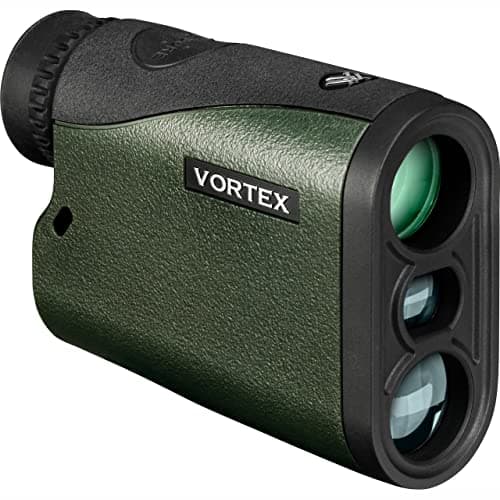
Maximum range is the number on the box and rarely the number that matters. Angle compensation and low-light glass decide whether the thing works when you need it.
We earn a commission when you buy through our Amazon links, at no extra cost to you. It never changes the order of the picks, and we say so when the cheaper thing is the better buy. How this works.
Every rangefinder listing leads with a maximum range, and that number is measured against a large, highly reflective target under ideal conditions. On a brown animal in low light, at an angle, in humid air, real performance is a fraction of it — and the cheaper the unit, the bigger the gap.
The specification that actually changes your shot is angle compensation. When you range downhill or uphill, the straight-line distance to the target is longer than the horizontal distance gravity acts over. Shoot for the line-of-sight number on a steep angle and you shoot high. An angle-compensated rangefinder gives you the number that matters, and the difference at 40 yards on a steep treestand angle is enough to miss.
After that: glass. You range at dawn and dusk because that is when animals move, and that is exactly where budget optics fall apart.
This page ranks on usable range, which is what a rifle hunter is buying. Archery inverts that completely — maximum range is irrelevant at forty yards and the angle from an elevated stand is the whole decision — so it has its own page and a different winner: rangefinders for bow hunting.
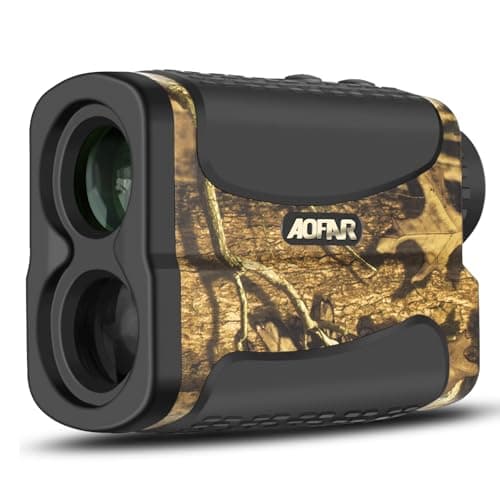
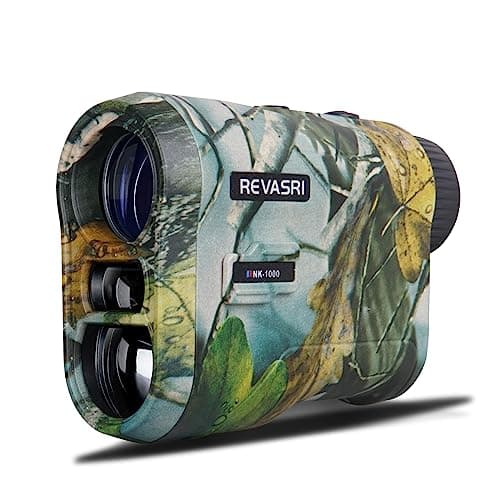
A 1000-yard claim at thirty-eight dollars is the tell. Maximum-range figures are quoted against a highly reflective target under ideal conditions, and on a deer at dusk this will not be close.
#ad · Live prices from the Amazon Creators API, as of October 19, 2026. Where we have no verified live price we show none — a gap beats a number that has rotted.
A 1000-yard claim at thirty-eight dollars is the tell. Maximum-range figures are quoted against a highly reflective target under ideal conditions, and on a deer at dusk this will not be close.
Usable range
4
Angle compensation
4
Glass quality
3
Ease of use
6
Value
5
What's good
+Very cheap
+Rechargeable battery
What's not
−Quoted maximum range is measured against a reflective target — real performance on an animal is a fraction of it, and cheap units fall furthest
−Low-light performance is where budget rangefinders fail, and low light is when you hunt
−No meaningful warranty support
−Angle compensation behavior is not clearly documented
Skip it if…
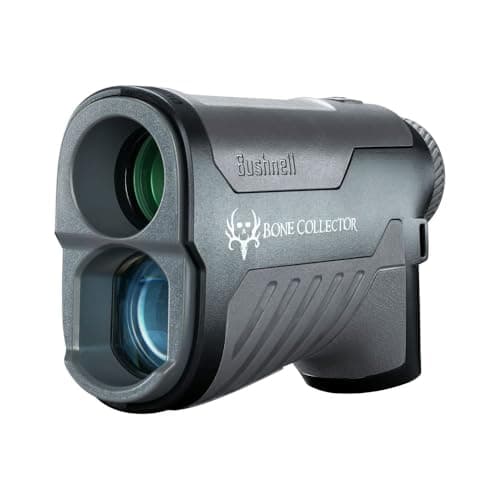
…you will rely on the number it gives you. For thirty dollars more the Bushnell BoneCollector comes from a real optics company with real support.
Better manufacturers publish separate figures: maximum range to a reflective target, to a tree, and to a deer. That last one is the only one that matters and it is often less than half the headline number. A unit that publishes only the big number is choosing not to tell you.
Angle compensation, and what it is called
Sold under a dozen names — angle range compensation, true horizontal distance, slope mode. They all do the same thing: report the horizontal distance rather than the line of sight. For bowhunting from a treestand, or any mountain hunting, this is not optional.
Magnification and eye relief
6x is standard and appropriate. Higher magnification makes a handheld unit harder to hold steady on a small target, which slows you down. If you wear glasses, check eye relief before buying.
Scan mode is more useful than it sounds
Continuous scan lets you sweep across a field and read distances as you go, which is how you pre-range the landmarks around a stand before light. Doing that once at dawn is worth more than any amount of ranging in the moment.
Battery type
Rechargeable is convenient and fails permanently when the cell dies. A CR2 battery can be replaced anywhere in the world. For a unit that lives in a pack for months between uses, the replaceable cell has a real argument.
How these were picked
I haven't handled these. Here's what I did instead.
Everyone in this category says they tested twenty of these. I haven't tested any, and I say so. What I do instead: read the manufacturer's manual and published specification, compile the numbers that decide the purchase, do the arithmetic in the open, check the live price, and name one product to skip. The scores above are judgments from that research against a published rubric — they are not measurements I took, because I do not have a lab and I am not going to pretend otherwise.
Questions
Frequently asked
Do I need a rangefinder for bow hunting?+
Yes, more than for rifle hunting. Arrow trajectory drops steeply, so a ten-yard error at forty yards is a missed or wounded animal. Angle compensation matters more still from a treestand, where the line-of-sight distance overstates the horizontal one.
What does angle compensation actually do?+
It reports the horizontal distance rather than the straight-line distance. Gravity acts over the horizontal component only, so on a steep downhill shot the line-of-sight number is too long and shooting for it puts your arrow or bullet high.
Is a 1000-yard rangefinder better than a 700-yard one?+
Only if you shoot past 700 yards, which almost nobody does. Both figures are measured against reflective targets anyway. Glass quality and angle compensation will affect your hunting far more than the maximum range number.
Why does my rangefinder fail to read in the rain?+
The laser reflects off precipitation, fog and even heavy dust before it reaches the target, returning a short or unstable reading. Better units filter this more effectively; no unit is immune. Range a solid object near your target instead.
We do not run a testing lab and we do not pretend to. Where a measured number came from a manufacturer's published specification or someone else's lab, we name them and link them. Where we could not verify something, we say so on the page rather than quietly leaving it out. Read the full method.