We earn a commission when you buy through our Amazon links, at no extra cost to you. It never changes the order of the picks, and we say so when the cheaper thing is the better buy. How this works.
Binocular numbers are magnification by objective diameter. A 10x42 magnifies ten times through a 42mm objective, and that combination dominates hunting for two arithmetic reasons.
Exit pupil. Divide the objective by the magnification: 42 ÷ 10 = 4.2mm. That is the diameter of the light beam leaving the eyepiece. A human pupil opens to roughly 5 to 7mm in low light when young, less with age. A 4.2mm exit pupil delivers close to what your eye can actually use at dusk. Push to 12x42 and the exit pupil drops to 3.5mm, which is measurably dimmer at exactly the times you glass.
Hand tremor. Magnification multiplies shake along with the image. Past about 10x handheld, the wobble starts costing you more detail than the magnification gains. This is why serious glassing above 10x is done on a tripod, and why a steady 8x resolves more of a distant animal than a shaking 12x.
So 10x42 is not tradition. It is what the arithmetic produces.
This page ranks 10x42 binoculars against each other on optical merit. For a western hunt the more useful question is about the whole glassing system, and the answer is uncomfortable for a binocular roundup: binoculars for elk hunting argues that a mid-tier binocular on a tripod finds more animals than better glass in your hands.
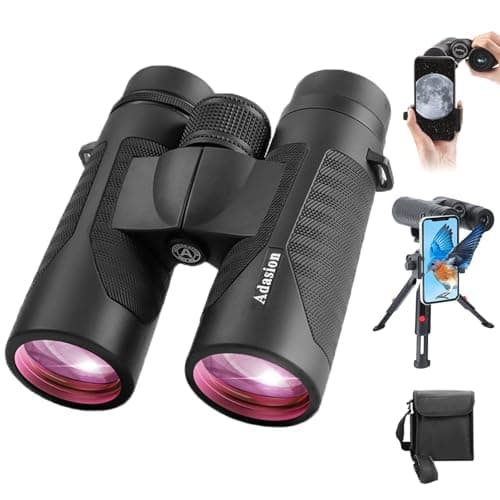
12x is the tell. Handheld magnification above about 10x shakes enough that you resolve LESS detail, not more — a steady 8x shows you more of an animal at 400 yards than a wobbling 12x does.
#ad · Live prices from the Amazon Creators API, as of October 19, 2026. Where we have no verified live price we show none — a gap beats a number that has rotted.
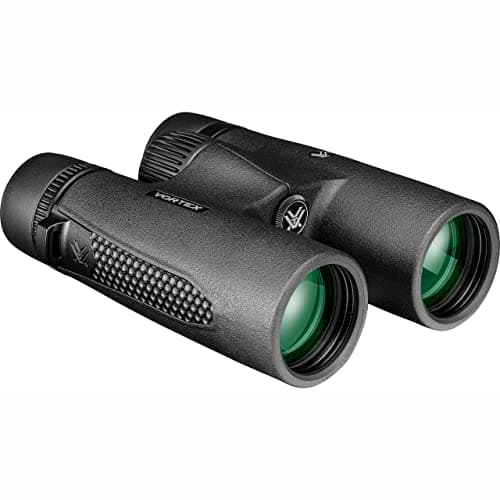
12x42367ft at 1,000ydsPhone adapter + tripodBAK4 prisms claimed
4.6/10
12x is the tell. Handheld magnification above about 10x shakes enough that you resolve LESS detail, not more — a steady 8x shows you more of an animal at 400 yards than a wobbling 12x does.
Glass clarity
5
Low light
4
Field of view
3
Durability
5
Value
6
What's good
+Cheaper than the Vortex glass above
+Includes phone adapter and a tabletop tripod
What's not
−Human hand tremor is magnified along with the image — past roughly 10x the shake dominates and effective resolution drops, which is why serious glassing above 10x is done on a tripod
−12x also narrows the field of view and reduces exit pupil, making the image dimmer at exactly the times you glass
−A 42mm objective at 12x gives a 3.5mm exit pupil, below what most eyes use in low light
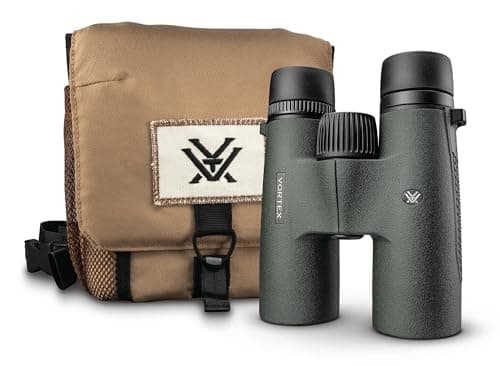
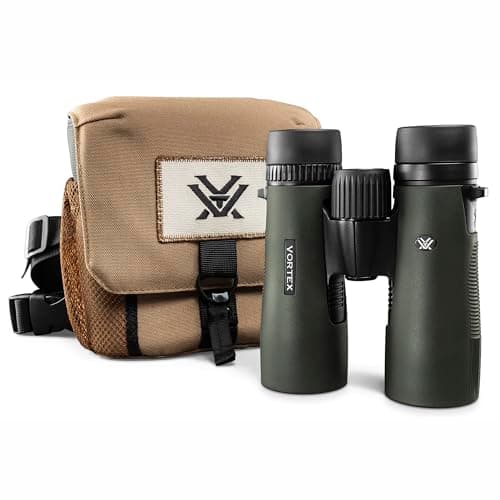
−The Vortex Triumph HD costs twice as much at 10x42 and comes with an unconditional warranty
Skip it if…
…you glass handheld, which is nearly everyone. Buy 8x42 or 10x42, and put the difference toward better glass.
8x gives a wider field of view, a bigger exit pupil and a steadier image, which suits timber, moving game and anyone whose hands are not rock steady. 10x reaches further and suits open country. If you glass mostly in woods, 8x42 is genuinely the better choice and almost nobody buys it.
Roof or porro prism
Roof prisms are slimmer, more durable and more expensive to make well — they need phase coatings to match porro performance. Porro prisms give better depth perception and more brightness per dollar, at the cost of a bulkier body. Nearly all modern hunting binoculars are roof prism.
The coatings line, again
Same four tiers as rifle scopes, and the same conclusion: fully multi-coated is what you want. Add phase-corrected for roof prisms, which restores contrast the prism geometry otherwise costs you.
Buy a harness, not a neck strap
A neck strap swings, bounces and puts the whole weight on your neck all day. A chest harness holds the binoculars against your body, keeps them out of the way when you kneel, and is the cheapest comfort upgrade in this category by a wide margin.
Set them up once, properly
Adjust the interpupillary distance until you see one circle, not two. Then close your right eye and focus with the center wheel, then close your left and adjust the diopter ring on the right eyepiece only. Note the diopter setting. Most people who complain about eye strain have never done this.
How these were picked
I haven't handled these. Here's what I did instead.
Everyone in this category says they tested twenty of these. I haven't tested any, and I say so. What I do instead: read the manufacturer's manual and published specification, compile the numbers that decide the purchase, do the arithmetic in the open, check the live price, and name one product to skip. The scores above are judgments from that research against a published rubric — they are not measurements I took, because I do not have a lab and I am not going to pretend otherwise.
Questions
Frequently asked
Is 10x42 or 8x42 better for hunting?+
8x42 for timber and moving game — wider field, steadier image, bigger exit pupil. 10x42 for open country where you glass at distance. 10x is the more popular choice and 8x is often the better one.
Why are 12x binoculars a bad idea handheld?+
Magnification multiplies hand tremor as well as the image, so past about 10x the shake costs you more detail than the magnification gains. 12x42 also drops the exit pupil to 3.5mm, which is dimmer than your eye can use at dusk.
What does exit pupil mean?+
Objective diameter divided by magnification — the width of the light beam leaving the eyepiece. A human pupil opens to roughly 5 to 7mm in the dark, so an exit pupil below about 4mm is throwing away light your eye could have used.
Do I need a binocular harness?+
It is the best money in this category after the binoculars themselves. A harness holds them against your chest instead of swinging from your neck, takes the weight off your neck, and keeps them out of the way when you kneel or crawl.
We do not run a testing lab and we do not pretend to. Where a measured number came from a manufacturer's published specification or someone else's lab, we name them and link them. Where we could not verify something, we say so on the page rather than quietly leaving it out. Read the full method.