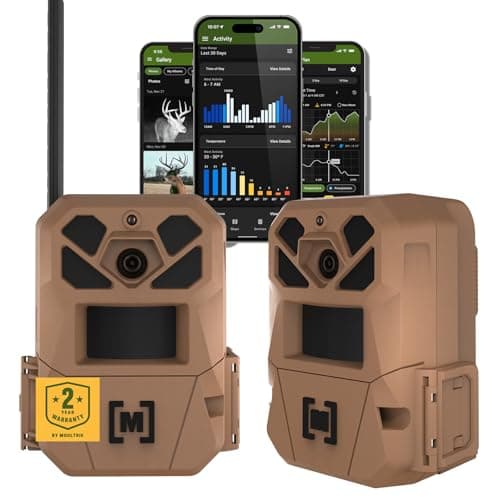
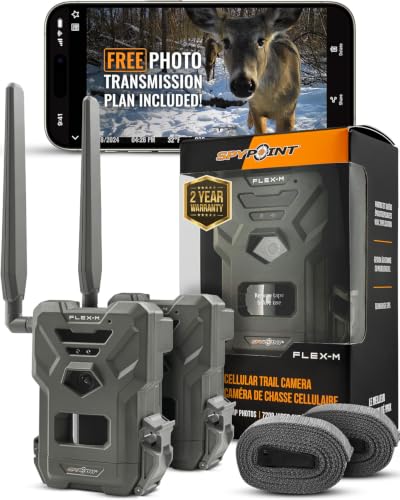
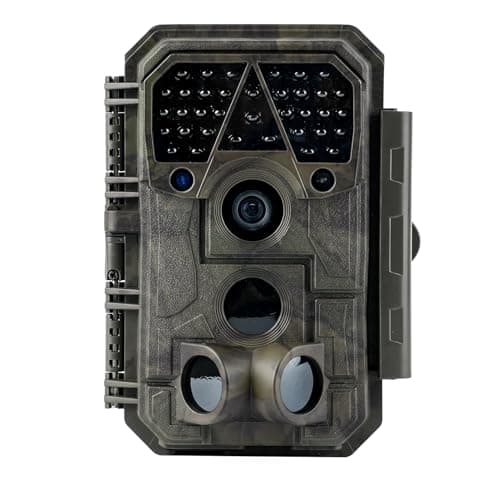
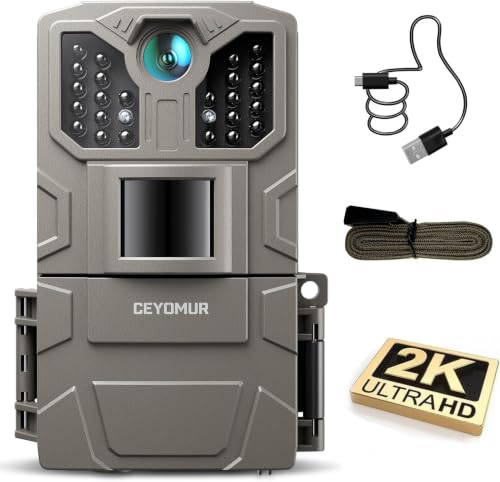
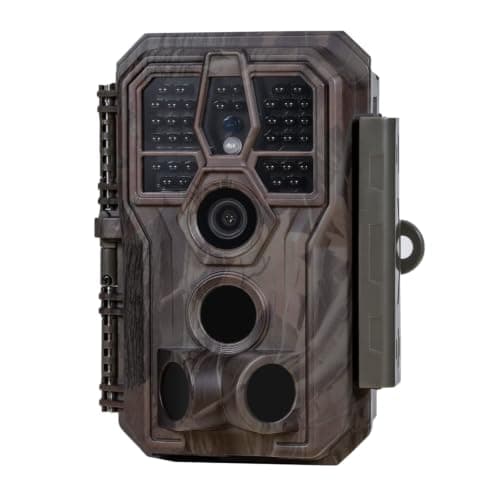
The verdict first: under a hundred dollars, buy the GardePro E5S. It is for the hunter watching one or two spots they can check without ruining them, and it is also the cheapest camera on this page that does the job properly — so it is the budget pick as well as the winner. If you need images without walking in, the Moultrie Edge 3 two-pack puts two cellular cameras inside the ceiling, with the subscriptions as the real cost. Skip the CEYOMUR: its listing leads with an interpolated megapixel count and never states a trigger speed, and trigger speed is the only specification that decides whether you photograph a deer or the place a deer was.
Every price here is a live lookup with its own date under the table. The prose quotes no numbers, because a hundred-dollar ceiling and a moving price make that a promise no page can keep.
The money is not in the camera, it is in the plan
A cellular camera costs you the camera once and the data plan every month, for as long as you own it. Two cellular cameras cost two plans. Over three seasons the subscriptions on a pair of cameras can comfortably exceed what the cameras cost, which is why a page about cameras under a hundred dollars has to be a page about running cost.
That is not an argument against cellular. It is an argument for being honest about which problem you are solving: cellular exists so you do not have to walk to the camera, and if the camera hangs on a pressured spot an hour from your house, that is worth money. Cellular against non-cellular works the arithmetic properly, and trail cameras with no subscription is the page for the opposite answer.
Trigger speed is the specification. Megapixels are not.
Every camera at this price advertises a megapixel figure that is interpolated — software enlarging the output of a much smaller sensor. It tells you almost nothing. Trigger speed tells you everything: it is the delay between the sensor detecting movement and the shutter firing, and it decides whether a walking deer is in the frame or just leaving it.
Of the five cameras here, exactly one publishes a trigger speed. That is the fact that shapes this page, and it is why the skip is a skip rather than a cheap option: a listing that will not state the number it was asked for has told you what the number is.
No-glow infrared, and why it matters on a shared lease
Low-glow infrared emitters produce a faint red light when they fire. No-glow emitters do not. Deer notice the glow less than people assume and other hunters notice it more than you would like, which makes no-glow the right default on a lease, on public land, or anywhere a camera could grow legs. Three of the cameras here state no-glow.
How to choose between the five
- Can you check the camera without ruining the spot? If yes, buy a card-based camera and spend nothing per month. If no, cellular is the product.
- Is your cell coverage good? If it is marginal, dual-SIM matters more than anything else on the spec sheet, and the SPYPOINT twin pack is the camera here that has it.
- How many angles do you need? Two cameras on an entry and an exit trail tell you far more than one camera on either. Both cellular options here are twin packs, which is most of why they fit the band.
- Is this camera going somewhere it might be stolen? Then buy cheaper and buy no-glow, and read trail cameras for security for the lock-box and placement side.
What is NOT on this page, and why
The Tactacam Reveal X 3.0 — the top pick on the unrestricted roundup — is absent because it has no live price in our price channel right now, and a page whose entire premise is a price ceiling cannot rank a product it cannot price. If the table above shows a camera here has crossed the hundred-dollar line since the last check, buy the next one down and the reasoning still holds.
Buying notes
Budget for lithium cells and a fast card
Alkaline AAs lose capacity in the cold, which is exactly when your camera is working hardest. Lithium AAs cost more and last through a winter. A slow SD card also slows the camera between frames, which costs you the second and third photo of the same animal.
Hang it at chest height and aim it along the trail
A camera pointed across a trail triggers as the animal is already crossing the frame. A camera pointed along the trail has time. Height matters because the detection cone is narrow vertically, and a camera strapped at knee height photographs legs.
Set the date and the delay before you hang it
A camera with a one-second delay on a feeder fills a card with the same deer and flattens the batteries doing it. Five to fifteen seconds is a sane starting point on a trail, longer on bait.
Where cameras fit in the season
The preseason checklist is where cameras go up, and the rangefinder page covers the other half of the scouting kit — knowing the distance to the trail the camera is watching.