We earn a commission when you buy through our Amazon links, at no extra cost to you. It never changes the order of the picks, and we say so when the cheaper thing is the better buy. How this works.
Hunting packs split into two genuinely different tools that get sold in the same aisle. An internal-frame day pack rides close to the body, does not snag in timber, and is the right answer for carrying your kit in and nothing much out. An external-frame freighter carries heavy, awkward loads on a shelf and transfers weight to your hips in a way an internal frame cannot.
Buying the wrong one is expensive in both directions. A freighter on a whitetail sit is weight you carry for nothing. An internal frame under a bone-in elk quarter is a genuinely miserable trip, and the pack is being asked to do something it was not built for.
So the first question is honest: is there any real chance you will pack an animal out on your back this season? If yes, buy the frame. If no, buy the smaller pack and enjoy the weight you saved on every walk in.
If the pack is for a western hunt specifically, the pack is one of three purchases that actually change the outcome and the other two are glass and game bags — best gear for a western elk hunt puts the whole kit in order, including the one category we refuse to make a recommendation in.
Two decisions sit underneath this ranking and each has its own page. Capacity is the first one, and it is the number most people get wrong in the same direction — what size hunting pack you need gives the liters for each kind of hunt and the conversion to cubic inches. Frame architecture is the second, and it is the one that decides whether a pack can carry an animal at all: internal against external frame.
A freighter frame with a detachable bag — the configuration that actually works for packing an animal out, from a company that has been making them for years.
#ad · Live prices from the Amazon Creators API, as of October 19, 2026. Where we have no verified live price we show none — a gap beats a number that has rotted.
In detail
The picks, in full
01
Best overall
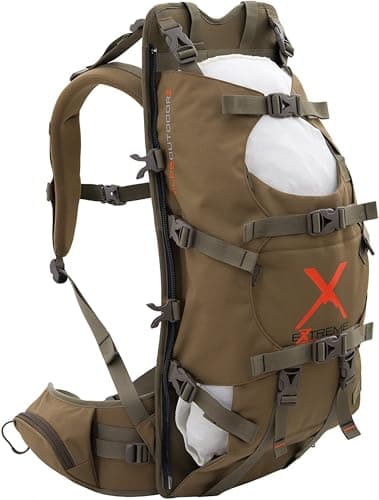
ALPS OutdoorZ Extreme Commander X
External frameDetachable pack bagMeat shelfCoyote brown
8.2/10
A freighter frame with a detachable bag — the configuration that actually works for packing an animal out, from a company that has been making them for years.
Load carriage
9
Capacity
9
Comfort loaded
8
Durability
8
Value
7
What's good
+The bag comes off so the frame carries meat directly against the load shelf
+Freighter frames transfer weight to the hips far better than an internal frame under heavy load
+Established brand with parts and warranty support
What's not
−External frames snag in thick timber
−Heavier empty than an internal-frame pack
−Overkill for a day hunt where you carry nothing out
Skip it if…
…you hunt whitetail from a stand you drive to. This is a pack-out frame and you would carry the weight of a feature you never use.
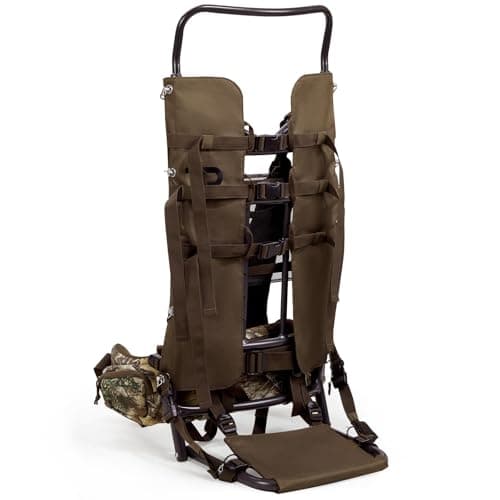
Aluminum external frameTelescoping top, 34-40inPadded hip belt600D fabric
6.6/10
About a hundred dollars for an adjustable aluminum external frame built for hauling meat, which is the cheapest honest entry into frame packs.
Load carriage
6
Capacity
7
Comfort loaded
6
Durability
6
Value
8
What's good
+Telescoping top section adjusts from 34 to 40 inches, which is normally a premium feature
+Three extended straps are there to lash meat or a bag to the frame, which is what an external frame is for
+Padded waist belt and load-adjustment straps put the weight on your hips rather than your shoulders
What's not
−No published load rating, which is the specification that matters most
−At the top of the budget band — the listing sat just under a hundred dollars at the last check
−Suspension is basic compared with purpose-built hunting frames
Skip it if…
…you plan to carry heavy loads regularly. Without a published load rating you are guessing about the one number that decides whether the frame is adequate.
Price as of October 19, 2026. Prices move — Amazon's is the one that counts.
#ad · we may earn a commission from this link to TR Aluminum External Frame Pack, Adjustable, Realtree Edge
Choosing a pack
The frame load rating is the specification
A pack's published load rating tells you what the frame was designed to carry comfortably. It is the number to buy around and the one most listings bury or omit. A frame without a published rating is a frame nobody is willing to commit to.
Capacity: buy for the hunt you take most
A 40-liter pack forces discipline about what comes along. A 90-liter pack gets filled because the space exists, and then you carry it every step. For day hunting, 30 to 45 liters. For multi-day backcountry, 65 to 90. For a whitetail sit you drive to, a 20-liter bag is plenty.
Meat shelf versus "meat shelf"
A real load shelf separates from the pack bag so the meat sits against the frame and your gear stays clean. A panel with a strap that a marketing sheet calls a meat shelf is not the same thing. If pack-out matters, check that the bag genuinely detaches.
Fit the torso, not the waist
Pack fit is decided by torso length — the distance from the C7 vertebra at the base of your neck to the top of your hip bones. Get someone to measure it before you order. Adjustable torso height is worth paying for if you are between sizes.
Load the pack correctly
Heavy items go high and close to your spine. Light bulky items go low and outside. That keeps the load's center of mass over your hips instead of pulling you backwards, which is the single biggest comfort factor once a pack is loaded.
How these were picked
I haven't handled these. Here's what I did instead.
Everyone in this category says they tested twenty of these. I haven't tested any, and I say so. What I do instead: read the manufacturer's manual and published specification, compile the numbers that decide the purchase, do the arithmetic in the open, check the live price, and name one product to skip. The scores above are judgments from that research against a published rubric — they are not measurements I took, because I do not have a lab and I am not going to pretend otherwise.
Questions
Frequently asked
What size hunting pack do I need for a day hunt?+
Thirty to forty-five liters covers layers, water, food, optics, a kill kit and game bags with room left. Anything larger gets filled with things you do not need, and you carry them all day.
Do I need an external frame to pack out an elk?+
Strongly recommended. A bone-in elk hind quarter can weigh 80 to 100 pounds, and a freighter frame transfers that to your hips far better than an internal frame. It is also the difference between two trips and four.
How heavy should a loaded hunting pack be?+
A common guideline is 20 to 25 percent of body weight for extended carry, which for a 180-pound hunter is roughly 36 to 45 pounds. Meat pack-outs routinely exceed that, which is why frame quality and load placement matter so much.
Internal or external frame?+
Internal for mobility and brush, external for heavy awkward loads. Some modern hunting packs blur the line with a removable bag on a load-hauling frame, which is the most versatile arrangement if you can only own one.
We do not run a testing lab and we do not pretend to. Where a measured number came from a manufacturer's published specification or someone else's lab, we name them and link them. Where we could not verify something, we say so on the page rather than quietly leaving it out. Read the full method.