The short answer: for everyday carry, 200 to 600 lumens is plenty, and the light we would point most people at is the Streamlight MacroStream at 500 lumens and 2,000 candela — both figures published. For a duty, security or outdoor light where you need to identify something at a distance, you want 1,000 to 2,000 lumens and, much more importantly, a high candela figure: the Stinger 2020 publishes 25,000 candela. Anything advertising five figures of lumens with no standard behind it is selling you a number, not a light.
If you already know your number and want the category ranked, we have EDC flashlights, EDC rechargeables and duty lights. This page is about the numbers on all of those pages.
Lumens and candela are different questions
Lumens measure total light output — everything the light emits in every direction it emits it. It is a measure of how much light there is, not where it goes.
Candela measure luminous intensity at the brightest point of the beam. In practical terms candela is the reach number: how far the beam usefully throws. Two lights with identical lumens can differ enormously in candela depending on the reflector, and that difference is what you actually perceive.
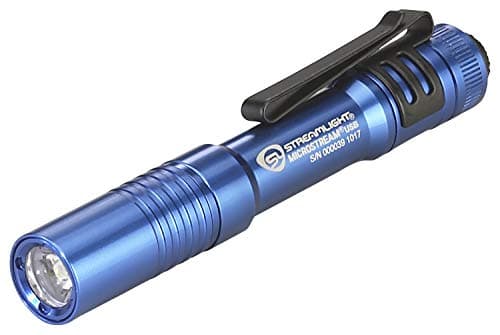
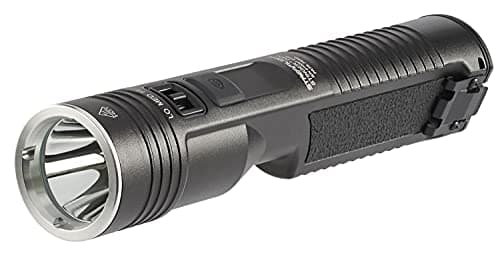
The clearest demonstration is on this page. The MicroStream publishes 250 lumens and 1,150 candela. The Stinger 2020 publishes 2,000 lumens — eight times as much — and 25,000 candela, which is more than twenty times as much. The lumens roughly describe how much light each puts out; the candela tell you that one lights up a room and the other lights up a treeline.
A dedicated thrower makes the same point from the other end: a deep reflector takes a given output and concentrates it, buying reach at the cost of the wide spill you want up close. Reach is a candela question. It is not a lumens question.
FL 1: the reason some numbers are comparable and some are not
The flashlight industry has a standard for this, and you should buy on it. FL 1 is the ANSI/PLATO measurement standard that defines how output, beam distance, runtime and impact resistance are tested and stated. When a listing says "500 lumens (FL 1)", it is telling you the figure was produced by a defined method rather than estimated from an LED manufacturer's datasheet.
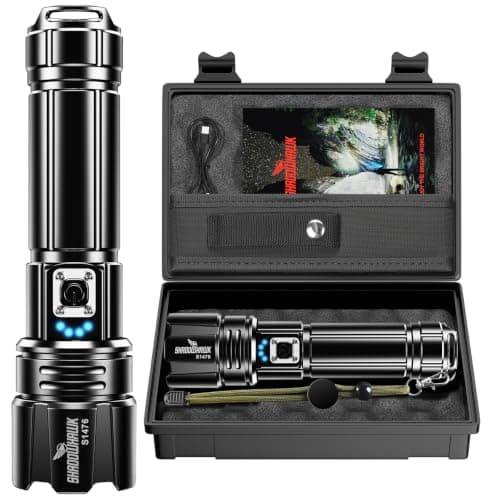
That matters because of how the alternative works. An unregulated light can be marketed on the theoretical maximum of its emitter — a number the light might hit for thirty seconds before heat forces it down, or might never hit at all. This is exactly why the generic "10,000 lumen" light is the skip on this page rather than the value pick: no FL 1 rating, no candela figure, and no runtime chart. Three absences, and together they are the review.
The practical test when you are shopping: does the listing publish candela as well as lumens, and does it publish runtime at each output level? A brand that gives you all three is telling you something checkable. Every pick on this page was chosen because its listing does.
How many lumens, by job
- Reading a label, finding something in a bag, walking a dog: 10-100 lumens. A phone does this. The reason to carry a light instead is that it has a low mode that will not blind you and a battery that is not also your phone.
- Everyday carry, general use, working under a dash: 200-600 lumens. The band most people should buy. The MacroStream sits in it and the MicroStream sits at the bottom of it — and 250 lumens genuinely does nearly everything a pocket light is asked to do.
- Duty, security, outdoors at night: 1,000-2,000 lumens, with candela. Where you need to identify something rather than illuminate it. The Stinger 2020 is the example, and the candela figure is the reason, not the lumens.
- Searching a field or a treeline: candela, not lumens. A thrower with a deep reflector. You will give up the wide spill that makes a light pleasant up close.
- Above 3,000 lumens: a specialist purchase. Real, useful, and it comes with heat, short turbo runtimes, and a step-down you need to read the runtime chart to understand.
Three things that beat lumens
Runtime at a usable level
A turbo figure is a sprint. What you want to know is how long the light holds a level you would actually walk with. Good brands publish a runtime chart per mode; that chart is worth more than the headline number, and if a light claims twelve hours without saying at what output, it has told you nothing.
Battery chemistry and whether you can replace it
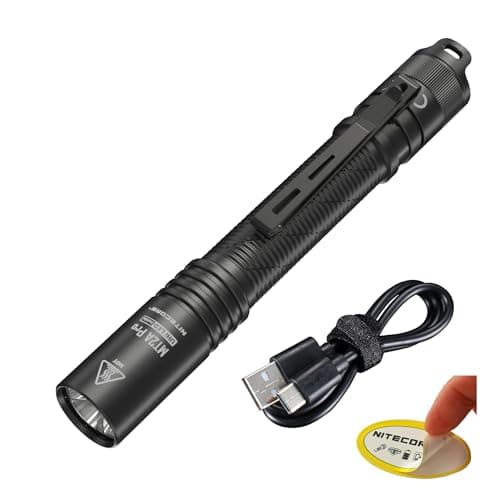
A light with a sealed internal cell is a light with an expiry date. A light that takes a replaceable 18650 or 21700 can be kept alive for years and run from a spare — we go through the cell formats here. A fallback to AA, like the MT2A Pro, is worth more in a real emergency than a thousand extra lumens.
The user interface
Whether the light comes on in the mode you wanted. A light whose first press is always turbo will blind you at 3am, and a light that needs four clicks to reach a usable level will irritate you daily. Not a number, and it affects you more than any of them.
What we are not claiming
We have not measured any of these lights. Every lumen and candela figure quoted here comes from the manufacturer's own published specification, and the page's argument is precisely that those figures are only worth something when they are published against a standard. We do not have an integrating sphere and we do not pretend to — how we pick says so plainly.
Buying notes
Look for FL 1 on the listing
It is the single best filter in this category. A brand quoting FL 1 figures is quoting a defined measurement; a brand quoting a bare lumen number may be quoting an emitter's theoretical maximum.
No candela figure is a red flag
Candela is cheap to publish and it is the number that describes reach. A listing that shouts lumens and omits candela is usually omitting it because the beam is unimpressive.
Read the runtime chart, not the runtime claim
"Up to 12 hours" and "12 hours at 100 lumens" are completely different statements. The second is a specification. The first is an advertisement.
More lumens means more heat
High output in a small body has to dump heat somewhere and that somewhere is the body in your hand. It is also why turbo modes step down. This is physics rather than a defect, and it is a reason the sensible everyday number is lower than the maximum available.