Skip to content
Steve's Outpost

Section 01 · Knives & EDC

Best EDC Rechargeable Flashlights

The best light is the one in your pocket, which makes size the specification everyone under-weights and output the one everyone over-weights.

By Stephen V.Updated How we pick
#ad

We earn a commission when you buy through our Amazon links, at no extra cost to you. It never changes the order of the picks, and we say so when the cheaper thing is the better buy. How this works.

There is a rule in this category that nobody wants to hear: a 3,000 lumen light you leave at home is worse than a 500 lumen light in your pocket. Every EDC light decision is a trade between output and the probability that you are actually carrying it, and the probability side of that equation is the one that gets ignored.

This page is the rechargeable pocket-clip class specifically — lights sized to ride in a front pocket all day, that charge without a separate charger. If you want the keychain and sub-pocket end of the market, that is covered in more depth on best EDC flashlights; if you want duty-size output, that is the duty light page.

Three numbers, and only one of them is on the box. FL 1 lumens are measured at the front of the lens thirty seconds after switch-on, to the ANSI/NEMA standard. A marketing lumen number is usually the emitter's theoretical maximum at the instant of switch-on, which nobody ever sees. Sustained output is what the light holds after it heats up — every small high-output light steps down, and the honest makers publish the curve. Candela is beam intensity, and it is what decides how far the light reaches: a 2,000 lumen flood can be less useful at distance than a 600 lumen thrower. Everything on these pages is ranked on the second and third of those, never the first.

Body format decides more than output does

Three shapes dominate this class and they carry completely differently.

  • Tube lights are the traditional shape. They have the most thermal mass, so they sustain output best, and they take standard replaceable cells. They also sit in a pocket like a roll of coins.
  • Flat lights ride like a phone and effectively disappear. The cost is thermal: a thin body cannot shed heat, so the step-down from a big turbo number is fast and steep. Most also use a sealed internal cell, which sets the light's lifespan.
  • Pen lights clip to a shirt pocket and weigh nothing. They are a genuine supplement rather than a primary — 250 to 500 lumens with limited runtime.

Pick the format first, honestly, based on what you wear and what your pockets already contain. Then pick the best light in that format. Doing it the other way round is how people end up with an excellent light in a drawer.

The charging question

Onboard USB-C is the sensible default: any cable, any phone charger, any airport. Magnetic docks — Olight's in particular — are faster and more pleasant to live with, and they are a proprietary part you have to own and not lose. Neither is wrong. What matters is knowing which one you bought.

There is a third option worth naming: a light with a replaceable standard cell. It means that in five years, when the battery is tired, you buy a cell rather than a flashlight. On lights with sealed internal batteries, the battery's lifespan is the product's lifespan, and at the prices in this category that is worth a moment's thought.

These are researched picks, not lights I carry. Elsewhere on this site there are pages about gear I actually own, and those are written in the first person because they have earned it — my rifles, my truck, my computer. Flashlights are not one of those categories yet. So this cluster does what the rest of the site does when I have not handled something: reads the published specifications, compares the numbers that are actually comparable, says which manufacturers publish enough to be checked, and names one to skip.

Completing the pocket

A light, a knife and a wallet is the whole EDC conversation for most people, and this site has opinions on the other two: the Microtech guide for the knife end and the Ridge wallet review for the wallet. The complete minimalist EDC page puts all three together without the loadout-photography nonsense.

The short answer

Quick picks

#ProductBest forScorePrice
01
Fenix Fenix E28R V2.0 (1,700 lumens)
Fenix E28R V2.0 (1,700 lumens)

The most light you can sensibly put in a front pocket. Magnetic tail, USB-C, and a runtime chart you can actually read before you buy.

Best overall
8.8
$65.45Amazon (affiliate link)
02
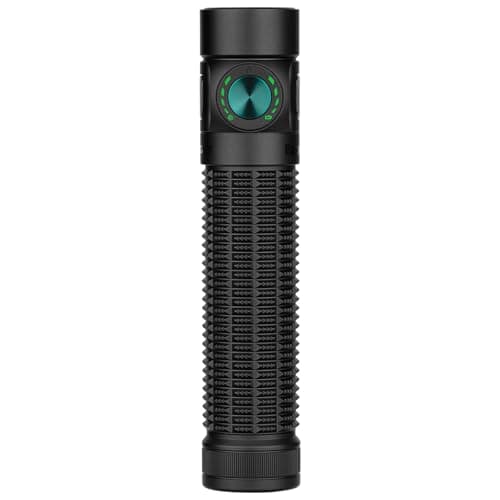
Olight Olight Baton4 Pro
Olight Baton4 Pro

The one that disappears. Small enough that carrying it is not a decision you make each morning, which is the only quality that actually determines whether you have a light when you need one.

Best pocket carry
8.3
$69.99Amazon (affiliate link)
03
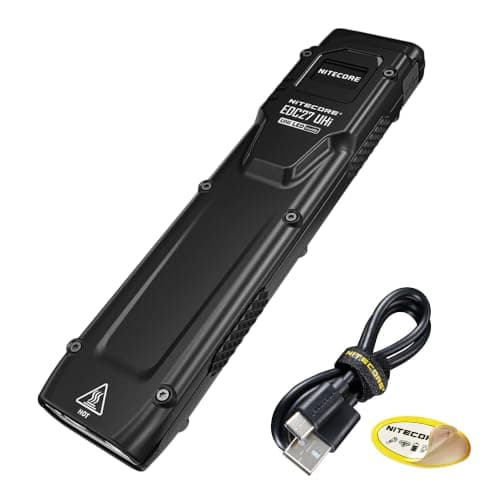
Nitecore Nitecore EDC27 (flat body, 3,100 lumens)
Nitecore EDC27 (flat body, 3,100 lumens)

A flat light sits in a pocket like a phone rather than like a tube, and once you have carried one it is difficult to go back. This is the high-output version of that idea.

Best flat body
8.0
$89.95Amazon (affiliate link)
04
Streamlight Streamlight MacroStream (500 lumens, 2,000 candela)
Streamlight MacroStream (500 lumens, 2,000 candela)

Five hundred lumens and a published candela figure, from a company that measures things. Not the brightest light here and comfortably the one whose numbers you can trust without checking.

Best honest simple one
8.8
$59.41Amazon (affiliate link)
05
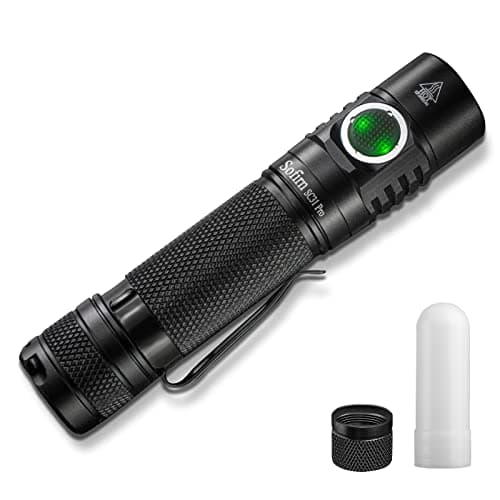
Sofirn Sofirn SC31 Pro (2,000 lumens)
Sofirn SC31 Pro (2,000 lumens)

The budget-enthusiast answer, and the reason nobody should buy an unbranded light to save money. Real published figures, an 18650 cell you can replace, and a fraction of the flagship price.

Best value
8.0
$42.99Amazon (affiliate link)
06
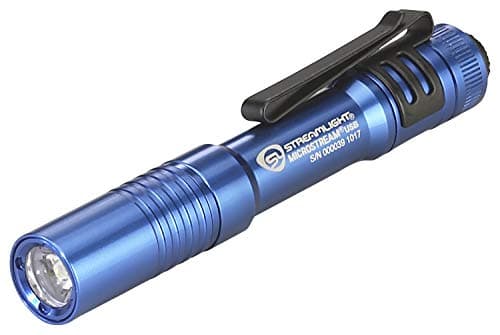
Streamlight Streamlight MicroStream USB (250 lumens)
Streamlight MicroStream USB (250 lumens)

Pen-sized, 250 honest lumens, and the light most likely to actually be in your pocket. The best light is the one you have, and this one weighs nothing.

Smallest useful light
8.5
$36.99Amazon (affiliate link)

#ad · Live prices from the Amazon Creators API, as of Sep 5, 2026. Where we have no verified live price we show none — a gap beats a number that has rotted.

In detail

The picks, in full

01
Fenix Fenix E28R V2.0 (1,700 lumens)

Best overall

Fenix E28R V2.0 (1,700 lumens)

1,700 lumens (FL 1)USB-C rechargeableMagnetic tail capPocket clip
8.8/10

The most light you can sensibly put in a front pocket. Magnetic tail, USB-C, and a runtime chart you can actually read before you buy.

Sustained output
8
Published data
10
Pocketability
8
Value
9

What's good

  • The magnetic tail turns any steel surface into a work light, which is the feature you use most and never plan for
  • Genuinely pocketable at an output level that used to require a duty-size body
  • Fenix publishes the step-down curve rather than one turbo number

What's not

  • Turbo is a short window in a body this size — the sustained figure is what you are buying
  • Magnet attracts steel swarf if you work around a shop
  • Bigger in the pocket than the slim flat lights below

Skip it if…

your pocket real estate is already spoken for by a knife and a phone. A flat-bodied light disappears in a way a tube light never does.

$65.45See it on Amazon (affiliate link)

Price as of Sep 5, 2026. Prices move — Amazon's is the one that counts.

#ad · we may earn a commission from this link to Fenix E28R V2.0 (1,700 lumens)

02
Olight Olight Baton4 Pro

Best pocket carry

Olight Baton4 Pro

High output for the sizeMagnetic chargingSide switchTwo-way pocket clip
8.3/10

The one that disappears. Small enough that carrying it is not a decision you make each morning, which is the only quality that actually determines whether you have a light when you need one.

Pocketability
10
Sustained output
7
Interface
8
Value
8

What's good

  • Small and light enough that it stops being a thing you consider carrying and becomes a thing you have
  • Magnetic charge dock is the least friction of any charging system here
  • Two-way clip works on a pocket or a hat brim

What's not

  • Proprietary charging dock — lose it and you are buying another
  • Small body means a fast, steep thermal step-down at the top setting
  • Side switch only, so no momentary tail control

Skip it if…

you want to run standard cells or standard cables. This is a closed system and it is a very good one, and that is the trade.

$69.99See it on Amazon (affiliate link)

Price as of Sep 5, 2026. Prices move — Amazon's is the one that counts.

#ad · we may earn a commission from this link to Olight Baton4 Pro

03
Nitecore Nitecore EDC27 (flat body, 3,100 lumens)

Best flat body

Nitecore EDC27 (flat body, 3,100 lumens)

3,100 lumens turboFlat profileUSB-C rechargeableDual switch
8.0/10

A flat light sits in a pocket like a phone rather than like a tube, and once you have carried one it is difficult to go back. This is the high-output version of that idea.

Pocketability
10
Peak output
9
Sustained output
6
Value
7

What's good

  • The flat body genuinely rides better in a pocket than any cylindrical light
  • Very high turbo output for something this thin
  • Integrated charging with no dock or proprietary cable

What's not

  • A thin body has almost nowhere to dump heat, so the step-down from 3,100 is fast and large
  • Built-in battery — when the cell is done, the light is done
  • More expensive than tube lights with comparable sustained output

Skip it if…

you judge a light by what it holds rather than what it peaks at. A tube light with a 21700 in it will beat this on sustained output and runtime every time, and cost less.

$89.95See it on Amazon (affiliate link)

Price as of Sep 5, 2026. Prices move — Amazon's is the one that counts.

#ad · we may earn a commission from this link to Nitecore EDC27 (flat body, 3,100 lumens)

04
Streamlight Streamlight MacroStream (500 lumens, 2,000 candela)

Best honest simple one

Streamlight MacroStream (500 lumens, 2,000 candela)

500 lumens (FL 1)2,000 candela publishedUSB rechargeablePocket clip
8.8/10

Five hundred lumens and a published candela figure, from a company that measures things. Not the brightest light here and comfortably the one whose numbers you can trust without checking.

Published data
10
Sustained output
8
Interface
9
Value
8

What's good

  • Streamlight publishes candela alongside lumens, so you can compare throw properly rather than guessing
  • Five hundred lumens is genuinely enough for every EDC task, which the market has decided to stop admitting
  • Simple two-mode interface with nothing to program or mis-set

What's not

  • Modest output next to everything else on this page, which is the point and will still bother some people
  • Micro-USB on this model rather than USB-C
  • No magnetic tail or dock

Skip it if…

you actually need high output for work at distance. This is a close-range utility light and it is honest about being one.

$59.41See it on Amazon (affiliate link)

Price as of Sep 5, 2026. Prices move — Amazon's is the one that counts.

#ad · we may earn a commission from this link to Streamlight MacroStream (500 lumens, 2,000 candela)

05
Sofirn Sofirn SC31 Pro (2,000 lumens)

Best value

Sofirn SC31 Pro (2,000 lumens)

2,000 lumens18650 cellUSB-C rechargeableMagnetic tail cap
8.0/10

The budget-enthusiast answer, and the reason nobody should buy an unbranded light to save money. Real published figures, an 18650 cell you can replace, and a fraction of the flagship price.

Sustained output
8
Published data
8
Build quality
6
Value
10

What's good

  • Publishes real specifications at a price where most listings publish fiction
  • Standard 18650 cell you can replace yourself in five years when it is tired
  • Anduril-style firmware on much of the enthusiast Sofirn range, which is either wonderful or infuriating depending on who you are

What's not

  • Fit and finish is a clear step below Fenix or Streamlight, and you can feel it
  • Enthusiast firmware has a learning curve that a duty light deliberately does not
  • Support and warranty are nothing like the majors

Skip it if…

the light has a job where failure matters. For that, pay for Streamlight or Fenix. For a light in a bag, a truck or a toolbox, this is the sensible money.

$42.99See it on Amazon (affiliate link)

Price as of Sep 5, 2026. Prices move — Amazon's is the one that counts.

#ad · we may earn a commission from this link to Sofirn SC31 Pro (2,000 lumens)

06
Streamlight Streamlight MicroStream USB (250 lumens)

Smallest useful light

Streamlight MicroStream USB (250 lumens)

250 lumens (FL 1)1,150 candela publishedUSB rechargeablePen clip
8.5/10

Pen-sized, 250 honest lumens, and the light most likely to actually be in your pocket. The best light is the one you have, and this one weighs nothing.

Pocketability
10
Published data
10
Output
5
Value
9

What's good

  • Small enough to clip in a shirt pocket and forget
  • Published candela as well as lumens, again
  • Cheap enough to own several and leave them in places

What's not

  • Two hundred and fifty lumens is a genuine limit — this is a close-work light
  • Micro-USB
  • Single cell, single mode pair, no configurability

Skip it if…

this is going to be your only light. It is a supplement, not a primary, and the pages above cover what a primary should be.

$36.99See it on Amazon (affiliate link)

Price as of Sep 5, 2026. Prices move — Amazon's is the one that counts.

#ad · we may earn a commission from this link to Streamlight MicroStream USB (250 lumens)

Choosing between them

Be honest about your pockets

If you already carry a knife and a phone in the same pocket, a tube light is going to lose that competition within a fortnight. Buy flat or buy pen-size and accept the output ceiling.

500 lumens is genuinely enough for EDC

Every task an EDC light performs — finding something behind a desk, walking to a car, reading a meter, checking under a hood — is comfortably done at 500 lumens. Everything above that is capability for the exception rather than the rule, and it costs size, heat and runtime.

Check whether the cell is replaceable

A sealed internal battery is fine on a cheap light and a real consideration on a ninety-dollar one. Lights with standard 18650 or 21700 cells can be re-batteried indefinitely.

A magnetic tail is the feature you will use most

It is not on any specification comparison and it changes how often the light gets used. Sticking a light to the underside of a hood or a steel door frame turns it into a work light with both hands free.
How these were picked

I haven't handled these. Here's what I did instead.

Everyone in this category says they tested twenty of these. I haven't tested any, and I say so. What I do instead: read the manufacturer's manual and published specification, compile the numbers that decide the purchase, do the arithmetic in the open, check the live price, and name one product to skip. The scores above are judgments from that research against a published rubric — they are not measurements I took, because I do not have a lab and I am not going to pretend otherwise.

Questions

Frequently asked

How many lumens do I need for everyday carry?
Around 500 covers essentially every EDC task. More is useful occasionally and costs you size, heat and runtime constantly. Buy for the size you will actually carry and treat output above 500 lumens as a bonus rather than a requirement.
Are flat EDC flashlights better than tube lights?
They carry better and they sustain worse. A flat body has very little thermal mass, so a big turbo number drops quickly. If you want the light to disappear in a pocket, flat wins. If you want output you can rely on for minutes rather than seconds, a tube light with a 21700 in it wins.
Is proprietary magnetic charging a problem?
Only if you lose the cable. It is genuinely the nicest charging experience in the category and it is a lock-in — you cannot borrow a charger from anyone. USB-C is less pleasant and works everywhere. Pick knowingly.
Should I buy a light with a replaceable battery?
At this price level, yes if you can. A sealed cell means the light's life is the battery's life. A standard 18650 or 21700 can be replaced for a few dollars years from now.

Keep reading

Receipts

Sources

We do not run a testing lab and we do not pretend to. Where a measured number came from a manufacturer's published specification or someone else's lab, we name them and link them. Where we could not verify something, we say so on the page rather than quietly leaving it out. Read the full method.