Skip to content
Steve's Outpost

Section 06 · Shooting Gear

Best Duty Flashlights

A duty light is a tool that gets used every day for years. That changes what matters: published numbers, service support and a switch that still works in year five.

By Stephen V.Updated How we pick
#ad

We earn a commission when you buy through our Amazon links, at no extra cost to you. It never changes the order of the picks, and we say so when the cheaper thing is the better buy. How this works.

A duty light and an EDC light are different products that happen to look similar. The EDC light is optimized for being carried; the duty light is optimized for being used — repeatedly, roughly, on a schedule, for years.

That changes the ranking criteria completely. Size stops being a virtue. Interface simplicity becomes critical. And the two things that matter most are the ones you cannot see in a photograph: what the light sustains, and whether the company behind it will still be answering the phone when the switch fails.

Three numbers, and only one of them is on the box. FL 1 lumens are measured at the front of the lens thirty seconds after switch-on, to the ANSI/NEMA standard. A marketing lumen number is usually the emitter's theoretical maximum at the instant of switch-on, which nobody ever sees. Sustained output is what the light holds after it heats up — every small high-output light steps down, and the honest makers publish the curve. Candela is beam intensity, and it is what decides how far the light reaches: a 2,000 lumen flood can be less useful at distance than a 600 lumen thrower. Everything on these pages is ranked on the second and third of those, never the first.

Why Streamlight keeps winning these

It is not the output figures — enthusiast brands beat them regularly on paper. It is three things that do not photograph well.

They publish candela. Almost every Streamlight listing gives you lumens and candela, which means you can predict how the beam behaves rather than hoping. In a category where most listings give one number, publishing two is a meaningful signal about how a company thinks.

They design for a duty cycle. A light that gets charged every shift for five years is a different engineering problem from a light that gets charged monthly. Cell management, switch life and charge-contact durability are where that money goes, and none of it is visible on a spec sheet.

Ten-Tap programming. Being able to set a light to high-only sounds trivial and is the single most requested feature among people who use lights professionally. Cycling through modes to get to the one you needed immediately is a design failure, and Streamlight is one of very few brands that lets you delete the problem.

None of that means the alternatives are bad. Fenix publishes better documentation than anyone and builds beautifully; Nitecore delivers more throw per dollar than either. It means the comparison is not just about which number is bigger.

Throw or flood — decide before you buy

This is the decision people get wrong most often on a full-size light.

A thrower has a deep reflector and a tight hotspot. It puts usable light a long way out and it is genuinely unpleasant for close work — the hotspot is blinding and there is little spill to see your surroundings by.

A flood beam lights a wide area close in and runs out of usefulness quickly with distance. Most general-purpose duty lights sit between the two, deliberately.

Compare candela figures, not lumens, to tell them apart. A 3,300 lumen thrower and a 2,000 lumen general-purpose light can have wildly different candela, and the candela number is the one that predicts what you will see.

These are researched picks, not lights I carry. Elsewhere on this site there are pages about gear I actually own, and those are written in the first person because they have earned it — my rifles, my truck, my computer. Flashlights are not one of those categories yet. So this cluster does what the rest of the site does when I have not handled something: reads the published specifications, compares the numbers that are actually comparable, says which manufacturers publish enough to be checked, and names one to skip.

Where a light like this belongs

A full-size light with a long runtime is one of the genuinely useful things to keep in a vehicle — it belongs in the same conversation as the recovery gear on the vehicle recovery page and in the box in the back of the 4Runner. Changing a tire in the dark is the most common emergency any of this gear ever gets used for, and a headlamp plus a good handheld solves it.

For competition use, the match-day gear checklist covers what actually goes in the cart, and a light is on it for the same reason a multitool is: not for the stage, for the day.

The short answer

Quick picks

#ProductBest forScorePrice
01
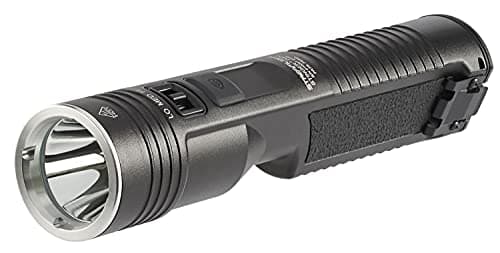
Streamlight Streamlight Stinger 2020 (2,000 lumens, 25,000 candela)
Streamlight Stinger 2020 (2,000 lumens, 25,000 candela)

Two thousand measured lumens and twenty-five thousand published candela, which is the pair of numbers that actually describes a light. The Stinger name has been on duty belts for decades and this is the modern one.

Best overall duty light
9.0
$153.49Amazon (affiliate link)
02
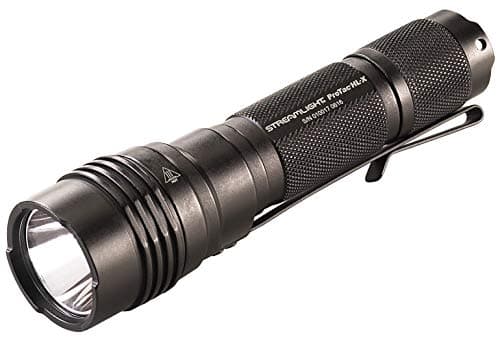
Streamlight Streamlight ProTac HL-X (1,300 lumens)
Streamlight ProTac HL-X (1,300 lumens)

Most of the Stinger's usefulness for meaningfully less money, in a body that also happens to be the basis of Streamlight's long-gun light. Runs on a rechargeable cell or CR123A primaries.

Best value duty light
9.0
$108.21Amazon (affiliate link)
03
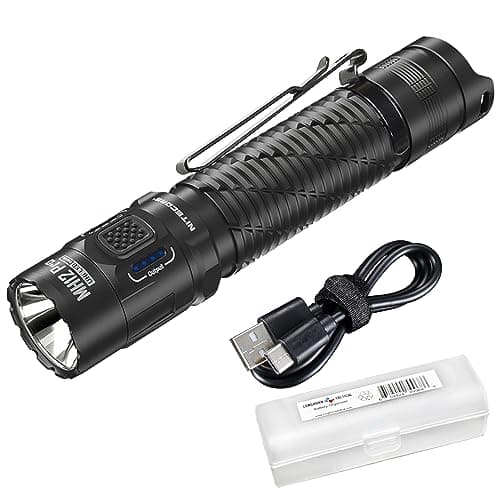
Nitecore Nitecore MH12 Pro (3,300 lumens)
Nitecore MH12 Pro (3,300 lumens)

A long-throw beam at a price the duty brands cannot match. If the job is identifying something at the far end of a field rather than lighting a room, candela is the number and this has it.

Best throw for the money
8.8
$89.95Amazon (affiliate link)
04
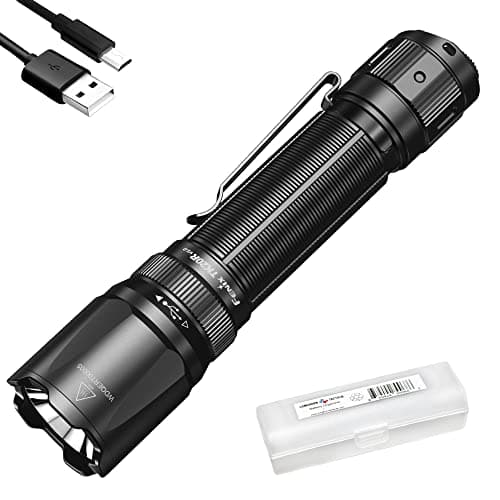
Fenix Fenix TK20R V2.0 (3,000 lumens)
Fenix TK20R V2.0 (3,000 lumens)

Two tail switches — one for instant maximum, one for everything else — which is the interface a light you might need in a hurry should have. Fenix's runtime data, in a duty body.

Best dual-switch light
9.0
$130.45Amazon (affiliate link)
05
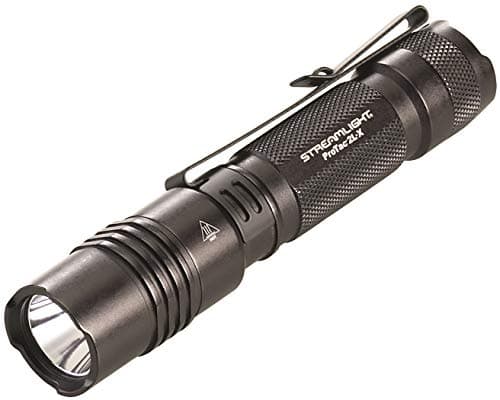
Streamlight Streamlight ProTac 2L-X USB
Streamlight ProTac 2L-X USB

Duty construction and duty honesty in a body that fits a jacket pocket. The one to buy if you want Streamlight reliability without a belt-sized light.

Best compact duty light
9.3
$69.49Amazon (affiliate link)
06
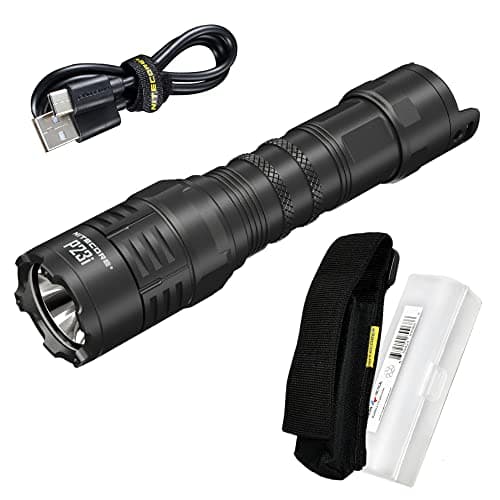
Nitecore Nitecore P23i (3,000 lumens, long throw)
Nitecore P23i (3,000 lumens, long throw)

Built to reach. If what you need is to see what is at the tree line rather than what is at your feet, this is the beam profile that does it.

Best pure thrower
8.5
$99.95Amazon (affiliate link)

#ad · Live prices from the Amazon Creators API, as of Sep 5, 2026. Where we have no verified live price we show none — a gap beats a number that has rotted.

In detail

The picks, in full

01
Streamlight Streamlight Stinger 2020 (2,000 lumens, 25,000 candela)

Best overall duty light

Streamlight Stinger 2020 (2,000 lumens, 25,000 candela)

2,000 lumens (FL 1)25,000 candela publishedUSB-C rechargeableDuty body
9.0/10

Two thousand measured lumens and twenty-five thousand published candela, which is the pair of numbers that actually describes a light. The Stinger name has been on duty belts for decades and this is the modern one.

Sustained output
9
Published data
10
Durability
10
Value
7

What's good

  • Publishes lumens AND candela, so you can compare throw against anything else properly
  • Built for a duty cycle rather than for a review — the body, the switch and the charging are all designed to be used daily for years
  • USB-C on the modern versions, which finally removes the cradle
  • Streamlight's service reputation is the reason agencies standardize on them

What's not

  • Expensive next to the enthusiast brands at the same output
  • Big and heavy — it is a belt light
  • Several very similar model numbers with and without chargers, which makes buying confusing

Skip it if…

the light lives in a drawer. Duty construction is paid for in weight and money, and neither is worth it for occasional use.

$153.49See it on Amazon (affiliate link)

Price as of Sep 5, 2026. Prices move — Amazon's is the one that counts.

#ad · we may earn a commission from this link to Streamlight Stinger 2020 (2,000 lumens, 25,000 candela)

02
Streamlight Streamlight ProTac HL-X (1,300 lumens)

Best value duty light

Streamlight ProTac HL-X (1,300 lumens)

1,300 lumens (FL 1)Dual fuel: 18650 or CR123ATen-Tap programmingTail switch
9.0/10

Most of the Stinger's usefulness for meaningfully less money, in a body that also happens to be the basis of Streamlight's long-gun light. Runs on a rechargeable cell or CR123A primaries.

Sustained output
8
Published data
10
Durability
9
Value
9

What's good

  • Dual fuel is a genuine operational advantage — primaries sit in a drawer for a decade and still work
  • Ten-Tap high-only programming, which is what a duty light should be set to
  • The same body architecture as the rail-mounted version, so the ergonomics carry over

What's not

  • Not rechargeable out of the box in every configuration — check which listing you are buying
  • Programming can be changed accidentally by somebody who does not know it exists
  • Beam is a compromise between throw and flood rather than excelling at either

Skip it if…

you want onboard USB charging without thinking about cells. Buy the Stinger or the Fenix instead.

$108.21See it on Amazon (affiliate link)

Price as of Sep 5, 2026. Prices move — Amazon's is the one that counts.

#ad · we may earn a commission from this link to Streamlight ProTac HL-X (1,300 lumens)

03
Nitecore Nitecore MH12 Pro (3,300 lumens)

Best throw for the money

Nitecore MH12 Pro (3,300 lumens)

3,300 lumens turboLong-throw optic21700 cellUSB-C rechargeable
8.8/10

A long-throw beam at a price the duty brands cannot match. If the job is identifying something at the far end of a field rather than lighting a room, candela is the number and this has it.

Throw
10
Sustained output
8
Published data
8
Value
9

What's good

  • Genuinely long reach for the size and money — this is a candela-first design
  • USB-C in the cell, no dock
  • Comes with a holster, which the premium brands charge extra for

What's not

  • Throw-biased beams have a tight hotspot and little useful spill, which is wrong for close work
  • Turbo-to-sustained gap is large, as always at this output
  • Nitecore's interface conventions differ from the duty brands, which matters if you swap between lights

Skip it if…

most of your use is inside arm's reach. A thrower is actively unpleasant up close — you want flood, and the ProTac or the Fenix will serve you better.

$89.95See it on Amazon (affiliate link)

Price as of Sep 5, 2026. Prices move — Amazon's is the one that counts.

#ad · we may earn a commission from this link to Nitecore MH12 Pro (3,300 lumens)

04
Fenix Fenix TK20R V2.0 (3,000 lumens)

Best dual-switch light

Fenix TK20R V2.0 (3,000 lumens)

3,000 lumens (FL 1)Dual tail switch5,000 mAh cellUSB-C rechargeable
9.0/10

Two tail switches — one for instant maximum, one for everything else — which is the interface a light you might need in a hurry should have. Fenix's runtime data, in a duty body.

Sustained output
9
Published data
10
Interface
9
Value
8

What's good

  • Dedicated instant-turbo switch means you never cycle modes under pressure
  • Large cell gives it genuinely long runtime at usable levels
  • Fenix publishes the runtime chart, which is why it keeps appearing on these pages

What's not

  • Physically large and heavy
  • Two switches is one more thing to learn by feel
  • Priced against the Stinger without the Stinger's service network

Skip it if…

you want a small light. This is a full-size searchlight-adjacent tool and it is sized accordingly.

$130.45See it on Amazon (affiliate link)

Price as of Sep 5, 2026. Prices move — Amazon's is the one that counts.

#ad · we may earn a commission from this link to Fenix TK20R V2.0 (3,000 lumens)

05
Streamlight Streamlight ProTac 2L-X USB

Best compact duty light

Streamlight ProTac 2L-X USB

FL 1 rated outputUSB rechargeable cellDual fuel capableTen-Tap
9.3/10

Duty construction and duty honesty in a body that fits a jacket pocket. The one to buy if you want Streamlight reliability without a belt-sized light.

Size
9
Published data
10
Durability
9
Value
9

What's good

  • Small enough to carry when a full-size duty light would be left behind
  • Same programming and same published-figures discipline as the bigger Streamlights
  • Runs on primaries if the rechargeable cell is flat

What's not

  • Lower output than everything else on this page
  • Micro-USB on much of the production run
  • Modest throw

Skip it if…

you need distance. This is a general-purpose light — check the candela figure against the throwers above before choosing it for outdoor work.

$69.49See it on Amazon (affiliate link)

Price as of Sep 5, 2026. Prices move — Amazon's is the one that counts.

#ad · we may earn a commission from this link to Streamlight ProTac 2L-X USB

06
Nitecore Nitecore P23i (3,000 lumens, long throw)

Best pure thrower

Nitecore P23i (3,000 lumens, long throw)

3,000 lumens turboDeep reflector for throw21700 i-series cellTactical tail switch
8.5/10

Built to reach. If what you need is to see what is at the tree line rather than what is at your feet, this is the beam profile that does it.

Throw
10
Sustained output
8
Published data
8
Value
8

What's good

  • Beam distance is the design goal and it delivers it
  • Tactical two-stage tail switch
  • USB-C directly in the cell

What's not

  • Narrow hotspot makes it poor for close work
  • Large head, which is what throw costs you in pocket terms
  • i-series cell format for onboard charging

Skip it if…

you want one light for everything. A thrower is a specialist and the compromise lights above will make you happier day to day.

$99.95See it on Amazon (affiliate link)

Price as of Sep 5, 2026. Prices move — Amazon's is the one that counts.

#ad · we may earn a commission from this link to Nitecore P23i (3,000 lumens, long throw)

Buying a light you will use daily

Programmable to high-only, if you can get it

The most useful duty-light feature is the ability to remove modes you do not want. If a light offers it, take it — you will never again cycle past strobe to get to high.

Check the candela figure against your actual distance

Work out honestly how far you need to see. Most people need far less throw than they buy and would be better served by a wider beam with more spill.

Dual fuel is underrated

A light that runs on a rechargeable cell or CR123A primaries can be brought back to life anywhere. For a light that lives in a vehicle or a go-bag, that flexibility is worth more than a few hundred lumens.

Buy the service network, not just the light

At this price the lights are all good. What differs is what happens when one fails in year three. That is the argument for the duty brands and it is a real one.
How these were picked

I haven't handled these. Here's what I did instead.

Everyone in this category says they tested twenty of these. I haven't tested any, and I say so. What I do instead: read the manufacturer's manual and published specification, compile the numbers that decide the purchase, do the arithmetic in the open, check the live price, and name one product to skip. The scores above are judgments from that research against a published rubric — they are not measurements I took, because I do not have a lab and I am not going to pretend otherwise.

Questions

Frequently asked

What makes a duty flashlight different from a normal one?
Construction for a daily charge-and-use cycle, a simple interface that works under stress, published performance figures, and a service pipeline behind it. Output is rarely the differentiator — most duty lights are outgunned on paper by cheaper enthusiast lights.
How many lumens does a duty light need?
Between about 1,000 and 2,000 sustained covers essentially everything. Beyond that you are buying turbo numbers that step down quickly. Candela matters more than lumens once you are past 1,000.
Is a thrower or a flood better?
Depends entirely on distance. Throwers put light far out with a tight hotspot and poor close-range usability; floods do the opposite. Most general-purpose duty lights sit in between on purpose. Compare candela to tell which is which.
Should a duty light be rechargeable or run on primaries?
Rechargeable for daily use, primaries for a light that sits unused. Dual-fuel lights that accept both are the best of both, and that flexibility is why they persist in duty ranges long after everything else went rechargeable-only.

Keep reading

Receipts

Sources

We do not run a testing lab and we do not pretend to. Where a measured number came from a manufacturer's published specification or someone else's lab, we name them and link them. Where we could not verify something, we say so on the page rather than quietly leaving it out. Read the full method.