We earn a commission when you buy through our Amazon links, at no extra cost to you. It never changes the order of the picks, and we say so when the cheaper thing is the better buy. How this works.
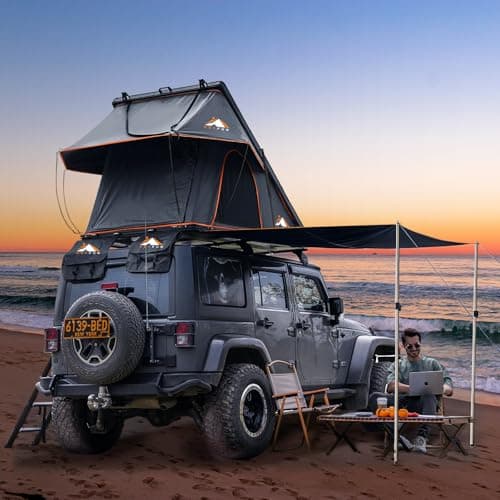
The short answer: worth it if you move camp most days, camp on difficult ground, or camp somewhere you would genuinely rather be off the ground. Not worth it for weekend campground camping, for families, or for anyone whose vehicle roof rating does not comfortably support one.
The reason people get this wrong is that the sticker price is roughly half of what a rooftop tent actually costs. Here is the full number.
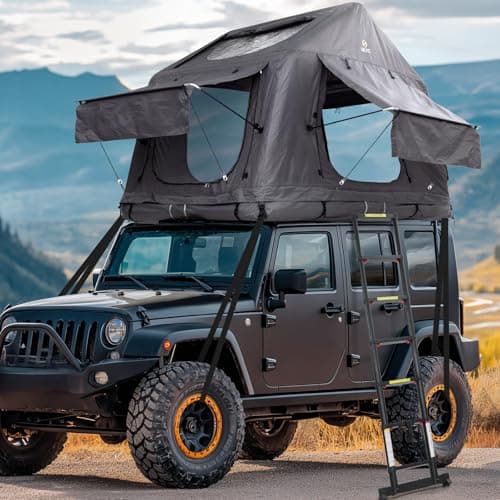
Inflatable beams instead of a rigid frame, which cuts weight dramatically — and weight is the constraint that stops most people buying a rooftop tent at all.
#ad · Live prices from the Amazon Creators API, as of October 19, 2026. Where we have no verified live price we show none — a gap beats a number that has rotted.
In detail
The picks, in full
01
Best lightweight option
Nice C Inflatable Rooftop Tent
Inflatable frameSUV and truckLightweightPump required
7.6/10
Inflatable beams instead of a rigid frame, which cuts weight dramatically — and weight is the constraint that stops most people buying a rooftop tent at all.
Setup speed
6
Weather protection
6
Weight
10
Interior space
7
Value
9
What's good
+Substantially lighter than any framed tent here, which changes the roof-load math entirely
+A third of the price of the hardshells
+Packs smaller when not in use
What's not
−Inflatable beams can puncture, and a puncture is a structural failure rather than a leak
−Needs a pump and time at every setup
−Less rigid in wind than a framed tent
Skip it if…
…you camp in sustained wind. An inflatable structure flexes in gusts in a way a rigid frame does not.
A realistic first-year total is $1,100 to $3,500, and $200 to $450 per year afterwards for as long as it stays on the roof. Against a ground tent and a good pad at roughly $200 total, that is the number to weigh.
The four cases where it is genuinely worth it
You move camp most days. Ninety seconds versus fifteen minutes, twice a day, for two weeks, is hours of your trip.
The ground is consistently bad. Rocky desert, saturated forest floor, snow. A rooftop tent makes pitch selection irrelevant.
You camp where being off the ground matters. Snake country, wild pigs, areas with a lot of ground-level wildlife.
You already have the rack and the roof rating. If a suitable rack is already on the vehicle, the marginal cost drops substantially.
The four cases where it is not
Weekend campground camping. A ground tent and a four-inch pad is more comfortable for a fraction of the money.
Families. Rooftop tents sleep two or three, and annexes are expensive add-ons.
Basecamp trips. You lose the use of the vehicle while camped, which is usually the reason you brought it.
Your roof rating does not support it. This is not a preference. Check the dynamic figure in your owner's manual first.
The cheaper setup that solves most of the same problems
If what you actually want is fast setup, a comfortable night and shelter from weather:
A quality ground tent with aluminum poles and a full rainfly — around $130
A four-inch sleeping pad with a real R-value — around $60
A vehicle awning for the cooking and shade problem — around $150
That is about $340, no fuel penalty, no roof rating question, and you keep the vehicle. It is not as fast to set up and it will not get you off wet ground. For most people it is the better purchase, and it is worth trying before spending four times as much.
How these were picked
I haven't handled these. Here's what I did instead.
Everyone in this category says they tested twenty of these. I haven't tested any, and I say so. What I do instead: read the manufacturer's manual and published specification, compile the numbers that decide the purchase, do the arithmetic in the open, check the live price, and name one product to skip. The scores above are judgments from that research against a published rubric — they are not measurements I took, because I do not have a lab and I am not going to pretend otherwise.
Questions
Frequently asked
How much does a rooftop tent really cost?+
The tent is $550 to $1,800, plus $300 to $800 for a rack if you do not have one, plus $200 to $450 a year in fuel from the drag. A realistic first-year figure is $1,100 to $3,500.
Do rooftop tents damage your roof?+
Not if you stay within the vehicle's dynamic roof load rating and the rack is correctly fitted. Exceeding those figures stresses the mounting points and, on unibody vehicles, the roof structure itself.
How long do rooftop tents last?+
A well-maintained tent kept out of prolonged UV and never packed away wet lasts many years. The failure points are the fabric cover on softshells, the gas struts on hardshells, and mildew from wet storage — which is entirely avoidable.
Can any car take a rooftop tent?+
No. The dynamic roof load rating and the rack's own rating both have to support the tent's weight, and on many crossovers they do not. Read your owner's manual and subtract your rack weight before you shop.
We do not run a testing lab and we do not pretend to. Where a measured number came from a manufacturer's published specification or someone else's lab, we name them and link them. Where we could not verify something, we say so on the page rather than quietly leaving it out. Read the full method.