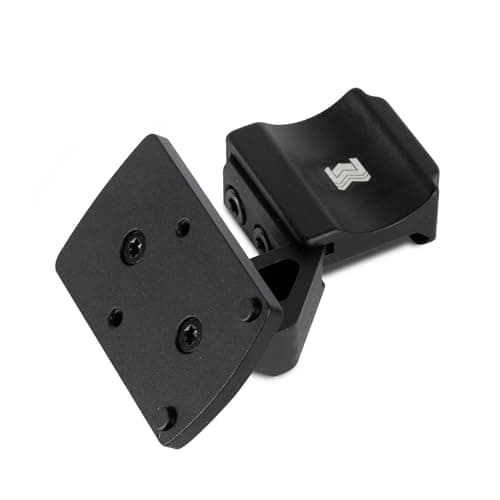
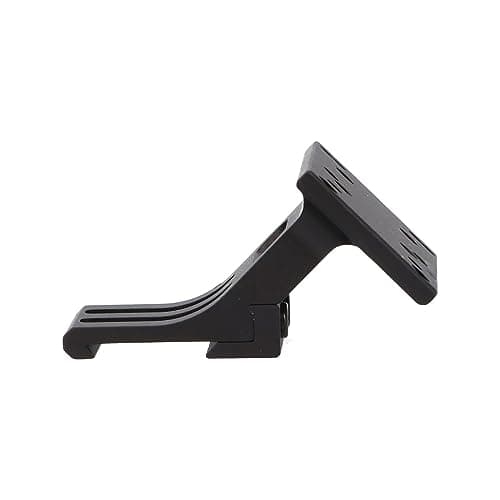
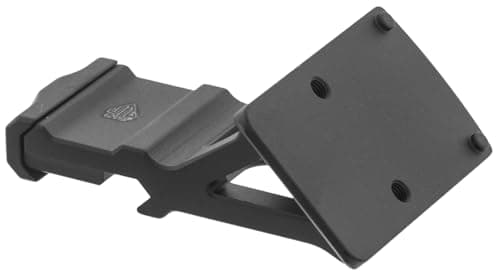
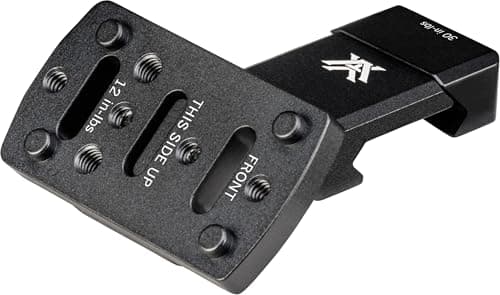
The verdict first: buy the Vortex Pro 45° Offset Mount. It is for the shooter whose rifle runs a magnified optic in a match or a class and who does not want to re-check hardware between stages. If you want the mount that fits whichever dot you already own, the Monstrum Canted Micro Red Dot Mount covers the RMR, 407C/507C and XR patterns in one part for a fraction of the money, and it is the value pick here. The budget pick is the UTG Super Slim RMR 45° — the cheapest and the slimmest, RMR footprint only.
Prices on this page come from a live lookup with an as-of date under the table. Nothing in the prose quotes a number.
What an offset mount is for
A magnified optic is slow and narrow up close. A low-power variable at 1x mostly solves that, and a fixed-power scope does not solve it at all. An offset mount puts a red dot at roughly 45 degrees beside the scope so you can roll the rifle and use the dot at close range without taking the scope off or dialing anything. In 3-gun and in most practical rifle classes, that roll is faster than any magnification change.
It is not the only answer. A piggyback mount sits the dot on top of the scope, which is faster to find but raises your head position and fouls most bags. A dot in front of the scope on a cantilever works for some people and nobody loves it. The 45-degree offset is the arrangement that has survived, which is why all four mounts here are that.
Footprint coverage is the specification that bites
A mount is cut for a specific optic pattern, exactly like a pistol slide. Three of the four here are RMR-pattern or RMR-plus, one is a universal claim that still needs checking, and one covers three patterns in a single part. If you already own the dot, start from the dot: buy the mount that fits it. If you own neither, buying a multi-footprint mount first is the cheaper mistake to make.
Our pistol red dot roundup explains the three common footprints in plain terms, and the same patterns apply here because the small dots used on offset mounts are pistol optics.
Zero retention, torque and the first match
An offset dot lives where your sling, your support hand and every barricade live. It gets knocked. Whether it keeps its zero after that is a function of two things: how much material surrounds the fasteners, and whether the fasteners were torqued and thread-locked in the first place.
Torque the mount screws to the manufacturer's figure with blue thread locker, confirm zero on paper, then check the screws again after the first hundred rounds. On the budget mounts here, check them after every match for the first season. That is not a criticism of the mounts, it is what the price difference buys.
How to choose between the four
- Is this a match rifle you depend on? Buy the Vortex and stop thinking about it.
- Do you already own a dot? Then footprint decides. The Monstrum covers the most patterns; the UTG and the Vortex are the slim RMR-pattern options.
- Are you already in the SIG optics ecosystem? The SIG mount is matched hardware for a Romeo-pattern dot, and outside that it buys you nothing the Monstrum does not.
- Does the rifle live in a bag or a rack? Then profile matters more than you think, and the slim mount is the one that stops snagging on everything.
Buying notes
The mount is not the optic
Every product on this page is a mount only. The dot is a separate purchase, and a cheap mount under a good dot is a worse combination than a good mount under a cheap dot — the mount is the part that moves.
Check rail space before you order
An offset mount needs a clear run of Picatinny rail beside the scope, and on a rifle with a scope, a light and a sling mount already fitted there often is not one. Measure first.
Set the angle to your gear, not to the catalogue
The point of the offset is that rolling the rifle brings the dot to your eye without moving your head much. How far you have to roll depends on your stock, your plate carrier if you wear one, and the height of your scope. Mount it, shoulder the rifle at home, and move it before you zero it.
Where this fits in a match setup
LPVOs for 3-gun covers the primary optic these mounts sit beside, and stage planning is where you work out whether you actually need the offset or just need to practise the magnification change.