We earn a commission when you buy through our Amazon links, at no extra cost to you. It never changes the order of the picks, and we say so when the cheaper thing is the better buy. How this works.
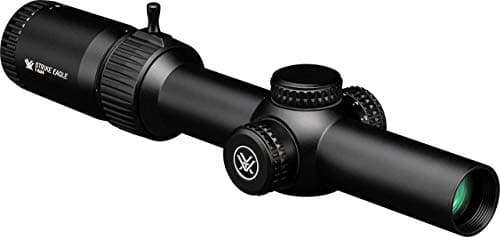
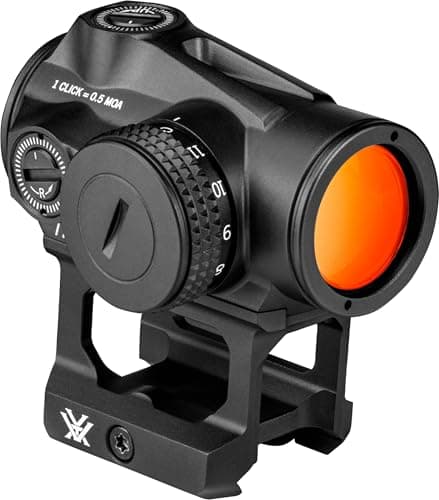
The verdict first: buy a red dot if your shooting is inside 100 yards, if weight matters, or if this is your first optic. Buy an LPVO if you need to identify targets at distance, if you shoot past 200 yards regularly, and if you accept about a pound of extra weight and roughly double the price.
For most people, most of the time, the red dot is the right answer, and a magnifier added later covers the occasional need for magnification at a fraction of an LPVO's weight penalty.
The numbers: a micro red dot is typically 1 to 4 ounces and costs $65 to $250. A 1-6x LPVO is typically 16 to 22 ounces with the mount, and costs $150 to $600. That weight sits high on the rifle, where it affects handling most.
Two follow-on decisions once you have picked a class. If it is a dot and it will be exposed to weather or carried against a shirt, the housing matters: enclosed versus open emitter. And if a dot has never looked like a dot to you, the LPVO is not just an alternative — it is the fix, because its reticle is etched rather than projected: red dots for astigmatism.
#ad · Live prices from the Amazon Creators API, as of October 19, 2026. Where we have no verified live price we show none — a gap beats a number that has rotted.
Both eyes open, unlimited eye relief. Head position barely matters, so you can get on target from any awkward position.
Faster inside 100 yards, and it is not close — there is no eye box to find.
A quarter of the weight, which changes how the rifle handles.
Years of battery life on a single cell.
Far cheaper for equivalent build quality.
LPVO: identification and precision
Magnification to identify a target before you engage it, which is genuinely the point.
Usable to 300+ yards, where a dot covers the entire target.
Holdover reticles for drop compensation without dialing.
True 1x at the bottom on good LPVOs, which recovers most of the red dot's close-range speed.
The middle option most people should consider
A red dot plus a flip-to-side 3x magnifier gives you dot speed most of the time and magnification when you need it, for less money and less permanent weight than an LPVO. The trade is that the magnifier is another thing to flip and another thing to carry, and the optical quality behind a red dot is not as good as a purpose-built LPVO.
Where LPVOs disappoint people
Two things, both about the low end of the range. First, some "1x" LPVOs are actually 1.2x or 1.5x, which breaks both-eyes-open shooting entirely. Second, illumination on cheaper LPVOs is not daylight-bright, so the reticle disappears against a bright background at exactly the moment you wanted the speed. Both are worth checking specifically.
What to buy first
If this is your first optic, buy a good red dot. It is cheaper, it teaches you what you actually need, and it will remain useful on another rifle when you upgrade. Almost nobody regrets a quality red dot; a fair number of people regret a budget LPVO.
How these were picked
1 of these is mine. The rest are research, and I say which is which.
Anything carrying the "I run this one" stamp above is gear I actually own and use, and I write about it in those terms. What I do not do is invent numbers to dress that up — there are no group sizes, round counts or chronograph figures on this site, because I did not record them. For everything without the stamp: I read the manufacturer's published specification, compile the numbers that decide the purchase, do the arithmetic in the open, check the live price, and name one product to skip. Those scores are judgments against a published rubric, not measurements I took.
Questions
Frequently asked
Is a red dot or an LPVO better?+
Red dot for speed, weight and cost inside 100 yards. LPVO for identifying and engaging targets at distance. For most shooters most of the time, the red dot is the right answer and a magnifier covers the exception.
How heavy is an LPVO?+
Typically 16 to 22 ounces with a mount, against 1 to 4 ounces for a micro red dot. That weight sits high on the rifle where it affects handling most, which is why it is the most common complaint from people who switch.
Do LPVOs have true 1x?+
Good ones do. Some cheaper LPVOs are actually 1.2x or 1.5x at the bottom of the range, which breaks both-eyes-open shooting entirely. It is worth checking specifically, because it is the feature the format is bought for.
Is a magnifier behind a red dot as good as an LPVO?+
Not optically — you are looking through two optics rather than one. It is lighter, cheaper and flips out of the way, which for many people is the better overall trade.
We do not run a testing lab and we do not pretend to. Where a measured number came from a manufacturer's published specification or someone else's lab, we name them and link them. Where we could not verify something, we say so on the page rather than quietly leaving it out. Read the full method.