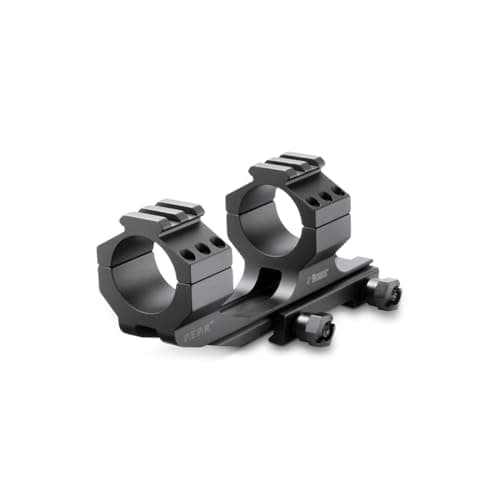
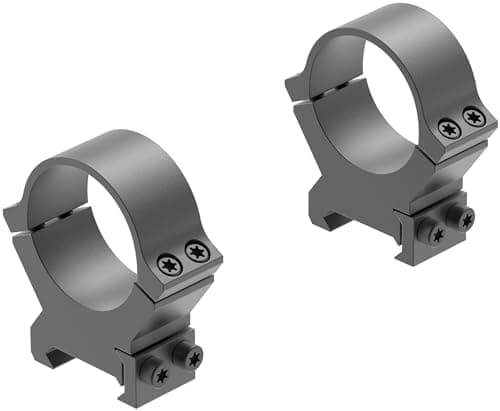
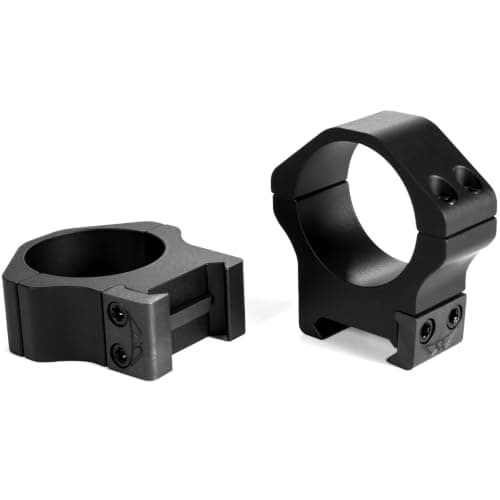
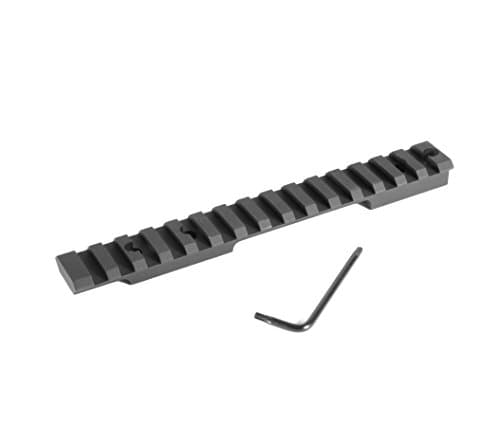
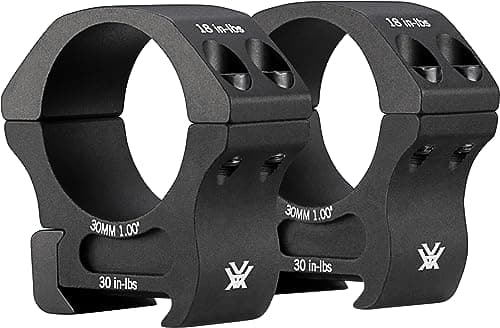
The verdict first: for a bolt-action rifle with a picatinny rail and a 30mm scope, buy Vortex Pro Series rings in medium height and a Wheeler inch-pound torque wrench. For an AR, buy the Burris P.E.P.R., which is a one-piece mount with the forward offset an AR needs. For a bolt gun you intend to shoot past six hundred yards, add a 20 MOA canted base — sixty-three dollars for several hundred yards of reach is the best value on the entire rifle.
This page exists because the site had a scope roundup, a precision scope roundup and a zeroing guide, and nothing at all about the hundred dollars of aluminum holding the two together. That is backwards: the mount decides whether the scope works.
Ring height, without guessing
Ring height has one job: get the objective bell to clear the barrel and the hand guard, and put the eyepiece where your eye already is when your cheek is on the stock. Those two constraints fight each other, and the answer is the lowest height that clears.
- Measure the objective, not the magnification. A 40mm objective usually clears on low rings; 50mm wants medium; 56mm generally wants high. The number on the scope is the glass diameter, not the outside of the bell, so allow a couple of millimeters.
- Check it with a dollar bill, not by eye. Mount it, then slide a bill between the bell and the barrel. If it does not pass, the rings are too low and the barrel will contact the scope under recoil.
- Lowest that clears wins. Every millimeter of extra height adds offset between the bore and the line of sight, which changes your holds at close range and makes a consistent cheek weld harder.
- An AR is the exception. The stock puts your eye high, so AR mounts are deliberately tall — the 1.93-inch and 1.5-inch heights you see advertised exist for that reason and are not a fashion.
Warne publish a ring-height selector for exactly this problem and Burris publish mount specifications by tube size; both are linked in the sources. Use the manufacturer's own figures rather than a forum post about a rifle that is not yours.
Why a canted base buys distance for sixty dollars
A scope has a finite amount of internal elevation. Call it 60 MOA of total travel on a typical 30mm tube: once it is centered and zeroed at a hundred yards, roughly half of that is above your zero and available to dial up. That runs out well before a thousand yards on most cartridges.
A 20 MOA base tips the whole scope downward by twenty minutes relative to the bore. You zero using some of your down travel, which you were never going to use, and in exchange you get twenty extra minutes at the top. Nothing else on a rifle gives you that much capability for sixty dollars, and it costs you nothing except a slightly odd-looking scope.
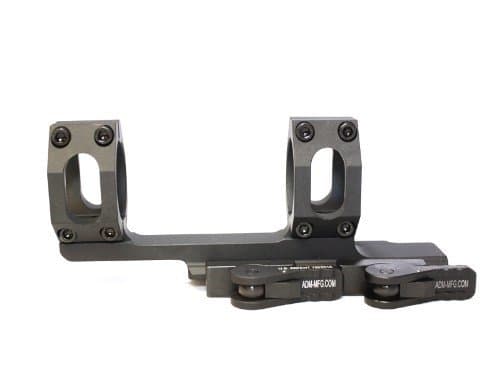
The same trick exists built into cantilever AR mounts — the ADM AD-RECON here comes in a 30 MOA version — and it is the reason my LR-308 wears one.
Torque, which is where scopes actually die
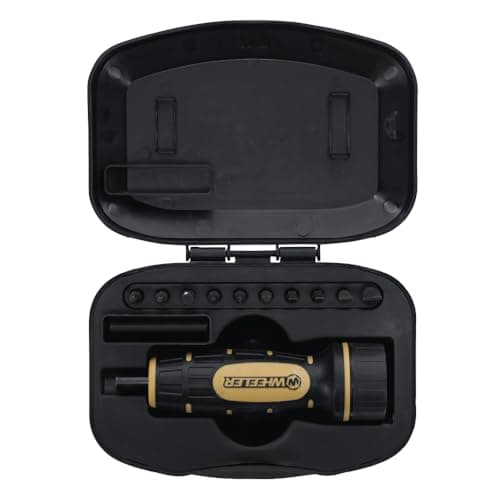
Ring screws are small, and the published figures are small: generally in the 15 to 25 inch-pound range for ring caps and 30 to 65 for base screws, depending on the maker. Those numbers are in inch-pounds. A standard foot-pound torque wrench cannot measure them and your wrist cannot either.
Over-torqued ring caps dent a scope tube, pinch the erector tube inside it, and produce a scope that will not track — which looks exactly like a defective scope and is not one. Under-torqued rings let the scope creep under recoil, which looks exactly like a scope that will not hold zero and is not one. A forty-eight-dollar inch-pound wrench removes both failure modes permanently, which is why it is on this page alongside the rings.
Level, then zero
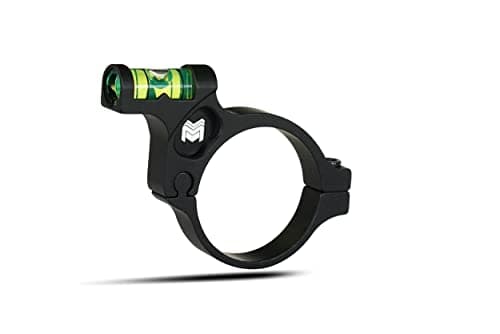
A canted reticle is invisible at a hundred yards and expensive at six hundred: your elevation dial no longer runs straight up relative to gravity, so every click you dial also moves you sideways. The sixteen-dollar bubble level here clamps on the tube and tells you whether the rifle is canted when you shoot; a leveling kit tells you whether the reticle is straight when you mount it. They are two different jobs and both are worth doing.
Then go and zero it properly — the zeroing page covers the sequence that wastes the least ammunition, and the DOPE card page covers what to do with the turrets afterward.
Buying notes
Confirm three numbers before you order
Tube diameter (1 inch, 30mm or 34mm), the rail standard on your rifle (picatinny and Weaver are not interchangeable in both directions), and the objective diameter. Getting any of the three wrong means the parts go back.
Rings or a one-piece mount?
Rings for a bolt gun: lighter, cheaper, and the receiver holds the alignment. A one-piece mount for an AR: the upper receiver and the hand guard are two different parts, the scope has to sit forward of the charging handle, and a single chunk of aluminum solves both at once.
Quick-detach is for people with a reason
A QD lever is genuinely useful if you swap optics or need to get to iron sights. For a rifle whose scope will be mounted once and never removed, it is extra money, extra height and an extra thing to come loose.
You probably do not need to lap rings
Lapping was standard advice when rings were cheap castings. Modern CNC-machined rings from an established maker are round enough, and lapping a good set is a way to turn a working part into scrap. If a scope shows a ring mark after mounting, the problem is usually alignment of the base or over-torque.
Blue thread locker on base screws, nothing on ring caps
Base-to-receiver screws vibrate loose and benefit from removable thread locker. Ring cap screws are torqued to a figure and do not want anything that changes the friction those figures assume. Follow the maker's instructions over this paragraph if they differ.