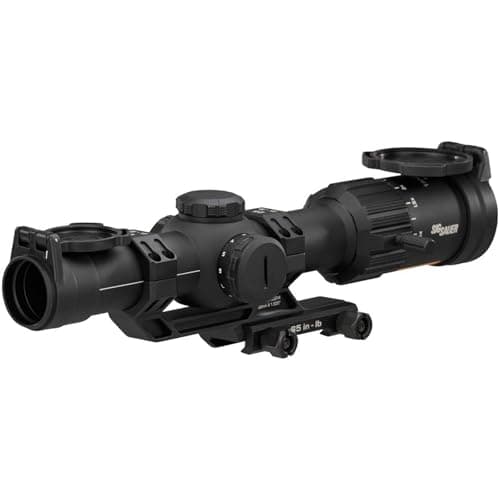
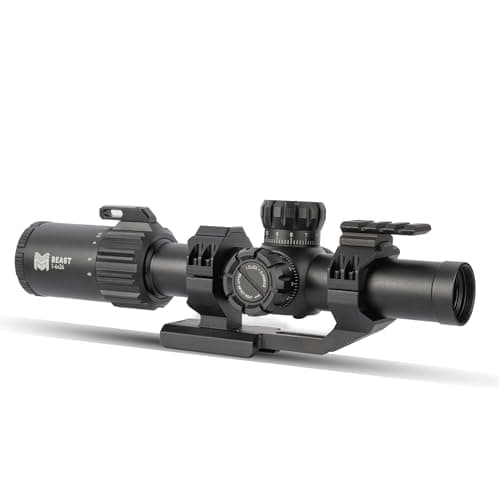
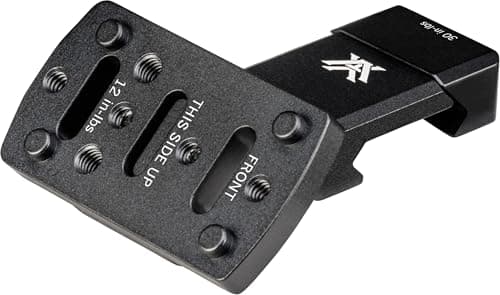
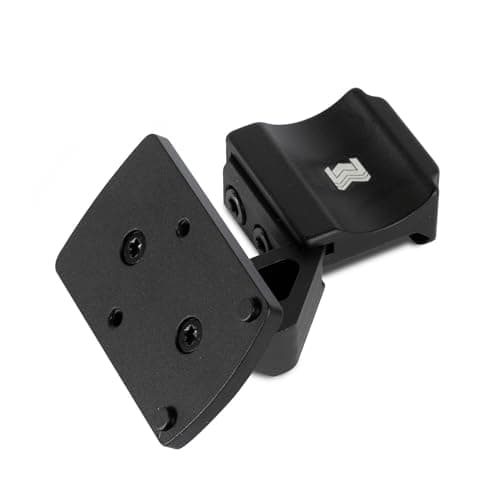
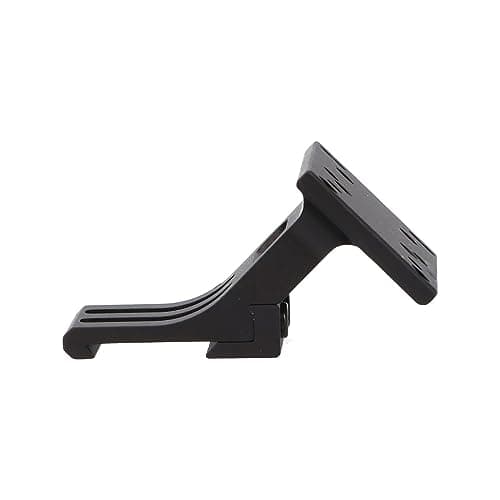
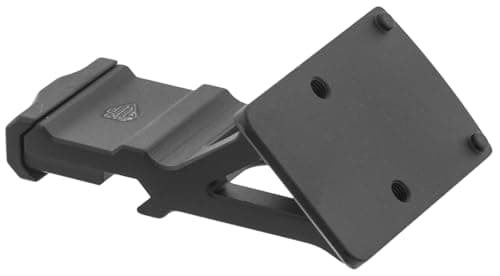
A 3-Gun stage asks for a close-range red dot and a distance scope at the same time. The modern answer is one optic that does most of both, and a second small one canted 45 degrees for the rest.
We earn a commission when you buy through our Amazon links, at no extra cost to you. It never changes the order of the picks, and we say so when the cheaper thing is the better buy. How this works.
The optic problem in 3-Gun is a genuine contradiction. Half a stage is steel at three hundred yards that you cannot hit without magnification. The other half is cardboard at seven yards that you cannot shoot fast enough with magnification. One rifle, one run, both problems.
The low-power variable optic is the compromise that solved it, and the offset dot is what removed most of the remaining compromise. I run Vortex glass on my ARs — Strike Eagles — which is a position I have written up at length in the Vortex owner's guide.
Working a barricade port. This is exactly the position where a bulky optic and a high-profile mount cost you — everything on the top rail has to fit through the hole.
What actually matters in an LPVO for this sport
A genuine 1x at the bottom
This is the specification that separates a usable multigun optic from a marketing claim. At a true 1x you can shoot with both eyes open and the scope behaves like a red dot with a tube around it. At 1.5x — which several optics quietly are — your eyes fight each other, and close-range speed collapses.
Eye box and eye relief at the top end
On a stage you get into position badly, at speed, from whatever awkward stance the barricade allows. A forgiving eye box means you see a full sight picture immediately rather than hunting for it. This is worth more in competition than absolute glass quality, and it is the thing spec sheets never quantify.
Second focal plane, and what that costs you
Most 3-Gun LPVOs are second focal plane: the reticle stays the same visual size as you zoom, so it does not shrink to invisibility at 1x. The trade is that any holdover marks in the reticle are only correct at one magnification — usually the top. Know which magnification your reticle is calibrated at, because holding over at 4x with a scope calibrated at 6x is a clean miss.
Daylight-visible illumination
At 1x in bright sun, an unilluminated reticle disappears against a light target. The top illumination setting needs to be genuinely daylight-bright, not merely visible indoors.
Weight and where it sits
An LPVO with a quality mount is a lot of weight on the top rail, high up, right where it affects how the rifle swings. Every ounce is one you are carrying through a stage. This is the honest argument for a plain red dot if your matches are mostly close range.
The offset dot: why it changed the answer
A 45-degree offset mount puts a small red dot at an angle beside the main optic. Roll the rifle inboard about 45 degrees and you are looking through the dot instead of the scope. The transition takes a fraction of a second and requires no adjustment to the LPVO at all.
What that buys you is significant:
You can leave the LPVO at its top magnification. No more running the whole stage at 1x because you might see a close target, and no more spinning the magnification ring under time.
Close targets become free. Roll, shoot, roll back. Faster than dialing down and faster than trying to use a magnified scope up close.
You have a backup. If the LPVO fogs, breaks or the illumination dies mid-match, the dot finishes the stage.
The costs: another optic and mount to buy, another zero to maintain, another thing sticking off the rail to catch on barricades and slings, and a body-mechanics skill that needs practice before it is fast. The mount is the part that must not move — it holds a zero you cannot check mid-stage — which is why the mount picks below are ranked on zero retention above everything else.
If you are weighing this against a plain red dot setup entirely, the longer argument is on red dot versus LPVO. The dots themselves are ranked on best red dot sights — check footprint compatibility against whichever mount you choose.
#ad · Live prices from the Amazon Creators API, as of October 19, 2026. Where we have no verified live price we show none — a gap beats a number that has rotted.
In detail
The picks, in full
01
Best overall LPVO
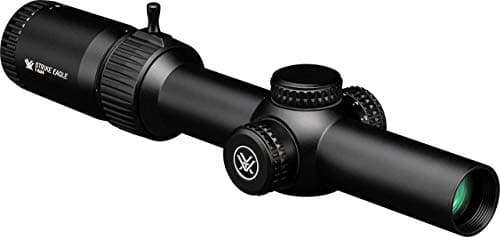
Vortex Strike Eagle 1-6x24
I run this one
Runs Strike Eagles on his ARs.
1-6x24Second focal planeBDC3 reticleIlluminated
8.4/10
True 1x at the bottom for both-eyes-open shooting and 6x at the top for identification, with the Vortex warranty behind it.
Glass clarity
8
True 1x
9
Illumination
8
Durability
9
Value
8
What's good
+Genuine 1x rather than 1.5x, which is what makes both-eyes-open shooting work
+6x is enough to identify a target at distance
+Illuminated reticle usable in daylight at the top setting
+Vortex VIP warranty
What's not
−Heavier than a red dot by a large margin
−Second focal plane means the BDC is only correct at 6x
−Slower to acquire up close than a red dot
Skip it if…
…speed inside 50 yards is the priority. A red dot is faster and weighs a third as much.
The LPVO. Prioritize true 1x and a forgiving eye box over glass quality. You will notice the eye box on every single stage.
A quality scope mount. A cantilever mount at the correct height for your cheek weld. Do not economize here — a scope that shifts zero is worse than no scope, because you will not know.
The offset mount, then the dot. Buy the mount that fits the dot you want, or the dot that fits the mount you like. Footprint mismatch is the most common mistake in this category by a distance.
Footprints, plainly
Micro red dots mount on a handful of standardized patterns — the RMR pattern and the 407C/507C pattern being the two you will meet most. A mount cut for one will not accept the other. Multi-footprint mounts exist and are worth the small premium if you do not yet own the dot. Check the pattern of your specific dot on the manufacturer's page before ordering anything.
Zeroing an offset dot
Zero it at a close distance — the range it exists to serve. Twenty-five yards is a common choice. There is no point zeroing your close-range backup at two hundred yards; that is what the scope is for. And check the mount fasteners after the first match. Offset mounts live in a high-vibration, high-contact position and hardware works loose.
1 of these is mine. The rest are research, and I say which is which.
Anything carrying the "I run this one" stamp above is gear I actually own and use, and I write about it in those terms. What I do not do is invent numbers to dress that up — there are no group sizes, round counts or chronograph figures on this site, because I did not record them. For everything without the stamp: I read the manufacturer's published specification, compile the numbers that decide the purchase, do the arithmetic in the open, check the live price, and name one product to skip. Those scores are judgments against a published rubric, not measurements I took.
Questions
Frequently asked
1-6x or 1-8x?+
1-6x for most club shooters. The extra magnification of a 1-8x is genuinely useful at longer steel, and it usually comes with more weight, a tighter eye box at the top end, and a higher price. If your matches top out around 200-300 yards, 1-6x is the easier optic to shoot well.
Do I need the offset dot?+
No, and it is the second purchase rather than the first. Buy the LPVO and a good mount, shoot a season, and see whether you are losing time on close arrays. If you are, the offset dot fixes exactly that problem.
Will an offset mount hold zero?+
A well-made one will. It is the single property to prioritize, because you cannot verify an offset zero mid-stage — you find out it moved by missing. Buy the mount on build quality and fastener quality, and re-check torque after the first match.
Can I use my hunting scope?+
If it has a true 1x low end, yes. Most hunting scopes start at 3x or higher, which makes close targets very difficult and is the specific reason LPVOs exist. Our rifle scope roundup covers the higher-magnification end if that is what you are shopping.
We do not run a testing lab and we do not pretend to. Where a measured number came from a manufacturer's published specification or someone else's lab, we name them and link them. Where we could not verify something, we say so on the page rather than quietly leaving it out. Read the full method.