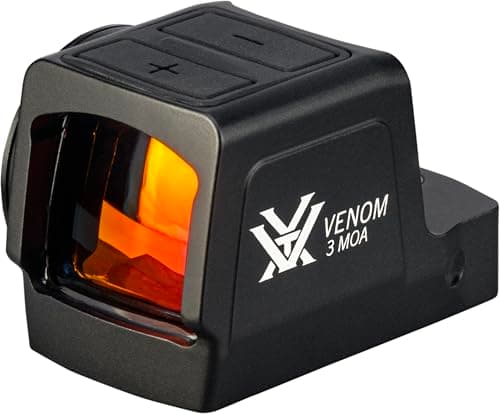
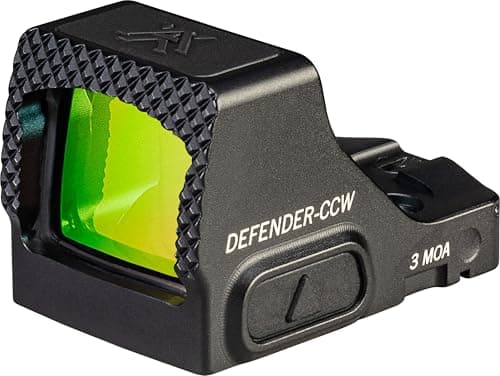
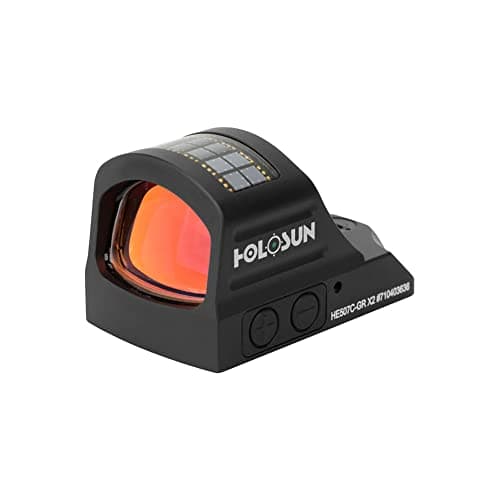
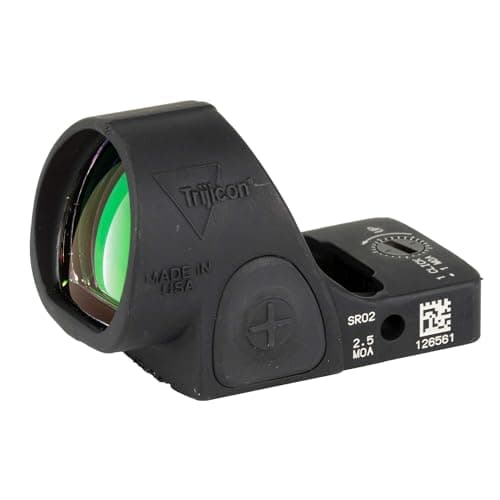
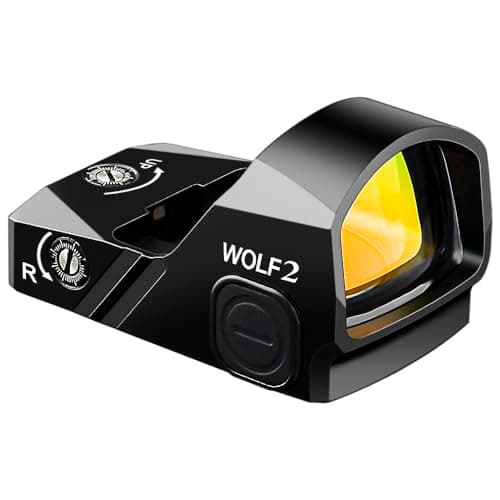
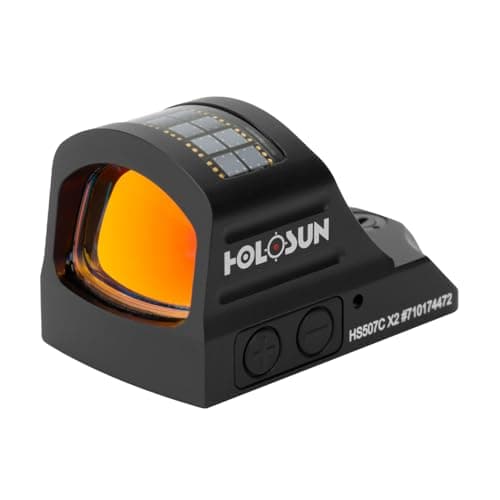
The verdict first: for a full-size pistol, buy the Holosun HS507C-X2 — it is for the shooter whose slide is already cut or who is choosing a cut, and it sits on the pattern the industry has standardized around. If the pistol is carried on your body rather than kept in a bag, buy the Vortex Venom Enclosed instead: an enclosed emitter cannot be blanked by rain, snow or pocket lint, and an open one can. The budget pick is the Cyelee WOLF2, the cheapest optic here I would mount on a pistol at all, and I would keep it on a range gun.
Every price on this page is a live lookup with its own date printed under the table. The prose quotes no numbers.
Footprint first. Everything else is second.
A pistol optic is not a universal part. The slide cut on your gun matches a specific pattern of screw holes and recoil lugs, and an optic in a different pattern does not mount — not with an adapter plate, not with care, not at all. Three patterns cover most of what you will meet:
- Trijicon RMR. The most widely supported pattern on full-size slides, and the one the budget pick here uses.
- Holosun 507C / 407C. What most new factory optic-ready pistols are cut for or shipped with a plate for, and the pattern of the top pick.
- Shield RMSc. The small-optic pattern used by compact and micro-compact carry pistols, and the one the Defender-CCW here is cut to.
Read your slide's documentation or the plate kit that came with it before you read any review, including this one. A mismatched footprint is the single most common return in this category and no amount of optic quality fixes it.
Open or enclosed: the carry decision
An open-emitter reflex fires an LED across a gap at an angled lens. Anything that lands on that lens or in that gap — a raindrop, snow, lint from a holster, blood — blocks the dot or smears it. An enclosed emitter puts the LED inside a sealed housing with glass at both ends, and nothing gets in.
On a range gun, open is fine and gives you a wider window for less money. On a gun carried daily, enclosed is the specification you are paying for, and the honest framing is that this one feature matters more than reticle, brightness or dot size combined. The full argument, with what each design actually fails at, is in enclosed against open emitter.
If the dot looks like a comma
An irregular cornea smears a red emitter into a starburst or a comma, and turning the brightness up makes it worse. Two things help: a green emitter, which many people with astigmatism see far more cleanly, and a smaller dot. That is why a green optic is ranked here on its own merits rather than as a footnote — red dots and astigmatism covers why it happens and what else to try before spending money.
Dot size, briefly
A 2 MOA dot covers two inches at a hundred yards and a 6 MOA dot covers six. On a pistol at typical distances the difference is small and the trade is speed against precision: a bigger dot is faster to see, a smaller one lets you aim at something small. The circle-dot reticles here try to have both, and mostly succeed. What size red dot MOA has the arithmetic if you want it.
What this page is not
It is not the 2011 page. If you already own a double-stack 1911 and want the optic and the mounting kit that the factory supports, red dots for 2011 pistols ranks inside that ecosystem and names the plates. It is also not the rifle page: tube sights, magnifier heights and solar rifle dots live in the main red dot roundup.
Buying notes
Budget for the plate and the screws
An optic-ready pistol ships with plates for some patterns and not others, and the correct screws are pattern-specific and torque-specific. Blue thread locker and a torque driver are not optional on a slide-mounted optic — this is the one place on a pistol where hand-tight means “it will come loose”.
Suppressor-height sights or nothing
If you want iron sights usable through the optic window as a backup, they have to be taller than the factory set. Standard-height irons sit below the glass and give you nothing when the dot dies.
Zero it, then confirm it after a hundred rounds
Slide-mounted optics settle. Zero at your working distance, shoot a box of ammunition, and confirm before you trust it. How to zero a red dot walks the process and getting close without firing a round is the version for a garage and a laser.
Holster fit is part of the purchase
An optic changes the holster you need, and a holster cut for a bare slide will drag on the sight or refuse to seat. Our holster page covers optic-cut holsters and what retention actually buys you.