Skip to content
Steve's Outpost

Section 06 · Shooting Gear

Enclosed vs Open Emitter Red Dots

One design has an exposed LED firing across an open gap at a lens. The other seals both sides of the window. The difference only matters in weather — and it matters a lot in weather.

By Stephen V.Updated How we pick
#ad

We earn a commission when you buy through our Amazon links, at no extra cost to you. It never changes the order of the picks, and we say so when the cheaper thing is the better buy. How this works.

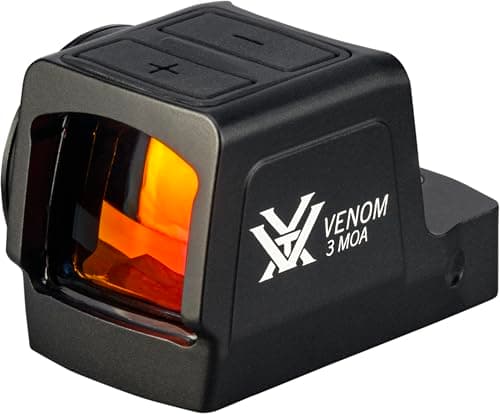
Vortex Venom Enclosed Micro Red Dot, 3 MOA

If it rains where you shoot

Venom Enclosed Micro Red Dot, 3 MOA

The cheapest enclosed-emitter dot worth owning. Sealed on both sides of the window, so water, snow and pocket lint cannot sit in front of the LED and take your dot away.

It is bigger and heavier than an open dot, and for a range gun or a dry climate you are paying for a problem you do not have. An open emitter is the right answer more often than this page's ranking suggests.

$199.00Amazon (affiliate link)

Price as of October 4, 2026. Prices move — Amazon's is the one that counts.

#ad · we may earn a commission from this link to Venom Enclosed Micro Red Dot, 3 MOA

The verdict first: buy an open emitter unless you carry in weather. If you do carry in weather — appendix, under a shirt, in rain or snow, or a duty pistol that lives outdoors — buy the Vortex Venom Enclosed, which is the cheapest enclosed dot worth owning. For everyone else the Holosun 507C-X2 is the better buy: it costs about the same, it is smaller, and its circle-dot reticle is the most useful one on the market.

That is the whole answer. What follows is why, and the one thing about open emitters that almost nobody warns you about until it happens.

What the two designs physically are

An open emitter is the shape everyone recognizes: a U-shaped housing with a lens at the front and an LED sitting in the base, firing diagonally upward onto a coated surface on the lens that reflects red light back at your eye. The gap between the LED and the lens is open to the air. That is the entire design, and it is why these sights are small, light and cheap.

An enclosed emitter puts glass on both sides. The LED fires into a sealed chamber, so the optical path is a closed tube. Nothing can get between the emitter and the lens, because there is no "between" that is open to the world.

The failure mode that decides this

An open emitter has one specific, well-known weakness: anything that lands in the gap and sits on the emitter window blocks the dot. Not dims it — blocks it. The dot disappears or smears into a comet while the sight itself is working perfectly.

The things that do it, in rough order of how often:

  • Rain. A single drop sitting over the LED is enough. It does not have to be raining hard.
  • Snow. Worse, because it packs in and stays.
  • Lint and dust. The reason this comes up for concealed carry specifically: an appendix-carried pistol spends all day collecting the inside of your shirt.
  • Mud, and your own sweat. Unlikely for most readers, and the reason duty users care about this at all.

None of this makes an open emitter a bad sight. It makes it a sight with a known, cheap, two-second fix: wipe the window. Shooters have been carrying open dots for twenty years and the overwhelming majority never have a problem. But the fix requires you to have a free hand and a moment, and the entire argument for the enclosed design is that it removes a failure you cannot fix at the wrong time.

What you give up for an enclosed emitter

  1. Size and weight. A closed optical path needs a second lens and a taller housing. On a compact carry pistol that is a real difference in how the gun sits and conceals.
  2. Choice. This is the honest finding of the page and the reason it ranks one enclosed sight against four open ones: the enclosed market under three hundred dollars is thin. Open emitters come in every footprint, dot size and price. Enclosed dots come in a handful.
  3. Money, at the quality end. At the entry end this has largely stopped being true, which is the actual news in this category over the last couple of years.
  4. Nothing optically. Worth stating plainly: enclosed is not sharper, brighter or more accurate. The dot does not look better. It just cannot be taken away from you by weather.

So which one, by what you actually do

  • Range pistol, matches, a gun in a safe. Open emitter, every time. Buy the Holosun 507C-X2 and spend the difference on ammunition.
  • Concealed carry, dry climate, inside a holster. Open emitter. Wipe the window when you dress. This is most people.
  • Concealed carry, appendix, humid or wet climate. Enclosed. The lint problem is real and daily.
  • Duty, outdoors, or a pistol that lives in a truck. Enclosed, if the budget reaches. This is what the design was built for.
  • Hunting sidearm. Enclosed. Rain and snow are the whole job description.

And whichever you buy, it needs a cut slide or a plate that matches its footprint, and it needs zeroing properly — that page is here. Footprints are not interchangeable: the RMR pattern and the Holosun K pattern are different hole spacings, and a plate for one does not fit the other.

The short answer

Quick picks

#ProductBest forScorePrice
01
Vortex Venom Enclosed Micro Red Dot, 3 MOA
Venom Enclosed Micro Red Dot, 3 MOA

The cheapest enclosed-emitter dot worth owning. The window is sealed on both sides, so rain, snow and pocket lint cannot sit on the emitter and block the dot — which is the entire argument for the design.

Best enclosed emitter
8.4
$199.00Amazon (affiliate link)
02
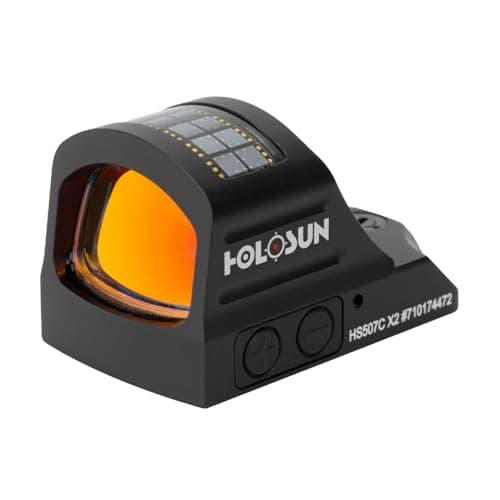
Holosun HS507C-X2, 2 MOA Dot + 32 MOA Circle
HS507C-X2, 2 MOA Dot + 32 MOA Circle

The default full-size pistol optic. Staccato sells a factory DPO kit for the 507C footprint specifically, which makes the mounting question a solved problem.

Best open emitter overall
8.8
$219.99Amazon (affiliate link)
03
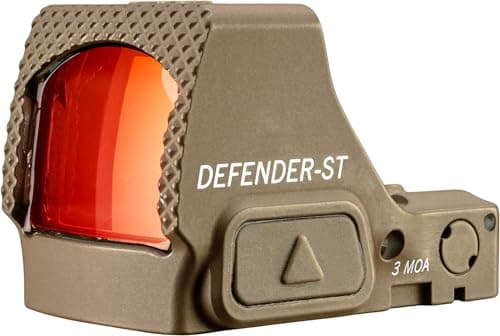
Vortex Defender-ST Micro Red Dot, 3 MOA (Tan)
Defender-ST Micro Red Dot, 3 MOA (Tan)

The bigger Defender, on the DeltaPoint Pro footprint. That footprint matters more than the dot does — see the 2011 red dot page for why.

Best open emitter for a full-size pistol
8.4
$299.00Amazon (affiliate link)
04
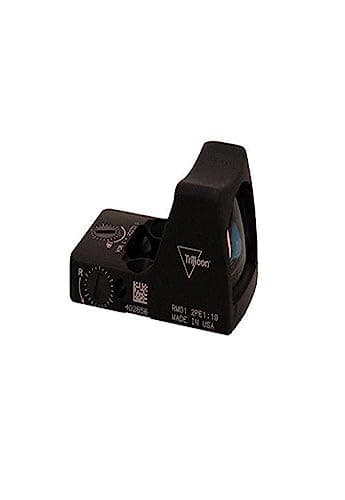
Trijicon RMR Type 2, 3.25 MOA, Automatic LED
RMR Type 2, 3.25 MOA, Automatic LED

The optic whose footprint everything else copies. It is expensive, it is old, and it has the longest hard-use record of anything on this page.

Best open emitter for abuse
8.4
Check price → (affiliate link)
05
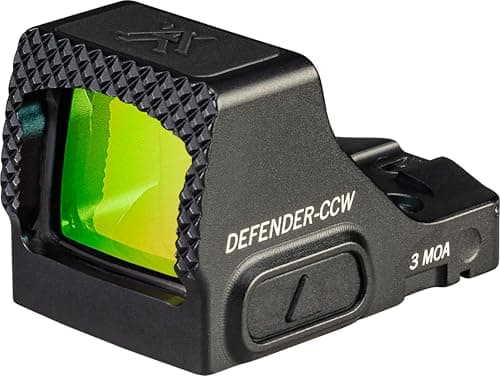
Vortex Defender-CCW Micro Red Dot, 3 MOA Green
Defender-CCW Micro Red Dot, 3 MOA Green

The Defender line is Vortex's serious pistol answer, and the CCW is the small one. It uses the Shield RMSc footprint, which is what compact slides are cut for.

Best open emitter for a small carry gun
8.4
$249.00Amazon (affiliate link)

#ad · Live prices from the Amazon Creators API, as of October 4, 2026. Where we have no verified live price we show none — a gap beats a number that has rotted.

In detail

The picks, in full

01
Vortex Venom Enclosed Micro Red Dot, 3 MOA

Best enclosed emitter

Venom Enclosed Micro Red Dot, 3 MOA

3 MOA dotEnclosed emitterMicro red dotVenom line
8.4/10

The cheapest enclosed-emitter dot worth owning. The window is sealed on both sides, so rain, snow and pocket lint cannot sit on the emitter and block the dot — which is the entire argument for the design.

Dot clarity
8
Battery life
8
Zero retention
9
Build quality
9
Value
8

What's good

  • An enclosed emitter cannot be obscured by water or debris — open reflex sights can and do fail this way
  • Micro footprint fits pistols and low-profile rifle mounts alike
  • Under two hundred dollars for an enclosed design is genuinely competitive

What's not

  • Only two left in stock at the last price check; the enclosed Venoms come and go
  • Enclosed housings are taller and heavier than the open reflex they replace
  • 3 MOA is a compromise between the 2 and 6 MOA options

Skip it if…

…the sight lives on a range gun in fair weather. An open reflex gives you a wider window for less money.

$199.00Amazon (affiliate link)

Price as of October 4, 2026. Prices move — Amazon's is the one that counts.

#ad · we may earn a commission from this link to Venom Enclosed Micro Red Dot, 3 MOA

02
Holosun HS507C-X2, 2 MOA Dot + 32 MOA Circle

Best open emitter overall

HS507C-X2, 2 MOA Dot + 32 MOA Circle

2 MOA dot with 32 MOA circleOpen reflexSolar failsafeShake AwakeAluminum housing
8.8/10

The default full-size pistol optic. Staccato sells a factory DPO kit for the 507C footprint specifically, which makes the mounting question a solved problem.

Dot clarity
9
Battery life
10
Zero retention
8
Build quality
8
Value
9

What's good

  • The circle-dot reticle is faster to find under stress than a bare dot and just as precise once you settle
  • Solar failsafe plus Shake Awake means it is essentially always on
  • Staccato lists a Dawson Precision DPO kit for the 507C/508T footprint, so the mount exists from the factory

What's not

  • Open emitter — rain, snow and lint can obscure the dot
  • The reticle button sequence takes learning
  • Two hundred and thirty-three dollars before you have bought the mounting kit

Skip it if…

…the gun gets carried in bad weather. An enclosed emitter is the honest answer for that, and it costs more.

$219.99Amazon (affiliate link)

$232.996% off

Price as of October 4, 2026. Prices move — Amazon's is the one that counts.

#ad · we may earn a commission from this link to HS507C-X2, 2 MOA Dot + 32 MOA Circle

03
Vortex Defender-ST Micro Red Dot, 3 MOA (Tan)

Best open emitter for a full-size pistol

Defender-ST Micro Red Dot, 3 MOA (Tan)

3 MOA dotDeltaPoint Pro footprintMicro reflexMotion activation
8.4/10

The bigger Defender, on the DeltaPoint Pro footprint. That footprint matters more than the dot does — see the 2011 red dot page for why.

Dot clarity
9
Battery life
8
Zero retention
9
Build quality
9
Value
7

What's good

  • The DPP footprint is what a lot of full-size optic-ready slides and adapter plates are cut for
  • Larger window than the CCW, which makes finding the dot faster
  • Vortex's best pistol glass short of the XL

What's not

  • Open emitter — same rain and debris caveat as every open reflex
  • Too large for most compact carry slides
  • Three hundred dollars

Skip it if…

…your slide or plate is cut for RMR. The RMR and DPP footprints are not interchangeable and forcing it is how optics get shot loose.

$299.00Amazon (affiliate link)

Price as of October 4, 2026. Prices move — Amazon's is the one that counts.

#ad · we may earn a commission from this link to Defender-ST Micro Red Dot, 3 MOA (Tan)

04
Trijicon RMR Type 2, 3.25 MOA, Automatic LED

Best open emitter for abuse

RMR Type 2, 3.25 MOA, Automatic LED

3.25 MOA dotAutomatic LED brightnessRMR footprintModel RM01-C-700600
8.4/10

The optic whose footprint everything else copies. It is expensive, it is old, and it has the longest hard-use record of anything on this page.

Dot clarity
8
Battery life
8
Zero retention
10
Build quality
10
Value
6

What's good

  • The patented housing shape is why RMRs survive slide impacts that flatten other optics
  • RMR is the footprint Staccato's DPO RMR/RMRHD/SRO kit is cut for
  • Automatic brightness means one fewer thing to think about

What's not

  • Four hundred and fifty dollars, roughly double the Holosun
  • Automatic-only brightness on this SKU — no manual override
  • Battery is under the optic on the Type 2, so changing it means unmounting and rezeroing

Skip it if…

…you want a top-loading battery. That is the single most common complaint about this optic and it is a fair one.

Check price on Amazon → (affiliate link)

No buyable offer at the last price check (October 4, 2026). We show nothing rather than a stale number.

#ad · we may earn a commission from this link to RMR Type 2, 3.25 MOA, Automatic LED

05
Vortex Defender-CCW Micro Red Dot, 3 MOA Green

Best open emitter for a small carry gun

Defender-CCW Micro Red Dot, 3 MOA Green

3 MOA green dotShield RMSc footprintMicro reflexMotion activation
8.4/10

The Defender line is Vortex's serious pistol answer, and the CCW is the small one. It uses the Shield RMSc footprint, which is what compact slides are cut for.

Dot clarity
9
Battery life
8
Zero retention
9
Build quality
9
Value
7

What's good

  • RMSc is the dominant footprint on compact and subcompact optic-ready slides
  • Green dots read as brighter to most eyes at the same power draw
  • Motion activation means it is on when the gun moves

What's not

  • Open emitter, so rain and lint can obscure the dot
  • Footprint fit is a hard yes-or-no — confirm your slide cut before ordering
  • Two hundred and forty-nine dollars on a pistol that may have cost five hundred

Skip it if…

…your slide is cut for the RMR or DeltaPoint Pro footprint. It will not fit and no adapter makes a small footprint bigger.

$249.00Amazon (affiliate link)

Price as of October 4, 2026. Prices move — Amazon's is the one that counts.

#ad · we may earn a commission from this link to Defender-CCW Micro Red Dot, 3 MOA Green

Buying notes

Check the footprint first, the features second

RMR, K-footprint, Shield RMSc and the rest are physically different patterns. Find out what your slide or your plate is cut for before you fall in love with a sight.

Shake-awake is more useful than a long battery life number

A sight that wakes on movement and sleeps when still is one you never have to remember to turn on, which is the only thing that matters on a carry gun. Combine it with a top-loading battery tray so changing the cell does not mean re-zeroing.

Dot size: 3 MOA unless you know why not

Two MOA is more precise and harder to find fast. Six MOA is fast and covers a lot of target at distance. Three is the compromise nearly everybody is happiest with, and a circle-dot reticle gives you both at once.

Green helps some eyes, and that is a vision question

If a red dot looks like a smear or a starburst to you, that is almost certainly astigmatism rather than a faulty sight, and green often reads cleaner. We go through that properly on its own page.

Do not buy an enclosed dot to avoid cleaning it

Both designs want the front and rear glass wiped. The enclosed design removes one specific failure — something sitting on the emitter — and no sight is maintenance-free.
How these were picked

I haven't handled these. Here's what I did instead.

Everyone in this category says they tested twenty of these. I haven't tested any, and I say so. What I do instead: read the manufacturer's manual and published specification, compile the numbers that decide the purchase, do the arithmetic in the open, check the live price, and name one product to skip. The scores above are judgments from that research against a published rubric — they are not measurements I took, because I do not have a lab and I am not going to pretend otherwise.

Questions

Frequently asked

Is an enclosed emitter red dot worth the extra money?
Only if your sight gets exposed to weather or lint. For a range gun or a pistol that lives in a holster in a dry climate, an open emitter is smaller, cheaper and does the same job. For appendix carry in a humid climate, a duty pistol or a hunting sidearm, the enclosed design removes a failure you cannot fix in a hurry.
What actually goes wrong with an open emitter?
Something lands in the gap between the LED and the lens and blocks the dot — a raindrop, packed snow, or shirt lint. The sight is still working; you just cannot see the dot until you wipe the window. That is the entire weakness, and it is also why the fix is two seconds long.
Is an enclosed dot optically better?
No. The dot is not sharper or brighter and the glass is not clearer because of the housing. The only difference is that the optical path is sealed. Anyone selling enclosed as an image-quality upgrade is selling you something else.
Will an enclosed dot fit my optics-cut slide?
Check the footprint, not the brand. Enclosed sights are made in several patterns and some are physically larger than the cut on a compact slide allows, even where the screw holes line up. Measure the cut or ask the slide maker.
Does an enclosed emitter use more battery?
Not meaningfully — the LED and the brightness setting decide that, not the housing. What does change battery life is leaving it on manual brightness at maximum instead of letting a shake-awake or auto-brightness sight manage itself.

Keep reading

Receipts

Sources

We do not run a testing lab and we do not pretend to. Where a measured number came from a manufacturer's published specification or someone else's lab, we name them and link them. Where we could not verify something, we say so on the page rather than quietly leaving it out. Read the full method.