Skip to content
Steve's Outpost

Section 06 · Shooting Gear

How to Zero a Red Dot

Start at 25 yards, confirm at your real distance, and shoot three-round groups rather than chasing single shots.

By Stephen V.Updated How we pick
#ad

We earn a commission when you buy through our Amazon links, at no extra cost to you. It never changes the order of the picks, and we say so when the cheaper thing is the better buy. How this works.

Zeroing is aligning the optic so the dot and the bullet arrive at the same place at a chosen distance. It takes about fifteen rounds if you do it in order, and about a hundred if you chase single shots.

Two rules before anything else. Shoot groups, not shots. Three rounds tell you where the rifle is pointing; one round tells you almost nothing, because your own variation is larger than the correction you are about to make. Adjust from the center of the group, not from the last hole.

Everything here assumes a safe range, a solid rest, and hearing and eye protection worn from the moment you are on the line.

The short answer

Quick picks

#ProductBest forScorePrice
01
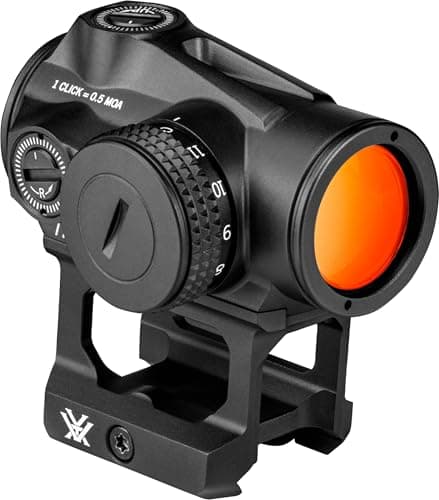
Vortex Vortex Triumph 2 MOA Red Dot
Vortex Triumph 2 MOA Red Dot

A 2 MOA dot from a company with an unconditional lifetime warranty, at the price where unbranded optics live.

Best overall
8.4
$99.00Amazon (affiliate link)
02
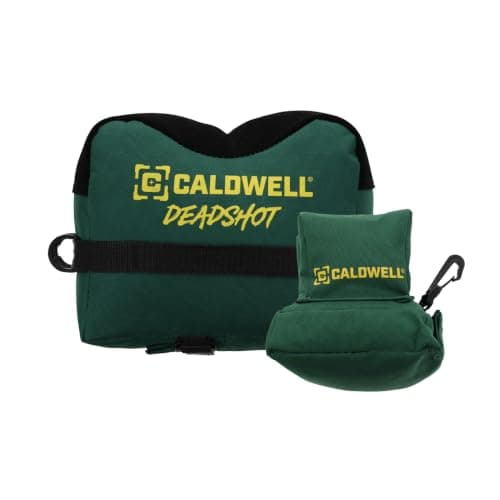
Caldwell Caldwell DeadShot Bag Combo (Filled)
Caldwell DeadShot Bag Combo (Filled)

Front and rear bags, filled, from the company most benches already have — the flexible setup for different rifles.

Best front and rear combo
8.3
$37.99Amazon (affiliate link)
03
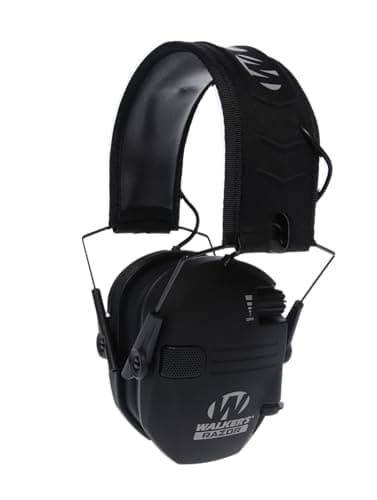
Walker's Walker's Razor Slim Electronic Muff
Walker's Razor Slim Electronic Muff

The electronic muff that made the category affordable, and still the one most range bags contain.

Best overall value
7.6
$35.09Amazon (affiliate link)

#ad · Live prices from the Amazon Creators API, as of Sep 4, 2026. Where we have no verified live price we show none — a gap beats a number that has rotted.

In detail

The picks, in full

01
Vortex Vortex Triumph 2 MOA Red Dot

Best overall

Vortex Triumph 2 MOA Red Dot

2 MOA dotUnlimited eye reliefVortex VIP warrantyMulti-coated lens
8.4/10

A 2 MOA dot from a company with an unconditional lifetime warranty, at the price where unbranded optics live.

Dot clarity
8
Battery life
8
Zero retention
9
Build quality
9
Value
8

What's good

  • 2 MOA is the right dot size for general use — precise enough at distance, fast enough up close
  • Vortex's VIP warranty is unconditional and transferable, which no budget optic offers
  • Multi-coated glass is noticeably clearer than uncoated budget optics
  • Holds zero through recoil, which is the specification unbranded dots quietly fail

What's not

  • More expensive than the sub-$30 options
  • No magnifier included

Skip it if…

the optic will live on a .22 that never leaves a bench. Zero retention under recoil is most of what you are paying for.

$99.00See it on Amazon (affiliate link)

Price as of Sep 4, 2026. Prices move — Amazon's is the one that counts.

#ad · we may earn a commission from this link to Vortex Triumph 2 MOA Red Dot

02
Caldwell Caldwell DeadShot Bag Combo (Filled)

Best front and rear combo

Caldwell DeadShot Bag Combo (Filled)

Front and rear bagsPre-filledWater resistantCaldwell
8.3/10

Front and rear bags, filled, from the company most benches already have — the flexible setup for different rifles.

Stability
8
Adjustability
8
Build quality
8
Value
9

What's good

  • Two-bag setup lets you adjust elevation by squeezing the rear bag, which is the technique benchrest shooters use
  • Adapts to rifles of different stock shapes
  • Arrives filled, so no sourcing sand

What's not

  • Two bags can shift relative to each other
  • Less stable than a one-piece rest for a beginner

Skip it if…

you want to set it down and shoot. Two bags require technique that a one-piece rest does not.

$37.99See it on Amazon (affiliate link)

$47.9921% off

Price as of Sep 4, 2026. Prices move — Amazon's is the one that counts.

#ad · we may earn a commission from this link to Caldwell DeadShot Bag Combo (Filled)

03
Walker's Walker's Razor Slim Electronic Muff

Best overall value

Walker's Razor Slim Electronic Muff

NRR 23 dBElectronic amplificationSlim cup profileFolding
7.6/10

The electronic muff that made the category affordable, and still the one most range bags contain.

Attenuation
6
Amplification
8
Comfort
7
Battery life
7
Value
10

What's good

  • Slim cups genuinely clear a rifle stock, which thick passive muffs do not
  • Amplification lets you hear range commands and conversation while compressing the shot
  • Cheap enough to own several and keep spares for guests
  • Folds flat for a range bag

What's not

  • NRR 23 is adequate outdoors and marginal indoors or beside a muzzle brake
  • Battery compartment is the common failure point
  • Headband padding is thin for long sessions

Skip it if…

you shoot indoors or beside braked rifles. Double up with plugs, or buy higher-NRR protection.

$35.09See it on Amazon (affiliate link)

$39.0010% off

Price as of Sep 4, 2026. Prices move — Amazon's is the one that counts.

#ad · we may earn a commission from this link to Walker's Razor Slim Electronic Muff

The process

  1. Mount the optic properly first. Torque the mount to the manufacturer's specification with a torque driver, use thread locker, and set the correct height. A loose mount will not hold a zero no matter how carefully you shoot.
  2. Bore sight to save ammunition. On a bolt rifle, remove the bolt, set the rifle solidly, look through the bore at a target at 25 yards, and without moving the rifle adjust the dot onto the same point. A laser bore sighter does the same job on any action. This usually gets you on paper first shot.
  3. Start at 25 yards. Close enough that you will be on paper, far enough that corrections are meaningful. Fire a three-round group.
  4. Measure from the center of the group to the point of aim, and adjust. Turret markings tell you the value per click — typically 0.5 MOA per click at 25 yards means one click moves about an eighth of an inch, so corrections at 25 yards take many clicks. Follow the arrows on the turret; they indicate which way the impact moves.
  5. Confirm with another three-round group. If it is centered, move back.
  6. Move to your chosen zero distance — commonly 50 or 100 yards for a rifle — and repeat. A 25-yard zero is a starting point, not a finished one.
  7. Confirm the zero cold. Come back another day and fire one group from a cold, clean barrel. That is the shot that matters in the field, and it is not always where your warm-barrel groups were.

Choosing a zero distance

ZeroBehaviorSuits
25 ydSecond crossing near 300 yd for many rifle cartridgesA practical general-purpose zero
50 ydSecond crossing near 200 yd, minimal rise betweenCarbines, the most popular choice
100 ydSimple, everything past it is holdoverHunting rifles, easiest to think about

These are general behaviors; the exact crossings depend on your cartridge, barrel length and sight height. Confirm on paper at the distances you actually shoot rather than trusting a chart.

The mistakes that waste ammunition

  • Chasing single shots. You adjust for your own variation and never converge. Shoot three, adjust from the center.
  • Adjusting from the last hole rather than the group center.
  • Inconsistent rest pressure shot to shot, which shows up as vertical stringing and looks like an ammunition problem.
  • A hot barrel. Let it cool between groups.
  • Not checking the mount first. A large share of "this optic will not hold zero" is a loose screw.

How these were picked

I haven't handled these. Here's what I did instead.

Everyone in this category says they tested twenty of these. I haven't tested any, and I say so. What I do instead: read the manufacturer's manual and published specification, compile the numbers that decide the purchase, do the arithmetic in the open, check the live price, and name one product to skip. The scores above are judgments from that research against a published rubric — they are not measurements I took, because I do not have a lab and I am not going to pretend otherwise.

Questions

Frequently asked

What distance should I zero a red dot at?
50 yards is the most popular for carbines and 100 yards is simplest for hunting rifles. Start at 25 yards to get on paper, then confirm at your chosen distance — a 25-yard zero is a starting point, not the finished job.
How many rounds does it take to zero?
About 15 to 20 if you bore sight first and shoot three-round groups. It takes far more if you chase single shots, because your own shot-to-shot variation is larger than the correction you are trying to make.
How do I bore sight without a tool?
On a bolt rifle, remove the bolt, rest the rifle solidly, look through the bore at a target 25 yards away, and adjust the optic onto the same point without moving the rifle. On other actions you need a laser bore sighter.
Why does my zero keep shifting?
Almost always a loose mount. Check the mount and ring screws with a torque driver before suspecting the optic. After that, an inconsistent rest, a hot barrel, or a budget optic that genuinely does not hold zero under recoil.
Which way do I turn the turret?
The turret arrows indicate the direction the point of impact moves, not the direction the dot moves. If your group is low, follow the UP arrow. Confirm with a group rather than assuming, because a reversed adjustment doubles your error.

Keep reading

Receipts

Sources

We do not run a testing lab and we do not pretend to. Where a measured number came from a manufacturer's published specification or someone else's lab, we name them and link them. Where we could not verify something, we say so on the page rather than quietly leaving it out. Read the full method.