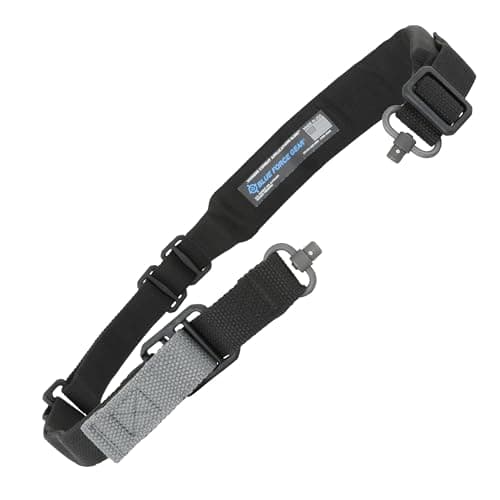
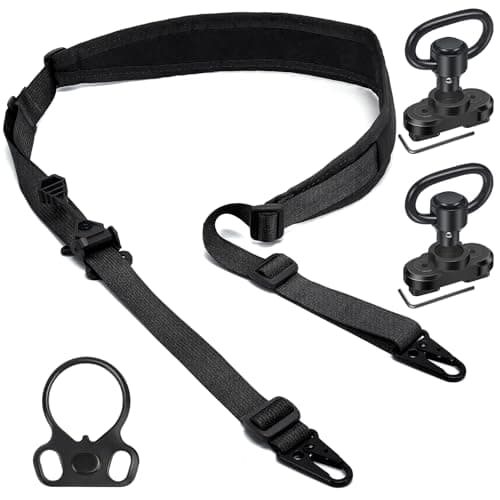
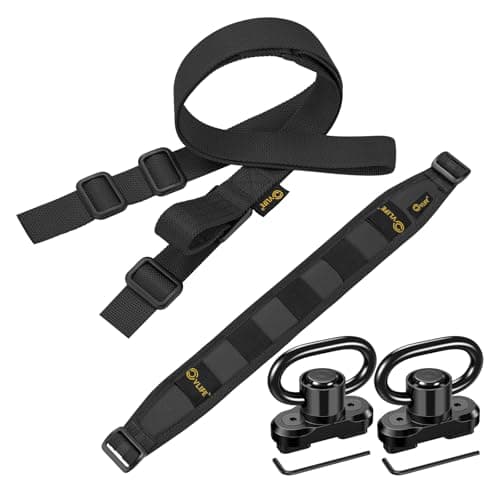
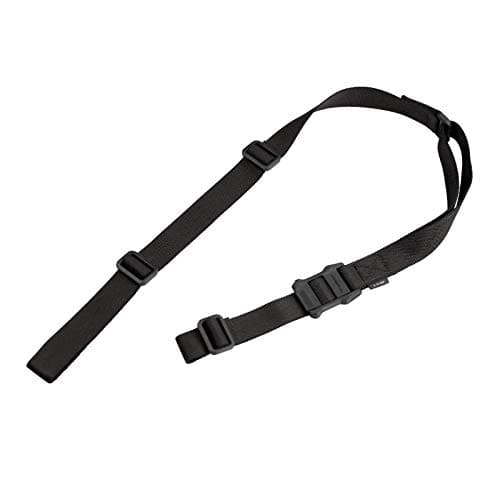
The verdict first: buy the Magpul MS1. It is for the shooter with one or two general-purpose rifles who wants a sling that works, and it has the same feature that makes the expensive sling good — one-hand quick adjustment. Buy the Blue Force Gear Vickers Padded QD instead if your rifle is heavy, your days are long, and your rifle already has QD sockets; in that specific case the padding and the swivels are worth every bit of the price difference. If you want the Vickers feature set without the Vickers price, the WarBull is the honest middle.
This is a two-sling page. If you have not settled on a two-point at all, read single point versus two point first, and if you want the whole category ranked rather than these two argued about, our rifle sling roundup does that.
What they have in common
Both are two-point slings with a one-hand quick-adjust slider. That is the capability that separates a sling from a strap: you run it long to carry the rifle and cinch it short to shoot, without putting the rifle down and without looking at what your hand is doing. Both come from companies with long records in this exact product, and both are modular enough to be moved between rifles.
If you only take one thing from this page: the slider is the product, and both of these have it. Everything below is about comfort and hardware, which matters but matters second.
Difference 1: padding
The Vickers has a padded shoulder section. The MS1 does not. This is the largest real difference and the one most worth thinking about, because its importance scales directly with rifle weight and time carried.
A light carbine on a range trip: the padding does nothing for you and adds bulk you will notice when the sling is slung across your back. A heavy precision rifle with a big scope, carried for a day on a hillside: an unpadded 1.25-inch strap concentrates that weight into a narrow line across your shoulder and it will become the thing you are thinking about. Magpul's own guidance on the MS1 is consistent with this — it is a general-purpose sling, not a load-carriage solution.
Difference 2: hardware
The Vickers ships with push-button QD swivels. They are genuinely excellent — the sling comes off in seconds and goes back on in the same place — and they are useless if your rifle has no QD sockets, which is the single thing to check before ordering one. The MS1's hardware is polymer and modular: it accepts different attachment kits without replacing the sling, and polymer does not mar a finish or rattle against a stock, which matters in the woods more than it does at a range.
Neither approach is better in the abstract. QD is better if your rifle is set up for it and you will actually remove the sling; the modular polymer approach is better if you do not yet know what your rifle takes. How to work out which you have is the page to read before you order either.
Difference 3: price, and what that means in practice
The Vickers costs about three times what the MS1 costs. The live prices in the table above are read from the real listings, so check them rather than trusting the ratio. What that money is buying is padding, better-grade hardware and build quality that is a visible step up — not a different capability.
That is the whole decision. If you are carrying a heavy rifle for hours, you are buying comfort that you will feel every time. If you are not, you are paying a premium for a sling that does the same job as the cheaper one and takes up more space doing it.
The honest third answer
A lot of people read a comparison like this, decide they want the padding and the QD, and then cannot justify the price. The WarBull 2-Point QD exists for exactly that person: padding, QD swivels and quick adjustment at closer to MS1 money. What you give up is hardware grade, and that is a real thing to give up — but it is a sensible trade for a rifle that is not being carried professionally.
And if none of the three is in budget, the CVLIFE quick-adjust at the bottom has the slider and basic everything else. It is a floor, not a recommendation, but it is a better floor than a cheap sling with open metal hooks — we explain why we skip those in the roundup.
What we are not claiming
We have not run these two slings against each other on a clock or counted how many hours each takes to chafe. Everything above is drawn from what the listings state, what the hardware is made of, and the geometry of a padded versus unpadded strap under load — which is enough to make this decision and not enough to pretend we tested them. How we pick says exactly that, in those words.
Buying notes
Check for QD sockets before you buy the Vickers
Push-button swivels need somewhere to push into. A rifle with swivel studs or a plain loop stock gets no benefit from them, and you will have paid for half a product you cannot use.
Buy the MS1 version that includes what you need
The MS1 exists in several configurations and some attachment hardware is sold separately. Read the specific listing you are ordering rather than assuming the loops are in the box.
Padding bulk is a real cost, not just a benefit
A padded sling slung across your back takes up more room and is more noticeable under a pack strap. If you hunt with a pack, think about where both straps are going to sit before you pick padding over simplicity — our pack-loading page covers the same interference problem from the other side.
Either way, load-test it at home
Hang your weight on the sling and pull against both attachment points before the first outing. Hardware that is going to slip generally does it the first time it is loaded.