Skip to content
Steve's Outpost

Section 02 · Hunting

Field Dressing a Deer: The Kit

The first hour after the shot decides how the meat tastes. Six items, one sequence, and a knife choice that comes down to whether you can sharpen one at dusk with cold hands.

By Stephen V.Updated How we pick
#ad

We earn a commission when you buy through our Amazon links, at no extra cost to you. It never changes the order of the picks, and we say so when the cheaper thing is the better buy. How this works.

Gerber Gerber Vital Skin and Gut

The honest recommendation

Gerber Vital Skin and Gut

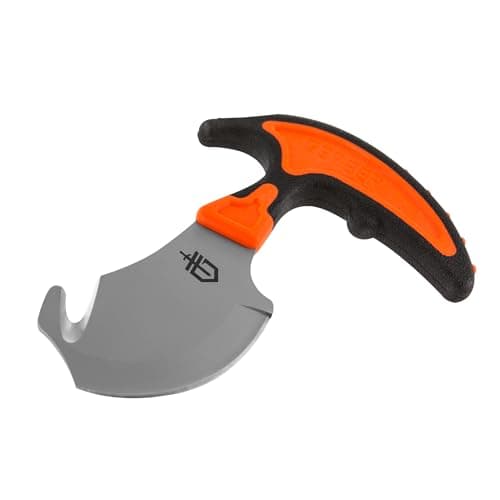
A replaceable-blade knife, because the knife that matters is the one that is still sharp on the third quarter. A fresh blade costs pennies and nobody sharpens well in the dark with cold, wet hands.

The blades are thin and they will snap if you lever with them, and they are not a knife you want for anything else. If you want one knife that does the whole job and lasts twenty years, buy the Buck 685 instead.

$26.75Amazon (affiliate link)

$29.9911% off

Price as of October 4, 2026. Prices move — Amazon's is the one that counts.

#ad · we may earn a commission from this link to Gerber Vital Skin and Gut

The verdict first: carry a replaceable-blade knife for the actual work and a Buck 685 BuckLite Max II as the knife you own — the first stays sharp through a whole animal because you swap blades instead of sharpening them, and the second is the one that does everything else. Add game bags, nitrile gloves, and a gambrel and hoist if the animal is coming home whole. That is the entire kit and it costs well under a hundred and fifty dollars.

This page is the kit and the sequence. If you want the knife category ranked properly on steel, grind and handle, that roundup is here — this one is about what the job actually asks of a knife, which turns out to be a different question.

The one thing that matters more than the gear

Get the heat out, and get it out fast. Almost everything that goes wrong with wild game on the table traces back to a carcass that stayed warm. A deer that is opened up, skinned and hanging in moving air within the hour will be good meat. One that lay whole in the back of a truck in fifty-degree weather for four hours may not be, no matter what you do afterward.

That is why the kit is what it is: everything here exists to get the animal open, off the ground, and cooling.

Two methods, and which one you want

Traditional field dressing

Open the body cavity, remove the viscera, then drag or carry the animal out whole and hang it to skin and quarter. This is what most people mean by field dressing and it is the right choice when the animal is near a vehicle, when you want it hanging whole to age, or when the weather is cold enough to let you take your time.

The gutless method

You never open the body cavity at all. Lay the animal on its side, skin the top side, remove the two quarters and the backstrap, roll it over and repeat, then reach in alongside the spine for the tenderloins. Everything you take is in a bag; everything you leave stays inside the animal.

This is the method to learn if you hunt away from roads. It is faster, it is cleaner, it does not require opening the gut at all — which removes the single biggest way to taint meat — and it produces bagged quarters you can walk out. It is standard practice on a western elk hunt and works perfectly well on a whitetail two miles from the truck.

The sequence, either way

  1. Make the gun safe and set it down somewhere you will not step on it. Unloaded, action open, muzzle pointed somewhere harmless. Every single time, before anything else.
  2. Tag it if your state requires tagging before field dressing. Several do, and that is a question for the regulations rather than for us.
  3. Gloves on. Shoulder-length for traditional dressing; nitrile is fine for gutless. This is about keeping the meat clean as much as it is about keeping you clean.
  4. Get it off the ground if you can. A log, a slope with the head uphill, anything. Dirt and pine needles in the meat are the thing you will be picking out later.
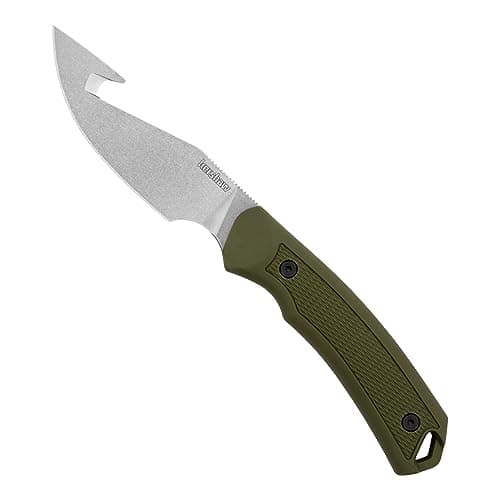
  5. Work shallow and let the knife do its job. The most common beginner mistake is cutting too deep on the first pass and opening the paunch. Short, shallow strokes, blade angled away from the gut. A gut hook helps here and is the entire argument for owning one — see the Kershaw Deschutes.
  6. Bag everything as it comes off. Not into a pile on the ground. Quarters into quarter bags, loose meat into a smaller bag, and get the bags into shade.
  7. Cool it, then move it. Hang it, prop it open, or get it to a cooler with ice. The cooler page has the actual quart figures, because nearly everybody buys too small.
  8. Wash and dry the knife before it goes away. Blood is corrosive and a knife left in a sheath wet will come out pitted.

Fixed blade or replaceable blade — the real argument

A good fixed-blade knife is sharper when it starts, holds an edge well, and will outlive you. A replaceable-blade knife is scalpel-sharp every single time, costs pennies per blade, and cannot be resharpened at all.

The question is not which knife is better. It is whether you can sharpen one. Field dressing dulls a blade quickly — hair, hide and the occasional bone contact are hard on an edge, and by the second quarter a knife that started sharp is working. If you can touch up an edge properly, in the cold, in failing light, with wet hands, a fixed blade is the better tool and it is more pleasant to use.

Most people cannot, honestly. Which is why the replaceable blade is the recommendation here and why plenty of experienced hunters carry one alongside the knife they actually like. If you want to be the person who can sharpen, we have a page on that and one on the tools, and it is a genuinely worthwhile skill.

One warning on replaceable blades: they are thin, they are brittle, and they will snap if you lever or twist with them. They are for cutting, not for prying joints apart. A snapped blade inside an animal, or in your hand, is the failure mode of the design.

What you do not need

A big knife. A five-inch blade is harder to control inside a body cavity than a three-inch one and does nothing better. A saw, usually — the gutless method does not need one, and most joints come apart with a knife if you find them. And a dedicated caping knife, unless you are actually caping for a mount, in which case take the whole cape and let a taxidermist do the delicate part.

The short answer

Quick picks

#ProductBest forScorePrice
01
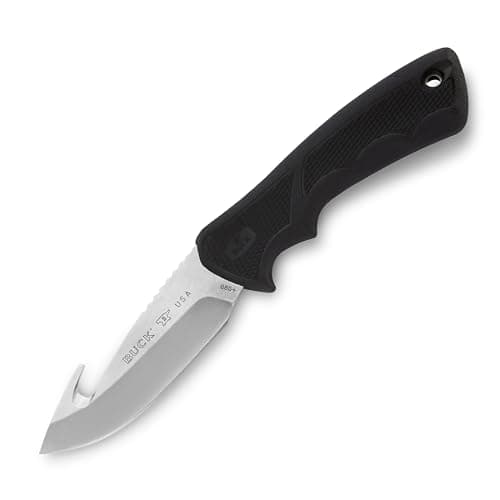
Buck Knives Buck Knives 685 BuckLite Max II
Buck Knives 685 BuckLite Max II

Four and a half ounces with a gut hook, from the company whose forever warranty is the oldest in the business.

Best knife for the whole job
8.0
$45.99Amazon (affiliate link)
02
Gerber Gerber Vital Skin and Gut
Gerber Vital Skin and Gut

A scalpel-style replaceable blade, which means you never field-sharpen and never work with a dull edge.

Best for never sharpening anything
7.4
$26.75Amazon (affiliate link)
03
Outdoor Edge Outdoor Edge WildSkin
Outdoor Edge WildSkin

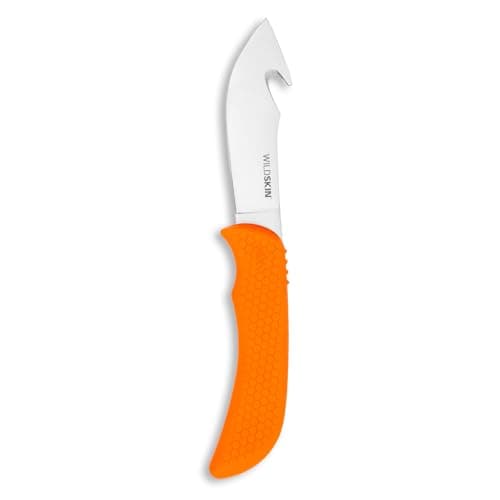
Four inches, a gut hook and a belt sheath for around twenty dollars, from a company that only makes game knives.

Best value knife
7.6
$21.29Amazon (affiliate link)
04
Kershaw Kershaw Deschutes Skinner
Kershaw Deschutes Skinner

A purpose-built skinner with a well-executed gut hook and a handle designed to be held with slick hands.

Best gut hook
7.6
$51.65Amazon (affiliate link)
05
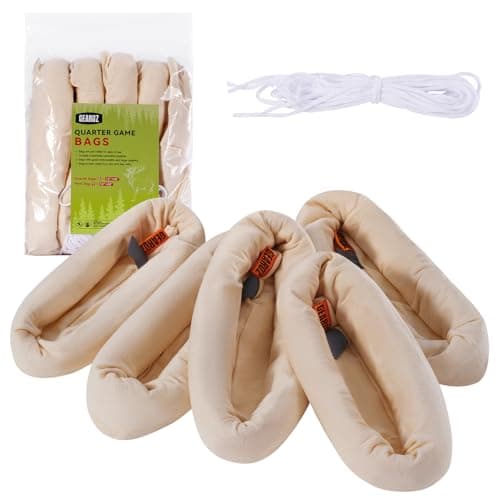
GearOZ GearOZ Elk Game Bags (5-Pack)
GearOZ Elk Game Bags (5-Pack)

Five reusable rolled bags for the price of one premium set — enough for a whole elk in one purchase.

Best cheap bags for the quarters
8.4
$23.99Amazon (affiliate link)
06
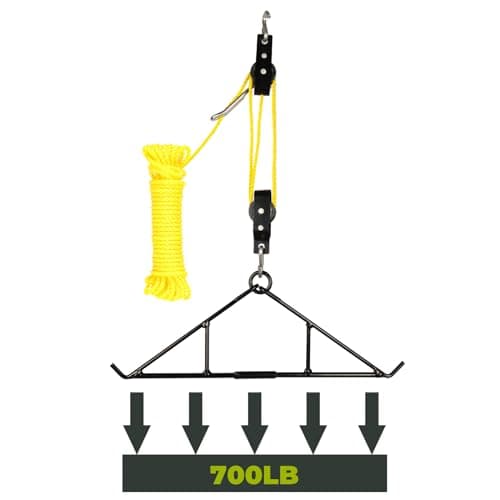
Highwild Highwild Game Hoist Gambrel and Deer Hanger Kit, 700lb
Highwild Game Hoist Gambrel and Deer Hanger Kit, 700lb

The pulley ratio is the point: a 4:1 block lets one person lift an animal one person cannot lift. Twenty-six dollars is a rounding error against the alternative of asking three neighbors.

Best way to get it off the ground
8.2
$27.99Amazon (affiliate link)

#ad · Live prices from the Amazon Creators API, as of October 4, 2026. Where we have no verified live price we show none — a gap beats a number that has rotted.

In detail

The picks, in full

01
Buck Knives Buck Knives 685 BuckLite Max II

Best knife for the whole job

Buck Knives 685 BuckLite Max II

Gut hook4.7 ozFixed bladeBuck Forever Warranty
8.0/10

Four and a half ounces with a gut hook, from the company whose forever warranty is the oldest in the business.

Edge retention
7
Blade shape
9
Grip when wet
9
Sheath
7
Value
8

What's good

  • Light enough that it does not get left behind, which is the failure mode for hunting knives
  • Gut hook opens hide without puncturing the body cavity
  • Buck's lifetime warranty is genuinely honored
  • Grippy handle material works with wet hands

What's not

  • Gut hooks are difficult to sharpen without a round file or a rod
  • Not a general camp knife — the profile is specialized

Skip it if…

…you want one knife for camp and game. A gut hook makes a poor food-prep knife and a worse whittler.

$45.99Amazon (affiliate link)

Price as of October 4, 2026. Prices move — Amazon's is the one that counts.

#ad · we may earn a commission from this link to Buck Knives 685 BuckLite Max II

02
Gerber Gerber Vital Skin and Gut

Best for never sharpening anything

Gerber Vital Skin and Gut

Replaceable bladesSkin and gut designOrange handleLightweight
7.4/10

A scalpel-style replaceable blade, which means you never field-sharpen and never work with a dull edge.

Edge retention
9
Blade shape
8
Grip when wet
7
Sheath
6
Value
7

What's good

  • A fresh blade every time beats a sharpened one, and caping with a scalpel edge is genuinely easier
  • Blade changes take seconds with cold hands
  • Blaze orange handle is very hard to lose in leaf litter

What's not

  • Replacement blades are an ongoing cost
  • Thin blades snap under lateral load — no prying at all
  • Used blades are a disposal problem in the field

Skip it if…

…you will use it as a general knife. These blades break when twisted, and that failure happens with your hand on the handle.

$26.75Amazon (affiliate link)

$29.9911% off

Price as of October 4, 2026. Prices move — Amazon's is the one that counts.

#ad · we may earn a commission from this link to Gerber Vital Skin and Gut

03
Outdoor Edge Outdoor Edge WildSkin

Best value knife

Outdoor Edge WildSkin

4.0 in bladeGut hookFixed bladeCamo nylon sheath
7.6/10

Four inches, a gut hook and a belt sheath for around twenty dollars, from a company that only makes game knives.

Edge retention
6
Blade shape
9
Grip when wet
8
Sheath
5
Value
10

What's good

  • Outdoor Edge specializes in game processing, and the geometry shows it
  • Four inches is the right length for deer-sized animals
  • Cheap enough to own two and keep one clean

What's not

  • Nylon sheath is the weak point — check retention before you trust it
  • Softer steel than the premium options

Skip it if…

…you process several animals a season. The edge will need attention partway through, which is the wrong time.

$21.29Amazon (affiliate link)

Price as of October 4, 2026. Prices move — Amazon's is the one that counts.

#ad · we may earn a commission from this link to Outdoor Edge WildSkin

04
Kershaw Kershaw Deschutes Skinner

Best gut hook

Kershaw Deschutes Skinner

Fixed bladeGut hookSkinning profileOlive handle
7.6/10

A purpose-built skinner with a well-executed gut hook and a handle designed to be held with slick hands.

Edge retention
7
Blade shape
9
Grip when wet
8
Sheath
7
Value
7

What's good

  • Deep skinning belly makes long clean cuts rather than repeated short ones
  • Kershaw's warranty and support are real
  • Handle contour holds up when your hands are wet and cold

What's not

  • Skinning profile is poor at any fine work
  • Gut hook needs a round sharpening rod

Skip it if…

…you want a knife that also caps and does detail work. This is a skinner and it is unapologetic about it.

$51.65Amazon (affiliate link)

Price as of October 4, 2026. Prices move — Amazon's is the one that counts.

#ad · we may earn a commission from this link to Kershaw Deschutes Skinner

05
GearOZ GearOZ Elk Game Bags (5-Pack)

Best cheap bags for the quarters

GearOZ Elk Game Bags (5-Pack)

5-packRolled quarter bagsReusableElk sized
8.4/10

Five reusable rolled bags for the price of one premium set — enough for a whole elk in one purchase.

Breathability
8
Durability
7
Size
9
Reusability
8
Value
10

What's good

  • Five bags covers four quarters plus loose meat, which is what an animal actually needs
  • Rolled construction packs small in a hunting pack
  • Genuinely reusable after washing

What's not

  • Fabric weight is below the Allen bags
  • Sizing is generous for deer and about right for elk

Skip it if…

…you are packing out over multiple miles of brush. Lighter fabric snags and tears where premium bags do not.

$23.99Amazon (affiliate link)

Price as of October 4, 2026. Prices move — Amazon's is the one that counts.

#ad · we may earn a commission from this link to GearOZ Elk Game Bags (5-Pack)

06
Highwild Highwild Game Hoist Gambrel and Deer Hanger Kit, 700lb

Best way to get it off the ground

Highwild Game Hoist Gambrel and Deer Hanger Kit, 700lb

700lb ratedGambrel includedPulley systemRope and hooks
8.2/10

The pulley ratio is the point: a 4:1 block lets one person lift an animal one person cannot lift. Twenty-six dollars is a rounding error against the alternative of asking three neighbors.

Lifting advantage
9
Capacity
8
Build quality
6
Versatility
8
Value
10

What's good

  • Turns a two- or three-person job into a one-person job
  • Hanging the animal makes skinning and quartering dramatically easier and cleaner
  • Works off a tree limb, a garage rafter or a hitch mount

What's not

  • The rated capacity assumes a sound anchor point — the weak link is always the branch
  • Rope and hardware are the cheap end of the category; inspect before every use

Skip it if…

…you process at a butcher's. If the animal goes straight from the truck to a shop, you are buying a tool for a job you do not do.

$27.99Amazon (affiliate link)

Price as of October 4, 2026. Prices move — Amazon's is the one that counts.

#ad · we may earn a commission from this link to Highwild Game Hoist Gambrel and Deer Hanger Kit, 700lb

Buying notes

Three to four inches of blade, and a grippy handle

Control beats length for every part of this job. What matters more than the steel is whether the handle is still usable when it is covered in blood and your hands are cold — which is what rubberized and textured handles are for.

Buy spare blades at the same time

A replaceable-blade knife with no spares in the pack is just a knife you cannot sharpen. Three or four per animal is a sensible allowance.

A gut hook is for one thing

Opening the hide in a straight shallow line without nicking the paunch. It is genuinely good at that and awkward for everything else, which is why a gut hook belongs on a second knife rather than on your only one.

Buy more game bags than one animal needs

They are a few dollars each, they weigh nothing, and the cost of not having one is meat on the ground. Keep a set permanently in the pack.

A gambrel is for the garage, not the backcountry

A gambrel and pulley hoist is the right tool for hanging a whole deer at home or at camp, and it is dead weight on your back. If the animal is being quartered where it fell, leave it in the truck.
How these were picked

I haven't handled these. Here's what I did instead.

Everyone in this category says they tested twenty of these. I haven't tested any, and I say so. What I do instead: read the manufacturer's manual and published specification, compile the numbers that decide the purchase, do the arithmetic in the open, check the live price, and name one product to skip. The scores above are judgments from that research against a published rubric — they are not measurements I took, because I do not have a lab and I am not going to pretend otherwise.

Questions

Frequently asked

What is the best knife for field dressing a deer?
A replaceable-blade knife, if you are honest about sharpening. It is scalpel-sharp on every quarter because you swap the blade instead of honing it, and nobody sharpens well in the cold with wet hands. If you can sharpen, a three-to-four-inch fixed blade like the Buck 685 is the nicer tool to use.
What is the gutless method?
Taking the quarters, backstraps and tenderloins off the animal without ever opening the body cavity. You skin one side, remove that side's meat, roll the animal and repeat. It is faster, cleaner and avoids the biggest cause of tainted meat, and it is the standard approach when you are carrying an animal out rather than dragging it.
Do I need a gut hook?
No, but it does one job well: opening the hide in a shallow straight line without nicking the paunch. It is clumsy for everything else, so it belongs on a second knife rather than on your only one.
How fast do I need to get a deer cooled down?
As fast as you reasonably can — opened up, skinned and in moving air within about an hour is the sensible target in mild weather. Heat is what ruins wild game, and almost every complaint about how venison tastes traces back to a carcass that stayed warm.
How many game bags do I need for a deer?
Four for the quarters plus one for loose meat and trim covers a whitetail comfortably. An elk wants five or six larger ones. Keep a set in the pack permanently — they weigh almost nothing and the cost of not having them is meat in the dirt.
Should I tag the deer before field dressing it?
Check your state's regulations, because several require tagging before the animal is moved or dressed and the rule varies by state and sometimes by season. That is a regulations question rather than a gear question, and it is worth knowing before you are standing over an animal.

Keep reading

Receipts

Sources

We do not run a testing lab and we do not pretend to. Where a measured number came from a manufacturer's published specification or someone else's lab, we name them and link them. Where we could not verify something, we say so on the page rather than quietly leaving it out. Read the full method.