Skip to content
Steve's Outpost

Section 02 · Hunting

Best Vortex Scope by Use

Nobody needs the best Vortex scope. You need the right one for deer at first light, or for a bench at four hundred yards, or for a .22 at fifty. Those are three different answers.

By Stephen V.Updated How we pick
#ad

We earn a commission when you buy through our Amazon links, at no extra cost to you. It never changes the order of the picks, and we say so when the cheaper thing is the better buy. How this works.

Most Vortex buying guides sort by price and let you work out the rest. That is backwards. The configuration you need is decided by what you shoot at and in what light, and only then does budget narrow it down.

So here is the same lineup sorted by job. Every one of these was verified live before it went on the page, and the tier guide explains what the Crossfire-to-Razor ladder actually means if you want the background.

Deer, in ordinary light

A 3-9x40 with a BDC reticle. This configuration has taken more deer than every other combination put together, and there is a reason: three power is low enough for a close shot in cover, nine is enough for anything you should be taking at range, and a 40mm objective keeps the scope low and the rifle balanced.

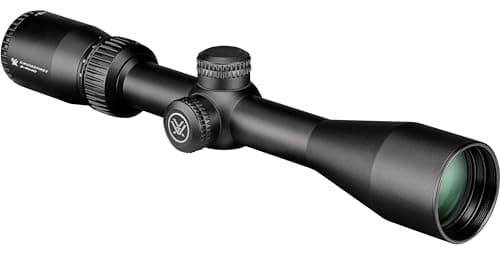
The Crossfire II Dead-Hold BDC does this for around $119. If your shooting happens between about nine in the morning and four in the afternoon, stop reading and buy that one.

Deer, at dawn and dusk

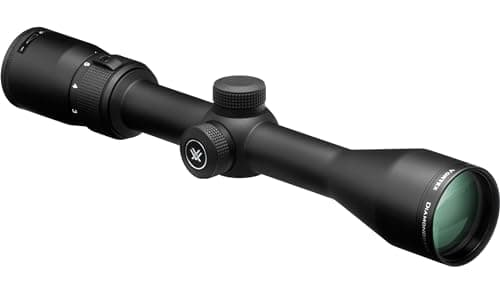
Which, for a great many hunters, is when the shot actually happens. This is the one situation where stepping up a tier genuinely changes outcomes. Same 3-9x40 configuration, better coatings, roughly double the money — the Diamondback.

Note what you give up: the Diamondback in this configuration has a plain duplex reticle, no holdover marks. That is the trade. Better glass, less reticle.

Open country

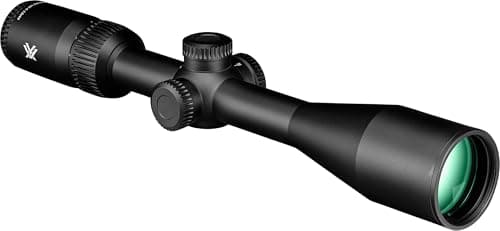
Longer shots, better light, less cover. Four to twelve power and a 44mm objective. The Crossfire HD 4-12x44 does this for around $199 and it is the sensible budget answer to a western hunt.

The thing to be honest about: a 4x floor is a real handicap if an animal appears at forty yards in timber. Do not buy an open-country scope for a timber rifle because you might hunt open country one day.

The range

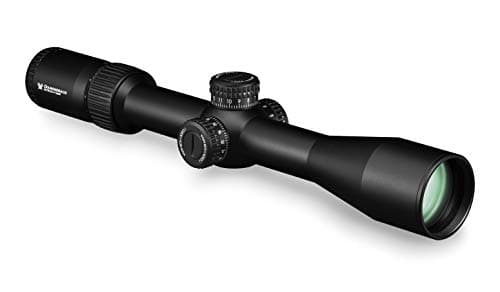
Different requirements entirely. You want first focal plane so the holdovers are true at every magnification, and exposed turrets built to be dialed and returned to zero. The Diamondback Tactical 4-16x44 FFP is four hundred dollars and there is nothing close to it at that money.

The cost of first focal plane is that the reticle gets fine at 4x and genuinely hard to see in poor light. That is why this is a range recommendation and not a hunting one.

Rimfire

A rimfire-specific scope exists for one reason: parallax. General riflescopes are set with parallax fixed at around a hundred yards; a .22 gets shot at twenty-five to seventy-five, and at those distances a hundred-yard parallax setting means the reticle floats against the target as your head moves.

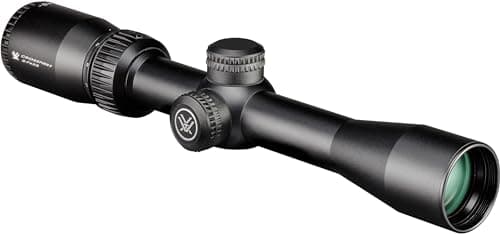
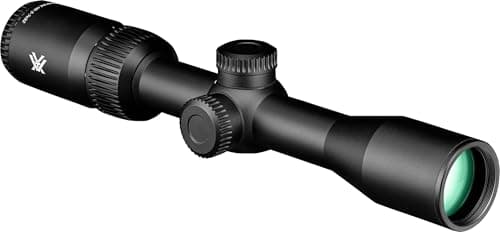
The Crossfire II 2-7x32 Rimfire has a close parallax setting and costs around $119. The Crossfire HD version is forty dollars more for better coatings. On a two-hundred-dollar rimfire, either is a defensible ratio and the cheaper one is not a compromise.

The one that does everything adequately

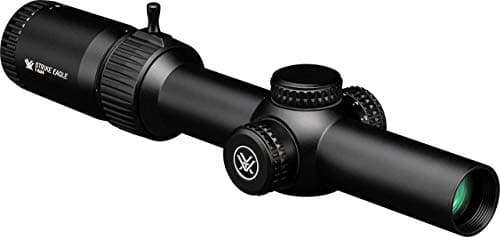
A 1-6x low-power variable. At 1x with the illumination on it works essentially like a red dot; at 6x it will identify an animal at a few hundred yards. The Strike Eagle 1-6x24 is around $226 and it is the most versatile single optic on this page.

Strike Eagles are what I run on my own ARs, which is why this one carries the owner-run stamp below and the rest of the page does not. That is not a claim that it out-performs anything here — it is a claim about what I chose to buy for a general-purpose rifle, and why.

It is also not the best at anything. That is what versatile means, and it is worth knowing before you buy.

The short answer

Quick picks

#ProductBest forScorePrice
01
Vortex Crossfire II 3-9x40, Dead-Hold BDC
Crossfire II 3-9x40, Dead-Hold BDC

The default deer scope. Three to nine power, a BDC reticle with holdover marks, and change from a hundred and twenty dollars.

Best for deer, on a budget
7.0
$118.99Amazon (affiliate link)
02
Vortex Diamondback 3-9x40 SFP, V-Plex
Diamondback 3-9x40 SFP, V-Plex

Same size, same weight, better coatings. The reason to spend the extra is entirely about the light you shoot in.

Best for deer at dawn and dusk
7.0
$249.00Amazon (affiliate link)
03
Vortex Crossfire HD 4-12x44, Dead-Hold BDC (MOA)
Crossfire HD 4-12x44, Dead-Hold BDC (MOA)

Twelve power and a 44mm objective for two hundred dollars. If your shots are longer than timber shots, this is the sensible budget answer.

Best for open country
7.2
$199.00Amazon (affiliate link)
04
Vortex Diamondback Tactical 4-16x44 FFP, EBR-2C (MOA)
Diamondback Tactical 4-16x44 FFP, EBR-2C (MOA)

First focal plane and turrets built to be dialed, for four hundred dollars. If the rifle lives on a bench or a bipod, start here.

Best for the range
8.2
$399.00Amazon (affiliate link)
05
Vortex Crossfire II 2-7x32 Rimfire, V-Plex
Crossfire II 2-7x32 Rimfire, V-Plex

Built with a close parallax setting for the ranges a .22 actually gets shot at. That one detail is why a rimfire-specific scope exists.

Best for rimfire
7.0
$118.99Amazon (affiliate link)
06
Vortex Crossfire HD 2-7x32 Rimfire, V-Plex MOA
Crossfire HD 2-7x32 Rimfire, V-Plex MOA

The same rimfire configuration in the newer HD line. Forty dollars more for better coatings on a scope that will outlive several rifles.

Best rimfire upgrade
7.0
$159.00Amazon (affiliate link)
07
Vortex Strike Eagle 1-6x24 SFP, BDC3 (MOA)
Strike Eagle 1-6x24 SFP, BDC3 (MOA)

True 1x for close and fast, six power when you need to identify something. The most versatile single optic Vortex sells at this money.

Best do-everything low-power
7.6
$225.99Amazon (affiliate link)

#ad · Live prices from the Amazon Creators API, as of Sep 5, 2026. Where we have no verified live price we show none — a gap beats a number that has rotted.

In detail

The picks, in full

01
Vortex Crossfire II 3-9x40, Dead-Hold BDC

Best for deer, on a budget

Crossfire II 3-9x40, Dead-Hold BDC

3-9x magnification40mm objectiveDead-Hold BDC reticleSecond focal plane
7.0/10

The default deer scope. Three to nine power, a BDC reticle with holdover marks, and change from a hundred and twenty dollars.

Glass clarity
6
Turret tracking
5
Reticle
7
Build quality
7
Value
10

What's good

  • The BDC marks give you something to hold on for the two-fifty and three-hundred shots
  • 3-9x is the range that has killed more deer than every other configuration combined
  • Cheap enough that the scope is not the reason you did not buy the rifle

What's not

  • BDC marks assume a trajectory that is probably not yours — confirm every one on paper
  • Low light is where this scope tells you it was inexpensive
  • Not a scope for dialing

Skip it if…

most of your shooting happens in the first and last half hour of light. Step up to the Diamondback — that is precisely what the extra money buys.

$118.99See it on Amazon (affiliate link)

Price as of Sep 5, 2026. Prices move — Amazon's is the one that counts.

#ad · we may earn a commission from this link to Crossfire II 3-9x40, Dead-Hold BDC

02
Vortex Diamondback 3-9x40 SFP, V-Plex

Best for deer at dawn and dusk

Diamondback 3-9x40 SFP, V-Plex

3-9x magnification40mm objectiveSecond focal planeV-Plex reticle
7.0/10

Same size, same weight, better coatings. The reason to spend the extra is entirely about the light you shoot in.

Glass clarity
7
Turret tracking
6
Reticle
6
Build quality
8
Value
8

What's good

  • Noticeably brighter than the Crossfire II when the light goes
  • Plain duplex reticle is uncluttered, which is what you want in poor light
  • Light enough that a walking rifle stays a walking rifle

What's not

  • No holdover marks at all — this is a zero-and-hold scope
  • Double the Crossfire II for a benefit confined to bad light
  • Capped turrets, same as the tier below

Skip it if…

you want holdover marks. The Crossfire II Dead-Hold gives you those for less; this trades them for glass.

$249.00See it on Amazon (affiliate link)

Price as of Sep 5, 2026. Prices move — Amazon's is the one that counts.

#ad · we may earn a commission from this link to Diamondback 3-9x40 SFP, V-Plex

03
Vortex Crossfire HD 4-12x44, Dead-Hold BDC (MOA)

Best for open country

Crossfire HD 4-12x44, Dead-Hold BDC (MOA)

4-12x magnification44mm objective1-inch tubeDead-Hold BDC MOA reticleSecond focal plane
7.2/10

Twelve power and a 44mm objective for two hundred dollars. If your shots are longer than timber shots, this is the sensible budget answer.

Glass clarity
7
Turret tracking
6
Reticle
7
Build quality
7
Value
9

What's good

  • Twelve power is enough magnification to place a shot properly at four hundred yards
  • The larger objective gathers more light than the 40mm entry scopes
  • HD line pricing sits between the Crossfire II and the Diamondback, and so does the performance

What's not

  • 4x bottom end is too much magnification for a close, fast shot in cover
  • One-inch tube limits internal elevation travel compared with a 30mm scope
  • Still a capped-turret hunting scope

Skip it if…

you hunt thick timber. Four power minimum is a real handicap when an animal appears at forty yards.

$199.00See it on Amazon (affiliate link)

Price as of Sep 5, 2026. Prices move — Amazon's is the one that counts.

#ad · we may earn a commission from this link to Crossfire HD 4-12x44, Dead-Hold BDC (MOA)

04
Vortex Diamondback Tactical 4-16x44 FFP, EBR-2C (MOA)

Best for the range

Diamondback Tactical 4-16x44 FFP, EBR-2C (MOA)

4-16x magnification44mm objectiveFirst focal planeEBR-2C reticle, MOAExposed turrets
8.2/10

First focal plane and turrets built to be dialed, for four hundred dollars. If the rifle lives on a bench or a bipod, start here.

Glass clarity
7
Turret tracking
8
Reticle
8
Build quality
8
Value
10

What's good

  • Holdovers are true at every magnification, which is the entire argument for first focal plane
  • Exposed turrets you can dial and return to zero
  • The best four hundred dollars in precision optics right now

What's not

  • The reticle is genuinely hard to see at 4x in poor light
  • Glass is a tier below Viper and it shows against one
  • Heavier than a hunting scope of the same magnification

Skip it if…

the rifle is carried more than it is shot from a bipod. FFP is a range-first decision.

$399.00See it on Amazon (affiliate link)

Price as of Sep 5, 2026. Prices move — Amazon's is the one that counts.

#ad · we may earn a commission from this link to Diamondback Tactical 4-16x44 FFP, EBR-2C (MOA)

05
Vortex Crossfire II 2-7x32 Rimfire, V-Plex

Best for rimfire

Crossfire II 2-7x32 Rimfire, V-Plex

2-7x magnification32mm objective1-inch tubeV-Plex reticleRimfire parallax setting
7.0/10

Built with a close parallax setting for the ranges a .22 actually gets shot at. That one detail is why a rimfire-specific scope exists.

Glass clarity
6
Turret tracking
6
Reticle
6
Build quality
7
Value
10

What's good

  • Rimfire parallax means the reticle is not floating against the target at fifty yards
  • 2x bottom end suits the fast, close shooting a .22 gets used for
  • Cheap enough to put on a rifle that cost two hundred dollars

What's not

  • Seven power is the ceiling — this is not a scope for small targets at distance
  • Plain duplex, no holdovers, and rimfire trajectories drop hard
  • The 32mm objective limits low-light performance

Skip it if…

you shoot rimfire steel at two hundred yards. You want more magnification and a holdover reticle for that.

$118.99See it on Amazon (affiliate link)

Price as of Sep 5, 2026. Prices move — Amazon's is the one that counts.

#ad · we may earn a commission from this link to Crossfire II 2-7x32 Rimfire, V-Plex

06
Vortex Crossfire HD 2-7x32 Rimfire, V-Plex MOA

Best rimfire upgrade

Crossfire HD 2-7x32 Rimfire, V-Plex MOA

2-7x magnification32mm objective1-inch tubeV-Plex MOA reticleRimfire parallax setting
7.0/10

The same rimfire configuration in the newer HD line. Forty dollars more for better coatings on a scope that will outlive several rifles.

Glass clarity
7
Turret tracking
6
Reticle
6
Build quality
8
Value
8

What's good

  • Better glass than the Crossfire II for forty dollars, which is a cheap upgrade in this category
  • Same rimfire parallax and same useful 2-7x range
  • The HD line is where Vortex's newer coatings live

What's not

  • Still a seven-power ceiling
  • Still no holdover marks
  • On a two-hundred-dollar rimfire, a hundred and sixty dollars of scope is a real ratio question

Skip it if…

the rifle is a plinker in a truck. The Crossfire II version costs forty dollars less and nobody will ever notice the difference on a squirrel.

$159.00See it on Amazon (affiliate link)

Price as of Sep 5, 2026. Prices move — Amazon's is the one that counts.

#ad · we may earn a commission from this link to Crossfire HD 2-7x32 Rimfire, V-Plex MOA

07
Vortex Strike Eagle 1-6x24 SFP, BDC3 (MOA)

Best do-everything low-power

Strike Eagle 1-6x24 SFP, BDC3 (MOA)

I run this one

Strike Eagles are what I run on my ARs. Vortex sells the line in 1-6x, 1-8x and 1-10x — this listing is the 1-6x24, the configuration that suits a general-purpose carbine best.

1-6x magnification24mm objectiveSecond focal planeBDC3 reticle, MOAIlluminated
7.6/10

True 1x for close and fast, six power when you need to identify something. The most versatile single optic Vortex sells at this money.

Glass clarity
7
Turret tracking
6
Reticle
8
Build quality
8
Value
9

What's good

  • At 1x with the illumination on, it works essentially like a red dot
  • Six power is enough to identify an animal or a target at a few hundred yards
  • The single most flexible optic on this page for a general-purpose rifle

What's not

  • 24mm objective and 6x ceiling limit it for anything genuinely long-range
  • Low-power variables are heavier than the red dot they partly replace
  • The illumination is not daylight-bright the way a dedicated red dot is

Skip it if…

you only ever shoot past three hundred yards. Six power is not enough and this is the wrong tool.

$225.99See it on Amazon (affiliate link)

Price as of Sep 5, 2026. Prices move — Amazon's is the one that counts.

#ad · we may earn a commission from this link to Strike Eagle 1-6x24 SFP, BDC3 (MOA)

Getting the configuration right

Start with the bottom number, not the top

The lowest magnification decides whether you can take a close shot. The highest decides whether you can take a long one. Almost everyone shops on the top number and gets bitten by the bottom one. A 6-24x scope on a timber rifle is a mistake you make once.

BDC marks are a promise about a trajectory that may not be yours

Dead-Hold BDC marks are calibrated to an assumed velocity and ballistic coefficient. Your rifle, your load and your altitude are not the ones in the calculation. Confirm every mark on paper at the distance it claims before you trust it on an animal. This is not optional.

Second focal plane means holdovers work at one power

On an SFP scope the reticle stays the same visual size while the target grows, so subtensions are only correct at the calibrated magnification — usually maximum. Dial the scope down and the marks silently stop meaning anything. This catches out more people than any other single thing in riflescopes.

Rimfire parallax is not a marketing feature

It is a genuine optical difference and it is the reason a rimfire-labeled scope exists. If you have ever shot a .22 and found the reticle drifting as you moved your head, that is parallax, and it is fixable by buying the right scope.

Mount it properly or none of this matters

Torque the ring screws to specification, level the reticle to the rifle and not to your eye, and check both again after the first fifty rounds. Our mounting hardware page has the rings, the levels and the wrench.
How these were picked

1 of these is mine. The rest are research, and I say which is which.

Anything carrying the "I run this one" stamp above is gear I actually own and use, and I write about it in those terms. What I do not do is invent numbers to dress that up — there are no group sizes, round counts or chronograph figures on this site, because I did not record them. For everything without the stamp: I read the manufacturer's published specification, compile the numbers that decide the purchase, do the arithmetic in the open, check the live price, and name one product to skip. Those scores are judgments against a published rubric, not measurements I took.

Questions

Frequently asked

What is the best Vortex scope for deer hunting?
A 3-9x40. The Crossfire II Dead-Hold BDC at around $119 if you shoot in reasonable light, or the Diamondback 3-9x40 at around $249 if your shots happen at dawn and dusk. The extra money buys coatings, and coatings are exactly what matters in poor light.
Do I need a rimfire-specific scope for a .22?
You do not need one, but it genuinely helps. Standard scopes fix parallax around a hundred yards; rimfire scopes set it much closer, which stops the reticle drifting against the target at the fifty-yard distances a .22 actually gets shot at.
Is first or second focal plane better for hunting?
Second, for most hunters. An FFP reticle shrinks with magnification and at 4x in the last light of the day it can be genuinely hard to see. FFP earns its place at the range, where you dial and hold across a range of magnifications in good light.
What magnification do I actually need for deer?
Nine power is enough for essentially any ethical shot most hunters take. The value of more magnification falls off quickly, and the cost — a higher bottom end, more weight, more mirage — arrives immediately.
Is the Strike Eagle a good hunting scope?
For timber and close country, genuinely yes — true 1x is faster than any conventional hunting scope. For open country it runs out of magnification at 6x, and the 24mm objective limits it in poor light. It is a versatility purchase, not an optimization.

Keep reading

Receipts

Sources

We do not run a testing lab and we do not pretend to. Where a measured number came from a manufacturer's published specification or someone else's lab, we name them and link them. Where we could not verify something, we say so on the page rather than quietly leaving it out. Read the full method.