Skip to content
Steve's Outpost

Section 02 · Hunting

Best Rifle Scopes for Elk Hunting

An elk rifle gets carried up a mountain and then used once, often in bad light, at a distance you did not choose. That is a different scope from a deer rifle and a different one again from a target scope.

By Stephen V.Updated How we pick
#ad

We earn a commission when you buy through our Amazon links, at no extra cost to you. It never changes the order of the picks, and we say so when the cheaper thing is the better buy. How this works.

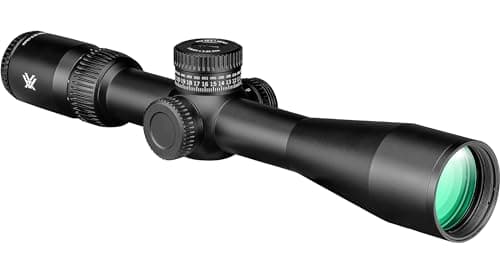
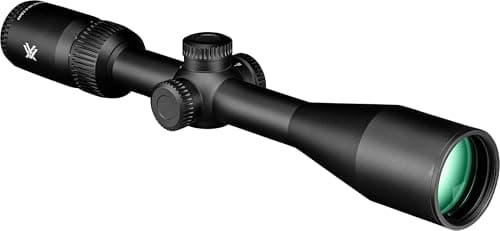
Vortex Viper HD 3-15x44 SFP, VMR-3 (MOA)

The one most elk hunters should buy

Viper HD 3-15x44 SFP, VMR-3 (MOA)

Three to fifteen power on a 44mm objective. Three power handles a bull at forty yards in dark timber; fifteen is enough for any honest shot across a basin — and the illuminated second-focal-plane reticle stays visible at last light, which is when elk move.

It is more money than a lot of rifles deserve. If your rifle has never shown you what it can do from a solid position, the Crossfire HD below is the honest buy and the difference goes into practice.

$749.00Amazon (affiliate link)

Price as of October 19, 2026. Prices move — Amazon's is the one that counts.

#ad · we may earn a commission from this link to Viper HD 3-15x44 SFP, VMR-3 (MOA)

The verdict first: buy the Vortex Viper HD 3-15x44 if you can. It is for the hunter who carries the rifle, might get a shot at forty yards in timber or four hundred across a basin, and will not get a second one. If the budget is the constraint — and for most people it should be — the Crossfire HD 4-12x44 at around two hundred dollars is a genuinely competent elk scope and the difference is better spent on ammunition and time at the range. If you intend to dial rather than hold, go to the Diamondback Tactical 4-16x44 instead.

Three existing pages sit near this one and none of them answers it. The deer-rifle roundup is 3-9x40 under four hundred dollars for timber whitetail hunting. The long-range roundup is target glass with exposed turrets, mostly bound for bolt guns on bipods. And the Vortex hunting lineup argues inside one brand. Elk is its own problem.

What makes elk different from deer

  1. The distance is not yours to choose. A whitetail stand has a known maximum. An elk hunt can hand you a bull at thirty yards in black timber in the morning and one at three hundred and fifty across a cut in the afternoon. A scope that only does one of those is the wrong scope, which is why the bottom end of the magnification range matters as much as the top.
  2. You carry it. Up. Every ounce on the rifle is an ounce you take uphill at altitude, and a 6-24x50 with a 34mm tube is a genuinely heavy object. This is the main reason the precision roundup's winners are not on this page.
  3. Light. Elk move at the edges of the day and frequently in timber. A 44mm objective with good coatings and an illuminated reticle is worth more here than two extra magnification steps.
  4. One shot, cold. There is no sighter. Everything about the setup should favor a first-round hit from an improvised position rather than a small group from a bench.

The magnification question, answered plainly

Most elk are killed inside three hundred yards. At three hundred yards, ten power puts an elk's vital area across a comfortable portion of the view — you are not short of magnification, you are short of a steady position. Twelve to fifteen power is plenty, and the reason to want a little more is identification and reading the animal rather than aiming at it.

The low end is the part people get wrong. A 6-24x scope at its lowest setting has a narrow field of view, and finding a moving bull at forty yards through it is genuinely hard. Three or four power at the bottom is what makes a scope usable in timber. A 3-15x gives you five times the zoom range in a package that still weighs what a hunting scope should.

Dial or hold — decide before you buy

Hold over, with a reticle built for it. Simpler, faster, no turret counting under pressure, and perfectly adequate to about four hundred yards with a modern cartridge and a verified zero. This is the Viper HD, the Crossfire HD with its Dead-Hold reticle, and the Sightron S1 with its holdover reticle. For most elk hunting this is the right answer and the exposed-turret scopes on this site are the wrong tool.

Dial, with exposed turrets and a zero stop. More precise past four hundred yards and slower to execute. Worth it if you have genuinely practiced it and if your hunting involves spotting an animal, building a position and taking time. That is the Diamondback Tactical on this page, and if you go that way you need a DOPE card you have verified and not a chart from a box.

Whichever you choose, do not mix units. MOA or MRAD, picked once.

The part people under-budget

A hunting scope needs mounting properly as much as a target scope does, and a mountain is the worst place to discover that rings worked loose. Rings or a one-piece mount at the right height, torqued to the published inch-pound figure, and a level reticle. That is sixty to two hundred and fifty dollars and it is covered properly here. Budget it alongside the glass rather than after it.

What a better scope will not do

It will not make you steady from a kneeling position on a sidehill with your heart rate at a hundred and sixty. Practice from field positions — sitting, kneeling, off a pack, off sticks — does more for a first-round hit than any upgrade on this page. The honest ranking of money for an elk hunter is boots, then glass you look through all day, then practice, then the rifle scope.

Which is also why the binocular and tripod page matters more than this one for most western hunts: you spend hours glassing and seconds aiming. The full kit list for the trip is on the western elk hunt gear page.

The short answer

Quick picks

#ProductBest forScorePrice
01
Vortex Viper HD 3-15x44 SFP, VMR-3 (MOA)
Viper HD 3-15x44 SFP, VMR-3 (MOA)

Three to fifteen power on a 44mm objective, second focal plane, illuminated. Three power for a bull at forty yards in dark timber, fifteen for a shot across a basin — one scope that does not make you choose which hunt you are on.

Best overall for elk
8.0
$749.00Amazon (affiliate link)
02
Vortex Crossfire HD 4-12x44, Dead-Hold BDC (MOA)
Crossfire HD 4-12x44, Dead-Hold BDC (MOA)

Twelve power and a 44mm objective for two hundred dollars. If your shots are longer than timber shots, this is the sensible budget answer.

Best for the money in open country
7.2
$199.00Amazon (affiliate link)
03
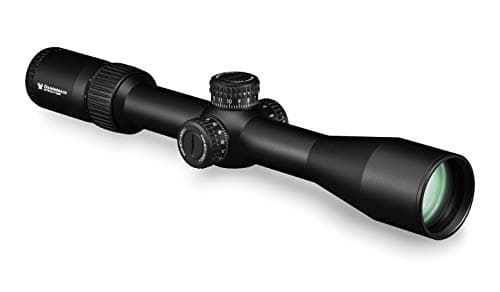
Vortex Diamondback Tactical 4-16x44 FFP, EBR-2C (MOA)
Diamondback Tactical 4-16x44 FFP, EBR-2C (MOA)

First focal plane, exposed turrets and a real holdover reticle for four hundred dollars. This is the scope I would put on a first precision rifle without hesitating.

Best if you intend to dial
8.2
$399.00Amazon (affiliate link)
04
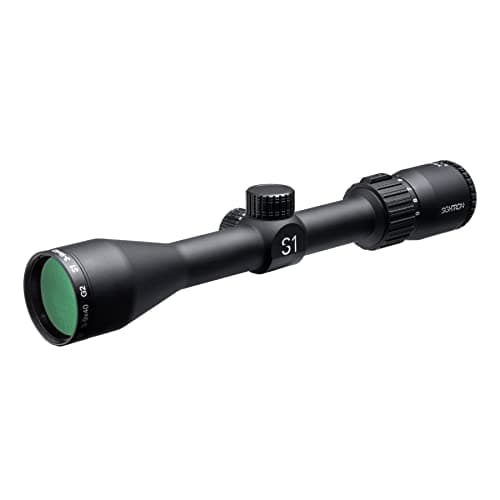
Sightron S1 3-9x40 G2, HHR (Hunter Holdover)
S1 3-9x40 G2, HHR (Hunter Holdover)

The second-generation S1 in the classic deer configuration, with a holdover reticle instead of a plain cross. This is the sensible Sightron hunting buy.

Best simple scope with a holdover reticle
7.4
$249.99Amazon (affiliate link)
05
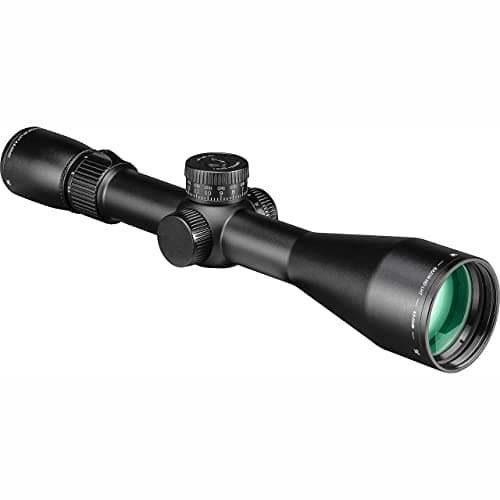
Vortex Razor HD LHT 4.5-22x50 FFP, XLR-2 (MOA)
Razor HD LHT 4.5-22x50 FFP, XLR-2 (MOA)

Fifteen hundred dollars for Razor glass in a package you can carry. The most sensible premium purchase on this page.

Best premium glass you can carry uphill
9.2
$1,499.00Amazon (affiliate link)
06
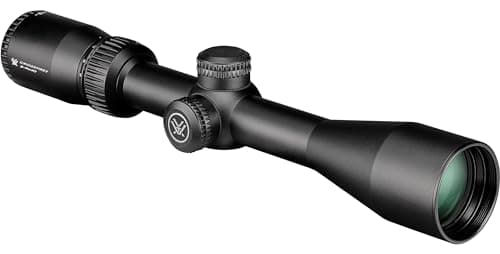
Vortex Vortex Crossfire II 3-9x40, Dead-Hold BDC
Vortex Crossfire II 3-9x40, Dead-Hold BDC

The honest answer for a hunting rifle inside 300 yards, and the clearest illustration of why second focal plane has not gone anywhere. At 3x on a gray morning the reticle is still there, which is the entire job.

Best budget — and still enough scope
8.4
$135.99Amazon (affiliate link)

#ad · Live prices from the Amazon Creators API, as of October 19, 2026. Where we have no verified live price we show none — a gap beats a number that has rotted.

In detail

The picks, in full

01
Vortex Viper HD 3-15x44 SFP, VMR-3 (MOA)

Best overall for elk

Viper HD 3-15x44 SFP, VMR-3 (MOA)

3-15x magnification44mm objectiveSecond focal planeVMR-3 reticle, MOA, illuminatedHD optical system
8.0/10

Three to fifteen power on a 44mm objective, second focal plane, illuminated. Three power for a bull at forty yards in dark timber, fifteen for a shot across a basin — one scope that does not make you choose which hunt you are on.

Glass clarity
9
Turret tracking
7
Reticle
8
Build quality
9
Value
7

What's good

  • The HD glass is a genuine jump — edge-to-edge sharpness and low-light performance both improve
  • 3-15x is the most useful hunting range Vortex offers in one scope
  • Second focal plane keeps the reticle usable at 3x in bad light

What's not

  • Around seven hundred and fifty dollars is a serious commitment on a rifle that cost less than that
  • VMR-3 hashmarks in a second focal plane scope are only true at the magnification Vortex calibrates them to — check the manual before you hold over
  • Heavier and longer than the Diamondback it replaces

Skip it if…

…your rifle and your shooting do not justify it. A Diamondback on a rifle you shoot well beats a Viper on one you do not.

$749.00Amazon (affiliate link)

Price as of October 19, 2026. Prices move — Amazon's is the one that counts.

#ad · we may earn a commission from this link to Viper HD 3-15x44 SFP, VMR-3 (MOA)

02
Vortex Crossfire HD 4-12x44, Dead-Hold BDC (MOA)

Best for the money in open country

Crossfire HD 4-12x44, Dead-Hold BDC (MOA)

4-12x magnification44mm objective1-inch tubeDead-Hold BDC MOA reticleSecond focal plane
7.2/10

Twelve power and a 44mm objective for two hundred dollars. If your shots are longer than timber shots, this is the sensible budget answer.

Glass clarity
7
Turret tracking
6
Reticle
7
Build quality
7
Value
9

What's good

  • Twelve power is enough magnification to place a shot properly at four hundred yards
  • The larger objective gathers more light than the 40mm entry scopes
  • HD line pricing sits between the Crossfire II and the Diamondback, and so does the performance

What's not

  • 4x bottom end is too much magnification for a close, fast shot in cover
  • One-inch tube limits internal elevation travel compared with a 30mm scope
  • Still a capped-turret hunting scope

Skip it if…

…you hunt thick timber. Four power minimum is a real handicap when an animal appears at forty yards.

$199.00Amazon (affiliate link)

Price as of October 19, 2026. Prices move — Amazon's is the one that counts.

#ad · we may earn a commission from this link to Crossfire HD 4-12x44, Dead-Hold BDC (MOA)

03
Vortex Diamondback Tactical 4-16x44 FFP, EBR-2C (MOA)

Best if you intend to dial

Diamondback Tactical 4-16x44 FFP, EBR-2C (MOA)

4-16x magnification44mm objectiveFirst focal planeEBR-2C reticle, MOAExposed turrets
8.2/10

First focal plane, exposed turrets and a real holdover reticle for four hundred dollars. This is the scope I would put on a first precision rifle without hesitating.

Glass clarity
7
Turret tracking
8
Reticle
8
Build quality
8
Value
10

What's good

  • First focal plane means the reticle subtensions are true at every magnification — the thing that makes holdovers work
  • Exposed turrets designed to be dialed, not merely adjusted once
  • Four hundred dollars for FFP is the single best price-to-capability point Vortex sells

What's not

  • The reticle gets fine and hard to see at 4x, which is the price of first focal plane at this money
  • Glass is a clear step below the Viper tier, and side by side it is obvious
  • Turret feel is functional rather than crisp

Skip it if…

…you hunt in low light at low magnification. An FFP reticle at 4x in the last light of the day is genuinely hard to see, and a second-focal-plane scope solves that.

$399.00Amazon (affiliate link)

Price as of October 19, 2026. Prices move — Amazon's is the one that counts.

#ad · we may earn a commission from this link to Diamondback Tactical 4-16x44 FFP, EBR-2C (MOA)

04
Sightron S1 3-9x40 G2, HHR (Hunter Holdover)

Best simple scope with a holdover reticle

S1 3-9x40 G2, HHR (Hunter Holdover)

3-9x magnification40mm objectiveG2 generationHHR Hunter Holdover reticle
7.4/10

The second-generation S1 in the classic deer configuration, with a holdover reticle instead of a plain cross. This is the sensible Sightron hunting buy.

Glass clarity
7
Turret tracking
7
Reticle
8
Build quality
8
Value
7

What's good

  • The HHR reticle gives you holdover marks without the clutter of a competition tree
  • 40mm objective is a real improvement over the SI Hunter in low light
  • Two hundred and fifty dollars sits it directly against the Vortex Diamondback

What's not

  • Priced above the Vortex Crossfire II it competes with on paper
  • Sightron's dealer network and service turnaround are smaller than Vortex's
  • Second focal plane, so the holdovers only mean something at the calibrated power

Skip it if…

…warranty convenience is what you are buying. Vortex will replace a scope with a phone call and a prepaid label; Sightron's warranty is good but it is a different experience.

$249.99Amazon (affiliate link)

Price as of October 19, 2026. Prices move — Amazon's is the one that counts.

#ad · we may earn a commission from this link to S1 3-9x40 G2, HHR (Hunter Holdover)

05
Vortex Razor HD LHT 4.5-22x50 FFP, XLR-2 (MOA)

Best premium glass you can carry uphill

Razor HD LHT 4.5-22x50 FFP, XLR-2 (MOA)

4.5-22x magnification50mm objectiveFirst focal planeXLR-2 reticle, MOALightweight build
9.2/10

Fifteen hundred dollars for Razor glass in a package you can carry. The most sensible premium purchase on this page.

Glass clarity
10
Turret tracking
9
Reticle
9
Build quality
10
Value
8

What's good

  • Half the price of the Gen III with most of the optical quality
  • Light enough for a rifle you actually walk with
  • 4.5x bottom end is genuinely usable in timber

What's not

  • Less elevation travel than the heavy Razors
  • Still fifteen hundred dollars
  • Six in stock at the last check

Skip it if…

…the rifle never leaves a bipod. Take the Gen III or the Viper PST — the weight saving buys you nothing there.

$1,499.00Amazon (affiliate link)

Price as of October 19, 2026. Prices move — Amazon's is the one that counts.

#ad · we may earn a commission from this link to Razor HD LHT 4.5-22x50 FFP, XLR-2 (MOA)

06
Vortex Vortex Crossfire II 3-9x40, Dead-Hold BDC

Best budget — and still enough scope

Vortex Crossfire II 3-9x40, Dead-Hold BDC

3-9x magnification40mm objectiveSecond focal planeDead-Hold BDC reticle
8.4/10

The honest answer for a hunting rifle inside 300 yards, and the clearest illustration of why second focal plane has not gone anywhere. At 3x on a gray morning the reticle is still there, which is the entire job.

Reticle usability
9
Low-light performance
7
Optical quality
6
Warranty
10
Value
10

What's good

  • The reticle stays visible at low power in poor light, which is when hunting shots happen
  • One-inch tube and 40mm objective mount low, so cheek weld stays natural
  • Around a hundred and forty dollars with the same unconditional warranty as the expensive ones

What's not

  • BDC marks are calibrated to an assumed trajectory and are approximate for your load
  • Nine power is not enough for precision work past about 400 yards

Skip it if…

…you are building a rifle to shoot past 500 yards. This is a hunting scope and it is honest about it; buy magnification and exposed turrets for that job.

$135.99Amazon (affiliate link)

Price as of October 19, 2026. Prices move — Amazon's is the one that counts.

#ad · we may earn a commission from this link to Vortex Crossfire II 3-9x40, Dead-Hold BDC

Buying notes

Second focal plane is usually right on a hunting rifle

SFP keeps the reticle a constant, bold, visible thickness regardless of magnification, which is what you want at last light at low power. FFP is the better choice if you hold over constantly at varied magnifications. The full comparison is here.

Objective size has a limit worth respecting

A 50mm objective gathers more light than a 44mm one, and it also sits the scope higher, weighs more and makes the rifle more awkward in a scabbard. On a carried rifle, 44mm with good coatings is the sweet spot and 56mm is a bench decision.

Illumination is worth it in this category

More than almost anywhere else on this site. A reticle you cannot see against a dark animal in dark timber is the specific failure mode of elk hunting, and illumination is the direct answer. Check the battery before the trip.

Verify the zero at altitude, not just at home

Air density changes trajectory, and a zero confirmed at two hundred feet is not identical at nine thousand. The effect inside three hundred yards is small, but if you are planning to shoot further it is worth a confirmation shot once you are there — camp rules permitting.
How these were picked

I haven't handled these. Here's what I did instead.

Everyone in this category says they tested twenty of these. I haven't tested any, and I say so. What I do instead: read the manufacturer's manual and published specification, compile the numbers that decide the purchase, do the arithmetic in the open, check the live price, and name one product to skip. The scores above are judgments from that research against a published rubric — they are not measurements I took, because I do not have a lab and I am not going to pretend otherwise.

Questions

Frequently asked

What magnification do I need for elk hunting?
Twelve to fifteen power at the top is plenty — most elk are taken inside three hundred yards, where ten power is already more than enough to aim with. What matters more is the bottom end: three or four power, so you can find and shoot a bull at forty yards in timber. A 3-15x or 4-12x covers elk hunting better than a 6-24x does.
Is a 3-9x40 enough for elk?
Yes, for the great majority of elk hunting, and plenty of bulls have been killed with exactly that. What you give up is identification at distance and a little low-light performance. If a 3-9x40 is what you own, hunt with it and spend the money on practice instead — that is a better trade than most upgrades.
Should I dial or hold over for elk?
Hold over, unless you have genuinely practiced dialing under time pressure. A holdover reticle with a verified zero is quick, needs no counting and is accurate enough to about four hundred yards with a modern cartridge. Dialing is more precise past that and slower, which is the wrong trade on an animal that is about to move.
How much should I spend on an elk scope?
More than on the deer scope and less than on the rifle, if you are forced to choose. Two hundred dollars buys a competent, repeatable hunting scope today; seven hundred and fifty buys genuinely better glass at last light and a wider zoom range. Above about fifteen hundred you are buying weight savings and optical refinement rather than capability.
Do I need a 50mm objective for low light?
No. Coatings and glass quality matter more than five millimeters of aperture, and a 50mm tube sits the scope higher, weighs more and is more awkward on a carried rifle. On a mountain rifle, 44mm with good coatings is the better engineering choice.
Is Vortex or Leupold better for elk hunting?
Both are legitimate and the decision is usually about features rather than quality. Vortex gives you more illuminated and holdover reticle options at a given price and an unconditional transferable warranty; Leupold gives you American manufacture and typically a lighter scope at the same magnification. The brand comparison is here.

Keep reading

Receipts

Sources

We do not run a testing lab and we do not pretend to. Where a measured number came from a manufacturer's published specification or someone else's lab, we name them and link them. Where we could not verify something, we say so on the page rather than quietly leaving it out. Read the full method.