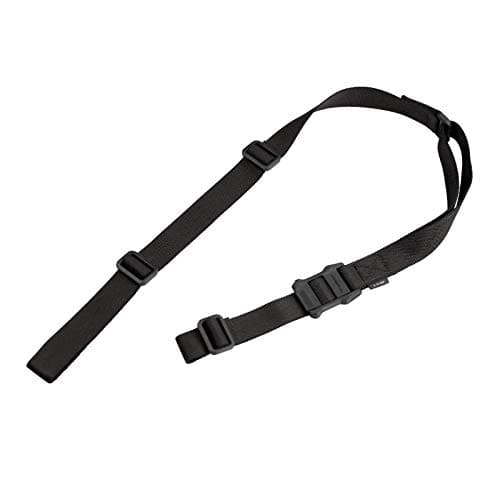
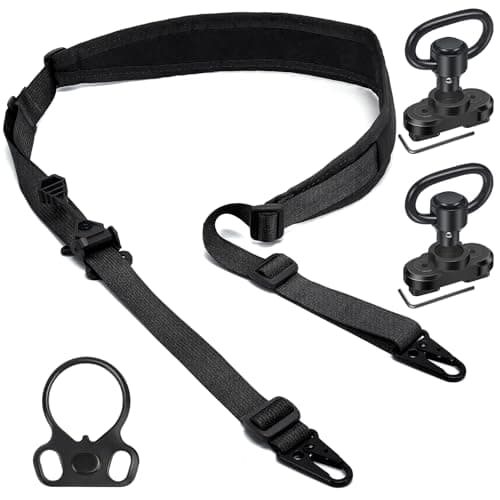
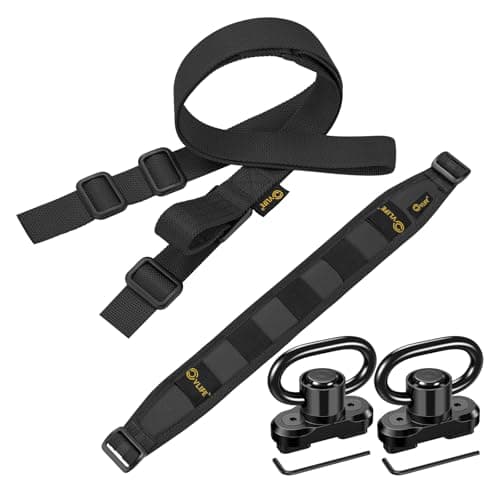
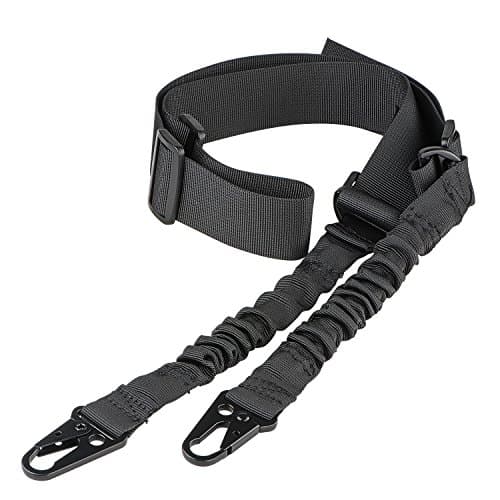
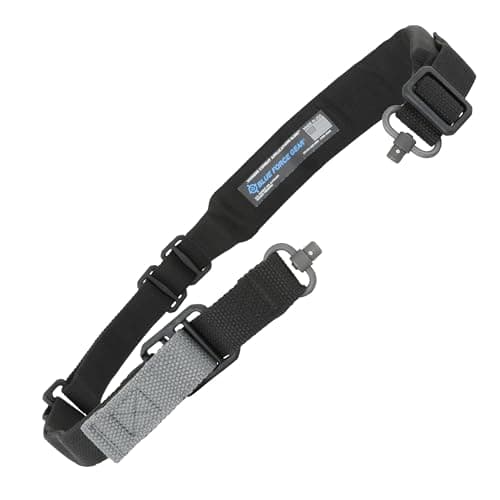
The verdict first: for hunting, buy the Blue Force Gear Vickers Padded QD. It is for the hunter carrying a rifle for hours on uneven ground, where shoulder pressure is the thing that decides whether the sling stays on. If your rifle is light and the walk is short, the Magpul MS1 does the same job for a third of the money with polymer hardware that stays quiet. The budget pick is the WarBull 2-Point QD — the cheapest sling here that has both padding and quick-detach swivels, which is the hunting combination. Skip the metal-hook CVLIFE: it rattles against a stock and the spring gate can be pressed open by a pack strap.
This is not a re-ranking of our rifle sling roundup. That page ranks slings for a general-purpose rifle and the unpadded, quick-adjust MS1 wins it on speed. Hunting inverts two of the criteria, and a different sling wins as a result. If you have not decided whether you want one attachment point or two, that argument is here — and for hunting the answer is two, every time.
The four things hunting changes
1. Hours, not minutes — so padding stops being optional
A range session puts a rifle on your shoulder in bursts. A hunt puts it there for the walk in, the walk between stands, the glassing and the walk out. An unpadded 1.25-inch strap under a nine- or ten-pound rifle concentrates that weight on a strip of trapezius, and the predictable outcome is the sling coming off and the rifle going into your hands — which defeats the purchase. This is the single biggest reason the ranking changes.
2. Silence — so metal hardware becomes a disqualifier
Every piece of metal on a sling is a thing that can tap a stock or a scope. The metal-hook sling at the bottom of this page names the noise problem in its own listing, and it also mars a finish. Magpul's polymer hardware is the quiet answer at the low end and the Vickers' push-button swivels seat solidly rather than swinging. If you have ever lost an animal to a sound you made, this moves up your list permanently.
3. Getting it off at the truck — so QD earns its keep
A hunting rifle goes in and out of a case, a scabbard or a truck seat repeatedly, and a sling that has to be unthreaded gets left on and snags. Push-button quick-detach swivels come out in seconds with no tools and go back into the same sockets. Two of the five slings here have them, which is most of why they rank where they do.
4. Your stock, not your rail — so attachment is the first check
This is where hunting slings actually fail, and it is worth doing before you order anything. A wooden or synthetic hunting stock normally has swivel studs — a small metal post with a hole through it — and takes spring-loaded swivels. Modern synthetic stocks increasingly have QD sockets, a round recess about half an inch across. Some rifles have neither. The Vickers wants QD sockets; the MS1 takes several different attachment kits without replacing the sling, which makes it the safer order if you have not looked yet. How to attach a rifle sling walks through identifying what you have, including the rifle that has no provision at all.
What about using the sling to shoot?
A quick-adjust two-point sling is a shooting aid as well as a carry strap: cinch it short and it loads tension between your support arm and your shoulder, which steadies the rifle from a field position. Every sling on this page has the slider that makes that practical. It is a genuine advantage on a hunting rifle, where you rarely get a bench, and it is one more reason a plain carry strap is the wrong purchase. Our shooting rests page covers the supported version of the same problem.
Pack straps and sling straps fight each other
If you are carrying a frame pack, the sling and the pack's shoulder straps compete for the same real estate, and the usual result is the rifle's weight landing on top of a loaded strap. Two honest answers: run the sling on the opposite shoulder from the pack's heaviest load, or use the pack's own rifle carry if it has one — which is a reason to read the pack-out frame page before you blame the sling. The padded Vickers is also the entry that copes best with sharing a shoulder, because the pad spreads what the strap concentrates.
Buying notes
Quick-adjust is the feature. Padding is the hunting feature.
Of everything on a sling specification sheet, the one-hand slider is what changes how you use the rifle, and all five slings here have it. Padding is what changes whether you still have the sling on at the end of the day, and only three do.
Closed loops or QD swivels, never an open hook
The one piece of sling hardware that fails in a way that matters is an open spring gate. It can be pressed open by a pack strap or a branch, and once it is open nothing is retaining the rifle. That is why the last entry here is a skip rather than a budget pick.
1.25 inches is the practical width
Narrower cuts in under load; wider catches on gear and does not feed through hardware cleanly. Padding is the better answer to shoulder pressure than width, which is the entire design of the Vickers.
Check it loaded before the season, not on the mountain
Hang the rifle on the sling, put your pack on over it, and walk around the yard for ten minutes. Hardware that is going to rattle will rattle, and a swivel that is going to work loose will start. That is a ten-minute check that cannot be done from a product listing.