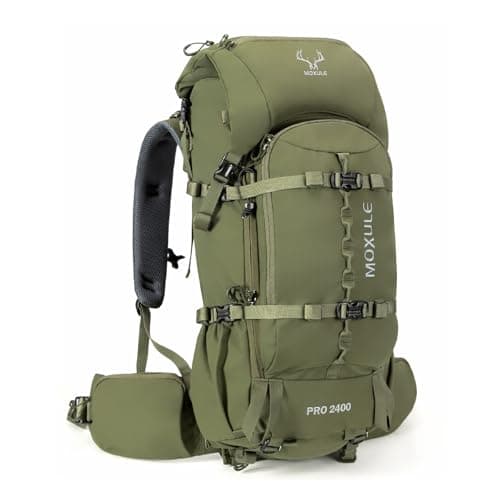
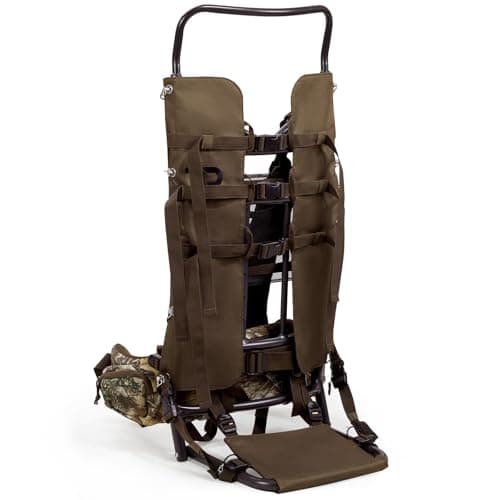
The verdict first: buy the TIDEWE 90L External Frame Pack. It is for the hunter who expects to carry an animal out on his back and wants the external-frame mechanism — detachable bag, meat against the shelf, weight on the hips — without paying premium-brand money for it. If your hunts are day hunts that might turn into a pack-out, the MOXULE Pro 2400 is the more honest size. The budget pick is the TR Aluminum External Frame Pack, the cheapest frame here with lash straps and a padded hip belt, which is the whole mechanism.
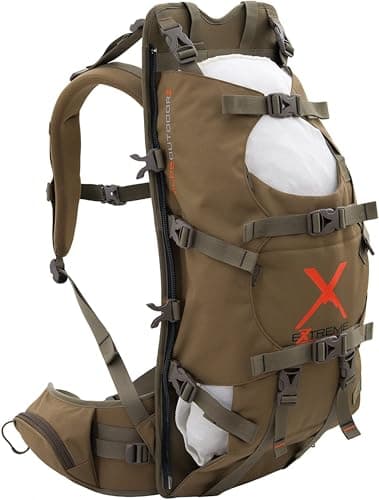
One thing to read before the table. The ALPS OutdoorZ Extreme Commander X is the only true freighter frame in this list — the bag comes off and the frame carries meat directly against the shelf, which is the configuration the others approximate. It had no buyable offer at the last price check, so the table shows no number for it and it is ranked fourth rather than first. That is a stock problem, not a quality judgment, and we would rather tell you than quietly leave it out.
This page ranks only packs with a load shelf and only on the pack-out job. If you want the category ranked on general hunting use, our hunting pack roundup is that page. If you have not decided on a frame type at all, internal against external argues it out, and what size hunting pack handles capacity.
What a meat shelf actually is
A load shelf — the listings also call it a meat shelf or a freighter shelf — is a horizontal platform at the bottom of an external frame, between the frame and your back. The pack bag unclips and comes off, you set a boned-out quarter or a bagged load directly onto the shelf, and the lash straps compress it against the frame. The weight sits low and close to your spine, where your hips can carry it.
That is the entire mechanism, and it is why external frames still exist in a market that otherwise moved to internal frames twenty years ago. You cannot lash eighty pounds of meat to the outside of an internal-frame daypack and expect to walk with it: the load sits away from your back, the lever arm pulls you backwards, and you end up carrying it with your shoulders and your lower back.
The SPIKA internal-frame pack in this registry is deliberately absent from this ranking for exactly that reason — it has no load shelf, so it is not a candidate here. It is a good day pack and it is ranked on the pages above.
What the frame costs you
Snagging in timber
An external frame catches on branches, and in thick timber it catches constantly. This is the real reason most hunters who do not pack out meat should not buy one. If your hunting is whitetails from a stand with a short drag to a truck, you want a cart or a drag and not a freighter frame.
Empty weight
Every pack here is heavier empty than an internal-frame pack of the same volume. You carry that on the way in, every time, for a capability you may use once a season. That is a fair trade for an elk hunter and a poor one for most deer hunters.
Capacity discipline
Ninety liters is a lot of bag. The listing note on the TIDEWE is honest about it and so are we: a big pack gets filled, and you carry what you pack. If you are not doing multi-day backcountry hunts, the smaller frame is not a compromise — it is the right answer.
Load rating is the specification nobody prints
The number you would most want before strapping a quarter to a frame is the published load rating, and across the budget and mid-tier end of this category it is simply not published. The TR frame's listing names no load rating at all, which is stated in its own notes and is the main reason it is a budget pick rather than the top pick.
Our honest position: on an unrated frame, treat the hardware as the limit rather than the fabric. Welds, buckles and the hip belt attachment are where a frame fails under a heavy load, and they are inspectable. Load the pack with something heavy at home, walk a mile, and look at the welds afterwards. We are not going to invent a figure for a pack whose maker did not publish one.
The first pack-out is a planning problem, not a gear problem
Two things decide whether a pack-out goes well, and neither is on this page. The first is how the animal is broken down — quartered and boned out is dramatically less weight than bone-in, and it is also what fits on a shelf. Field dressing gear and game bags cover that half.
The second is how many trips you are willing to make. One heroic 110-pound carry is how people get hurt; two sensible loads take longer and end with you walking normally the next day. Plan for two. The gear only has to be good enough for the load you actually chose, and the rifle has to come along too — a padded sling is the difference when the pack straps already own your shoulders.
Buying notes
Fit the hip belt before anything else
A freighter frame transfers load to your hips, and if the belt does not sit on your iliac crest it transfers nothing. Two of these packs have adjustable or telescoping frames precisely so the belt can be put in the right place. Do that adjustment at home, loaded.
Count the lash straps
Lash straps are how meat stays on a shelf, and they are the cheapest thing on the pack to get wrong. Three extended straps is the practical minimum. Spare webbing straps weigh nothing and solve a problem you cannot solve otherwise.
A rain cover is not optional on a pack-out
Wet meat and wet bags are heavier and spoil faster, and a soaked pack bag adds pounds you are carrying for nothing. Two packs here include a cover; if yours does not, buy one.
Game bags go between the meat and the frame
Meat straight onto a shelf is a cleaning job and a contamination risk. Breathable game bags are what the shelf is designed to carry, and they are a few dollars — our game bag roundup ranks them, and how to pack a hunting pack covers the order things go in.