We earn a commission when you buy through our Amazon links, at no extra cost to you. It never changes the order of the picks, and we say so when the cheaper thing is the better buy. How this works.
Two things decide a red dot and only one of them is on the box.
Dot size, quoted in MOA, is a deliberate trade. A 2 MOA dot covers about two inches at 100 yards and is precise; a 6 MOA dot covers six inches and is faster to find. Neither is better — you choose based on the distance and target size you actually shoot. For general use, 2 to 3 MOA is the right answer.
Zero retention is the thing nobody advertises and the reason optics cost what they cost. A red dot that shifts point of impact under recoil is worse than iron sights, because you trust it. This is the specification a twenty-dollar budget has to sacrifice, and it is why the cheapest optic in every search result is on this page as the skip.
A note on scope: everything on this page is an accessory. There are no firearms on this site.
Two things this page deliberately does not cover, each with its own page. If the dot looks like a smear, a comet or a starburst to you, the sight is almost certainly fine and your cornea is the variable: red dots for astigmatism explains why and what actually helps. And if the sight will live outdoors or under a shirt, the housing design matters more than anything in the ranking above — enclosed versus open emitter.
Three questions this page deliberately leaves to their own pages. If the dot is going on a 12 gauge, the whole ranking changes — a bigger dot is the better dot and the emitter needs to survive weather: red dots for shotguns. If you are not sure what the MOA figure on the box means for your shooting, what size red dot you actually need puts the arithmetic in a table. And if you are weighing a green emitter against a red one, red against green explains why green looks brighter and what that is worth.
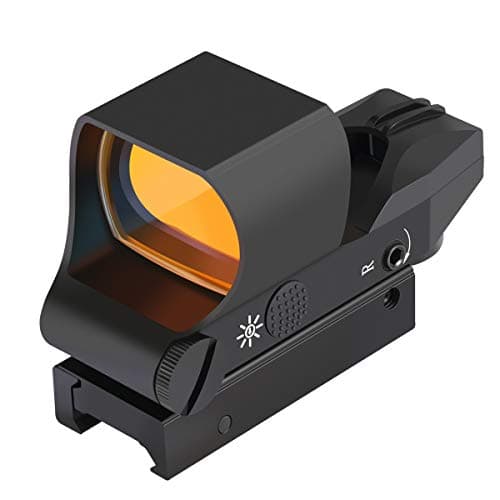
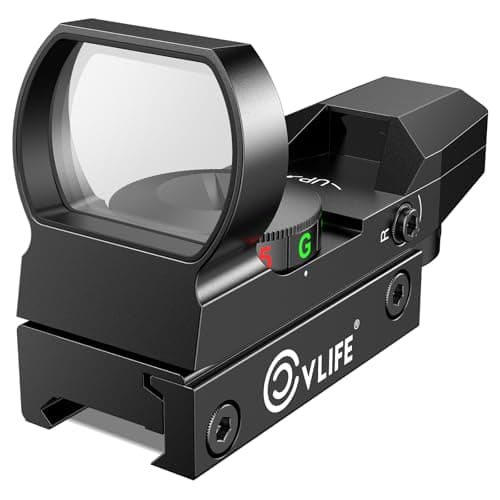
The optic that appears at the top of every red dot search. At twenty dollars there is no budget left for the thing that actually matters — holding zero through recoil — and an optic that loses zero is worse than iron sights.
#ad · Live prices from the Amazon Creators API, as of October 19, 2026. Where we have no verified live price we show none — a gap beats a number that has rotted.
The optic that appears at the top of every red dot search. At twenty dollars there is no budget left for the thing that actually matters — holding zero through recoil — and an optic that loses zero is worse than iron sights.
Dot clarity
5
Battery life
5
Zero retention
3
Build quality
4
Value
5
What's good
+Extremely cheap
+Two reticle colors
What's not
−Zero retention through recoil is the entire job of a red dot, and it is the first thing a $20 budget sacrifices — a dot that wanders is worse than no optic at all because you trust it
−Open reflex housing exposes the emitter lens to rain, dust and mud
−No stated recoil rating and no warranty to invoke when it fails
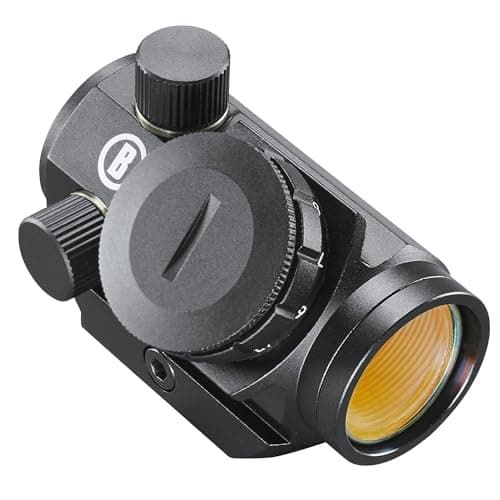
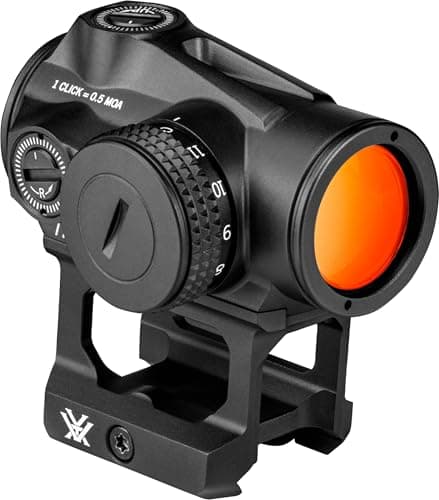
−The Bushnell TRS-25 costs three times as much, is genuinely waterproof, and has a decade of documented service
Skip it if…
…you will shoot at anything you care about hitting. Buy the Bushnell, or use the iron sights you already have.
For a rifle, a lower-third or absolute co-witness height lets you see your iron sights through the optic — absolute puts them on the dot, lower-third puts them in the bottom third of the window. This matters because it gives you a fallback if the optic fails, and because a dot mounted too high forces an unnatural head position.
Shake-awake versus always-on
Modern optics either run for years on a single battery with the dot always on, or use motion activation to switch off when still. Both work. What matters is that you never wonder whether the optic is on when you pick it up — either approach delivers that, and a manual switch does not.
Torque the mount properly
Loose mounting screws are the most common cause of a "defective" optic that will not hold zero. Use a torque driver at the manufacturer's stated value and a thread locker. Then confirm zero after twenty rounds — mounts settle.
Confirm zero, do not assume it
Check zero after mounting, after any impact, after any temperature extreme, and at the start of each season. Zero drift is silent, and finding it at the range costs nothing while finding it in the field costs everything.
How these were picked
I haven't handled these. Here's what I did instead.
Everyone in this category says they tested twenty of these. I haven't tested any, and I say so. What I do instead: read the manufacturer's manual and published specification, compile the numbers that decide the purchase, do the arithmetic in the open, check the live price, and name one product to skip. The scores above are judgments from that research against a published rubric — they are not measurements I took, because I do not have a lab and I am not going to pretend otherwise.
Questions
Frequently asked
What MOA red dot should I get?+
2 to 3 MOA for general use — precise enough at distance, fast enough up close. Go larger only for close-range speed shooting or shotgun use, where a 6 MOA dot is genuinely faster to find.
What does MOA mean on a red dot?+
Minute of angle: one sixtieth of a degree, which is almost exactly one inch at 100 yards. A 2 MOA dot covers two inches at 100 yards and four at 200. It describes the dot's apparent size, not its accuracy.
How long do red dot batteries last?+
Quality optics run 20,000 to 50,000 hours on a single battery at moderate brightness — years of always-on use. Budget optics with less efficient emitters run far less, and rarely publish a figure.
Do I need to co-witness iron sights?+
Not strictly, but it is a sensible fallback if the optic fails, and it costs nothing but choosing the right mount height. Lower-third co-witness keeps the irons out of your way while leaving them available.
We do not run a testing lab and we do not pretend to. Where a measured number came from a manufacturer's published specification or someone else's lab, we name them and link them. Where we could not verify something, we say so on the page rather than quietly leaving it out. Read the full method.