Red dots divide into categories that matter far more than price does. Get the category right and a hundred-dollar sight is the correct answer; get it wrong and a three-hundred-dollar one is useless to you.
One disclosure before the picks. My own Vortex experience is riflescopes — a Viper PST and a pair of Strike Eagles — and I have not run any of the eight dots on this page personally. So the rankings below are built from published specifications, footprints and the honest category logic that follows, and I am not going to dress that up as range time I did not put in.
The three questions that decide this
1. Rifle or pistol?
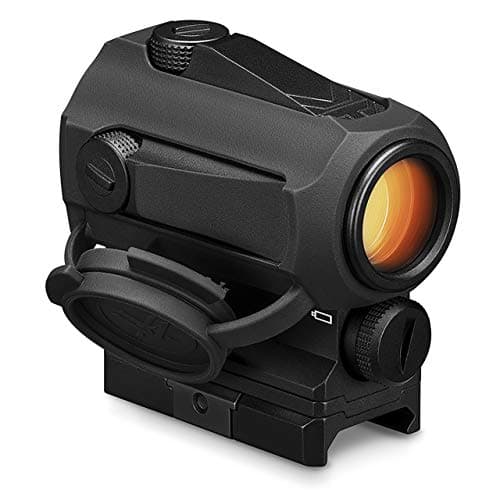
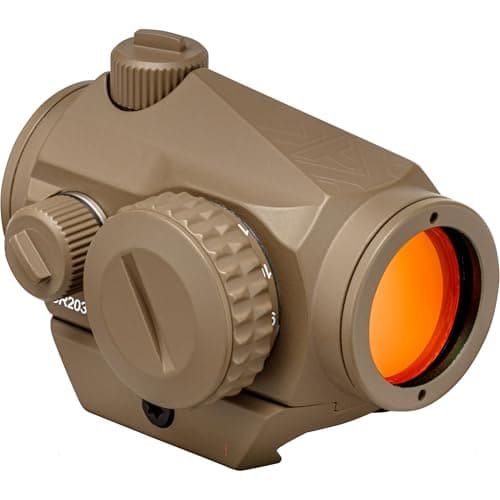
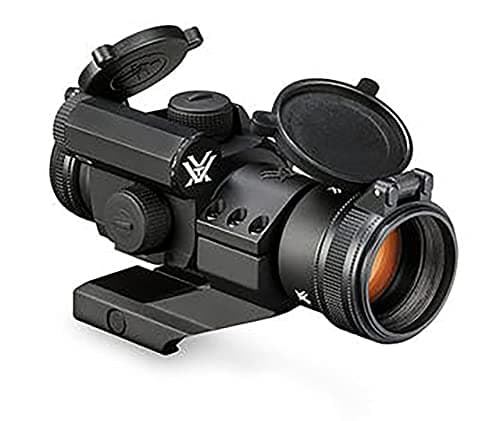
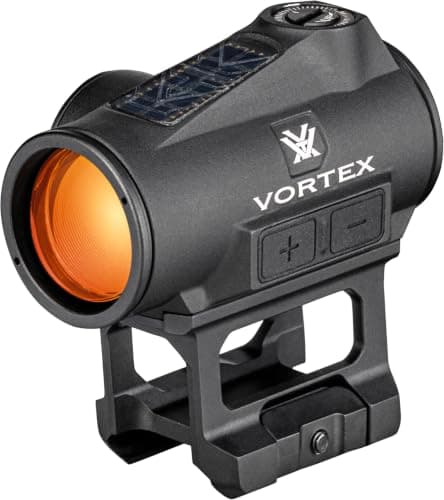
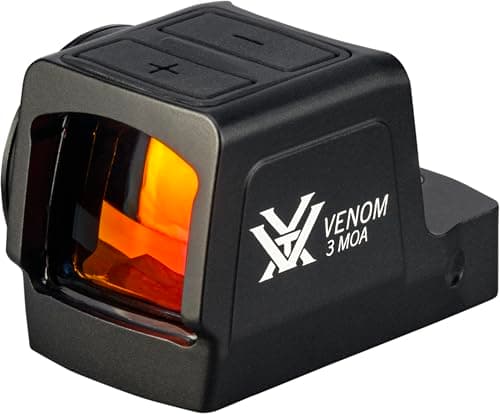
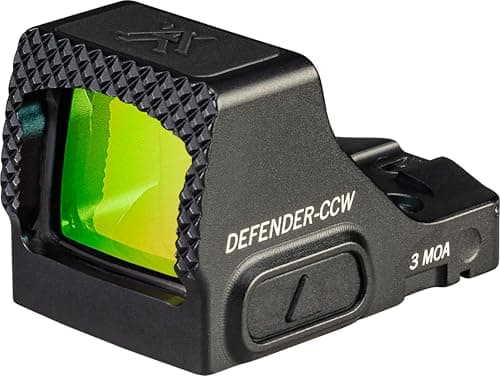
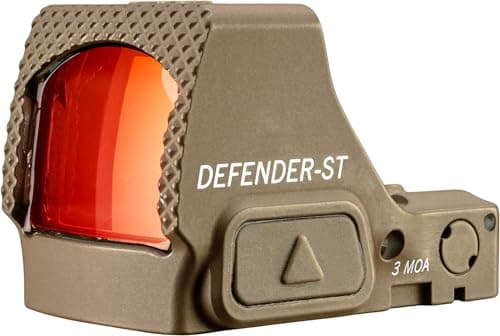
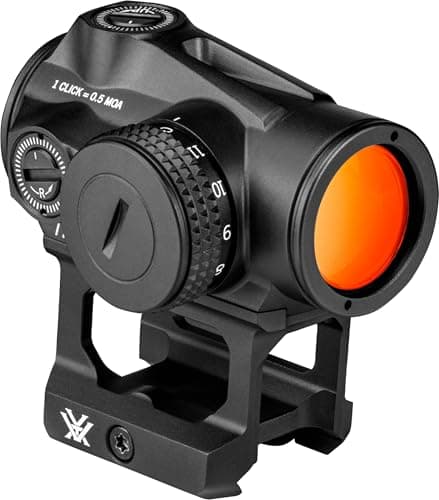
Tube sights — Triumph, SPARC, Crossfire, StrikeFire — are rifle and shotgun optics. They are bigger, more forgiving of a rough mount, and they mount to a rail. Micro reflex sights — Venom, Defender — mount to a pistol slide or a low rifle mount and are small enough to sit behind iron sights.
Putting a tube sight on a pistol is not a thing. Putting a micro reflex on a rifle absolutely is, and is increasingly common.
2. Open or enclosed emitter?
An open reflex has an exposed LED firing across an open window. Rain, snow, mud and pocket lint can land on that emitter and the dot disappears. An enclosed emitter puts it inside a sealed housing where nothing can reach it.
On a fair-weather range gun, open is fine and gives you a wider window for less money. On a gun that gets carried or hunted with, enclosed is the honest recommendation and the Venom Enclosed Micro is the one under two hundred dollars.
3. What footprint does your slide take?
This is the question that ruins purchases. A pistol optic mounts to a specific bolt pattern and the patterns are not interchangeable.
- Defender-CCW uses the Shield RMSc footprint — the standard on compact and subcompact optic-ready slides.
- Defender-ST uses the DeltaPoint Pro footprint, which is common on full-size slides and adapter plates.
Confirm what your slide or plate is cut for before you order. No adapter turns a small footprint into a large one, and forcing a mismatch is how optics come loose under recoil. Our 2011 red dot page goes through this in detail for double-stack 1911s.
Dot size: 2 MOA or 6 MOA?
A 2 MOA dot covers two inches at a hundred yards. A 6 MOA dot covers six. Small dots are more precise; large dots are faster to find, especially under stress.
One thing worth knowing: if you have astigmatism, a larger dot looks worse, not better. Astigmatism smears a point of light, and a bigger point smears into a bigger blob. If red dots have always looked like commas to you, try a smaller dot or a green emitter before you conclude the optic is faulty.
Solar and motion activation
The one genuine failure mode of a battery optic is a dead battery you did not notice. Two features address it. Solar backup runs the dot off ambient light when the battery is flat. Motion activation wakes the optic when the gun moves and sleeps it when it does not, stretching battery life into years.
On a defensive gun, either is worth the premium. On a range gun that lives in a safe, change the battery once a year and buy the cheaper sight.
Two decisions this page assumes you have already made. The MOA figure beside each dot above is explained properly on what size red dot you need, with a table of what each size covers downrange. And several of these come in green as well as red — red against green is whether that is worth the premium for your eyes.
Buying and mounting a red dot properly
Height matters more than people expect
On a rifle, the optic has to sit at a height where your cheek weld puts your eye behind the dot without effort. Sights that ship with an integrated mount — the SPARC does — have already solved this. Sights that do not need a mount chosen deliberately, and a wrong-height mount is the most common reason a red dot build feels awkward.
Zero it properly, once
A red dot has no parallax to speak of at practical distances, which means head position barely matters — but the zero still has to be right. We have a whole page on zeroing a red dot including the distance argument.
Brightness settings are the feature you actually use
Too dim and the dot vanishes against a bright target; too bright and it blooms into a star you cannot aim with. A sight with a wide brightness range, adjusted for the light you are in, outperforms a nominally better optic left on one setting.
Green costs more and helps some eyes
The human eye is more sensitive to green than red at the same power, and many people with astigmatism see a green emitter far more cleanly. If red dots read as a smear to you, that is worth the twenty or thirty dollar premium. If they look like dots, it is not.
Co-witness with irons if the gun matters
An electronic sight can fail. Iron sights that line up through the window — absolute or lower third co-witness — mean a failure is an inconvenience rather than a stoppage. This is a rifle consideration mostly, and it is another reason mount height is not a detail.