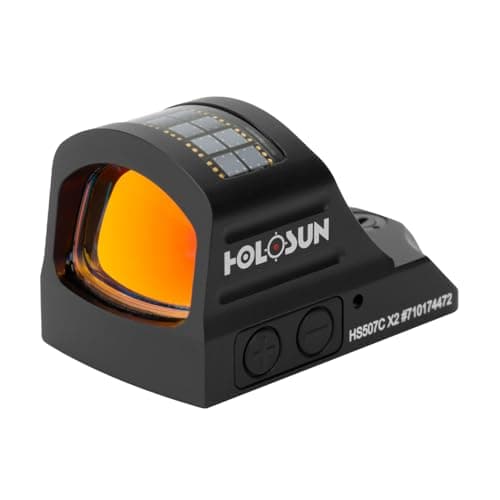
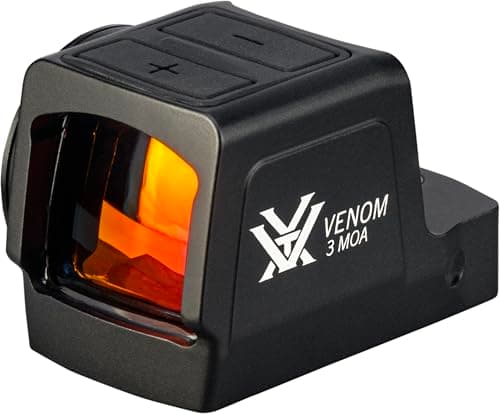
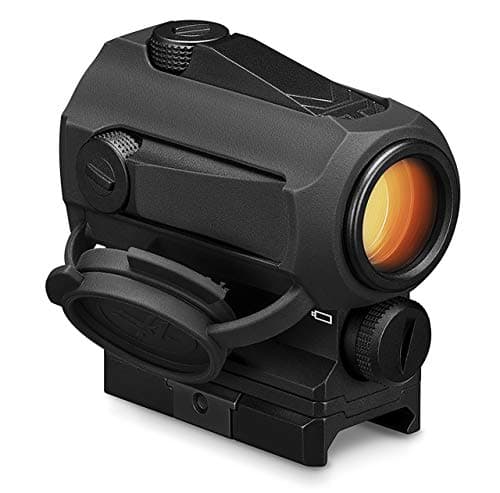
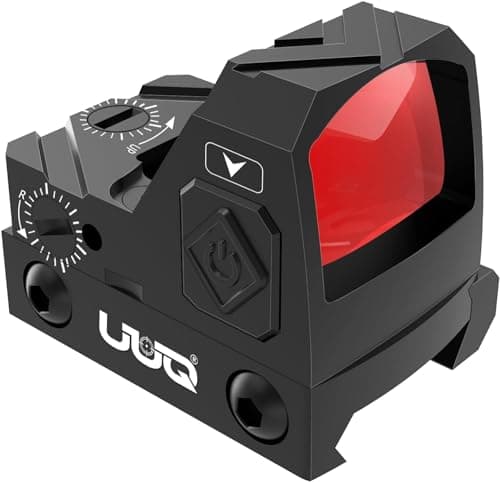
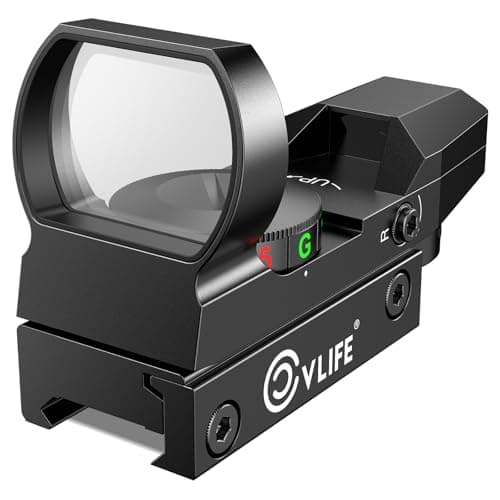
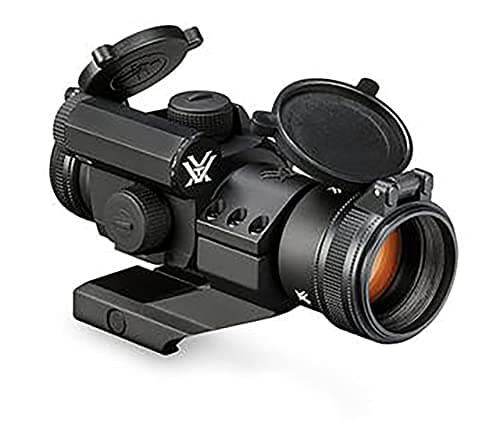
The verdict first: for a general-purpose 12 gauge, buy the Vortex StrikeFire II — a 4 MOA dot, red or green, with the cantilever mount already in the box. It is for the person whose shotgun does a bit of everything: clays, birds, a slug in deer season, a home-defense gun in the closet. If the gun is specifically a turkey or slug gun, buy the Holosun HS507C-X2 instead and use the 2 MOA dot inside the circle. If it is a duck gun that lives in weather, buy the Vortex Venom Enclosed and stop reading.
This site already has a general red dot roundup, and if you are shopping for a dot for an AR or a general-purpose rifle, that is the page you want — it ranks the same category on different criteria and this page does not re-rank it. A shotgun is a different problem in three specific ways, and they are the only three things worth arguing about.
1. Dot size is almost the whole decision
A dot's size is published in MOA, which is an angle. One MOA covers roughly one inch at 100 yards, so a 2 MOA dot covers about two inches at 100 and half an inch at 25. That is the entire arithmetic, and on a shotgun it runs the other way from a rifle.
Shotgun shooting at a moving target is a speed problem. You are not aiming, you are pointing, and a big bright dot is faster to find in the window and faster to put on a bird that is going away from you. A 4 MOA dot covers about an inch at 25 yards — which is nothing compared with a shot pattern — and it appears in your eye the instant the gun comes up. That is why the StrikeFire II leads this page while the exact same dot size would be a liability on a precision rifle.
Turkey and slugs invert it again. A turkey load is aimed at a head and neck, a slug is aimed like a rifle bullet, and both want a small dot. The honest solution is a circle-dot reticle: the Holosun's 32 MOA ring finds the target the way a big dot does, and the 2 MOA dot in the middle of it gives you something fine enough to aim with. We go through the general version of this trade in detail on what size red dot you actually want.
2. Open or enclosed, decided by weather and not by price
An open reflex sight fires its LED across an open channel to a lens. It is lighter, cheaper and gives you a wider window — and anything that lands in that channel sits between the emitter and your eye. Rain, wet snow, marsh mud and a smear of sunscreen all do it. An enclosed emitter puts the whole optical path inside a sealed housing, which is why it costs more and why a waterfowl gun should have one.
If your shotgun shoots clays on dry Saturdays, an open sight is the right answer and the extra money buys you nothing. If it goes in a blind in November, buy the enclosed one. The full enclosed-versus-open argument is here — it is written about pistols, but the physics and the verdict carry over exactly.
3. Recoil: what we can and cannot tell you
A 12 gauge delivers more recoil energy to a mounted optic than anything else on this site. It is the single most common way a cheap red dot dies — not by breaking visibly, but by quietly walking off zero over a box of shells, which you will blame on yourself.
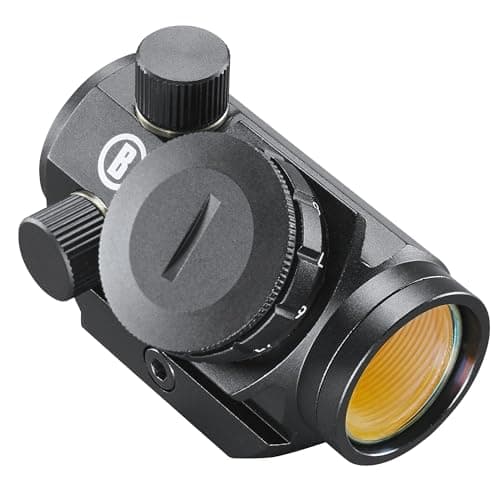
Here is the honest limit of what this page can claim: the manufacturers of the dots above do not publish a shotgun-specific recoil rating, and we have not strapped these to a 12 gauge and counted rounds. What we can tell you is what the listings state and what the brands behind them are worth — Vortex's VIP warranty is unconditional and transferable, Bushnell has been supporting the TRS-25 for over a decade, and the twenty-dollar unbranded reflex at the bottom of this page states no recoil rating at all. On a shotgun that last fact is the whole review.
The mounting problem, and the gap on this page
None of this works if the optic cannot be attached properly, and a shotgun is harder to mount than a rifle. You have three realistic routes:
- A factory-cut receiver. Most current field and tactical shotguns ship drilled and tapped or with an optics cut. If yours does, use the plate the manufacturer sells for it and nothing else — this is the one place where the gun maker's part is genuinely the right part.
- A Picatinny rail on the receiver. The common answer on tactical and 3-Gun shotguns, and the one that takes a tube dot like the StrikeFire II or the SPARC.
- A rib or saddle mount. For a hunting gun you do not want to drill. These are model-specific and fit quality varies enormously.
We link no shotgun mount on this page, deliberately. A mount has to match your specific receiver or rib, and no shotgun-specific mount has ever been resolved into this site's registry against a verified live listing. We would rather tell you what to look for and leave the gap than sell you a part that does not fit your gun. Buy the mount for your model from the gun's manufacturer or a maker that names your model on the box, and torque it to the published figure.
What a dot will not fix
It will not change your pattern, your choke or your lead. If you miss birds because you stop the gun, a red dot will show you missing with better information. The two genuine gains are that you can aim a slug properly out to the distance the barrel is capable of, and that you can shoot a turkey's head with a repeatable reference instead of a bead and hope.
For a competition shotgun specifically, the setup question is different again and we cover it where it belongs: my 940 Pro and how it is set up and the 3-Gun shotgun page.
Buying notes
Zero a shotgun dot with the load you will actually shoot
Slug zero and buckshot point of impact are not the same, and neither matches where a turkey load centers. Zero with the shell you hunt with, write the distance down, and re-check it after anything that touches the mount. Our zeroing procedure is here.
Brightness matters more than it does on a rifle
A dot that is bright enough against a dark treeline will bloom into a smear against a bright sky, and shotgun targets are frequently against a bright sky. Every dot here has manual brightness settings; learn where yours lives for the two conditions you shoot in and leave it there.
Keep the bead, keep the irons
A red dot is a battery-powered part on a gun you may be depending on. The bead or the factory irons cost nothing to keep and they work when the battery does not. Models with solar backup or shake-awake reduce the odds of a dead sight but they do not remove them.
Spare batteries, written on the calendar
Change the cell at a fixed point in the year rather than when the dot goes out. Our preseason checklist puts it in the same pass as checking zero, which is the only way it reliably happens.