Skip to content
Steve's Outpost

Section 02 · Hunting

Best Hunting Knives Under $50

Fifty dollars is more than enough knife to field dress a deer. Here are the five worth owning, the one decision the band forces, and the folder to walk past.

By Stephen V.Updated How we pick
#ad

We earn a commission when you buy through our Amazon links, at no extra cost to you. It never changes the order of the picks, and we say so when the cheaper thing is the better buy. How this works.

Buck Knives Buck Knives 685 BuckLite Max II

The most knife the band holds

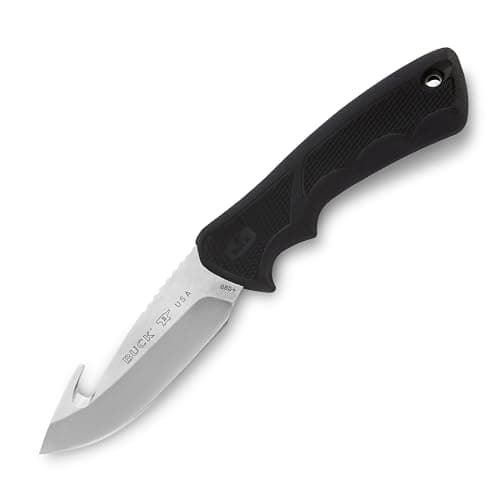
Buck Knives 685 BuckLite Max II

Under five ounces with a gut hook and a warranty Buck genuinely honors — the only knife under this ceiling whose maker will still be answering the phone in ten years.

A gut hook needs a round file or a sharpening rod to maintain, which most people do not own. If that bothers you, the replaceable-blade Gerber below sidesteps sharpening entirely.

$45.99Amazon (affiliate link)

Price as of November 23, 2026. Prices move — Amazon's is the one that counts.

#ad · we may earn a commission from this link to Buck Knives 685 BuckLite Max II

The verdict first: under fifty dollars, buy the Buck Knives 685 BuckLite Max II. It is for the deer hunter who wants one fixed blade with a gut hook, light enough that it does not get left in the truck, from a company whose lifetime warranty is actually honored. The budget pick is the Old Timer 158OT Guthook Skinner — a full tang at a price where partial tangs are the norm, which is the specification that decides whether a knife survives being levered. Skip the unbranded folding gut hook: a folding pivot inside a body cavity traps blood and hair where you cannot reach it.

Prices come from a live lookup with the date printed under the table. The prose quotes no numbers deliberately, because this band is narrow and prices move — read the table.

If the budget can move, our hunting knife roundup ranks the category with no ceiling and is the better page. This one is for a hard fifty-dollar limit, which is where most people actually are the week before the season.

The fork this band forces

Under fifty dollars you are choosing between two different ideas about how a hunting knife stays sharp, and you cannot have both done well at this price.

A gut hook and a steel you sharpen

The traditional answer, and three of the five knives here are it. A gut hook opens hide without puncturing the body cavity, which is the single most useful specialization on a deer knife — and the thing nobody mentions is that a gut hook needs a round file or a tapered rod to sharpen, because a flat stone cannot reach inside the curve. If you do not own one and will not buy one, you have bought a hook that will be dull next season.

A replaceable blade and no sharpening at all

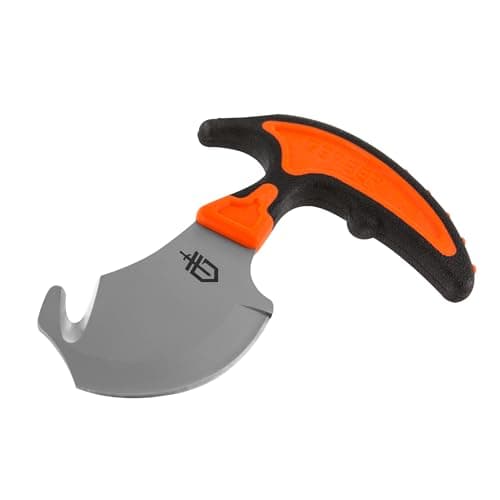
The Gerber Vital Skin and Gut is the other idea: a fresh scalpel edge every single time, changed in seconds with cold hands, with a blaze orange handle that is very hard to lose in leaf litter. Caping and fine work around a skull are genuinely easier with a new blade than with a sharpened one.

The costs are real and worth stating: replacement blades are an ongoing expense, thin blades snap under lateral load so there is no prying at all, and used blades are a disposal problem in the field — you are carrying out something sharp, in the dark, covered in blood. Plan a container for them before you need one.

Our read: if you own a sharpening system, buy a gut hook knife. If you do not and will not, buy the replaceable blade and stop pretending. Our sharpener roundup is the page that decides which camp you are in, and how to sharpen is the process.

Why fixed blades, and why the folder is a skip

Every recommendation on this page except one is a fixed blade, and the exception is listed as a skip. The reason is specific rather than snobbery: a folding knife has a pivot, and a pivot is a cavity that fills with blood, hair and fat in exactly the place you cannot reach. It will not come clean without full disassembly, and most people never disassemble it.

There is also a safety version of the same argument. Working inside an animal with a wet grip puts lateral load on a lock that was designed for cutting, and lock security on an unbranded folder is not a specification anybody publishes. A fixed blade at the same price is strictly better at this job. For general carry a folder is the right tool and that is its own page — a hunting knife is not a general carry knife.

Blade length and shape, briefly

Three and a half to four inches is the useful range for deer-sized animals, and all the fixed blades here sit in it. Longer is not better: a long blade is harder to control inside a cavity and gets in the way around a pelvis. Shorter struggles on larger animals.

On shape, a deep skinning belly makes long clean cuts rather than repeated short ones, which matters most on hide. A drop point is the better all-rounder and the better choice if the knife will also do camp work. Handle material matters more than either once your hands are wet — grippy rubberized handles work cold and bloody, and traditional sawcut handles are harder in the cold than modern materials.

Two knives beats one good knife

The practical trick at this price is to buy two cheap knives rather than one slightly better one. One does the gutting and the hide; the second stays clean for the meat. That is a genuine hygiene improvement and it is also the honest reason the Outdoor Edge WildSkin is on this page — it is cheap enough to buy twice. Between them you have a spare in the truck, which is the knife that actually matters when the first one goes down a ravine.

The rest of the job is bags, gloves and something to carry quarters, and none of it is a knife — field dressing gear is the kit list and game bags is the ranking.

The short answer

Quick picks

#ProductBest forScorePrice
01
Buck Knives Buck Knives 685 BuckLite Max II
Buck Knives 685 BuckLite Max II

Under five ounces with a gut hook and a warranty Buck genuinely honors. It is the top of this band and the only knife in it whose maker will still be answering the phone in ten years.

Best under $50
8.0
$45.99Amazon (affiliate link)
02
Gerber Gerber Vital Skin and Gut
Gerber Vital Skin and Gut

A replaceable-blade knife is the other way to spend this money: instead of a better steel you get a scalpel edge every single time, which is the harder thing to reproduce with a stone in the dark.

Best under $50 for caping and fine work
7.4
$26.75Amazon (affiliate link)
03
Outdoor Edge Outdoor Edge WildSkin
Outdoor Edge WildSkin

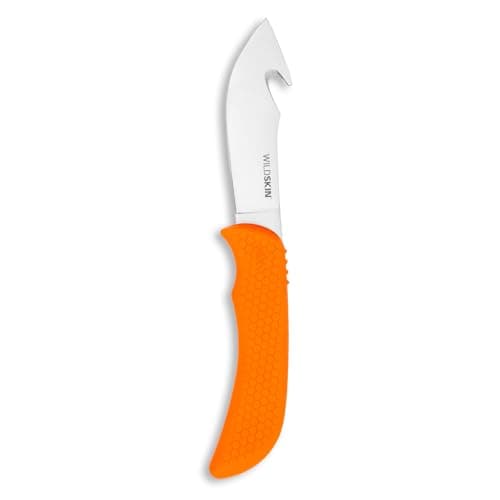
Four inches of fixed blade and a gut hook from a company that makes nothing but game processing tools. Cheap enough to buy two and keep one clean for the meat.

Best value under $50
7.6
$21.29Amazon (affiliate link)
04
Old Timer Old Timer 158OT Guthook Skinner
Old Timer 158OT Guthook Skinner

A full tang at a price where partial tangs are the norm, which is the specification that decides whether a knife survives being levered. Plan on putting an edge on it before the season.

Best budget — the cheapest that does the job
6.8
$24.15Amazon (affiliate link)
05
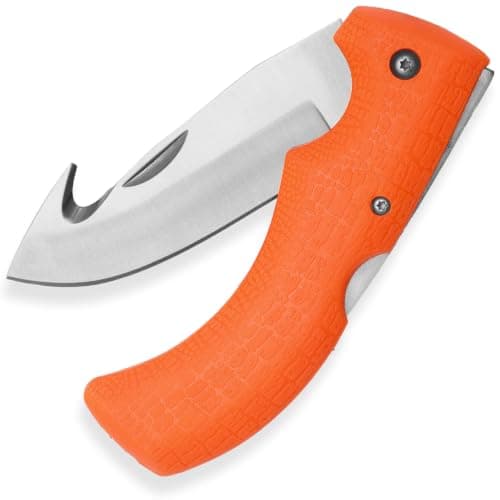
Unbranded Generic Folding Gut Hook Knife
Generic Folding Gut Hook Knife

A folding pivot inside a body cavity is the one mistake this band makes that a cheap fixed blade does not. Every other knife on this page costs about the same and cleans properly.

Skip this one
4.0
$24.99Amazon (affiliate link)

#ad · Live prices from the Amazon Creators API, as of November 23, 2026. Where we have no verified live price we show none — a gap beats a number that has rotted.

In detail

The picks, in full

01
Buck Knives Buck Knives 685 BuckLite Max II

Best under $50

Buck Knives 685 BuckLite Max II

Gut hook4.7 ozFixed bladeBuck Forever Warranty
8.0/10

Under five ounces with a gut hook and a warranty Buck genuinely honors. It is the top of this band and the only knife in it whose maker will still be answering the phone in ten years.

Edge retention
7
Blade shape
9
Grip when wet
9
Sheath
7
Value
8

What's good

  • Light enough that it does not get left behind, which is the failure mode for hunting knives
  • Gut hook opens hide without puncturing the body cavity
  • Buck's lifetime warranty is genuinely honored
  • Grippy handle material works with wet hands

What's not

  • Gut hooks are difficult to sharpen without a round file or a rod
  • Not a general camp knife — the profile is specialized

Skip it if…

…you want one knife for camp and game. A gut hook makes a poor food-prep knife and a worse whittler.

$45.99Amazon (affiliate link)

Price as of November 23, 2026. Prices move — Amazon's is the one that counts.

#ad · we may earn a commission from this link to Buck Knives 685 BuckLite Max II

02
Gerber Gerber Vital Skin and Gut

Best under $50 for caping and fine work

Gerber Vital Skin and Gut

Replaceable bladesSkin and gut designOrange handleLightweight
7.4/10

A replaceable-blade knife is the other way to spend this money: instead of a better steel you get a scalpel edge every single time, which is the harder thing to reproduce with a stone in the dark.

Edge retention
9
Blade shape
8
Grip when wet
7
Sheath
6
Value
7

What's good

  • A fresh blade every time beats a sharpened one, and caping with a scalpel edge is genuinely easier
  • Blade changes take seconds with cold hands
  • Blaze orange handle is very hard to lose in leaf litter

What's not

  • Replacement blades are an ongoing cost
  • Thin blades snap under lateral load — no prying at all
  • Used blades are a disposal problem in the field

Skip it if…

…you will use it as a general knife. These blades break when twisted, and that failure happens with your hand on the handle.

$26.75Amazon (affiliate link)

$29.9911% off

Price as of November 23, 2026. Prices move — Amazon's is the one that counts.

#ad · we may earn a commission from this link to Gerber Vital Skin and Gut

03
Outdoor Edge Outdoor Edge WildSkin

Best value under $50

Outdoor Edge WildSkin

4.0 in bladeGut hookFixed bladeCamo nylon sheath
7.6/10

Four inches of fixed blade and a gut hook from a company that makes nothing but game processing tools. Cheap enough to buy two and keep one clean for the meat.

Edge retention
6
Blade shape
9
Grip when wet
8
Sheath
5
Value
10

What's good

  • Outdoor Edge specializes in game processing, and the geometry shows it
  • Four inches is the right length for deer-sized animals
  • Cheap enough to own two and keep one clean

What's not

  • Nylon sheath is the weak point — check retention before you trust it
  • Softer steel than the premium options

Skip it if…

…you process several animals a season. The edge will need attention partway through, which is the wrong time.

$21.29Amazon (affiliate link)

Price as of November 23, 2026. Prices move — Amazon's is the one that counts.

#ad · we may earn a commission from this link to Outdoor Edge WildSkin

04
Old Timer Old Timer 158OT Guthook Skinner

Best budget — the cheapest that does the job

Old Timer 158OT Guthook Skinner

3.5 in bladeFull tangHigh carbon stainlessGut hook
6.8/10

A full tang at a price where partial tangs are the norm, which is the specification that decides whether a knife survives being levered. Plan on putting an edge on it before the season.

Edge retention
6
Blade shape
8
Grip when wet
6
Sheath
5
Value
9

What's good

  • Full tang at a price where partial tangs are normal
  • Long-running pattern with a known character
  • Traditional sawcut handle grips reasonably when wet

What's not

  • Factory edge is usually mediocre and needs work
  • Sheath is basic
  • Handle material is harder in the cold than modern rubberized grips

Skip it if…

…you want it sharp out of the box. Budget an evening on a stone before the season.

$24.15Amazon (affiliate link)

Price as of November 23, 2026. Prices move — Amazon's is the one that counts.

#ad · we may earn a commission from this link to Old Timer 158OT Guthook Skinner

05
Unbranded Generic Folding Gut Hook Knife

Skip this one

Generic Folding Gut Hook Knife

FoldingGut hookUnspecified stainlessSheath included
4.0/10

A folding pivot inside a body cavity is the one mistake this band makes that a cheap fixed blade does not. Every other knife on this page costs about the same and cleans properly.

Edge retention
3
Blade shape
5
Grip when wet
4
Sheath
4
Value
4

What's good

  • Compact
  • Cheap

What's not

  • A folding pivot traps blood, hair and fat where you cannot reach it, and it will not come clean without full disassembly
  • Lock security while working inside an animal is a genuine safety issue with a wet grip
  • No named steel
  • Fixed blades at the same price are strictly better for this job

Skip it if…

…you are field dressing anything. The Outdoor Edge WildSkin costs about the same and is a fixed blade, which is what this job wants.

$24.99Amazon (affiliate link)

Price as of November 23, 2026. Prices move — Amazon's is the one that counts.

#ad · we may earn a commission from this link to Generic Folding Gut Hook Knife

Buying notes

Check the sheath before you trust the knife

The listed weak point across this band is the sheath, not the blade. Nylon sheaths vary enormously in retention and a fixed blade that falls out of its sheath on a hillside is gone. Load it, turn it upside down, shake it — in the kitchen, not on the mountain.

Expect to put an edge on it out of the box

The factory edge on the cheap end of this band is usually mediocre, and the Old Timer in particular wants work before the season. That is a twenty-minute job and it is the difference between a knife that works and a knife you blame.

Blaze orange is a feature, not a color

A dropped knife in leaf litter at dusk is effectively invisible unless it is orange. One of the five here is, and it is the cheapest insurance on this page.

Do not store it in the sheath

Leather and nylon both hold moisture against steel. Clean it, dry it, oil the blade and store it out of the sheath between seasons — the same principle as long-term gun storage, for the same reason.
How these were picked

I haven't handled these. Here's what I did instead.

Everyone in this category says they tested twenty of these. I haven't tested any, and I say so. What I do instead: read the manufacturer's manual and published specification, compile the numbers that decide the purchase, do the arithmetic in the open, check the live price, and name one product to skip. The scores above are judgments from that research against a published rubric — they are not measurements I took, because I do not have a lab and I am not going to pretend otherwise.

Questions

Frequently asked

What is the best hunting knife under $50?
The Buck Knives 685 BuckLite Max II. Under five ounces, a gut hook that opens hide without puncturing the cavity, a grippy handle that works with wet hands, and Buck's lifetime warranty behind it. The honest caveat is that a gut hook needs a round file or rod to sharpen, which most people do not own.
Is a $50 hunting knife good enough to field dress a deer?
Comfortably. Field dressing is not a demanding cutting task — it is a hygiene and control task, and a four-inch fixed blade with a grippy handle does it. The money above fifty dollars buys better steel and better finish, which matters more for how often you sharpen than for whether the job gets done.
Gut hook or replaceable blade for hunting?
Gut hook if you own a round sharpening rod or file, because that is the only way to maintain the curve. Replaceable blade if you do not, because a fresh scalpel edge every time beats a dull hook — at the cost of ongoing blade purchases, no prying at all, and carrying used blades out of the field.
Should I use a folding knife for hunting?
Not as your field dressing knife. The pivot traps blood, hair and fat where you cannot reach it and will not come clean without full disassembly, and lock security under lateral load with a wet grip is a genuine safety issue on a cheap folder. A fixed blade at the same price is strictly better for this job.
What blade length do I need for a deer knife?
Three and a half to four inches. Long enough to work through a deer-sized animal and short enough to control inside a cavity and around a pelvis. Longer blades look more capable and get in the way.
Do I need two hunting knives?
It is the best use of a fifty-dollar budget. One knife for the gutting and the hide, one kept clean for the meat, and whichever you do not carry becomes the spare in the truck. Two cheap fixed blades beat one slightly better knife here.

Keep reading

Receipts

Sources

We do not run a testing lab and we do not pretend to. Where a measured number came from a manufacturer's published specification or someone else's lab, we name them and link them. Where we could not verify something, we say so on the page rather than quietly leaving it out. Read the full method.