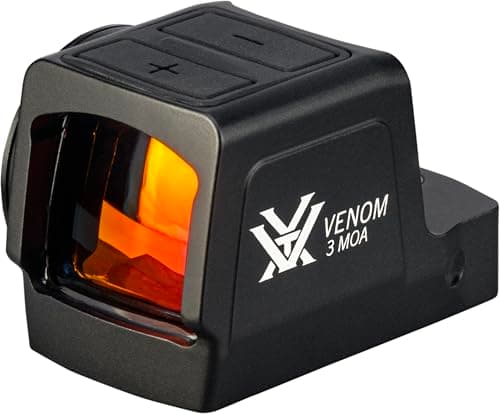
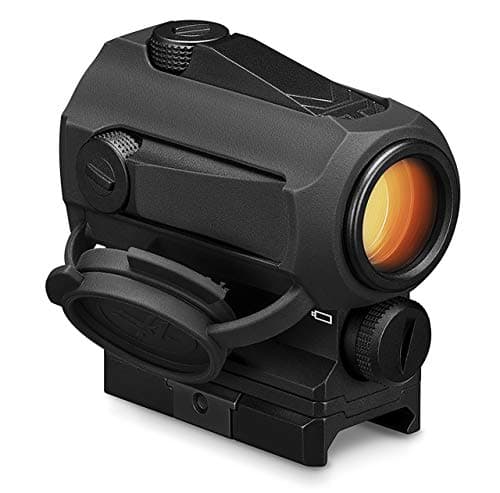
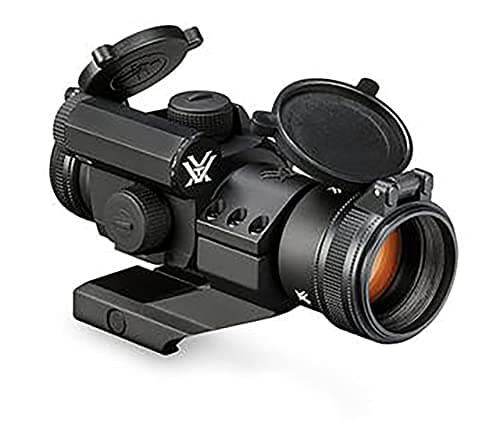
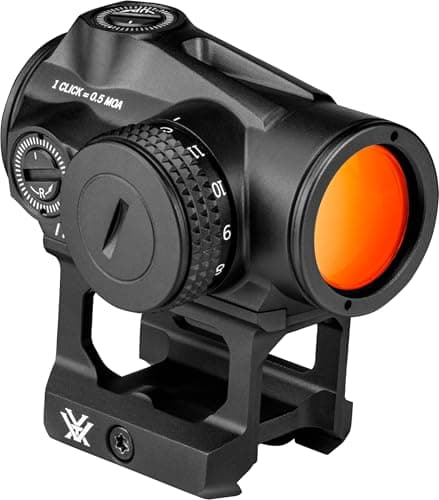
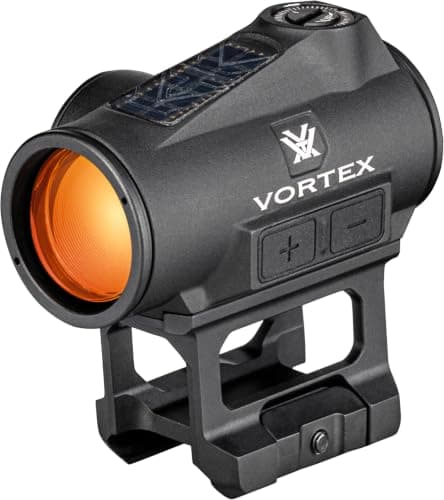
The verdict first: the closest thing to an Aimpoint in this registry's price range is the Vortex Crossfire II Solar Dot, because it answers the single reason most people buy an Aimpoint — the sight is never dead — by not needing the battery in daylight at all. It is for the shooter who wants a set-and-forget rifle dot and will not be checking a battery date. If the attraction was the sealed, weatherproof housing instead, the Vortex Venom Enclosed Micro is the pick. The budget pick is the Vortex Triumph 2 MOA, the cheapest sight here still carrying an unconditional transferable warranty.
Read this before the ranking: we do not list an Aimpoint on this page, and that is deliberate rather than an oversight. No Aimpoint has been verified into this site's product registry against a live listing, and an "alternatives" page that ranks the thing you came to replace is just the roundup again. If an Aimpoint is what you want, buy an Aimpoint — this page exists for the person who has decided the money is going somewhere else.
What an Aimpoint is actually known for
Three things, and only the first two are numbers we can source. Primary Arms' published listing for the Aimpoint PRO Patrol Rifle Optic states a constant-on battery life of over 30,000 hours on a single DL1/3N cell and that the sight is submersible to 150 feet. Those figures are cited to that retailer listing, named in the sources below, because Aimpoint's own specification pages refuse automated requests and we will not quote figures we have not read.
The third thing is a reputation for durability built over decades of duty and military use. That is real and it is not a specification, so we are not going to pretend to measure it or to have replicated it. What we can do is be precise about which of the three each sight below actually addresses — and be clear that none of them matches all three.
Thirty thousand hours is three and a half years of leaving the sight switched on permanently. That is the actual proposition: you turn it on when you mount it and you never think about it again. Every alternative on this page gets at that proposition by a different route, and the honest summary is that routes are not the same as arriving.
Which alternative answers which strength
The battery-life argument → solar backup
The Crossfire II Solar Dot does not out-spec Aimpoint's runtime and does not try to. It sidesteps it: the panel runs the dot in daylight, which is when most shooting happens, and the cell is the backup rather than the supply. The 2 MOA dot means you give up nothing on precision to get it. The honest limit is in its own listing — a panel needs light, so the safe and the dark blind put you back on the battery.
The sealed-housing argument → an enclosed emitter
Submersible to 150 feet is a sealing claim. The structural version of that in this registry is the Venom Enclosed Micro: an enclosed emitter cannot be blanked out by rain, snow or lint, which is the failure mode every open reflex sight genuinely has. Enclosed against open emitter is the full argument. An enclosed housing being available under two hundred dollars is the real news here; a 150-foot submersion rating is not what it is claiming.
The complete-package argument → a mount in the box
Part of what an Aimpoint PRO costs is that it arrives ready to bolt on. The SPARC Gen II and the StrikeFire II both come with their mounting sorted, which matters more than it sounds: mounting height is where cheap red dot builds actually go wrong, and an unbudgeted mount is how a hundred-dollar sight becomes a hundred-and-forty- dollar sight.
The warranty argument → Vortex VIP
Every sight on this page is backed by Vortex's unconditional, transferable VIP warranty. It is a different proposition from Aimpoint's — not "this will not break" but "if it does, it gets replaced, no receipt, no argument, whoever owns it". For a civilian rifle that is arguably the more useful promise, and it is why this page is a Vortex page rather than a survey of every budget brand. The Vortex guide covers the tiers in full.
Where the substitution does not work
Three cases, stated plainly, because an alternatives page that cannot name its own limits is an advertisement.
- A duty or professional requirement. If a specification sheet, an agency policy or an armorer's list names the optic, nothing on this page is a substitute and the question is not really about performance.
- Years of constant-on with no battery check at all. Nothing here claims 30,000 hours. Solar changes the shape of the problem; it does not match the number.
- A documented record under genuinely hard use. Aimpoint's reputation comes from decades of it. These sights have warranties instead, which is a different kind of assurance and a cheaper one.
If none of those three is your situation — and for most people buying a red dot for a rifle they shoot on weekends, none of them is — then the gap between a $479 duty optic and a well-warranted $169 one is much narrower than the price difference suggests.
Buying notes
Decide what you were buying before you compare prices
"Aimpoint alternative" is three different questions wearing one phrase. If you wanted the runtime, go solar. If you wanted the sealing, go enclosed. If you wanted the reputation, no price comparison will satisfy you and you should buy the Aimpoint.
A cheap mount under a good sight is still a cheap build
The two sights here that include mounting are easier recommendations for that reason. Where you are buying a mount, our mounts page covers height and ring selection.
Dot size is a separate decision and it is not about price
2 MOA for general use, 4 MOA for close and fast, 6 MOA for a shotgun bead replacement. What size red dot MOA has the arithmetic. Four of the five sights here are 2 or 3 MOA; the StrikeFire is the deliberate exception.
If the budget is really the problem, say so and shop the band
Three of the sights on this page sit over a hundred dollars. Red dots under $100 is the page for a hard ceiling, and it is honest about what the band cannot buy.