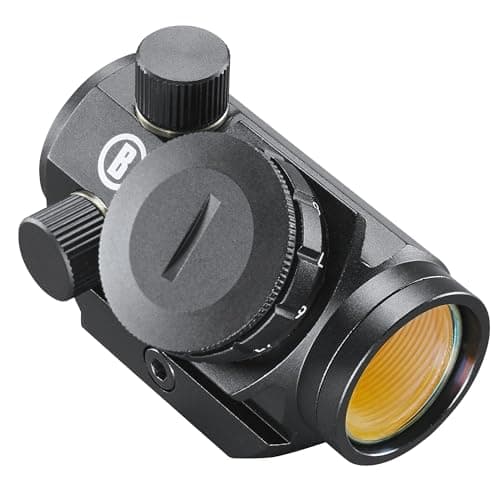
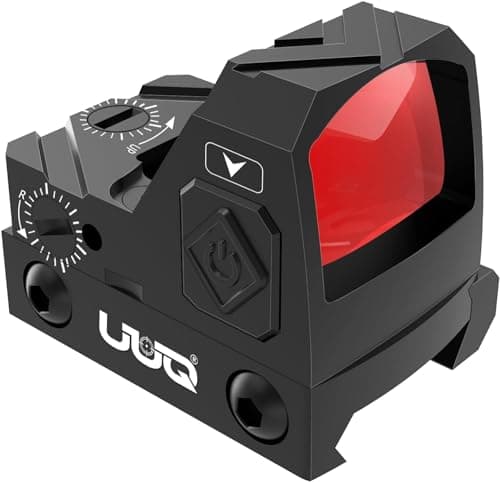
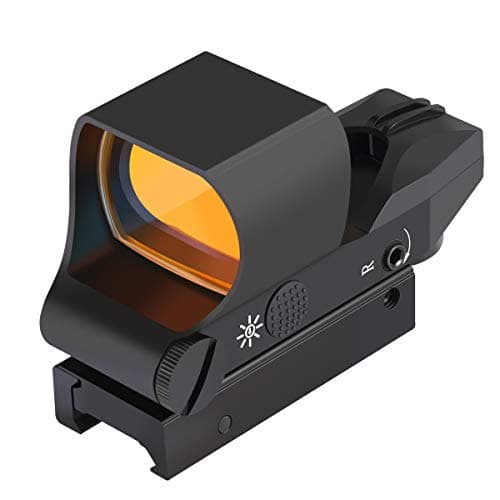
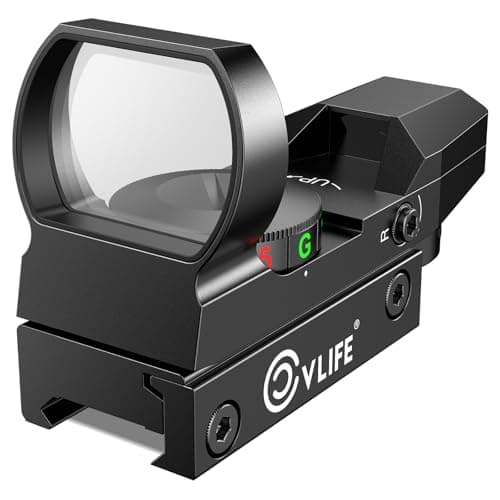
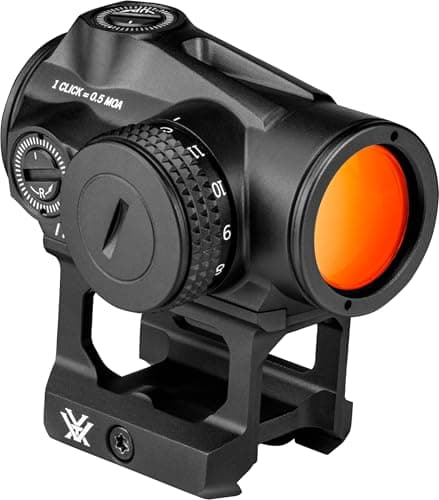
The verdict first: under a hundred dollars, buy the Vortex Triumph 2 MOA. It is for the shooter who wants one general-purpose dot on one rifle and wants somebody to answer the phone if it fails. If you want to spend as little as possible and still own a sight that works, the budget pick is the Bushnell Trophy TRS-25 — the cheapest sight on this page that is genuinely waterproof and has a decade of documented service behind this exact model. Skip the twenty-dollar CVLIFE: holding zero through recoil is the entire job of a red dot, and that is the first thing the bottom of this band gives up.
Every price on this page comes from a live lookup and carries its own date — look at the table, not at this sentence. Prices move, this band is narrow, and a page that hard-coded a number would be lying to you within a week. If something has crossed the ceiling since the last check, the table will tell you and the ranking above it still holds.
Why a hundred dollars is the honest ceiling
A red dot does exactly one thing: it puts an aiming point on a piece of glass and keeps it in the same place relative to the bore. Everything else — brightness settings, reticle colors, window size — is a preference. Zero retention is the product.
That is why the band matters. Below about thirty dollars, sights are built to a price that does not include a housing stiff enough to survive recoil cycles, and the dot wanders. A sight that wanders is worse than iron sights, because you believe it. Between roughly fifty and a hundred dollars you can buy a tube sight from a manufacturer that publishes a warranty and has a service history, and that is the whole reason to spend the money.
Above the ceiling you buy features rather than function: a bigger window, a magnifier- compatible height, solar backup, an enclosed emitter. Those are real and worth having, and they are covered in the unrestricted roundup and in the Vortex lineup. None of them is why a cheap dot fails.
What this band cannot buy you
An enclosed emitter
Every sight on this page with a reflex housing has an open emitter: a small LED firing across an open gap at an angled lens. Rain, snow, mud or pocket lint on that lens blanks the dot. The answer is an enclosed design, and the cheapest honest one in this registry is well above the line — see enclosed against open emitter. The tube sights here (the Triumph and the TRS-25) are not enclosed in that sense, but a tube does shield the emitter far better than an open reflex does, which is most of why they rank above the reflexes.
A documented durability record from a budget brand
The UUQ and the Feyachi both do things on paper that cost much more elsewhere — shake- awake, an RMR-pattern footprint, four selectable reticles. What they do not have is years of people reporting back. That is not a criticism, it is a fact about new products from new sellers, and it is the reason neither is the top pick.
Mounting height for a magnifier
If a flip-to-side magnifier is in your plan, stop reading this page. Magnifier-compatible height is a specification you buy deliberately and it is not in this band — the sight that has it is the Strikefire II, which lives in the main roundup.
How to choose between the five
In order, the questions that actually separate them:
- Will it see recoil? On a centerfire rifle or a shotgun, buy the Triumph or the TRS-25 and stop. On a rimfire or an air rifle, the cheaper reflexes are fine and the money saved is real.
- Is it going on a pistol or a slide cut? Then footprint decides it before anything else, and the UUQ's RMR pattern is the one with the widest mount support. Confirm your slide cut against the listing before you order — see dot size and footprints.
- How much does the dot need to cover? 2 MOA covers two inches at a hundred yards and 3 MOA covers three. On a deer-sized target at fifty yards neither matters; on a small target at two hundred, the 3 MOA dot hides it.
- Do you want a warranty you can actually invoke? Only the Vortex has one on this page. That is the single biggest difference between the top entry and the rest of the band.
Buying notes
Budget for the mount, not just the sight
Two of the sights here ship with a mount and the rest do not, and a cheap mount under a cheap sight is the most common way a sub-$100 build loses zero. If the listing does not name the mount, assume you are buying one. Our rings and mounts page covers how to choose it.
Shake-awake is worth more than brightness settings
Twelve brightness levels are a specification; a sight that is already on when you pick the gun up is a capability. Of the five here, only the UUQ has motion activation, and on a gun that gets picked up in a hurry it is the feature that changes the most.
Zero it properly before you believe it
A new dot is not zeroed, including the ones that claim to be. How to zero a red dot walks the process, and how to get close without firing a round is the version for people who do not have a range handy.
If you have astigmatism, read this before you buy any of them
An irregular cornea smears a red dot into a comma or a starburst, and a bigger dot makes it worse rather than better. That is an eye problem and not an optic problem, and it is the one case where this whole page may be the wrong document — red dots and astigmatism covers it.