Skip to content
Steve's Outpost

Section 06 · Shooting Gear

How to Zero a Rifle Scope

Most zeroing problems are mounting problems wearing a disguise. Get the base, the rings and the level right and the shooting part takes about nine rounds.

By Stephen V.Updated How we pick
#ad

We earn a commission when you buy through our Amazon links, at no extra cost to you. It never changes the order of the picks, and we say so when the cheaper thing is the better buy. How this works.

The verdict first: torque the mounting screws to the manufacturer's specification, level the reticle to the rifle, bore sight at 25 yards, then shoot three-round groups at 100 and move the group to the point of aim. Nine rounds is a normal zeroing session. Two boxes means something is wrong with the rifle, the mount or the process — not with your shooting.

This page is the scoped-rifle procedure. If your rifle wears a red dot the distances and the failure modes are different and there is a separate walkthrough: how to zero a red dot.

Step 1: mount it properly, because this is where zeros die

A rifle that will not hold zero has almost always been assembled by feel. Manufacturers publish inch-pound figures for base screws and ring caps for a reason, and the two failure modes sit either side of that number: too loose and the base walks under recoil, too tight and you deform the scope tube.

  • Degrease the screw threads and the receiver holes.
  • Torque base screws first, in a cross pattern, to the figure the base manufacturer publishes.
  • Set the scope in the rings, then bring the ring caps down evenly — a few inch-pounds at a time, alternating corners, until they reach specification.
  • Leave an even gap on both sides of each ring cap. An uneven gap means uneven clamping.

Step 2: level the reticle to the rifle

A canted reticle produces an error that is invisible at 100 yards and enormous at 800, because the error grows with the amount you dial. You cannot correct it later by dialing — you have to fix it at the bench.

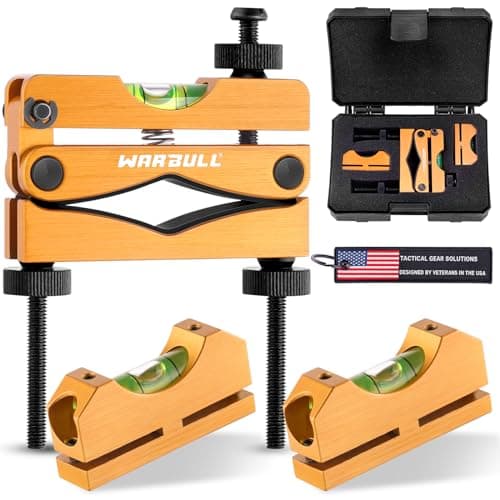
Level the rifle first, using the flat of the rail or the action, then level the scope's turret cap or elevation housing to the same reference. Two magnetic levels do this in about ten minutes.

Step 3: get on paper at 25 yards

A laser bore sighter or, on a bolt gun, simply removing the bolt and looking through the bore, gets you close enough that the first shot lands on a large target at 25 yards. Fire one round, and move the group to the point of aim.

25 yards is not the zero. It is a mechanical convenience for finding the paper cheaply. Do not stop here, and do not rely on the "25-yard equals 100-yard zero" folklore — it is trajectory-specific and it is wrong more often than it is right.

Step 4: the actual zero, at 100

Move to 100 yards, off front and rear bags or a bipod and rear bag, and fire a three-round group. Measure from the center of the group to the center of the bullseye — not from your best shot, and not from your worst.

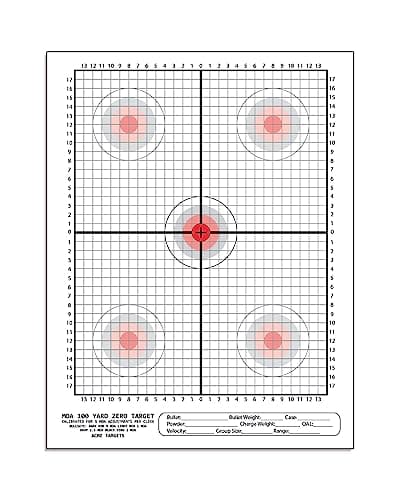
Convert that measurement to clicks. This is the one place a calibrated target earns its money: a grid printed in clicks means you read the correction off the paper instead of doing arithmetic on a windy bench. If you are converting inches to angular units yourself, the rulers are explained in full on MOA vs MRAD.

Dial the correction, fire a confirming three-round group, and if it is centered, you are done. Reset the turrets to zero per your scope's instructions and write the date and the ammunition in your log.

Step 5: confirm, then leave it alone

Fire a cold-bore shot on a subsequent day before you trust the zero for hunting. The first shot from a cold, clean-ish barrel is the shot that matters in the field, and it is not always in the middle of the group you shot warm.

The short answer

Quick picks

#ProductBest forScorePrice
01
Generic 100-Yard Zero Target, Calibrated for 1/4 MOA per Click
100-Yard Zero Target, Calibrated for 1/4 MOA per Click

A grid printed in clicks rather than inches. You measure the offset, read the click count straight off the paper, and stop doing arithmetic on a bench in the wind.

Best sight-in target
8.0
$8.62Amazon (affiliate link)
02
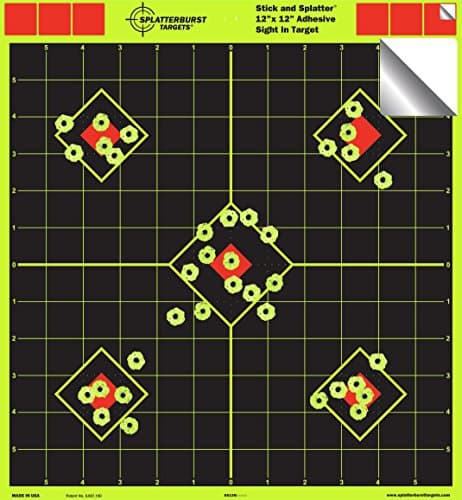
Splatterburst Splatterburst 12 x 12in Adhesive Sight-In Targets
Splatterburst 12 x 12in Adhesive Sight-In Targets

A bright ring around every hole means you can call your shots from the bench without walking downrange or owning a spotting scope. Adhesive backing means it goes on cardboard, steel backers or a tree stump.

Best splatter target
7.2
$11.99Amazon (affiliate link)
03
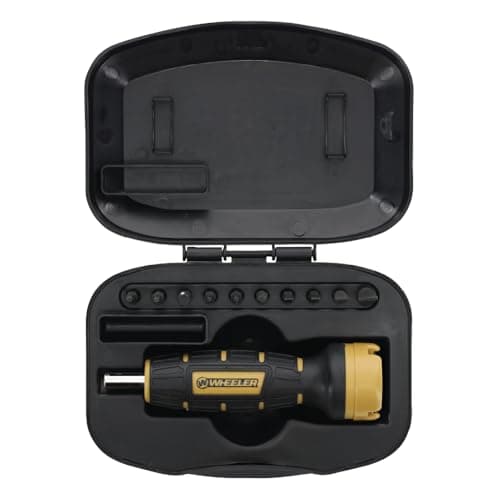
Wheeler Wheeler Digital FAT Wrench with Interchangeable Bits
Wheeler Digital FAT Wrench with Interchangeable Bits

The single most common cause of a rifle that will not hold zero is a ring or base screw that was tightened by feel. A torque wrench converts a mystery into a number you can reproduce.

Best torque wrench
8.0
$67.99Amazon (affiliate link)
04
WarBull WarBull Universal Scope Leveling Kit, Magnetic Base
WarBull Universal Scope Leveling Kit, Magnetic Base

A canted reticle is invisible at 100 yards and enormous at 800. Levelling the scope to the rifle at the bench is a ten-minute job that you cannot fix later by dialing.

Best leveling kit
8.2
$28.99Amazon (affiliate link)
05
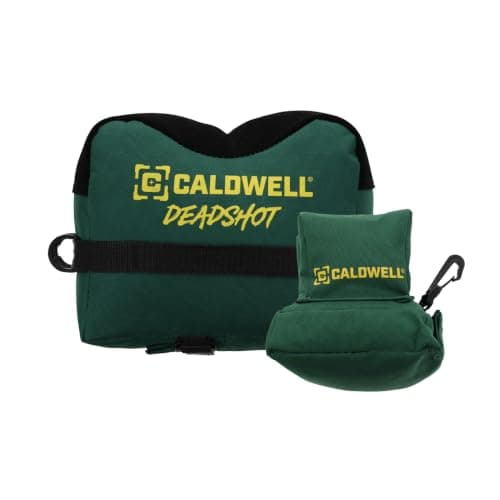
Caldwell Caldwell DeadShot Filled Bag Combo, Front and Rear
Caldwell DeadShot Filled Bag Combo, Front and Rear

You cannot zero a rifle you are also holding up. Front and rear bags take you out of the equation so the group you shoot is the rifle's group and not yours.

Best bench bags
8.0
$37.99Amazon (affiliate link)
06
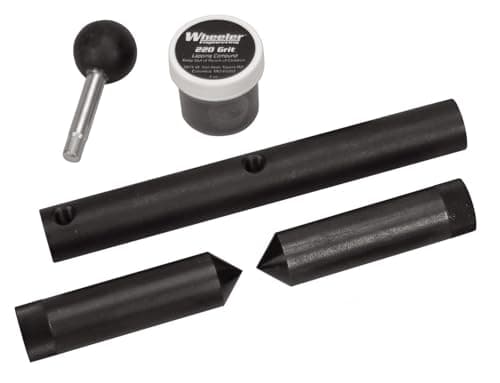
Wheeler Wheeler Scope Ring Alignment and Lapping Kit, 30mm
Wheeler Scope Ring Alignment and Lapping Kit, 30mm

A real tool solving a problem most people do not have. On a quality one-piece mount, ring misalignment is already inside tolerance, and lapping a set of rings you did not need to lap removes finish for nothing.

Skip this one
4.8
$59.99Amazon (affiliate link)

#ad · Live prices from the Amazon Creators API, as of Sep 7, 2026. Where we have no verified live price we show none — a gap beats a number that has rotted.

In detail

The picks, in full

01
Generic 100-Yard Zero Target, Calibrated for 1/4 MOA per Click

Best sight-in target

100-Yard Zero Target, Calibrated for 1/4 MOA per Click

100-yard calibration1/4 MOA click grid1in squaresPaper
8.0/10

A grid printed in clicks rather than inches. You measure the offset, read the click count straight off the paper, and stop doing arithmetic on a bench in the wind.

Ease of use
9
Accuracy of grid
9
Visibility
6
Versatility
6
Value
10

What's good

  • Removes the single most common zeroing error, which is arithmetic under time pressure
  • Grid in clicks means you dial what you measured instead of converting twice
  • Costs less than the three rounds you would waste getting it wrong

What's not

  • Calibrated for 1/4 MOA scopes — a 1/8 MOA target scope or a MIL scope needs its own grid
  • Plain paper is hard to see at 100 yards without a spotter

Skip it if…

your scope adjusts in MIL. Buy a MIL grid instead; mixing rulers is the one mistake that actually matters here, and our MOA versus MRAD page explains why.

$8.62See it on Amazon (affiliate link)

Price as of Sep 7, 2026. Prices move — Amazon's is the one that counts.

#ad · we may earn a commission from this link to 100-Yard Zero Target, Calibrated for 1/4 MOA per Click

02
Splatterburst Splatterburst 12 x 12in Adhesive Sight-In Targets

Best splatter target

Splatterburst 12 x 12in Adhesive Sight-In Targets

12 x 12inAdhesive backingFluorescent hit ringMulti-pack
7.2/10

A bright ring around every hole means you can call your shots from the bench without walking downrange or owning a spotting scope. Adhesive backing means it goes on cardboard, steel backers or a tree stump.

Visibility
10
Ease of use
9
Grid utility
3
Durability
7
Value
7

What's good

  • You can see hits at 100 yards through the rifle scope, which is the entire point
  • Adhesive backing means no stapler and no frame
  • Works in poor light where a plain black bullseye disappears

What's not

  • No click grid — pair it with the calibrated target above rather than replacing it
  • Per-target cost is far higher than paper

Skip it if…

you shoot with a spotting scope on the bench already. You are paying for visibility you have by other means.

$11.99See it on Amazon (affiliate link)

Price as of Sep 7, 2026. Prices move — Amazon's is the one that counts.

#ad · we may earn a commission from this link to Splatterburst 12 x 12in Adhesive Sight-In Targets

03
Wheeler Wheeler Digital FAT Wrench with Interchangeable Bits

Best torque wrench

Wheeler Digital FAT Wrench with Interchangeable Bits

Inch-pound rangeDigital readoutInterchangeable bitsStorage case
8.0/10

The single most common cause of a rifle that will not hold zero is a ring or base screw that was tightened by feel. A torque wrench converts a mystery into a number you can reproduce.

Accuracy
9
Bit coverage
9
Ease of use
8
Build quality
8
Value
6

What's good

  • Turns 'tight enough' into a repeatable specification the manufacturer publishes
  • Prevents the two opposite failures — a crushed scope tube and a base that walks
  • The bit set covers essentially everything on a rifle, so it replaces a drawer of drivers

What's not

  • Sixty-eight dollars for a tool you use twice a year takes some justifying
  • Digital readouts need a battery, and a manual click wrench does not

Skip it if…

you own one rifle you never re-mount. Take it to a gunsmith once, have it torqued properly, and leave it alone.

$67.99See it on Amazon (affiliate link)

Price as of Sep 7, 2026. Prices move — Amazon's is the one that counts.

#ad · we may earn a commission from this link to Wheeler Digital FAT Wrench with Interchangeable Bits

04
WarBull WarBull Universal Scope Leveling Kit, Magnetic Base

Best leveling kit

WarBull Universal Scope Leveling Kit, Magnetic Base

Magnetic basesTwo-level systemUniversal fitMachined aluminum
8.2/10

A canted reticle is invisible at 100 yards and enormous at 800. Levelling the scope to the rifle at the bench is a ten-minute job that you cannot fix later by dialing.

Accuracy
8
Ease of use
9
Build quality
7
Versatility
8
Value
9

What's good

  • Cant error grows with distance, so this matters exactly as far as you intend to shoot
  • Magnetic bases hold on the rail and the turret housing without a third hand
  • Cheap relative to the scope it is protecting the performance of

What's not

  • Levels the scope to the rifle, not the rifle to the world — you still level the gun when you shoot
  • Marketplace machining tolerances vary; check the bubbles against a known flat

Skip it if…

you only shoot inside 200 yards. At that distance a small cant is genuinely inside the noise and the money is better spent on ammunition.

$28.99See it on Amazon (affiliate link)

Price as of Sep 7, 2026. Prices move — Amazon's is the one that counts.

#ad · we may earn a commission from this link to WarBull Universal Scope Leveling Kit, Magnetic Base

05
Caldwell Caldwell DeadShot Filled Bag Combo, Front and Rear

Best bench bags

Caldwell DeadShot Filled Bag Combo, Front and Rear

Front and rear bagsPre-filledWater-resistant shellBench height
8.0/10

You cannot zero a rifle you are also holding up. Front and rear bags take you out of the equation so the group you shoot is the rifle's group and not yours.

Stability
9
Ease of use
9
Durability
8
Portability
5
Value
9

What's good

  • Removes shooter wobble, which is what you are trying to eliminate while zeroing
  • Pre-filled, so it works out of the box rather than after a trip for sand
  • Front-and-rear as a set costs barely more than a decent front bag alone

What's not

  • Bench bags do not translate to field positions — a zero confirmed off bags is still a bench zero
  • Filled bags are heavy to carry any distance

Skip it if…

you already run a bipod and a rear squeeze bag. That combination does the same job and works in the field, which bench bags do not.

$37.99See it on Amazon (affiliate link)

Price as of Sep 7, 2026. Prices move — Amazon's is the one that counts.

#ad · we may earn a commission from this link to Caldwell DeadShot Filled Bag Combo, Front and Rear

06
Wheeler Wheeler Scope Ring Alignment and Lapping Kit, 30mm

Skip this one

Wheeler Scope Ring Alignment and Lapping Kit, 30mm

30mm alignment barsLapping compoundLapping barCase
4.8/10

A real tool solving a problem most people do not have. On a quality one-piece mount, ring misalignment is already inside tolerance, and lapping a set of rings you did not need to lap removes finish for nothing.

Usefulness for most shooters
3
Build quality
8
Ease of use
6
Risk of misuse
3
Value
4

What's good

  • Genuinely useful on two-piece bases, mismatched rings or an older action with a questionable receiver face
  • Alignment bars alone will show you whether you have a problem worth solving

What's not

  • Sixty dollars to fix a fault a quality one-piece mount does not have
  • Lapping is irreversible — done unnecessarily it only removes material and finish
  • The check it performs is the valuable half, and you rarely need the other half

Skip it if…

you are running a modern one-piece cantilever mount, which is most people reading this. Torque the screws properly, level the reticle, and spend the sixty dollars on ammunition.

$59.99See it on Amazon (affiliate link)

Price as of Sep 7, 2026. Prices move — Amazon's is the one that counts.

#ad · we may earn a commission from this link to Wheeler Scope Ring Alignment and Lapping Kit, 30mm

What you actually need to buy

The short list

  1. A torque wrench, or a gunsmith who owns one.
  2. A levelling kit, if you intend to shoot past 300 yards.
  3. A calibrated target in the unit your turrets adjust in.
  4. Front and rear support, or a bipod and a rear bag.

That is the whole list. Everything else in this category is optional, and one popular item is genuinely not needed by most people — see the skip pick above.

Match the target to the turret

A target gridded in quarter-MOA clicks is useless in front of a MIL scope, and vice versa. Mixing rulers is the classic and expensive mistake in this whole subject, which is exactly why we keep pointing at the MOA versus MRAD page rather than re-explaining it here.

Ammunition consistency beats everything

A zero belongs to a rifle and a load. Change the ammunition and you have changed the zero, sometimes by a lot. If you hunt with one load, zero with that load, and do not confirm with cheap practice ammunition.

If you handload, the equipment side of that is on why I handload for long range — and note that nothing on this site publishes load data.

Three-shot groups, not five, and not one

One shot tells you nothing about where the rifle shoots. Five costs ammunition and heats the barrel. Three is the working compromise for zeroing, and the group center is the datum — a zero adjusted off a single flyer is a zero you will chase all season.
How these were picked

I haven't handled these. Here's what I did instead.

Everyone in this category says they tested twenty of these. I haven't tested any, and I say so. What I do instead: read the manufacturer's manual and published specification, compile the numbers that decide the purchase, do the arithmetic in the open, check the live price, and name one product to skip. The scores above are judgments from that research against a published rubric — they are not measurements I took, because I do not have a lab and I am not going to pretend otherwise.

Questions

Frequently asked

Does a 25-yard zero equal a 100-yard zero?
Not reliably. The idea comes from a specific trajectory and a specific sight height, and it does not transfer between cartridges, barrel lengths or mounting heights. Use 25 yards to get on paper cheaply, then zero at the distance you actually mean.
How many rounds should zeroing take?
About nine — one or two to get on paper, three to see where the rifle shoots, three to confirm the correction, and a couple in reserve. If it is taking two boxes, stop shooting and check the mount, the torque and the reticle level.
What is the right zero distance for hunting?
One hundred yards is the honest default because it is what your data will be built from. Maximum point blank range zeros exist and work, but they trade a known number for a convenient one, and a known number is worth more once you own a rangefinder.
Do I need to lap my scope rings?
Almost certainly not, if you are running a quality one-piece mount. The alignment check is useful; the lapping itself is irreversible and solves a problem modern mounts do not have. That is why the lapping kit is the skip pick on this page.
Why does my rifle shoot to a different place on the first shot?
Cold bore, fouling state and a cold stock all move the first shot on some rifles. It is normal and it is worth knowing about, which is why the last step here is confirming a cold-bore shot on a separate day before you trust the zero on an animal.

Keep reading

Receipts

Sources

We do not run a testing lab and we do not pretend to. Where a measured number came from a manufacturer's published specification or someone else's lab, we name them and link them. Where we could not verify something, we say so on the page rather than quietly leaving it out. Read the full method.