A large-frame AR built to reach. Every part, the number I actually paid for it, and the one upgrade that changed what the rifle could do — a mount with 30 MOA of cant in it.
We earn a commission when you buy through our Amazon links, at no extra cost to you. It never changes the order of the picks, and we say so when the cheaper thing is the better buy. How this works.
This is the rifle that taught me the difference between a rifle that shoots well and a rifle that reaches. It started as a 16-inch DPMS LR-308 — a perfectly reasonable .308 that I could have left alone — and it is now a 20-inch match-barreled gun with a fixed precision stock, an adjustable gas block and a canted scope mount, because each of those is an answer to a problem the last change created.
Below is every part with the number I actually paid beside it. The interesting part of this page is not the total. It is the two mounts at the bottom of the ledger, and why there are two of them.
Nothing on this page sells you a gun or a gun part. Receivers, barrels, bolts, triggers, gas blocks and magazines are not sold on Amazon, this site monetizes through Amazon, and a buy button beside any of them would point somewhere that cannot sell you one. Those rows link to the maker, unmonetized. The only things anyone is paid for here are the accessories — optics, mounts, bipods, bags — and they are marked as such.
The LR-308 as it stands: olive receiver set, the long Odin Works KMod forend covering the gas system, a Magpul PRS out back and a bipod up front. Everything about the silhouette is a decision, and most of those decisions were about weight I chose to accept.
These are historical prices — what I paid when I bought these parts, not what they cost today. None of the maker links above is an affiliate link and we earn nothing if you use one; they are there so you can check a specification against the company that publishes it.
The 30 MOA mount is the whole story
I will put this first because it is the part of the build I would tell somebody about in a parking lot, and because it cost me $200 to learn.
A riflescope has a finite amount of internal elevation adjustment, and you do not get all of it. The erector tube sits roughly centered in the main tube when the rifle is zeroed, so the travel above your zero is somewhere around half of the total on the box. That is fine at 300 yards. Ask a .308 to go to four figures of yardage and you are asking for a large share of that remaining half, all at once — and if the scope runs out, it simply runs out. The reticle stops climbing. There is no override.
A canted mount fixes it mechanically instead of optically. Tilt the scope down relative to the bore by 30 MOA and you have spent 30 MOA of the scope's down travel — which you were never going to use — to buy back 30 MOA of up travel, which is exactly the direction you need. Nothing inside the scope changes. You just stop wasting half the adjustment range pointing at the ground.
I ran the flat AD-RECON first, and it is a genuinely excellent mount. It is also the reason the rifle had a ceiling I could feel. Swapping to the 30 MOA version of the same mount is the single change that turned this from a rifle that shot well at distance into a rifle that could be dialed all the way out and still have turret left.
The bolt gun on the other page got a 20 MOA base from the start, because I only needed to learn this once.
Caps on, and you can see the shape of the problem: that is a lot of objective bell sitting in a one-piece mount, well above the bore. Everything about how far this rifle can be dialed is decided by that block of aluminum between the rail and the rings.
The business end of the ergonomics: the PRS with its adjustable comb and length of pull, and the rings sitting up on the rail. In this particular photograph the rifle is wearing the Sightron 8-32x56 rather than the Viper PST — both scopes have 30mm tubes, so the glass moves between rifles more easily than the ledger suggests.
Large-frame AR realities nobody tells you first
"DPMS pattern" is a compatibility question, not a brand
AR-15 parts are close to universal. Large-frame .308 AR parts are not, and the reason is that the platform never had a single controlling specification the way the AR-15 did. The two families you will see referenced are the DPMS/LR-308 pattern and the ArmaLite AR-10 pattern, and they differ in ways that matter when you are buying — barrel extension geometry, handguard mounting, and the height of the upper receiver rail relative to the barrel.
This is why the forend row in the ledger says "DPMS low profile" rather than just "15.5in handguard". The Odin Works 308 KMod comes in more than one receiver height, and the wrong one does not fit badly — it fits, and then the rail is not continuous with the receiver, which is a $215 mistake you notice at the range. Before you buy any large-frame handguard, confirm the pattern and the receiver height against your specific upper.
It is heavy, and the parts that make it good make it heavier
Every choice on this rifle adds weight. A 20-inch M110-contour barrel is heavier than a 16-inch pencil. A 15.5-inch forend is heavier than a 12-inch. The PRS is a solid block of aluminum and polymer with adjustment hardware in it. A 6-24x50 on a steel-ringed quick-detach mount is a great deal of glass sitting high above the bore.
None of that is a complaint, because every one of those choices is bought withweight and is paid for in stability. But it does mean this is not a rifle you carry, and if you are building a large-frame AR because you want a lightweight .308 for the woods, this parts list is the wrong parts list. That rifle exists. It is not this one.
The barrel swap is the one that changes the answer
Sixteen inches of .308 is a compromise made for handling. Going to a 20-inch Criterion in the M110 contour changes three things at once: more velocity from the same load, a heavier contour that heats more slowly through a string, and a match-grade bore that gives the rest of the build something to be worth doing. It is also the single part on the ledger with the best ratio of money spent to difference made — $340, against $675 of scope.
The 1:10 twist is worth a note. It is the sensible middle for .308 and it stabilizes the heavier match bullets people actually shoot at distance rather than only the lighter hunting weights. Twist rate is one of the few genuinely irreversible decisions on a barrel, so it is worth getting right the first time.
Looking back along the forend. The bipod is far enough forward to load properly against and the handguard is long enough that the gas block and the whole gas system live under it — which is exactly why the adjustable gas block below has to be a set-screw design rather than something you tune with a knob.
Adjustable gas on a big AR
A gas gun is a system that has to be balanced. Too much gas and the carrier slams, the brass lands three time zones away, the rifle beats itself and the recoil impulse is harsher than it needs to be. Too little and it does not cycle. Factories set the gas port generously on purpose, because a rifle that runs dirty ammunition in the cold is a rifle that does not come back under warranty.
On a precision rifle you would rather have it tuned. An adjustable gas block lets you dial the system down to the point where it reliably cycles with the ammunition you shoot, and everything above that threshold is violence you were paying for and did not want. On a large-frame .308 there is more of that violence to remove than on an AR-15, so the payoff is bigger.
The BTE block on this rifle is a $35 set-screw micro block. Set-screw adjustment is the right choice when the block lives permanently under a 15.5-inch handguard: you set it once with a purpose, and there is nothing sticking out to snag or to drift. It is not the design you want if you plan to re-tune between a suppressed and unsuppressed load every weekend — the bleed-off block on my 300 Blackout is that job, and it is a different tool for a different problem.
The trigger, the handle and the muzzle
The LaRue MBT-2S at $110 is the least glamorous good decision on the list. A two-stage trigger gives you a defined take-up and then a wall, and at distance that wall is what lets you break a shot without disturbing the rifle. There are $300 triggers. There is not $190 of difference between them and this one for what I do.
The POF Tomahawk is an ambidextrous charging handle, and on a large-frame gun that is more than a preference. The rifle spends its life on a bipod with your shooting hand where it is and your support hand under the buttstock; being able to charge it from either side without breaking position is genuinely useful rather than a spec-sheet item.
The Spike's Dynacomp is a compensator rather than a plain brake. On a .308 it flattens the rifle enough to see your own impact through the scope, which is the whole reason to run one — spotting your own trace and splash is worth more than a measurably smaller group. It is also loud, and everybody beside you on the line knows exactly what you are shooting. That is the trade.
The muzzle device, from the end everybody else on the firing line experiences. A compensator on a .308 buys you a flatter rifle and the ability to watch your own impact. It spends somebody else's comfort to do it.
What it shoots
Everything that goes through this rifle is ammunition I loaded myself, and that is not a flourish — it is part of the build. A match barrel and a tuned gas system are only worth the money if what you feed them is consistent, and the most direct route to consistent is to make it yourself, one round at a time, to the same specification every time.
The whole reasoning is on its own page: why I handload for long range. The short version is that at 1,000 yards, velocity variation between rounds shows up as vertical spread on the target, and velocity variation is a manufacturing problem you can take ownership of.
No load data on this site. Not now, not ever. You will not find a charge weight, a recipe or a "start here and work up" anywhere on these pages, and you should be suspicious of any website that hands you one. Load data belongs in a published, pressure-tested manual for the exact components in front of you — the Hodgdon Reloading Data Center, a Sierra or Nosler manual, or the bullet maker's own data. What I write about is process and precision practice.
Loaded and sorted, ready for a trip. These photographs are cropped on purpose: the box lids carry my hand-written charge weights, and this site does not publish load data. What you can see is the part that matters here — several different bullet types, each batch kept separate, because they are not interchangeable and the rifle knows it.
Where this rifle actually goes
It has been to the NRA Whittington Center more than once, which is the reason the 30 MOA mount exists. Finding somewhere in Texas to shoot a rifle like this at its actual limit is harder than building it was — I wrote up the honest state of long-range access here rather than pretending otherwise.
The LR-308 at the top, with two of the smaller-frame guns underneath it for scale. The difference in receiver size between the top rifle and the ones below it is the whole large-frame AR conversation in one photograph — and it is why almost none of their parts swap.
The full profile. Twenty inches of barrel, fifteen and a half inches of handguard and a fixed stock: this rifle is longer than most people picture when somebody says "AR", and every inch of it is doing a job.
If you are putting glass on a gas gun of your own rather than reading about mine, the AR-10 scope page is the buying version of this section — magnification by the rifle's job, the cantilever mount the platform needs, and why a canted mount is the cheapest distance you can buy. The two other things this rifle taught me are on the sling page — a heavy rifle is a different sling problem — and the reloading bench that feeds it.
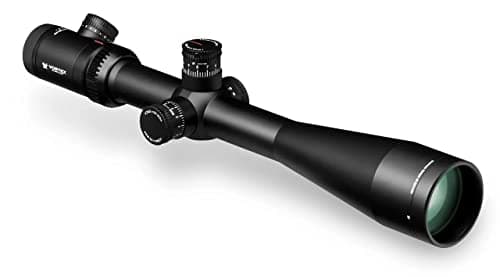
The scope on this rifle. Six to twenty-four power on a 30mm tube, turrets that come back to zero, and the reticle library that is the actual reason I keep buying Vortex.
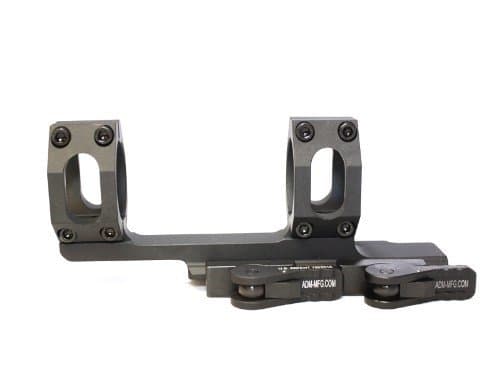
The single part on this rifle that changed what it could do. A canted mount gives the scope back the elevation a flat mount spends before you ever get to 1,000 yards.
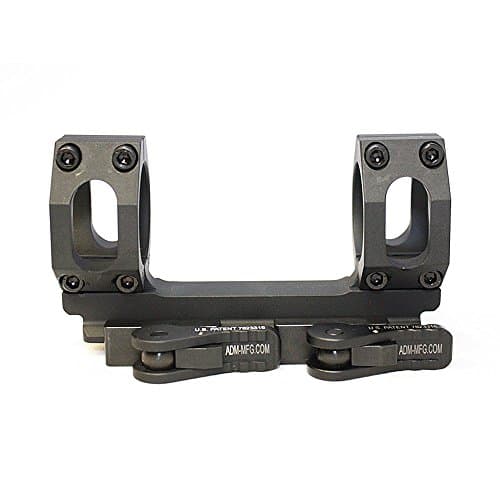
The same mount without the cant, and the right one for the great majority of rifles. It is only wrong if you are trying to get to four figures of yardage, which is a sentence I earned the hard way.
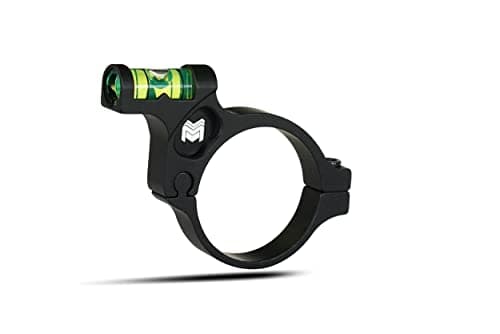
Twenty dollars of insurance against the error that gets worse the further you shoot. Cant the rifle a few degrees and your elevation dial quietly becomes a windage dial.
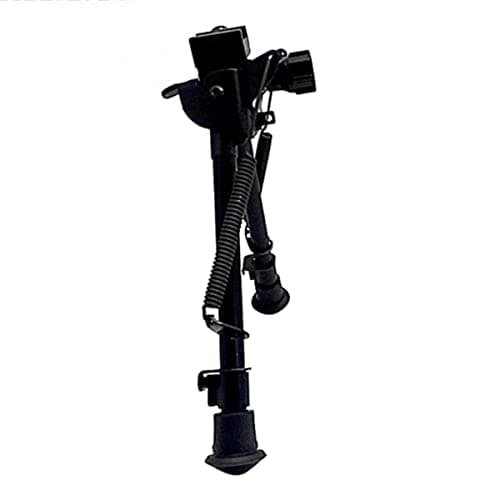
The cheapest thing on this page that will visibly shrink your groups. A bipod holds the front of the rifle; nothing holds the back of it unless you buy something that does.
#ad · Live prices from the Amazon Creators API, as of October 19, 2026. Where we have no verified live price we show none — a gap beats a number that has rotted.
In detail
The picks, in full
01
Best overall
Vortex Viper PST Gen I 6-24x50 SFP, EBR-1 (MOA)
I run this one
This is the glass on my LR-308 — $675 as paid. Gen I is the older generation and Vortex has moved the line on since; it is still what I judge this bracket against.
The scope on this rifle. Six to twenty-four power on a 30mm tube, turrets that come back to zero, and the reticle library that is the actual reason I keep buying Vortex.
Glass clarity
8
Turret tracking
9
Reticle
9
Warranty
10
Value
8
What's good
+Twenty-four power is enough magnification that a 1,000-yard target becomes a shooting problem rather than a seeing problem
+The turrets track and return, which is the entire job of a scope you dial rather than hold with
+Vortex reticle design is the most current in this price bracket and the EBR family is why the brand keeps my money
+The VIP warranty is not marketing — it is the reason I will put a Vortex on a rifle I care about
What's not
−Second focal plane, so the subtensions are only honest at one magnification
−6x at the bottom is a lot of scope for anything inside 100 yards
−An older generation, which is exactly why it sits at this price instead of a Gen II price
Skip it if…
…you want first focal plane. The subtensions on this one are only true at full magnification, and if you hold rather than dial, that will bite you at the worst moment. Buy an FFP scope instead — Vortex sells one.
Price as of October 19, 2026. Prices move — Amazon's is the one that counts.
#ad · we may earn a commission from this link to Vortex Viper PST Gen I 6-24x50 SFP, EBR-1 (MOA)
02
Best mount for reaching out
ADM AD-RECON 30mm Cantilever Mount, 30 MOA
I run this one
The mount on my LR-308 now — $250 as paid, replacing the flat AD-RECON below. The 30 MOA version is the reason the rifle dials past 1,000 instead of running out of turret.
30mm rings30 MOA cant built inQuick-detach leverPicatinny
8.2/10
The single part on this rifle that changed what it could do. A canted mount gives the scope back the elevation a flat mount spends before you ever get to 1,000 yards.
Return to zero
9
Machining
9
Elevation gained
10
Weight
6
Value
7
What's good
+Thirty MOA of built-in cant hands the scope back roughly 30 MOA of usable up-elevation, which is most of what a .308 needs to get to 1,000
+Return-to-zero quick-detach lever that actually returns to zero
+The machining and hardware are visibly a tier above the bargain mounts, and the mount is the part that must not move
+One-piece cantilever puts the eye box where your head naturally lands on a large-frame AR
What's not
−Costs more than a scope some people would put in it
−Thirty MOA of cant means you will run out of DOWN adjustment before you can zero at very short range on some scopes
−Heavy, and it is heavy in the worst place — up high, above the bore
Skip it if…
…your rifle never goes past 500 yards. You will spend the money and then spend half your scope's travel just getting a 100-yard zero. The flat version below is the right mount for that rifle.
I ran a flat AD-RECON 30mm cantilever on this rifle first, at $200. It is a genuinely good mount. It is also the reason this page has a section about elevation math.
The same mount without the cant, and the right one for the great majority of rifles. It is only wrong if you are trying to get to four figures of yardage, which is a sentence I earned the hard way.
Return to zero
9
Machining
9
Elevation gained
4
Weight
6
Value
8
What's good
+Same lever, same machining, same return-to-zero behavior as the canted version
+Zeroes at 100 yards without eating a chunk of the scope's down-travel
+Cheaper than the 30 MOA version by about the price of a decent bipod
What's not
−No built-in cant, so every MOA you dial for distance comes out of the scope's own travel
−Same weight problem as the canted one
−You can discover its limit only by running out of elevation on the clock, which is a bad time to discover it
Skip it if…
…you already know the rifle is going to 1,000 yards. Buy the 30 MOA version once instead of buying this one and then that one, which is what I did.
9-13in leg rangeSwivel (canting) headPicatinny mountSpring-return legs
7.6/10
The bipod everything else is compared to, in the version that clamps straight to a rail. The swivel is the part that matters — ground is never level.
Stability
9
Build quality
9
Adjustability
8
Weight
6
Value
6
What's good
+Swivel head lets you level the rifle on unlevel ground instead of levelling your body, which is the difference between a comfortable position and a tiring one
+The 9-13in range covers prone on grass and prone on a bench pad, which is most of long-range shooting
+Notched legs so the height stays where you set it under recoil
+Harris legs and springs are still serviceable decades in, which is the actual argument for the price
What's not
−Costs three times a lookalike that mounts the same way
−Needs a picatinny section on the handguard — an M-LOK or KeyMod forend needs a rail adapter first
−The swivel adds a wobble you have to learn to load out of the bipod
Skip it if…
…the rifle shoots off a bench or a bag every single time. A fixed bipod, or no bipod at all, is lighter and cheaper, and a rear bag will do more for your groups than any bipod will.
Fits 30mm tubesAnti-cant bubbleClamps to the tubeVisible in the peripheral view
8.3/10
Twenty dollars of insurance against the error that gets worse the further you shoot. Cant the rifle a few degrees and your elevation dial quietly becomes a windage dial.
Usefulness at distance
9
Build quality
6
Ease of use
8
Value
10
What's good
+Cant error scales with distance — it is invisible at 100 yards and it is your whole miss at 1,000
+Costs less than a box of match ammunition and fixes something no amount of skill fixes
+Sits where you can see it without breaking cheek weld
What's not
−One more thing on the tube to snag on a case
−Only useful if you actually look at it, which takes deliberate practice
−Cheap enough that the glass bubble is the weak point
Skip it if…
…you shoot inside 300 yards. The error is real but it is smaller than your group at that distance, and you would be buying a habit you do not need yet.
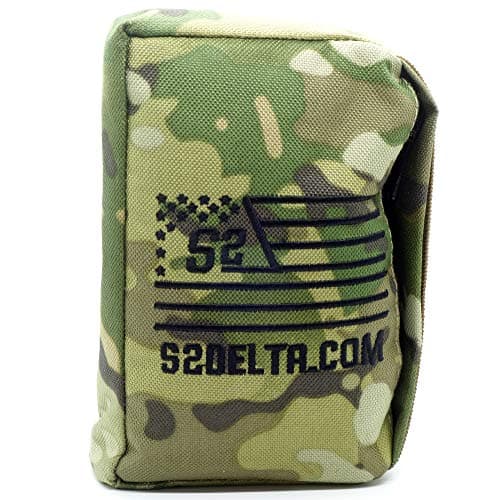
Rear squeeze designFilled and ready to useDoubles as a barricade bagAbout a pound
8.3/10
The cheapest thing on this page that will visibly shrink your groups. A bipod holds the front of the rifle; nothing holds the back of it unless you buy something that does.
Stability gained
8
Portability
9
Build quality
7
Value
9
What's good
+A squeeze bag gives you fine elevation control with your support hand instead of your bipod legs, which is how people actually hold a small target
+Light enough that it lives in the bag permanently rather than getting left at home
+Works as a barricade bag when the position is not prone
What's not
−Smaller than a dedicated rear bag, so it is less stable on a flat bench than a big filled bag
−The fill settles and needs occasional working back into shape
−Nothing about it is precision equipment — it is a bag of stuffing that happens to work
Skip it if…
…you already own a heavy filled rear bag and only shoot prone off a mat. This is the portable answer, not the stable one.
Confirm the pattern before you spend a dollar on a handguard
DPMS/LR-308 and ArmaLite AR-10 are not interchangeable, and inside the DPMS family there are still receiver-height variations. Find your upper's exact specification, then buy. This is the single most common expensive mistake on the platform.
Buy the canted mount first if you already know the answer
A 20 or 30 MOA mount costs a little more than a flat one and costs a great deal less than a flat one plus a canted one. If the rifle is going past 600 yards, buy the cant on day one. If it genuinely is not, buy flat and enjoy having your full down-adjustment available for a short zero.
Spend on the barrel before you spend on the scope
A match barrel behind mediocre glass will still print groups. Excellent glass in front of a mediocre barrel just gives you a very clear view of a mediocre group. The ratio on this build — $340 of barrel to $675 of scope — is honestly the wrong way around, and I would buy more barrel and less scope if I were starting again.
Two parts here are not sold on Amazon at all
The Magpul PRS AR10 stock and the Odin Works 308 KMod forend both came back empty when I ran them through the same product API that prices every buy button on this site. So did DPMS-pattern .308 handguards generally. Those go in the ledger with a link to the maker and nothing else — a "close enough" substitute is how you end up with a handguard that does not index to your receiver.
How these were picked
3 of these are mine. The rest are research, and I say which is which.
Anything carrying the "I run this one" stamp above is gear I actually own and use, and I write about it in those terms. What I do not do is invent numbers to dress that up — there are no group sizes, round counts or chronograph figures on this site, because I did not record them. For everything without the stamp: I read the manufacturer's published specification, compile the numbers that decide the purchase, do the arithmetic in the open, check the live price, and name one product to skip. Those scores are judgments against a published rubric, not measurements I took.
Questions
Frequently asked
What does a 30 MOA scope mount actually do?+
It tilts the scope downward relative to the barrel by 30 minutes of angle. Because your scope has a fixed amount of internal adjustment and you only realistically use the half above your zero, that tilt converts 30 MOA of down-travel you were never going to use into 30 MOA of up-travel you badly need at distance. Nothing changes inside the scope — you have just stopped wasting its range.
Do I need 30 MOA, or is 20 MOA enough?+
For a .308 going to 1,000 yards, 20 MOA of cant plus a scope with generous travel is usually enough, and 20 MOA bases are far more common. I went to 30 MOA on the AR because I wanted margin rather than exactly enough. The bolt gun runs a 20 MOA base. Both work; the one that does not work is a flat mount on a rifle you intend to dial a long way.
Is a 16in .308 AR not good enough for long range?+
It is a perfectly capable rifle and it will hit steel a very long way out. The 20-inch barrel buys velocity from the same load and a heavier contour that holds its point of impact through a longer string. Whether that is worth $340 depends entirely on whether your groups are currently limited by the rifle or by you. Mine were limited by the rifle, eventually.
Why an adjustable gas block on a rifle you are not suppressing?+
Because factory gas ports are cut generous for reliability, and everything above the threshold that reliably cycles the rifle is extra recoil, extra carrier speed and extra wear. Tuning the gas down to what your ammunition actually needs makes the rifle noticeably calmer to shoot, which matters most on the shot you take after the last one.
Where can I buy the Magpul PRS AR10 stock?+
Not from a link on this page. I searched it live through the same product API that prices everything else on this site, in two different query shapes, and it does not come back. Buy it from Magpul or a retailer that stocks their rifle furniture. We earn nothing from that and would rather say so than point you at something that merely looks similar.
We do not run a testing lab and we do not pretend to. Where a measured number came from a manufacturer's published specification or someone else's lab, we name them and link them. Where we could not verify something, we say so on the page rather than quietly leaving it out. Read the full method.