There is a steel buffalo standing at the far end of a New Mexico valley, and hitting it earns you the right to buy a t-shirt. This is the range, the drive, and what the shot is actually like.
We earn a commission when you buy through our Amazon links, at no extra cost to you. It never changes the order of the picks, and we say so when the cheaper thing is the better buy. How this works.
Ten miles south of Raton, New Mexico there is a gate, and behind that gate is 33,300 acres of the NRA Whittington Center. It has been there since 1973. It has twenty-five ranges. It sits between 6,300 and 8,100 feet of elevation in the Sangre de Cristo foothills, and you can camp on it, stay in a cabin on it and shoot on it as a member of the public.
I am telling you where it is because that is the useful part. Almost every genuinely long range in this part of the country is a private club, a members-only arrangement or a vetting course away. Whittington is a destination that you can simply go to, and the single most famous thing on it is a steel buffalo standing a very long way down a valley.
The view that makes the drive worth it. Mat down, rifle on the bipod, and the entire valley in front of you with target lines stepping away into the distance. This is what a real long-range facility looks like, and there is nothing like it within a day of home.
The White Buffalo, and the two numbers everyone quotes
The buffalo lives at the far end of the Center's High Power Rifle Silhouette Range. That range is laid out in the metric silhouette tradition, and the targets step out like this:
200 meters — chicken
300 meters — pig
385 meters — turkey
500 meters — ram
1,025 meters — the White Buffalo
The Center's own page gives the buffalo's dimensions as 6 feet by 10 feet and calls it, accurately, "an amazing target to acquire".
Here is the small thing that trips people up: the range page lists it at 1,025 meters, and everybody who shoots it — including the shirt they sell you in the Pro Shop afterwards — calls it 1,123 yards. Those are within a couple of yards of each other and nobody at the range is going to argue about it. I use the yardage because that is what is printed on the shirt in my truck.
You do not buy this shirt. You earn the right to buy it, which is a distinction the Pro Shop takes seriously and so does everyone wearing one. This is mine, on the seat, on the way home.
Read the range rules before you pack
The silhouette range has restrictions that are easy to miss and awkward to discover after a six-hour drive. In the Center's own words: no .22 centerfire, no magnums, belted or non-belted, and no full metal jacket or armor-piercing ammunition at all. The range is open every day, from official sunrise to official sunset, and a red range flag has to go up before you use it.
The magnum ban surprises people who assumed a 1,000-yard target calls for a big cartridge. The FMJ ban surprises people who bought a case of surplus. Neither is a problem if you are shooting a .308 with match bullets, which is one more quiet argument for loading your own — you know exactly what is in the box because you put it there.
The Center also runs a High Power 1,000 Yard Rifle Range separately, at 200 to 1,000 yards, where magnums are permitted. Check which range you are booked onto and read that range's rules, not the other one's.
The drive is part of it
There is no getting around the fact that this is a road trip. From North Texas you are looking at the better part of a day in the truck, most of it across the Panhandle, and you arrive somewhere that is meaningfully higher and drier than where you left. That is not a complaint — it is the actual value proposition. You are not going to Whittington to shoot for an hour. You go for a few days, you camp or take a cabin, and you shoot until you have learned something.
The elevation is worth thinking about before you leave. Between 6,300 and 8,100 feet the air is thinner than it is at home, which means less drag, which means your drops are not your drops. If you have a ballistic solver, this is what it is for. If you do not, this is the trip where you find out you need one — and it is the reason the wind meter on this page is the first pick rather than a nice-to-have.
Confirming zero before anything else happens. This is the least glamorous hour of the trip and skipping it is how people spend an afternoon guessing. Paper first, close, and only then start walking the distance out.
Setting up on the long line
The sequence that has worked for me every time is dull and it works: confirm zero on paper at a known short distance, then step out through the intermediate silhouettes before you ever look at the buffalo. The chicken at 200 meters and the pig at 300 are not warm-up targets, they are calibration. If your dope is wrong at 300 it is going to be spectacularly wrong at 1,025, and the buffalo will not tell you which direction you missed in.
Then it is the boring stuff, done properly. Rifle level — this is where a bubble level on the scope tube stops being a gimmick, because a few degrees of cant at 1,000 yards moves your impact sideways by a distance you would not believe. Bipod loaded. Rear bag under the stock. Natural point of aim actually checked, by closing your eyes, breathing, and seeing where the reticle has gone when you open them.
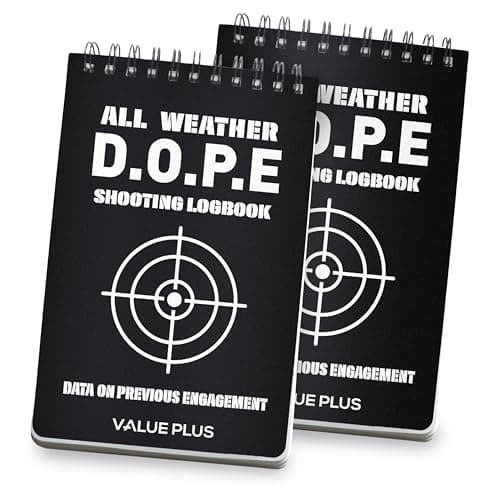
The whole working surface: rifle, mat, magazine, ammunition and the book. That book is doing more work than most of the hardware — the difference between a lucky day and a repeatable one is whether you wrote down what the conditions were when it worked.
The wind is the entire problem
Elevation at 1,000 yards is arithmetic. You have a solver or a chart, you dial the number, and the number is either right or it is close enough to correct on the second shot. Wind is not arithmetic. Wind is a judgment about a column of air a thousand yards long that you can only measure at one end of.
In a valley like Whittington's that column does not behave. It funnels, it comes off the slopes, it does one thing at the firing line and something else three hundred yards out where the grass is. A wind meter tells you what is happening at your face, which is genuinely useful and is not the whole answer. Mirage through a spotting scope, and the way the grass lies at different distances, tells you about the rest of it.
I am not going to give you a wind formula, because the honest thing to say is that the people who are good at this got good by shooting a lot in the wind and writing down what happened. That is what the log book is for and it is why it is on the list of things to buy.
I marked this one up afterwards, because a photograph does not carry scale and nobody believes how small these look. The circles are targets. That is the honest visual answer to "how hard can it be".
What connecting actually feels like
At this distance the shot is not a single event, it is a sequence with a gap in the middle. You break the trigger, the rifle moves, you get back on the scope, and then nothing happens for a length of time that feels wrong. Over a thousand yards the bullet is in the air long enough that you have time to wonder whether you pulled it.
Then, if you have done it right, the steel moves before you hear anything. The buffalo is 6 feet by 10 feet, and at 1,123 yards it takes up almost nothing in the glass, so what you actually see is a small pale shape shifting. And then, later — genuinely, noticeably later — the sound arrives, flat and delayed, and everybody on the line who was watching makes the same noise at the same time.
I have connected on the White Buffalo at 1,123 yards. Both of my rifles have been out there across multiple trips — the LR-308 behind the Viper PST and the Remington 700 behind the Sightron SIII — and every round through both of them was one I loaded on my own bench. I am not going to dress that up with a group size or a hit count, because I did not record them and inventing them would make the rest of this page worthless.
Through the glass, which is the only honest way to show what the distance does. The numbered board and the silhouettes beyond it are what a target looks like when it is a very long way away and the magnification is doing all the work.
Would I recommend the trip?
Without hesitation, and not only for the buffalo. Whittington is the rare facility where the shooting is only part of it — there is a firearms museum, there are hunts, there is camping and there are cabins, and the whole place is set up on the assumption that you came for several days rather than an afternoon. If you have a rifle you have built for distance and nowhere near home to prove it, this is the answer, and it is a better answer than a membership at a club that will not let you past 300 yards.
A dialed elevation number is only as good as the distance you fed it. At a known-distance range this is a luxury; anywhere else it is the first number in the chain.
Fourteen dollars for the only piece of equipment on this page that improves every other piece of equipment on this page. Write down what the rifle did and stop guessing next time.
#ad · Live prices from the Amazon Creators API, as of October 19, 2026. Where we have no verified live price we show none — a gap beats a number that has rotted.
In detail
The picks, in full
01
Best wind meter
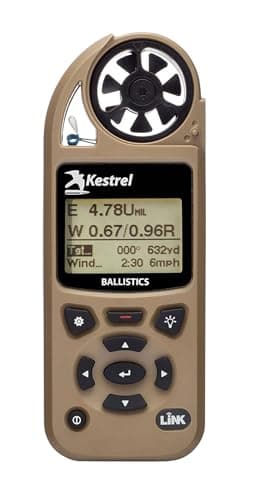
Kestrel 5700 Ballistics Weather Meter
On-board ballistic solverWind, temperature, pressure, humidity, density altitudeRuggedized handheldRuns on AA batteries
7.8/10
At 1,000 yards the wind is the whole problem and everything else is arithmetic. This measures the wind where you are and does the arithmetic for you.
Accuracy
9
Solver quality
9
Durability
9
Ease of use
6
Value
6
What's good
+Density altitude changes your dope more than most people believe, and this is the instrument that tells you it changed
+The integrated solver means the wind reading and the firing solution are the same device rather than two
+Field-repairable, AA-powered, and it has been the standard for long enough that everyone at the line knows how to use yours
What's not
−It measures the wind at the firing line, and the wind that misses you is the wind halfway to the target
−Expensive enough to be a real decision against buying better glass
−The menu system rewards reading the manual, which nobody does at the range
Skip it if…
…you shoot inside 500 yards, or you have not yet built a verified drop chart for your load. Learn to read mirage and grass first — it is free and it is the skill the meter cannot replace.
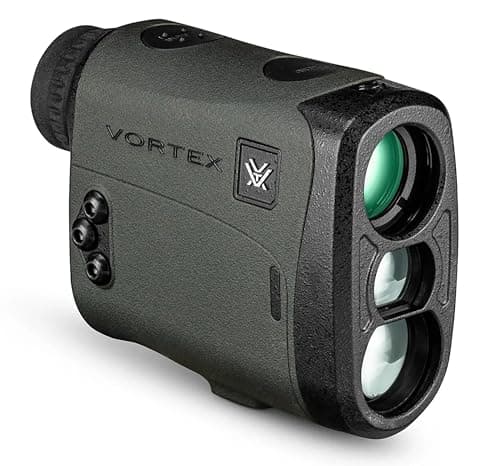
Ranges to 1,800 yards on reflective targetsHD optical systemAngle compensationCompact monocular
8.3/10
A dialed elevation number is only as good as the distance you fed it. At a known-distance range this is a luxury; anywhere else it is the first number in the chain.
Range performance
8
Glass clarity
7
Ease of use
9
Value
9
What's good
+Every ballistic solution starts with a range, and a guessed range poisons everything downstream of it
+The reflective-target maximum is a marketing number — treat it as roughly half that on a deer-sized non-reflective target and it is still plenty
+Vortex warranty on an electronic item, which is not universal in this category
What's not
−Advertised maximum ranges across this entire category are measured against reflective targets in ideal light
−Handheld rangefinders wobble at long distance; you will want to brace it
−No integrated ballistic solver at this price
Skip it if…
…you only shoot at a range with painted distance markers. The distances are already known and better than your rangefinder will read them.
Weatherproof pagesDope and conditions columnsPocket sizedTwo books
8.3/10
Fourteen dollars for the only piece of equipment on this page that improves every other piece of equipment on this page. Write down what the rifle did and stop guessing next time.
Usefulness
9
Durability
8
Layout
6
Value
10
What's good
+A written record turns a good day into a repeatable day, which is the entire skill of long-range shooting
+Weatherproof paper survives the mat, the dew and the truck bed
+Costs less than a box of match ammunition and outlasts several rifles
What's not
−Only works if you fill it in while you are shooting, which nobody wants to do
−A phone app does the same job with better math, if your phone survives the day
−Layouts are generic and will not match how you like to record things
Skip it if…
…you already keep dope in a ballistic app and actually update it. Two systems means neither one is trustworthy.
At 1,000 yards and at 7,000 feet of elevation, the two things you cannot eyeball are the wind and the air density. A ballistic-solving wind meter handles both, and it is the reason it is the top pick here rather than the glass. Everything else on this list makes shooting more pleasant. This one makes it possible to be right.
A spotter is not optional if you shoot alone
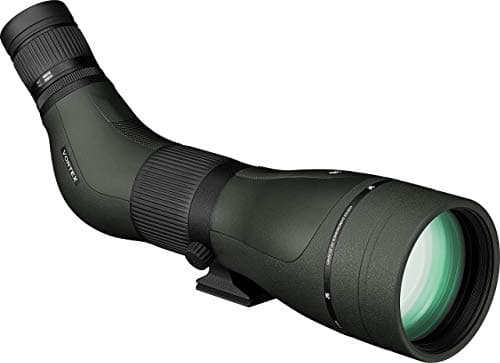
You cannot correct a miss you did not see, and at this distance you frequently will not see your own splash through the rifle scope. An 85mm spotter on a tripod solves it. If you always shoot with a partner who owns one, save the money.
Comfort is performance at this distance
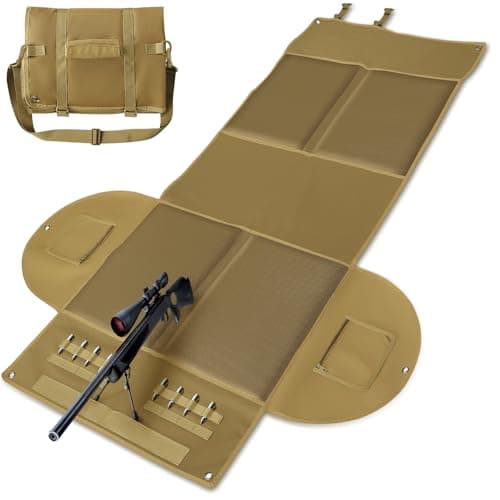
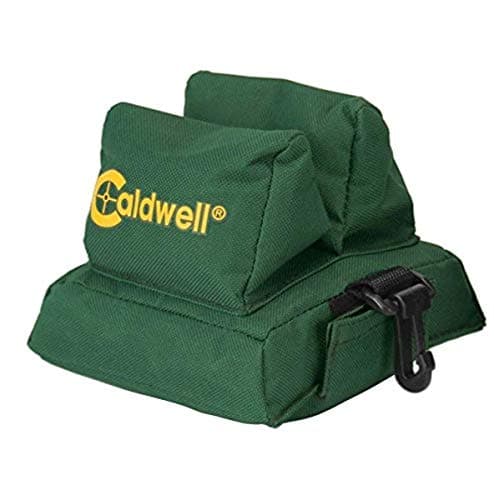
A padded mat and a rear bag sound like luxuries and are not. Long-range shooting is an hour in one position, and a position you cannot hold is a position you will not shoot well from. Being uncomfortable does not build character, it builds vertical spread.
The log book is the cheapest thing here and the highest-leverage
Every serious long-range shooter has a record of what worked in what conditions, because the alternative is re-learning the same thing every trip. Fourteen dollars. Buy it before you buy anything else on this page.
How these were picked
I haven't handled these. Here's what I did instead.
Everyone in this category says they tested twenty of these. I haven't tested any, and I say so. What I do instead: read the manufacturer's manual and published specification, compile the numbers that decide the purchase, do the arithmetic in the open, check the live price, and name one product to skip. The scores above are judgments from that research against a published rubric — they are not measurements I took, because I do not have a lab and I am not going to pretend otherwise.
Questions
Frequently asked
How far away is the White Buffalo, exactly?+
The Whittington Center's own range page lists the White Buffalo at 1,025 meters on the High Power Rifle Silhouette Range. Everyone who shoots it — and the shirt the Pro Shop sells you afterwards — calls it 1,123 yards. Those are the same target and the two figures are within a couple of yards of each other.
How big is the White Buffalo target?+
Six feet by ten feet, per the Center's own description. That sounds enormous until you look at it through a scope at over a thousand yards, at which point it stops sounding enormous.
Can the general public shoot at the Whittington Center?+
Yes. It is a public destination facility with twenty-five ranges, camping, RV spaces and cabins, and it hosts both public and private events. Check the individual range's rules and availability before you travel — the silhouette range and the 1,000-yard high power range have different ammunition restrictions.
What ammunition is not allowed on the silhouette range?+
The Center's page for that range prohibits .22 centerfire, any magnum — belted or non-belted — and all full metal jacket or armor-piercing ammunition. If you were planning to bring surplus ball or a magnum, plan differently.
What rifle do you need to hit it?+
A .308 with a match barrel, a scope with enough elevation to get there, and ammunition that is consistent from round to round will do it. The cartridge matters less than the three things people skip: a canted scope base so you do not run out of adjustment, a verified drop chart for the actual conditions, and an honest wind call.
How high is the Whittington Center?+
Between 6,300 and 8,100 feet across its 33,300 acres. That elevation genuinely changes your ballistics compared with shooting near sea level, which is the single most common surprise for first-time visitors from lower ground.
We do not run a testing lab and we do not pretend to. Where a measured number came from a manufacturer's published specification or someone else's lab, we name them and link them. Where we could not verify something, we say so on the page rather than quietly leaving it out. Read the full method.