A weapon light is one of the few accessories where the specification everyone compares — lumens — is close to the least important thing about it. What actually decides whether the light is any good on your gun is whether it fits, whether you can operate it without changing your grip, and whether anybody makes a holster for the combination.
Get those three right and a 500 lumen light is excellent. Get them wrong and a 1,500 lumen light is an expensive paperweight with a rail clamp.
Three numbers, and only one of them is on the box. FL 1 lumens are measured at the front of the lens thirty seconds after switch-on, to the ANSI/NEMA standard. A marketing lumen number is usually the emitter's theoretical maximum at the instant of switch-on, which nobody ever sees. Sustained output is what the light holds after it heats up — every small high-output light steps down, and the honest makers publish the curve. Candela is beam intensity, and it is what decides how far the light reaches: a 2,000 lumen flood can be less useful at distance than a 600 lumen thrower. Everything on these pages is ranked on the second and third of those, never the first.
Fitment: the part that catches people out
Pistol lights split into two families and they are not interchangeable.
Full-size rail lights clamp to a standard accessory rail and fit most full-size and compact pistols that have one. They are the flexible option — the light moves between guns.
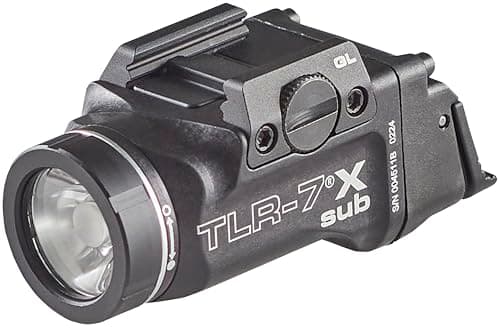
Compact and sub-compact lights are frequently sold in model-specific fitments, because small pistols do not have enough rail to standardize on. Streamlight's Sub range is the clearest example: the same light is sold in several versions cut for different pistols, and buying the wrong one means it will not mount at all.
This is on you to verify. This site is not going to tell you a light fits your specific pistol. What we will tell you is that the listing names the fitments, that you should read it, and that if your model is not named you should not assume. If you carry a subcompact — the carry-gun page gets into why a lot of people do — this is the single most common way to waste $150 in this category.
Long-gun lights are simpler but have their own version of the problem: a Picatinny-mount light needs a Picatinny surface, and a modern M-LOK handguard does not have one until you add a rail section or buy a light with a direct M-LOK mount. Both of the AR builds on this site run M-LOK or KeyMod handguards, which is the situation most current rifles are in.
Switch placement is the whole ergonomics question
On a pistol, the switch is worked by the support-hand thumb or index finger, and the useful question is whether you can activate it without breaking your grip. Ambidextrous paddles that can be run from either side are the standard to look for, and the height of the paddle matters more than people expect — several manufacturers ship high and low options in the box for exactly this reason.
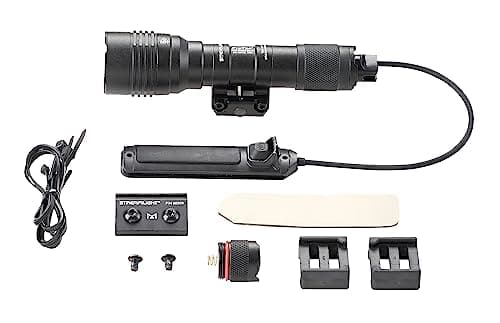
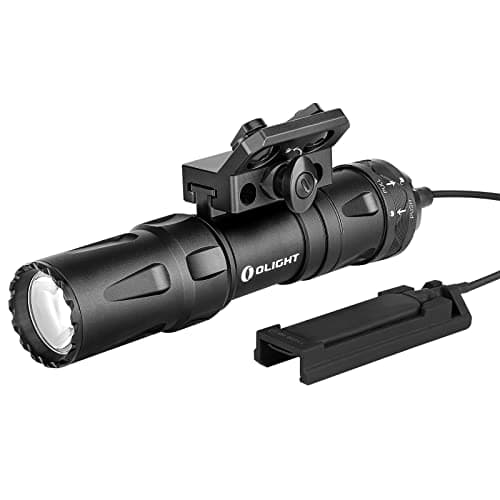
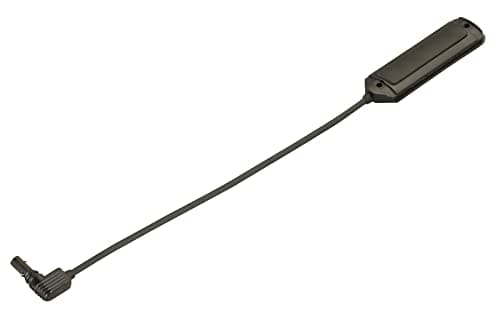
On a long gun, a light without a remote pressure switch is a light you will not use. Reaching forward to a body-mounted switch means changing your support-hand position, which is exactly what you do not want to do. The switch is not an accessory here; it is part of the system, and the lights that include one are meaningfully better value than the ones that do not.
The honest downside: tape switches are the most common failure point in any weapon light setup. They get crushed, the cables get snagged, the adhesive lets go. Route them properly, secure the cable, and if the setup matters to you, own a spare.
Holster support is a real specification
Putting a light on a carry pistol invalidates every holster you own. Light-bearing holsters are cut for a specific light-and-gun combination, and the availability of that combination is genuinely a buying criterion.
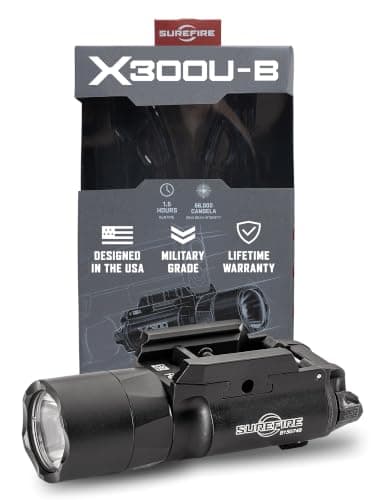
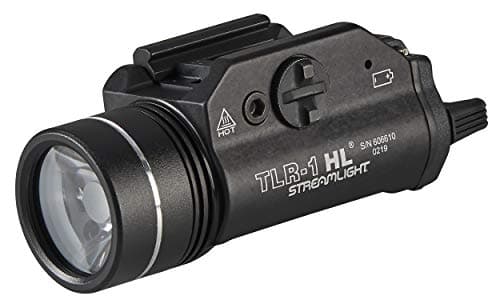
This is the practical reason the Streamlight TLR-1 and the SureFire X300 dominate: every holster maker cuts for them. A better light with no holster support is a worse purchase, and the money you save on the light gets spent on a custom holster with a lead time.
What is not on this page
Modlite. It is the light a lot of people will expect to see here, and it is not sold through the channel this site monetizes — a live search returned other manufacturers' lights and lookalikes, not Modlite. If you want one, buy direct from them. We earn nothing from saying that and would rather say it than substitute something that merely looks similar.
Lasers. Several of these lights are sold in light-and-laser combinations. That is a different product with different training implications and it is out of scope here.
These are researched picks, not lights I carry. Elsewhere on this site there are pages about gear I actually own, and those are written in the first person because they have earned it — my rifles, my truck, my computer. Flashlights are not one of those categories yet. So this cluster does what the rest of the site does when I have not handled something: reads the published specifications, compares the numbers that are actually comparable, says which manufacturers publish enough to be checked, and names one to skip. On weapon lights in particular: mounting, switch and holster decisions are the sort of thing that should be confirmed against your own equipment rather than taken from any website, including this one.
Getting this purchase right
Confirm fitment on the listing, for your exact model
Sub-compact lights are model-specific. Read the listing, find your pistol by name, and if it is not there, do not assume it will fit. This is the mistake this category is famous for.
Budget for the holster at the same time
A light-bearing holster is not optional and is not cheap. Check that one exists for your gun-and-light combination before you buy the light, not after.
On a long gun, buy the switch with the light
A weapon light you have to reach for will not get used under any pressure at all. Lights that include a pressure switch in the box are the better buy even at a higher sticker price.
Primaries for a gun that sits, rechargeable for one that gets used
CR123A cells hold charge for years, which is the right answer for a light on a firearm that is stored rather than carried daily. Rechargeables self-discharge and need a routine.
Compare candela, not lumens
Identifying something at distance is a candela problem. Streamlight and SureFire both publish it for weapon lights, which makes the comparison possible.